
No Other Choice is Not Your Average Revenge Thriller


Where the desperate characters of Park Chan-wook’s Vengeance Trilogy punished the people who wronged them, this mordant, anti-capitalist film takes a different tack, with its protagonist attacking the systems that oppress him instead. By David Opie
This article contains spoilers for ‘No Other Choice’.
Revenge cinema is more or less synonymous with South Korea these days, and much of that is down to the work of one man: Park Chan-wook. That’s not to say other Korean productions haven’t shown a flair for vindictive storytelling. Everything from Kim Jee-woon’s I Saw The Devil (2010) and Yeun Sang-ho’s King of Pigs (2011) to recent TV fare such as My Name (2021) and The Glory (2022) takes great delight in South Korea’s uniquely cruel brand of revenge. But still, it was Park’s beloved Vengeance Trilogy that popularised Korean revenge cinema two decades ago, taking it global with the success of Sympathy for Mr. Vengeance (2002), Oldboy (2003) and Sympathy for Lady Vengeance (2005).
WATCH NO OTHER CHOICE IN CINEMAS
Book TicketsTitles aside, sympathy is actually quite sparse in these films, especially when it comes to the vengeance that Park’s protagonists wreak. Where our sympathies do lie, however, is with the protagonists themselves, ordinary citizens pushed to committing horrific acts in an unforgiving world. In Sympathy for Mr. Vengeance, Shin Ha-kyun’s Ryu is a deaf-mute factory worker struggling to pay his sister’s hospital bills, while Oldboy’s Oh Dae-su (Choi Min-siks) is a salaryman unfairly imprisoned – much like Lee Geum-ja (Lee Young-ae) in Sympathy for Lady Vengeance, who, it turns out, was also jailed for a crime she did not commit. In each case, these avatars for cruelty aren’t intrinsically ‘evil’ by any stretch, despite the evils they inflict on those who did them wrong.
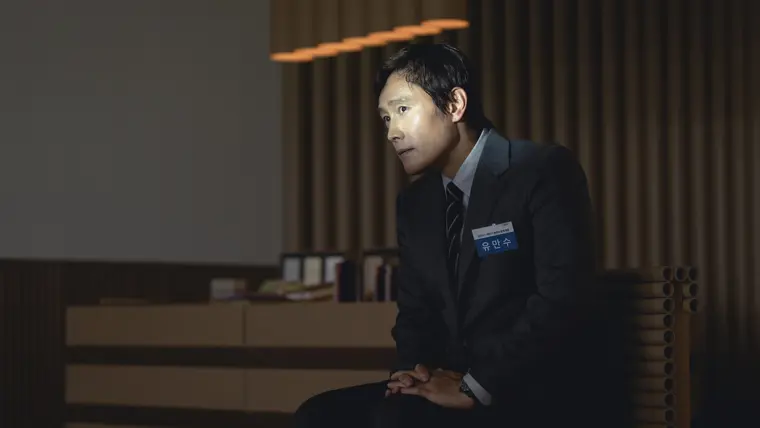
The same is also true of Lee Byung-hun’s Yoo Man-su in No Other Choice, even if Park’s latest film isn’t widely considered to be a revenge film. At first, you’d have no idea that Man-su has a capacity for evil, let alone vengeance. The character seems to live a perfect life, surrounded by his perfect family in his perfect home. Thanks to the money he makes working at a paper factory, Man-su’s world is one of endless possibilities. But when Solar Paper is bought out by Americans, and Man-su is made redundant, he suddenly finds himself adrift in a ruthless job market where choice is a luxury and the idyllic life he’s built is on the verge of collapse.

Knowing Park, you might expect this to be the catalyst that drives Man-su to murder, and it is, but not quite in the way you’d expect. Instead of taking revenge on his boss or the executives responsible, Man-su decides to take out his competition – quite literally – to secure a position that’s come up at the rival Moon Paper business. Through his own sham company that doesn’t even exist, Lee’s family man begins to lure in other candidates (Park Hee-soon, Lee Sung-min) for fake interviews so he can get close enough to kill them.
These men did nothing to Man-su. In another life, he could have even been friends with them. But now, they’re just corpses that need to be disposed of, more victims in the horror show that is modern-day capitalism. Extreme? Yes. Relatable? Uncomfortably so. At a time when the cost of living continues to increase exponentially, and the global job market is flooded with people-replacing AI, the path taken by Man-su couldn’t be more relevant (even if the film is based on Donald E Westlake’s The Ax, an American novel released in 1997).
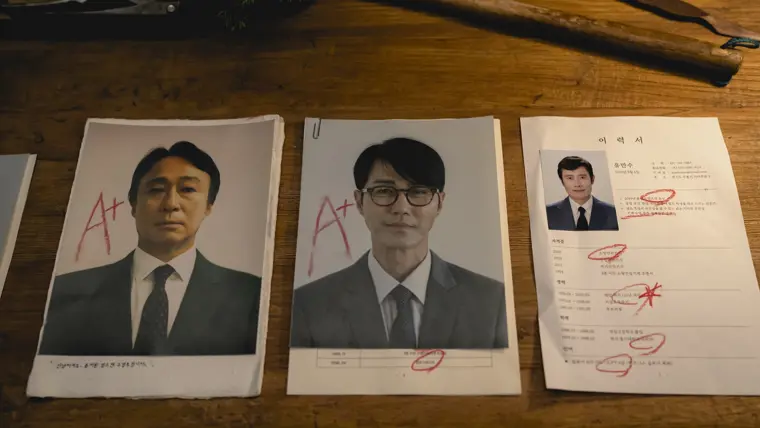
No Other Choice is clearly an anti-capitalist fable. It depicts the extremes that workers are forced into when their backs are against the wall and they can no longer afford necessities like, oh I don’t know, Netflix or cello lessons for their children. As such, it’s tempting to suggest that Park’s latest venture – like his previous film Decision to Leave (2022) – isn’t about revenge at all. But upon closer inspection, No Other Choice isn’t quite the departure for Park that you might think. Rather, it is simply an evolution of his outlook. He’s still scrutinising the morality of vengeance, just from a very different angle.
The turning point comes early on when Man-su considers killing the manager of Moon Paper after he fails to secure a new job with his company. Standing over Sun-chul on a rooftop, Lee’s character comes close to dropping a potted pepper plant on his head. But then something shifts in Man-su. He rethinks his assassination plan, concocting a new plot to secure work.
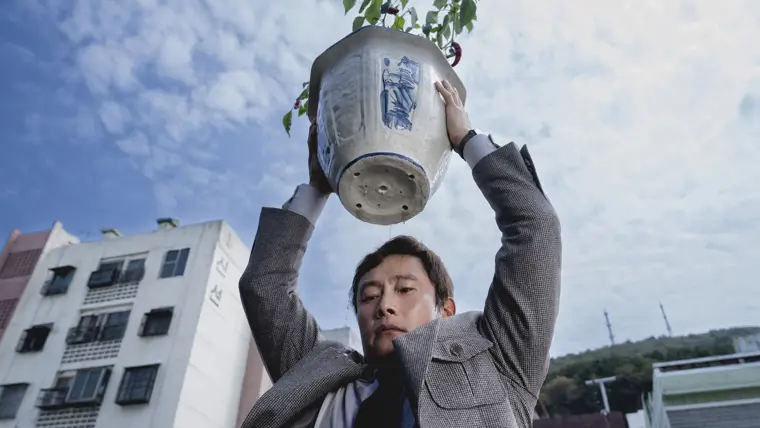
It’s no coincidence that this pivotal scene has been front and centre of the marketing for No Other Choice, just as it’s no coincidence that the pepper plant that’s contemplated as a murder weapon is a Korean symbol of male virility. Emasculated, hopeless and broke, Man-su could have easily given into the pettiness and wrath that’s bound up in revenge. Instead, this moment of clarity inspires him to strike back at something bigger than any one person: capitalism itself.
Well, not consciously. Man-su is hardly a hero for the people, valiantly striking back against the hamster wheel we’re all trapped in. But by manipulating the system, finding homicidal loopholes within it for his own gain, Man-su fights to reclaim the agency taken by those much higher up on the ladder.
Such a quest might seem worlds removed from the revenge that characterises Park’s Vengeance Trilogy, but class disparity is just as integral to those films as it is No Other Choice. Take poor Ryu toiling away in what looks like a steel plant, unable to assist his sick sister without resorting to ‘help’ from black-market channels in Sympathy for Mr. Vengeance. Or what about the titular Oldboy himself, a middle-aged salaryman whose imprisonment brings to mind the endless toil of all office workers, trapped in their cubicles until they’re no longer of use?
To be South Korean is to feel that mounting pressure more than most. As a nation, Korea has long been suppressed by foreign powers, be it China, Japan or, to another degree, the United States. Even within the country, multiple dictatorships and 1997’s financial crisis bore down hard on Korean citizens in the 20th century, fuelling a collective feeling of suffering. Combined with the daily pressures of work and study within a hyper-capitalistic framework, is it any wonder that Koreans came up with a specific term to define such misery?
The meaning of Han (Korean: 한), or haan, is somewhat ambiguous in English, providing a catch-all description of sorts for what Professor Michael D Shin defines as ‘the complex of emotions that result from the traumatic loss of collective identity’. But however you might understand it, this uniquely Korean outlook is the driving force behind every action in Park’s Vengeance Trilogy and No Other Choice alike. Each protagonist is motivated by injustice, pushing back against a system forever rigged against them. Han and capitalism are intertwined in this sense, one just as ubiquitous as the other. But by more explicitly emphasising the role that capitalism plays in this, No Other Choice frames vengeance more acutely as an inevitable result of suffering within South Korean society.

The difference for Man-su is that he’s no longer just lashing out or scrambling in the same way that Park’s previous protagonists did. He is still scrambling, yes, but he’s working with the means the system has provided in order to exploit it, playing within the game to beat it. Yet, in the end, he’s still just another cog in the machine.
As the only human left working in the factory, Man-su might have ‘won’, so to speak, but it won’t be long until he’s replaced again, when he’s considered too old or even redundant in the face of new technology. And so the cycle continues, not just for Man-su but within Park’s filmography too, as it further evolves to encompass wider definitions of what vengeance looks like today in modern Korean society.
WATCH NO OTHER CHOICE IN CINEMAS
RELATED ARTICLES

Korean Films
Park Chan-wook on Decision to Leave
Review
One Battle After Another Review: A Bold, Electrifying Political Thriller
Leonardo DiCaprio leads Paul Thomas Anderson’s dynamic state-of-the-nation epic, where grenade-tossing, car-flipping action is counterbalanced by dark, satirical humour, writes Yasmin Omar.
List
Films We’re Looking Forward to in 2026
Ryan Gosling heads to space, Meryl Streep puts on her Prada, Margot Robbie yearns for Jacob Elordi and Tom Cruise leads – checks notes – a comedy?! Here are the 2026 movies we can't wait to watch.