
Savages Director Claude Barras on His Latest Stop-Motion Animation
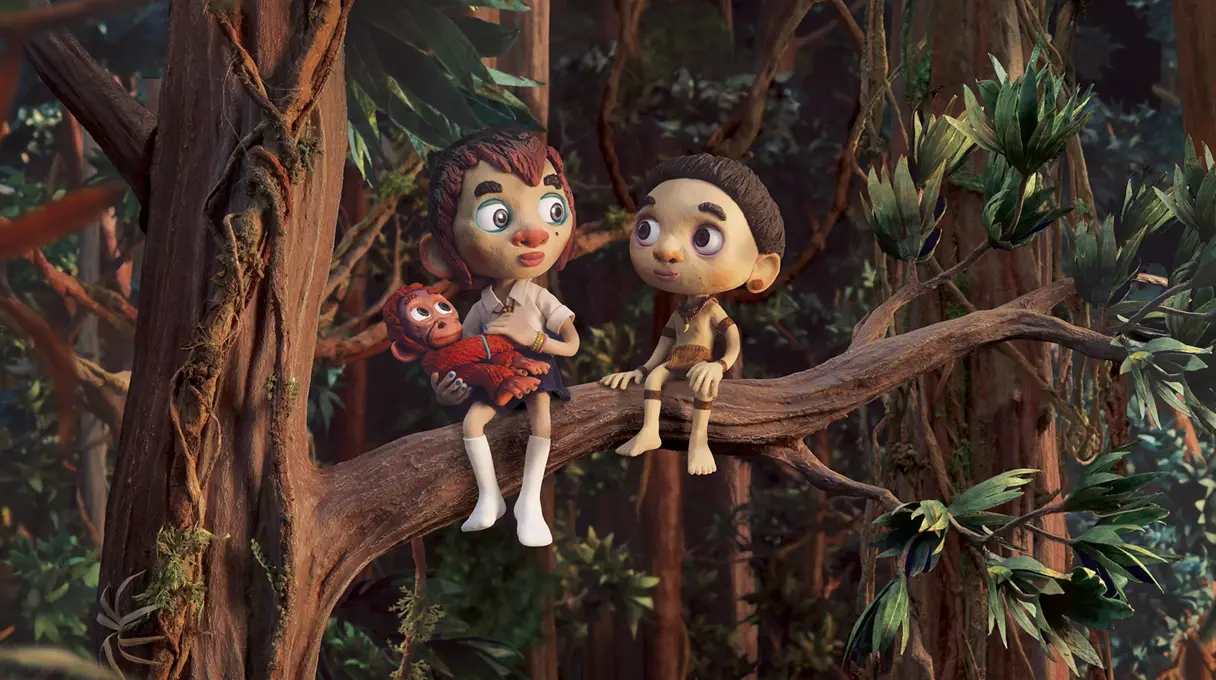

How do you follow up the surprise commercial and awards success of your stop-motion feature debut about traumatised children bonding in an orphanage? For Claude Barras, the Swiss director of the Oscar- and BAFTA-nominated My Life as a Courgette (2016), the next step was to exploit the goodwill he’d accumulated for all its worth. ‘Courgette was an unexpected success,’ he tells me via translator. ‘I had credit in the bank, so to speak, to make a film that is commercial, but is also very close to my heart. This was my one chance to make my dream film.’
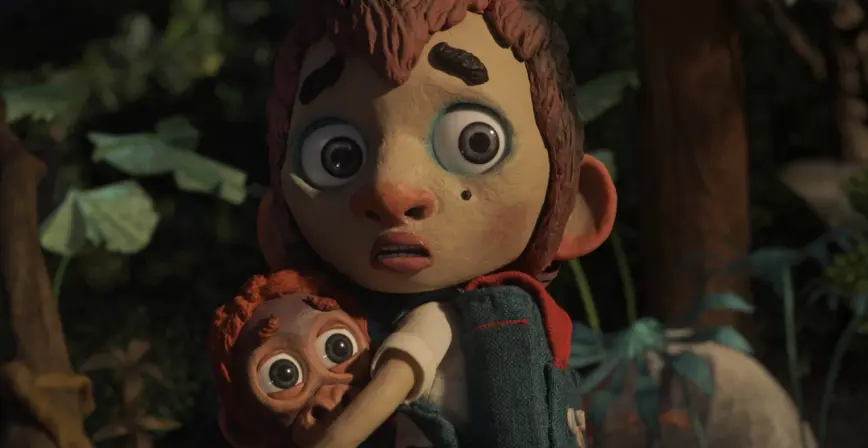
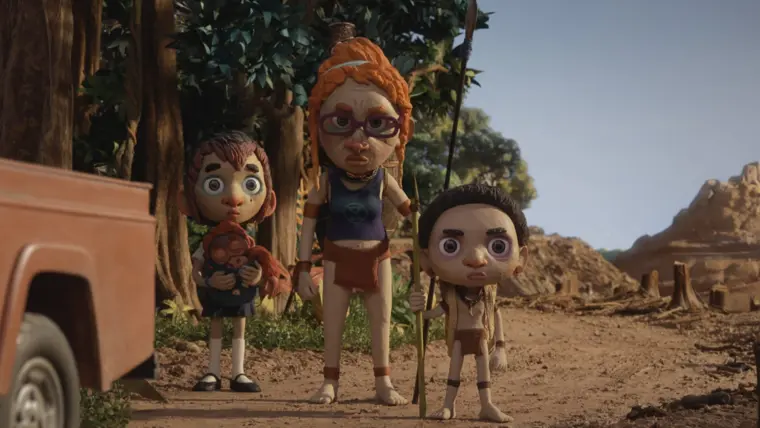
Barras’ new feature, Savages, has a considerable expansion in scale for sets and storytelling. The film takes place in Borneo, at the edge of a tropical forest facing increased threats from logging companies. It follows Kéria, a young girl with biological ties to the indigenous Penan population of the forest – who are facing displacement – through her late mother, but little connection to that part of her heritage. When an orphaned baby orangutan, Oshi, comes into Kéria’s care, it sets off a chain of events that will lead to the discovery of her own origins and a fight for the rights of those wanting to live in harmony with the natural world.
With puppets of both Oshi and Courgette – the title character of My Life as a Courgette – on display in front of him, Barras discusses his latest animated gem.

JOSH SLATER-WILLIAMS: WHAT WAS A TYPICAL WORK DAY ON THIS PRODUCTION LIKE FOR YOU?
CLAUDE BARRAS: Where I’m the most involved is in the script, the storyboarding and then sculpting the puppets. I like to delegate to the rest of the team while still maintaining an overview. What I try to do, as much as possible, is keep the intention of each sequence and communicate that to each team – because it’s not the same teams working on each sequence and we don’t shoot them in order. So, I aim to maintain an overall unity to the film. I’m the one in charge of not losing the thread.
JSW: HOW WERE YOUR CHILD LEADS CAST? BOTH KÉRIA [VOICED BY BABETTE DE COSTER] AND HER NOMADIC COUSIN SELAÏ [MARTIN VERSET].
CB: All the voices were recorded in Belgium and it was [casting director] Michaël Bier, who’s used to working with children, who came on board for that. He had 15 children audition for each role. I ended up keeping four for each part, and then had a workshop with them where they all played against each other. We ended up picking the ones that had the most chemistry, and sounded the most realistic in terms of age gap and how they expressed themselves.
We didn’t want it to sound like actors trying to create a role, we wanted kids communicating naturally. We have to bear in mind that when we record, we do so in a fairly neutral atmosphere. The adult actors help to lead the children in certain scenes, but none of it’s visual, so essentially the voices carry the soul of those characters.
WATCH SAVAGES IN CINEMAS
Book TicketsJSW: THIS FILM DIFFERS FROM SOME ECO-TALES IN THAT IT FOCUSES A LOT MORE ON THE BEAUTY OF THE ENVIRONMENTS AND THE COMMUNITY-DRIVEN PRESERVATION THAN THE ACTUAL DEFORESTATION. WAS THAT A CONSCIOUS STORYTELLING DECISION?
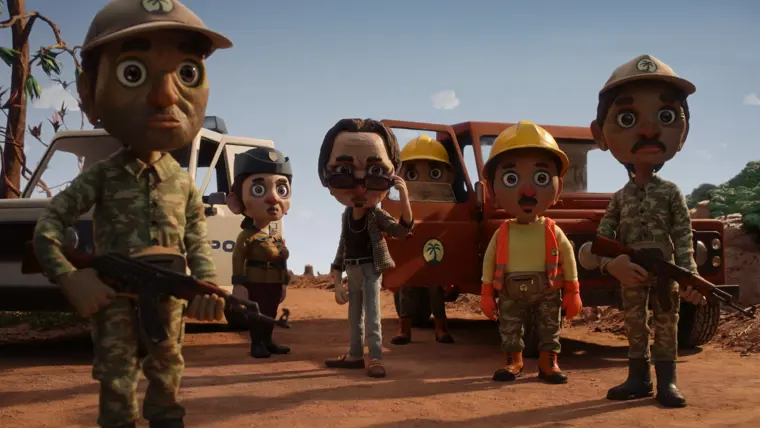
CB: Yes, very much so. The balance of power is so uneven that the main focus had to be on the side that is resisting the logging companies' escalation. I wanted to show just how much beauty and dignity there is in the Penan way of life, especially considering the overwhelming odds they face against the huge corporate machine that's trying to move them elsewhere. I’m doing this not only to highlight the small victories that can happen, but also to try and encourage the audience to side with them, to want to fight alongside them, without it being too on the nose either.
JSW: COULD YOU SPEAK ABOUT THE CHOICE NOT TO SUBTITLE THE FILM’S PENAN DIALOGUE? IT’S ONLY TRANSLATED BY OTHERS AFTER THE INDIGENOUS CHARACTERS’ WORDS ARE SPOKEN.
CB: I wanted the audience to go on the same journey as Kéria. She doesn’t know that language, so she’s discovering it as she goes along through gestures, through translation. You lose a lot of the emotional engagement when reading subtitles.
JSW: WHICH OF THE CHARACTERS’ MODELS WAS THE ‘EASIEST’ TO WORK WITH?
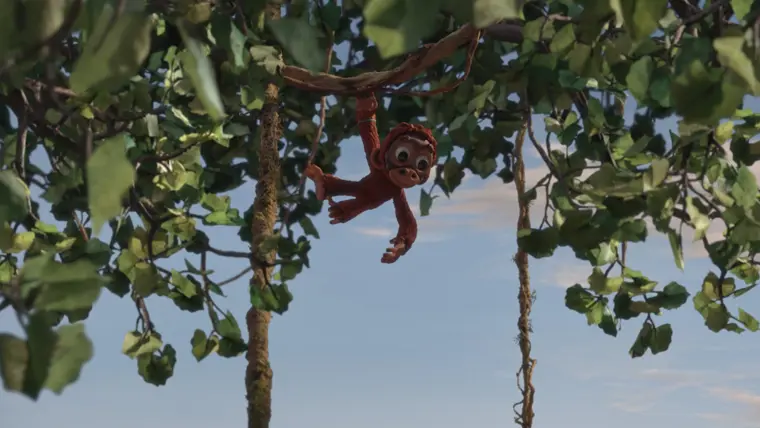
CB: I think Oshi [the baby orangutan] was simultaneously the biggest challenge and the most pleasurable character to work with because he’s so central to everything else. All the set was built around Oshi and his scale dictated everything around him. But he’s quite easy to manipulate. As you can see [Barras removes the mouth of the Oshi puppet in front of him], his mouth is a magnet, so you can change the expressions as you go. We have a library of 24 mouths per character. [Barras also removes Courgette’s mouth.]
JSW: WHAT ARE YOUR FAVOURITE FILMS THAT EXPLORE A NOMADIC WAY OF LIFE?
CB: I will always keep referring back to Princess Mononoke [1997], which isn’t so much about nomadic lifestyles – it’s really about that clash of cultures. The preconceived idea that I kept coming across was that modernity was fully guilty and traditional ways of life were very virtuous. I think it’s much more complex than that. It’s certain communities’ use of modernity to advance specific causes that can provoke this sort of conflict in real life. But I live in a world that is very modern, so I can only really speak from that perspective. I don’t like labelling these things as separate entities: traditional way of life, modernity, et cetera. The real issue is things like violence and forced submission that exist across cultures and across those different ways of life.
WATCH SAVAGES IN CINEMAS
RELATED ARTICLES
List
15 of the Best Animated Movies
From the revered, fantastical animated features of Studio Ghibli to Walt Disney’s hand-drawn masterpieces, the medium presents infinite possibilities. Here, we share our favourite animated movies.
Article
Jurassic Park’s Gothic Monsters
With its horrifying creatures, monomaniacal scientists and suspicion of technological progress, the blockbuster action franchise – and Jurassic World: Rebirth – owes a lot to Gothic storytelling traditions, writes Billie Walker.
List
A Short History of Cats in Film
While dogs might have long held the crown as man’s best friend, cats are particularly beloved by filmmakers, from Agnés Varda to Stanley Kubrick; here's our guide through a short history of cats in films.