
Why Are There So Many Cult Leaders in Films Right Now?

Chris Evans in Honey Don't!, Austin Butler in Eddington, John Malkovich in Opus, Channing Tatum in Blink Twice... Miriam Balanescu investigates this disturbing cinematic trend.
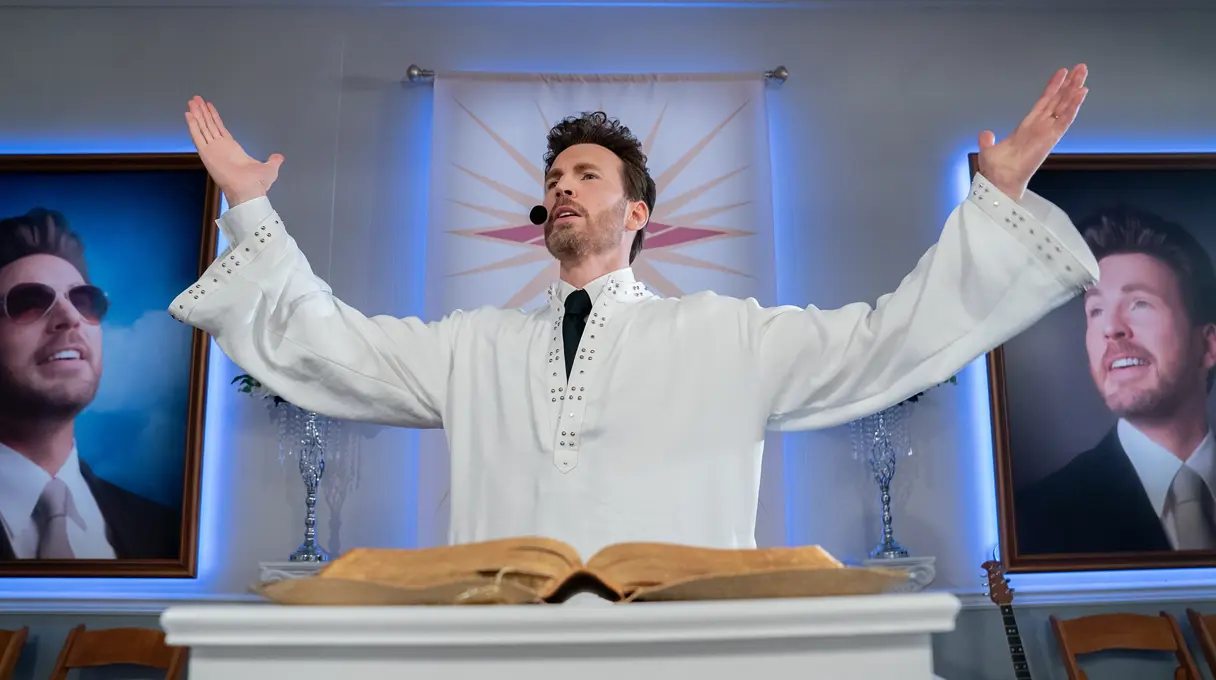
Weaponising his charm, Chris Evans plays a lecherous, conceited cult leader in Honey Don’t!, the second instalment of Ethan Coen and Tricia Cooke’s high-energy, lesbian B-movie trilogy. The film, which focuses on straight-talking private detective Honey (Margaret Qualley), presents Reverend Drew Devlin (Evans) as the prime suspect in her murder investigation. Coen and Cooke let us glimpse the inner workings of a shady church, which sexually preys on its female congregants and provides the front for a drug-trafficking organisation.
As the body count associated with the wryly named Four Way Temple stacks up, Devlin’s clumsy mistakes implicate him ever more deeply in the crime. Honey Don’t! recreates a knowingly silly cliché with its disreputable reverend. Evans, best known for playing the morally righteous Captain America, is cannily cast. The role showcases a different side to him – namely the polished, glassy, soul-sucking charisma often associated with cult leaders.

WATCH HONEY DON'T! IN CINEMAS
Book TicketsThere’s been a notable rise in cult leaders in cinema over the past 12 months. Besides Devlin, we’ve had the Covid conspiracist Vernon Jefferson Peak (Austin Butler) in Ari Aster’s Eddington (2025), who grows an online following by spreading myths about a government child-smuggling ring. Mark Anthony Green’s Opus (2025), meanwhile, turns Nineties popstar Alfred Moretti (John Malkovich) into the leader of the ‘Levelists’, a cult who want to usher in a new era where talented creatives reign. Finally, in Zoë Kravitz’s Blink Twice (2024), Channing Tatum plays a tech billionaire accused of company-wide exploitation. At the start of the film, he brushes accusations aside and claims to be a reformed man… except it transpires that he is covertly orchestrating a cult-like sect on an island he has purchased to facilitate continued abuse.
Church corruption in the likes of Honey Don’t! and Blink Twice coincides with a moment when religion has become one of most polarising aspects of American politics. In both films, cult leaders manipulate doctrine to suit their motives. Devlin audaciously preaches physical ‘submission’ in Honey Don’t!, while Blink Twice’s crucifix-wearing Slater King (Tatum) encourages others to ‘forget’ rather than ‘forgive’. These dubious ecclesiastics find their real-life counterparts in splinter groups in the US, from the Fundamentalist Church of Jesus Christ of Latter-Day Saints to The Family International, where ‘religion’ is used to justify widescale abuse.

As Eddington recognises, even where cults are not explicitly religious, they often use the language of enlightenment to convince others to buy into their shaky views. Subtly or explicitly, the cult leaders in each of these films deify themselves. Peak relies on his dress and demeanour (a purity-signalling white suit and meditative manner); Devlin indulges in idolatry by comically decorating his church with huge self-portraits; and Moretti simply calls himself ‘a god’.
The American press’ fascination with cult leaders stretches back to the 1890s, but the stoking of extreme views online has kept such figures in our cultural consciousness. As journalist Derek Thompson argues, the internet has created a society that is more fragmented and skewed than ever before. He argues, a little sweepingly, that the ‘mainstream’ (from politics to pop culture) no longer exists, as all fandoms and beliefs depart from it and therefore have cult-like flavours.
Eddington – a dissection of the so-called culture wars that crystallised around the pandemic – seems to share this thesis, ramping up the extremity of views on all sides of the political spectrum. Its sheriff protagonist Joe Cross (Joaquin Phoenix) encounters Peak when his wife (Emma Stone) is seduced by his online theories. Joe believes his ideas are normal compared to Peak’s, but increasingly we see that the pair subscribe to similarly fringe beliefs. Meanwhile, the comedically inaccessible jargon used by the film’s white Black Lives Matter protestors sows further division within the tight-knit community.

Unlike the self-contained Swedish death cult from Aster’s earlier film Midsommar (2019), today’s on-screen cults are more fearsome because they appear to secretly operate among us – and insidiously influence ordinary society. Opus takes a similar premise to Midsommar (and Blink Twice), since it invites a small cluster of people to stay with a strange, self-sufficient community at an isolated compound, before horrors unfold. But the real chill in Opus is the reveal that Moretti’s followers are scattered across the globe. Like that film’s megastar, Slater in Blink Twice is a household name invited to speak on national television, making him another cultist hidden in plain sight. These fictional cults play on the anxieties fostered by QAnon-type conspiracies: that the upper echelons of society are all involved in dubious goings-on.
In our era of online fandom, there is also an increasing conflation between celebrity and cult leader. Honey Don’t!’s Evans and Eddington’s Butler gently draw on their real-life heartthrob status to convey how followers can easily be taken in. Their good looks make characters and audiences alike blind to their sinister intentions, our expectations of the kinds of characters they will inhabit (love interests or heroes) cleverly subverted. In Honey Don’t!, churchgoers are characterised sardonically as either Evans’ henchmen or groupies.

Opus blurs the line most between its sect and the cult-like devotion of fans from its opening, with shots of concertgoers in thrall to Moretti. The Levelists are made up of his fans, who the singer calls upon to join its ranks. Writer-director Green pokes fun at the popstar’s egomania. He preaches that ‘all things are not equal’ – because he is superior – and uses his followers to wreak revenge on those who have questioned his brilliance. Unlike Evans and Butler, Malkovich doubles down on his (madcap) persona, and the stereotype of artist as oddball, showing how his fame allows him free rein to exercise his weirder side without his guests’ judgement – or suspicion that anything is awry.
Another unignorable aspect of these new on-screen cult leaders is that they are all male. In these films, cults become synonymous with the cover-up of abuse and the seduction of women. The post-MeToo context is most explicit in Blink Twice, where drugged women literally wake up to the predatory behaviour of men in power. Kravitz capitalises on Tatum’s dreamboat reputation. Her protagonist Frida (Naomi Ackie) is infatuated with him, which is why it takes her so long to recognise his disturbing edge.
Yet Tatum plays the role with a beguiling sincerity and sensitivity that makes us sympathetic to Frida’s naïveté. Eddington draws on the trope of cults seducing vulnerable women in all senses; while in Opus, the slimy Moretti uses his stature to overstep boundaries in his behaviour with women during performances. Honey Don’t! uses the cult leader as a shorthand for all that is wrong with masculinity, satirising Devlin’s brazen manipulation of women and how he twists sermonising language to do so. When he tries the same weedling tactics with the no-nonsense Honey, she doesn’t stand for it.

Nefarious cult notwithstanding, Kravitz’s film adopts a largely comedic tone. Its light-hearted humour shines through Alia Shawkat’s Jess, Frida’s flatmate who joins her on the island but drops jokes about its cult-like rituals. Honey Don’t! pushes this further, making the corrupt reverend the film’s punchline. As Devlin tries to reassert his power when the violence kick-started by his church’s illicit activity spirals out of control, his ineptitude and arrogance come back to bite.
The detective caper recognises the pervasiveness of cult leaders in popular culture and chooses to take them down a peg. Rather than allowing him to be the source of fear, Coen and Cooke’s mocking portrait of Devlin takes away his sting. In all these films (save Eddington), it is a female character who brings about a cult leader’s downfall. On screen at least, we can live out the fantasy of women toppling powerful men.
WATCH HONEY DON'T! IN CINEMAS
RELATED ARTICLES

Article
Ari Aster’s Fascination with Conspiracies
A constant in the horror auteur’s work is manipulative characters shaping the reality of their vulnerable targets, and Eddington – with its Covid deniers – is no exception. Here, Billie Walker examines the cunning conspirators in each of Aster’s films.

Review
Blink Twice Review: Zoë Kravitz’s Extremely Online Thriller
In her spoiler-free review, Yasmin Omar digs into the actress-turned-director’s immaculately designed ‘eat the rich’ movie, which is deeply indebted to social-media trends.
Article
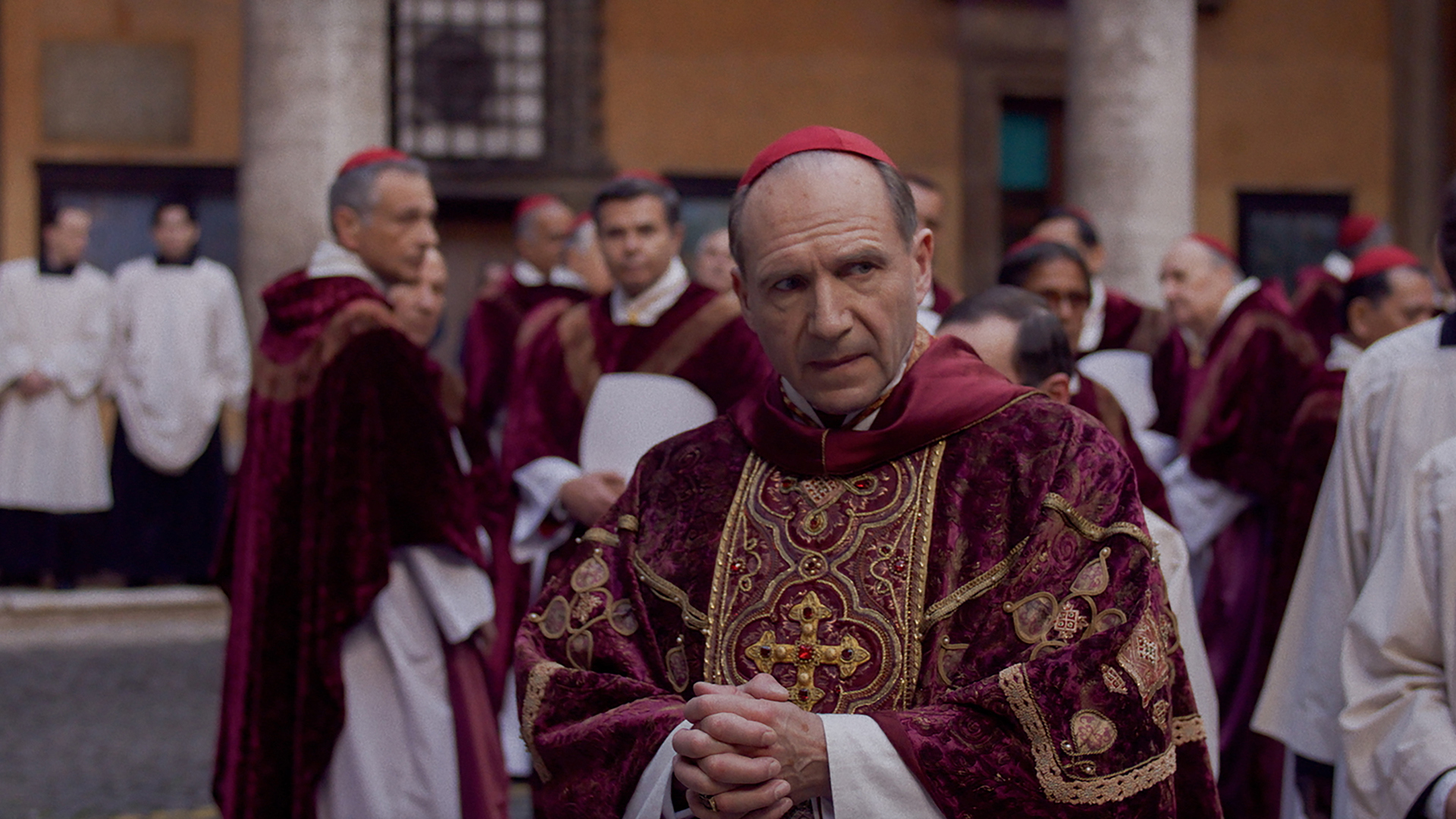
Conclave & The Characters who Use God for Personal Gain
Edward Berger’s papal potboiler reveals the self-serving unscrupulousness of holy men. Here, Victoria Luxford considers cinema’s sinister ministers, from There Will Be Blood to The Night of the Hunter.