
Celine Song on Living and Loving Under Capitalism
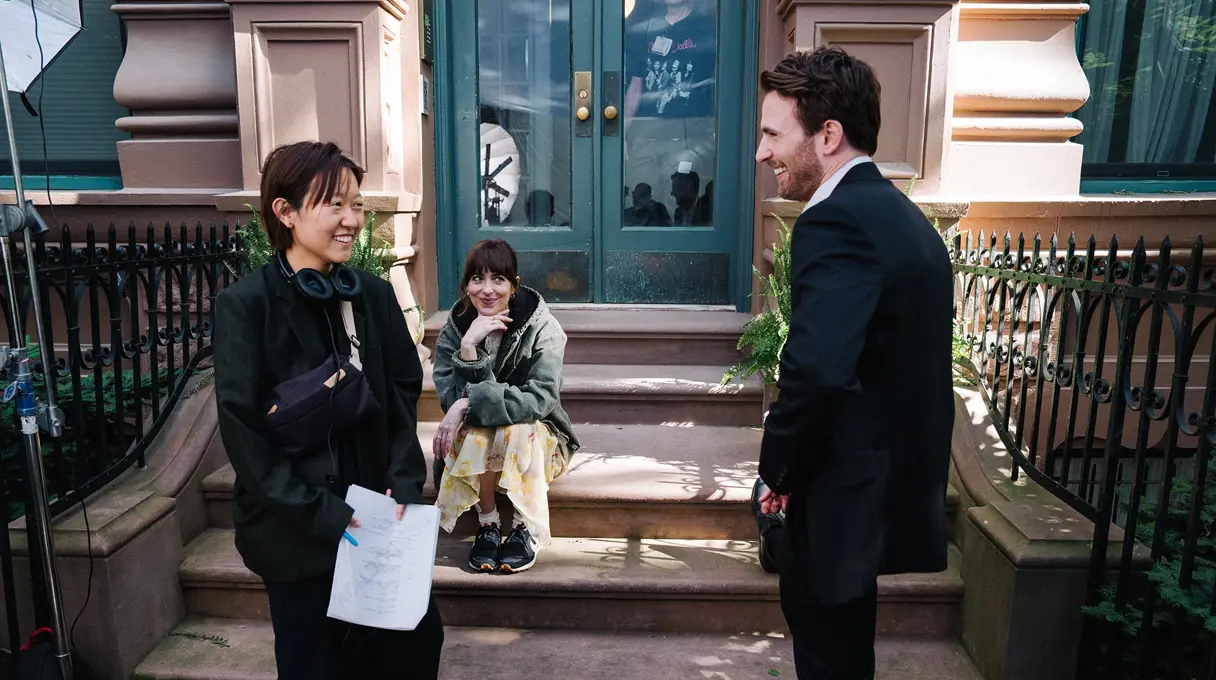

Academy Award-nominated writer-director Celine Song tells Hannah Strong how her brief stint as a matchmaker inspired her thought-provoking new romance Materialists.
Celine Song knows a lot about love. In 2023, her debut feature Past Lives won hearts around the world with its tender blend of romance and yearning, as well as netting Song an Oscar nomination for Best Original Screenplay. It was after she finished production on Past Lives – while waiting to find out if the film would be accepted into the Sundance Film Festival – that Song sat down to work on a new script, inspired by the time she spent working as a matchmaker when she first moved to New York City.

WATCH MATERIALISTS IN CINEMAS
Book Tickets‘I was a playwright, and you can’t really make a living being a playwright in New York,’ Song explains from her Manhattan office, with a view over the city’s breathtaking skyline. ‘I needed a day job, but kept getting rejected from all these retail and barista jobs. Then a friend who was working as a matchmaker helped me get an interview, and I ended up working there.’ Song ultimately didn’t spend much time as a matchmaker. ‘I was only there for about six months,’ she says. ‘But I always knew I wanted to write something about it, because in those six months, I learned more about people and what’s in their hearts than I did in any other period of my life. Because the truth is people are very, very honest with their matchmaker.’
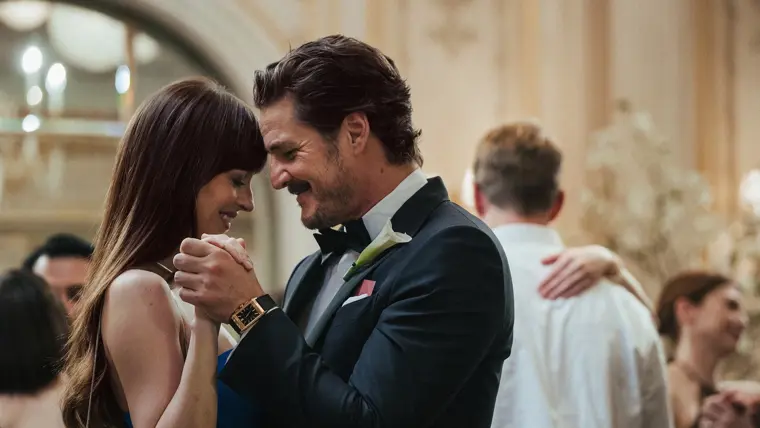
We get a sense of this in Materialists, where Dakota Johnson plays Lucy, a high-flying matchmaker at an elite firm, helping New York’s most affluent bachelors and bachelorettes find love (or something close to it). She’s a little like a therapist for her clients, who share their most intimate desires with her, but as Song points out, ‘You wouldn’t say to your therapist that you don’t want to date somebody who’s shorter than six feet. You wouldn’t tell your therapist that you want a certain race and certain weight and certain height, you know what I mean?’ This reduction of people to their most desirable traits and assets is at the heart of Materialists. ‘Really, it’s about the commodifications of the self,’ Song says. ‘You’re commodifying yourself because the whole world is commodifying you, so you start thinking, “Well, maybe I am an object, maybe I am a commodity,” and you start internalising that.’

Song’s script was inspired by classic romantic comedies – but not the cinematic kind. ‘I was thinking a lot about Victorian romances, which were written for women, by women, and if you think about what they are, it’s quite unprecedented,’ Song explains. ‘Half of those books are about property and what people are worth. I think economic reality has always been such a huge part of romance – to me, Materialists is part of that tradition, but of course it is very much set today, where all of us exist within the credit market.’ Song believes that part of the reason stories like Pride and Prejudice still resonate all these years later is because they tap into our present anxieties about living and loving under capitalism. ‘What an amazing fantasy Pride and Prejudice is,’ she notes, ‘because in that story, the love of your life is also the answer to all your practical problems. The way to get rid of all your financial worries is also the person that you want to be with.’
Of course, Song had to find her very own Elizabeth Bennet, who came in the form of Dakota Johnson. ‘I knew that Dakota was the right person for Lucy when I met her, because she is somebody who understands the world,’ Song says. ‘And Lucy, she understands the value of everybody who walks the streets, she knows when she walks into a room what everybody is worth on the dating market.’

In Materialists, Lucy finds herself torn between two men: the suave, extremely wealthy Harry (Pedro Pascal), who sweeps her off her feet, and her ex-boyfriend John (Chris Evans), a struggling actor still living with roommates and a little bit of a chip on his shoulder. The rivals cross paths early, when John is part of the catering team at the wedding where Lucy and Harry meet. ‘That was the first scene I wrote,’ Song says. ‘It really cracked open the whole film for me, because I realised this was something that I experienced as well, where you end up at these fancy parties, but because I come from theatre and most of my friends are theatre actors who are just trying to chase their dream in New York City, sometimes they’d be at these parties too, working on the catering.’ Song felt split between two worlds. ‘I’d see my clients and what they were asking for – which is a certain value when it comes to money, height, things like that – then go home and I would only be hanging out with my struggling actor friends, who I knew would be of no worth to my clients. They’d have the looks, the height, but absolutely no money. There was this tension that existed between the two worlds, and it meant they’d never meet.’

For Song, this gap between what we look for in a partner versus what love really is was the crux of the Materialists script. ‘What always interests me is the mystery of love,’ Song says. ‘Love is the most mysterious thing in the world, and I know this because you can talk to the smartest, most incredible, most brilliant people on Earth, and if you ask them about their love life, it’s all going to fall apart. Lucy shows up in the film as somebody who is very smart about dating, but then we learn that she’s also stupid when it comes to love. Because all those things that you say you want in a partner – height, money, whatever – those can all disappear. What you need is a forever love. And love… well, it’s like Lucy says in Materialists,’ Song explains, smiling. ‘“Love just walks through the door.”’
This article originally appeared in the Curzon Summer Journal. Pick up your limited-edition copy of the magazine in your local Curzon for free while stocks last.
WATCH MATERIALISTS IN CINEMAS
RELATED ARTICLES

American Indie
How the Past Lives Composers Captured The Passage of Time Through Music
Article
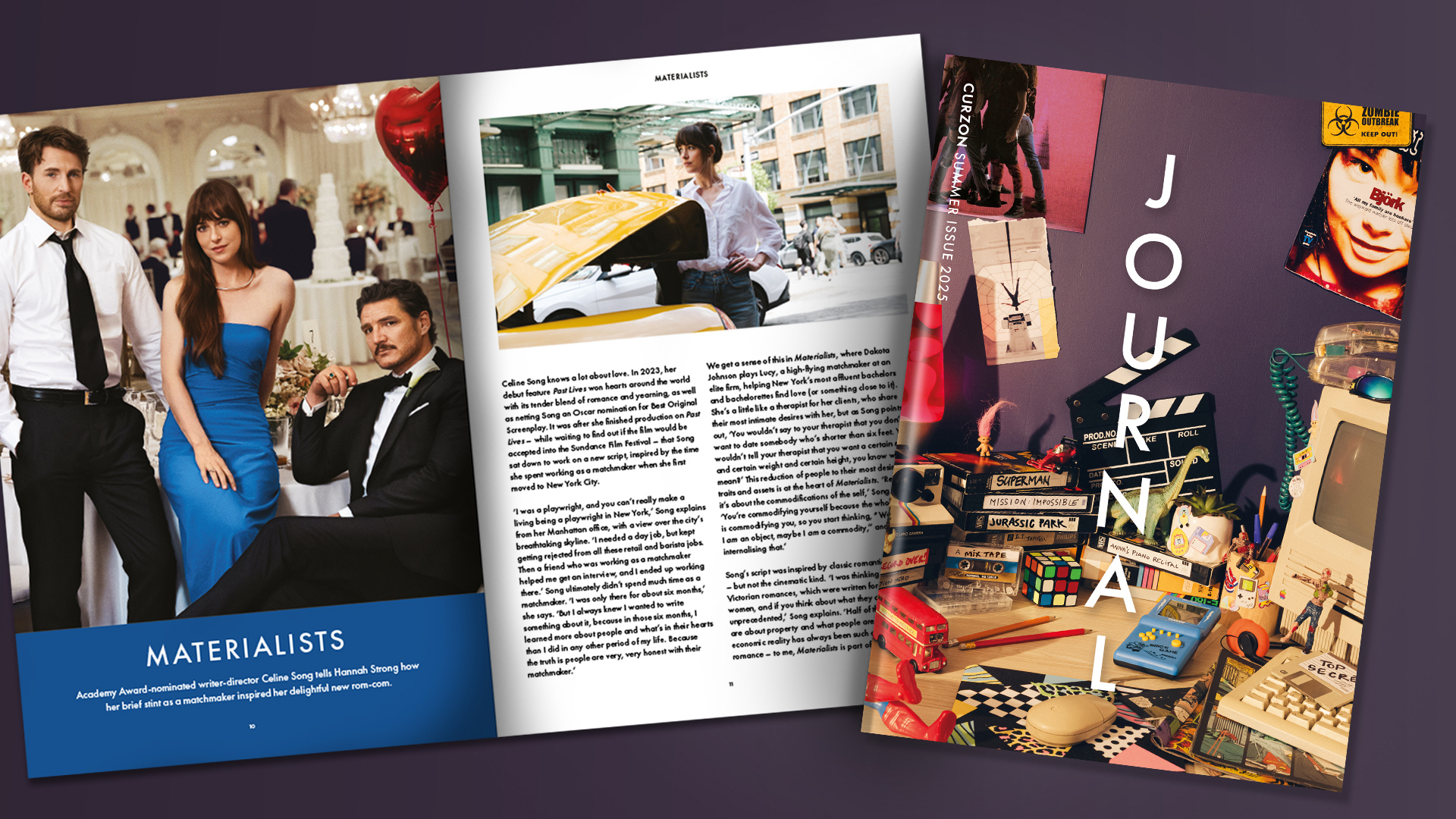
The 2025 Summer Journal is Out Now
The Summer Journal is now available (for free!) in all Curzon cinemas. Check out Yasmin Omar's editor's letter, and pick up your copy when you next visit us.

List
The Best Romantic Films Ever Made
To celebrate the sheer diversity of this ever popular genre, we’ve compiled a list of the very best romantic films to ever grace our screens.