
Jay Kelly Review: George Clooney Contemplates His Own Stardom

A loosely metatextual portrait of its A-list actor, Noah Baumbach’s wistful, bittersweet character study explores the personal cost of fame and the artifice inherent in being a silver-screen icon. By Yasmin Omar
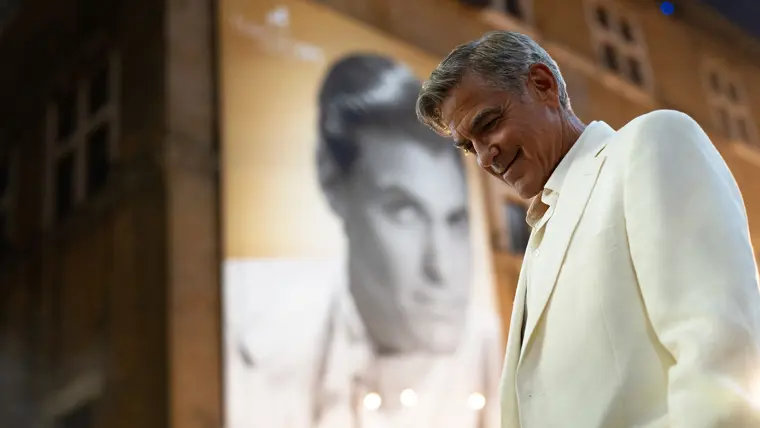
Dressed in a gleaming white suit on a balmy summer evening, the movie star Jay Kelly (George Clooney) enters a cobblestoned courtyard. He’s being honoured with a career-tribute award at a Tuscan arts festival – the kind of ossifying lifetime-achievement prize he’s historically rejected – and all around him are merry Italians drinking and dancing. But Jay is irritable.
Looming above him and the revellers is a blown-up headshot of his from some 40 years ago, where his hair is dark and his face unlined. ‘Fuck me,’ he grumbles when he spots it, recognising that he is – once again – being quite literally overshadowed by his past. Jay Kelly is painfully aware that, to most people, he isn’t a flesh-and-blood person anymore. To those who know him, he’s an ego to be soothed, a problem to be solved, a crisis to be managed. To those who don’t, he’s a compendium of his former glories. Even his put-upon manager Ron (Adam Sandler) addresses the photograph, rather than the man, when conversing with him moments later. ‘I’m down here!’ Jay yells, exasperated. He just wants to be seen.
The isolation of fame and the mutability of identity are core tenets of Noah Baumbach’s ruminative, pleasingly melancholy character study. Jay Kelly is a butterfly in a bell jar: admired, but trapped (notice how many shots there are of Clooney, alone, staring longingly at strangers through plate-glass windows). Forcefully separated from humanity at large, he contemplates who he is and how he came to be through a dreamy, Felliniesque journey.
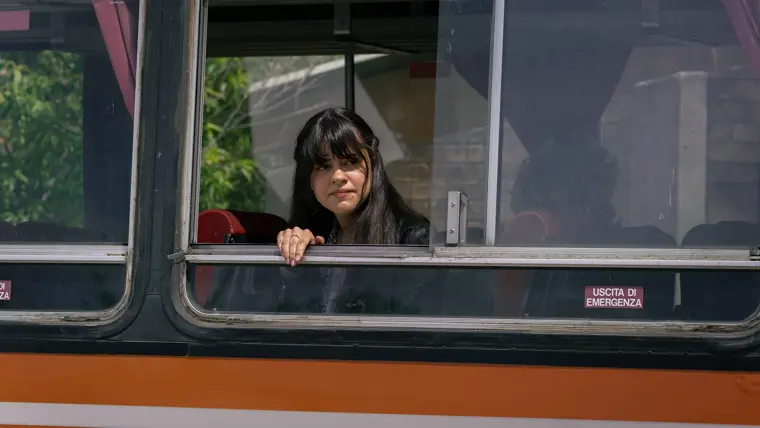
It all starts when his youngest daughter Daisy (Grace Edwards) refuses to let her father crash her post-graduation interrailing trip through Europe, which happens to fall during his two-week break between film projects. He ignores her and finds a way to tag along anyway – nobody says ‘no’ to Jay Kelly – showing up on her cross-country train from Paris with his entire entourage, much to her annoyance.
Jay Kelly is, from many angles, a simulacrum of George Clooney himself. Both actor and character are Kentucky-born upper-echelon A-listers who’ve spent most of their lifetime in the public eye. Nowadays each is something of a relic, part of a vanishing class of Nineties movie stars whose box-office cachet isn’t what it used to be (last year, Clooney’s Apple TV+ flop Wolfs had its theatrical release and planned sequel abruptly cancelled).
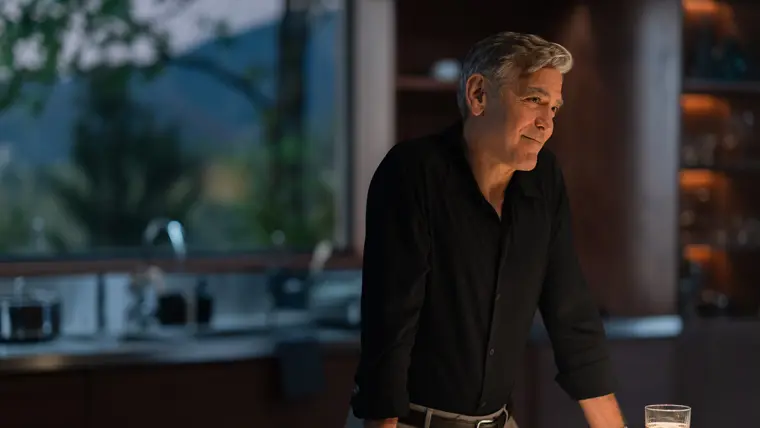
It’s commendable that the performer lent elements of his biography to the film – there’s a point when Clooney-as-Jay flat-out says, ‘It’s like a movie where I’m playing myself’ – since it allows him to grapple with deeply personal issues while remaining behind the self-protective curtain of inhabiting someone else. The result is Clooney’s most vulnerable performance in years, a soul-searching investigation into his somewhat diminished place in the world. He constructs a walk-in closet full of personalities – the affable boss, the long-lost friend, the caring father, the humble autograph-signer – that he puts on or casts off depending on who Jay’s interacting with. Clooney’s familiar smile, too, is constantly changing, with a snarling grimace lurking beneath his warm grin at times of peak agitation.
Artifice, Jay Kelly posits, is an unavoidable truth of maintaining a movie-star persona. And yet the film is fascinated by what is real – indeed, the word keeps recurring in Baumbach and Emily Mortimer’s script, whose protagonist has been pretending for so long he’s lost sight of its meaning. In a bid to visualise this theme, there’s a surreality to Mark Tildesley’s production design. The sets, including those that narratively aren’t supposed to, look like sets.
That’s not to say they appear cheap, rather that they don’t quite approximate the real thing. The French train carriage, for example, is bright and roomy and spotless, and all its passengers form a cheerful, transeuropean travelling community of sorts. This makes sense when it’s mentioned that Jay hasn’t been on a train for three decades. He’s projected this quaint backdrop as just another stage for him to perform his charm offensive, making a show of himself and throwing out questions to the crowd. But he doesn’t wait for their answers and never sits among them (despite having a ticket for seat 48). Lonely as he is, Jay values perception over connection.
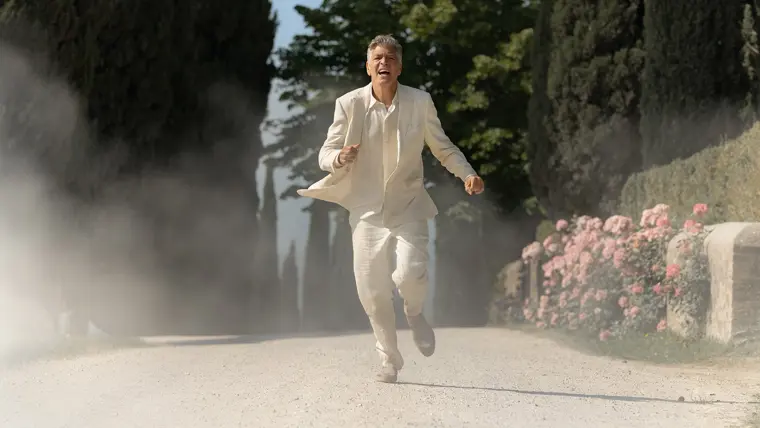
This moment is one of many in Jay Kelly that feels, very self-consciously, like a movie scene. Over the course of the film, we get a break-up in a busy restaurant; a lovers’ goodbye at a station; a man apprehending a thief who stole an old lady’s handbag; and not one, but two sequences of Clooney running after a departing, dust-clouding car. Repurposing such well-worn tropes further collapses the divide between the real and the imagined, destabilising an already unsteady Jay.
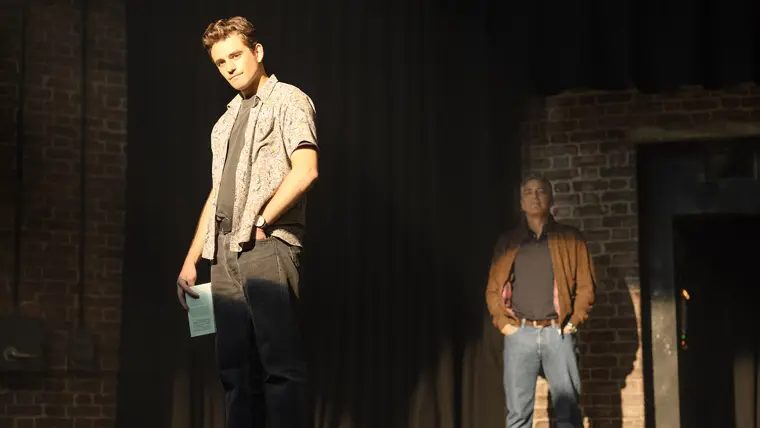
Baumbach also pushes the idea to a lightly fantastical plane through memory vignettes, where our protagonist steps through doors into decisive incidents from his past: his big-break audition, an on-set affair etc. It’s a compelling alternative to the more expected flashback because, loitering in the shadows, is present-day Jay observing his younger self in a Stella Adler ‘acting is reacting’ way. Watching Clooney’s expression relax, and harden, reveals so much about how his character came to be an intimacy-shunning workaholic – and his current regret over it.
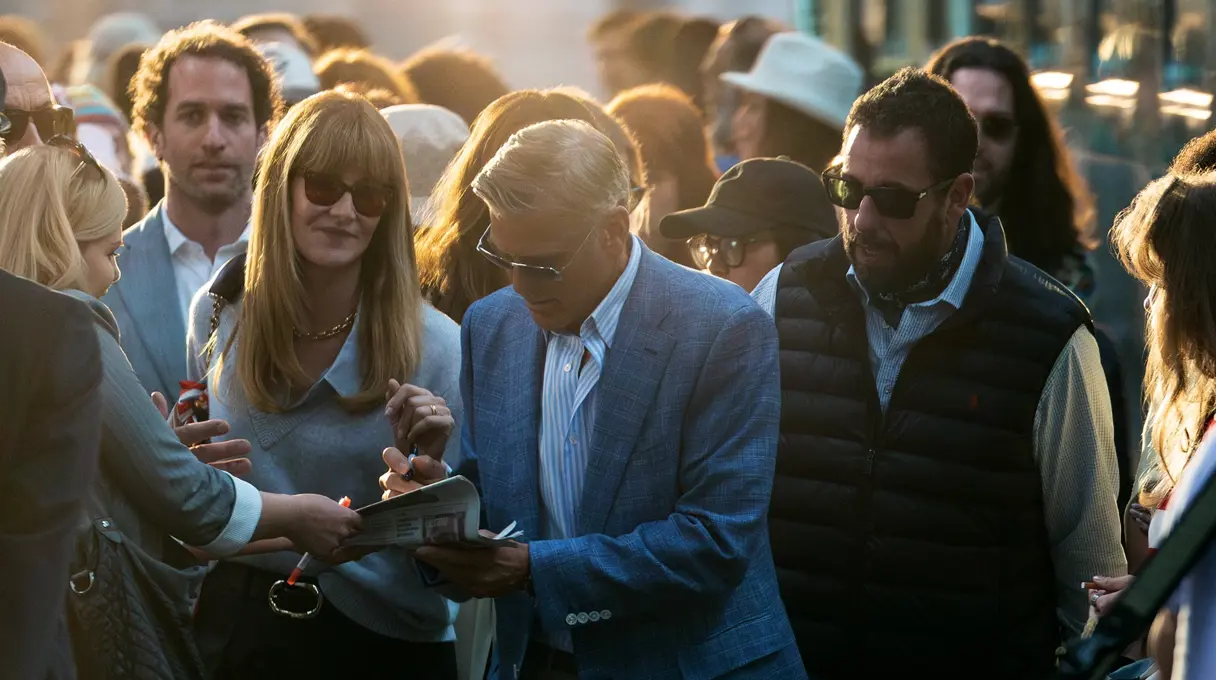
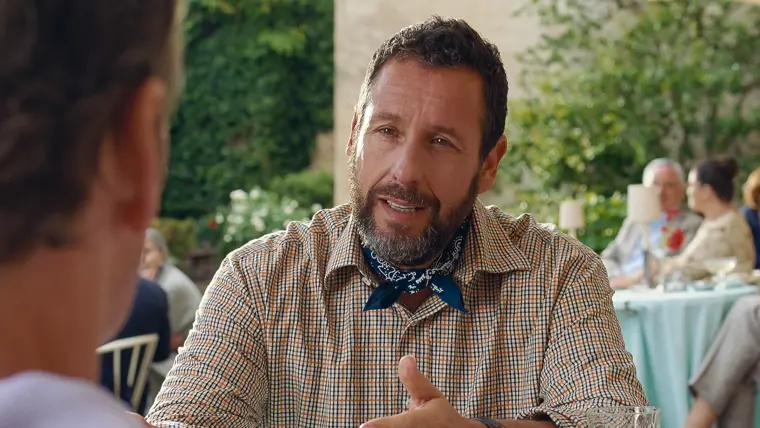
Baumbach’s dramedy is an edifice to its lead performer, but Adam Sandler forms its emotional foundations. He portrays Jay’s right-hand man Ron with a stream-of-consciousness neuroticism and uncomplaining self-abnegation. Jay’s needs always come first. Jay calls during Ron’s father-daughter tennis tournament? He’ll leave the game unfinished and rush to his mansion. Jay books a last-minute trip to Europe? He’ll drop everything to accompany him.
He’s a foil to Laura Dern’s hard-nosed publicist Liz – reminiscent of her take-no-prisoners Marriage Story (2019) divorce lawyer – whose contempt for her needy client is open. ‘You love him,’ she tells Ron, sharply. ‘I work for him [...] He’s not our family or our friend. We’re not to him what he is to us.’ Sandler plays up Ron’s puppy-dog devotion to his master, wearing a gifted neckerchief like it’s proof of their strong relationship – when in reality he just happened to be there when Jay was offering it.
Ron exhibits a heart-on-sleeve optimism that Jay Kelly, surprisingly, shares. With its take-home message that family and friendship are more worthwhile than a successful career, it’s softer than your typically spiky Baumbach movie (though there is still a devastating letter written as part of a therapy exercise). Jay Kelly’s soaring, cinematic ending tugs at your heartstrings until they snap clean in two. His priorities may have been backwards, but Jay Kelly was right about one thing: ‘The best way to make an audience cry is not to cry.’
WATCH JAY KELLY IN CINEMAS
RELATED ARTICLES
Interview
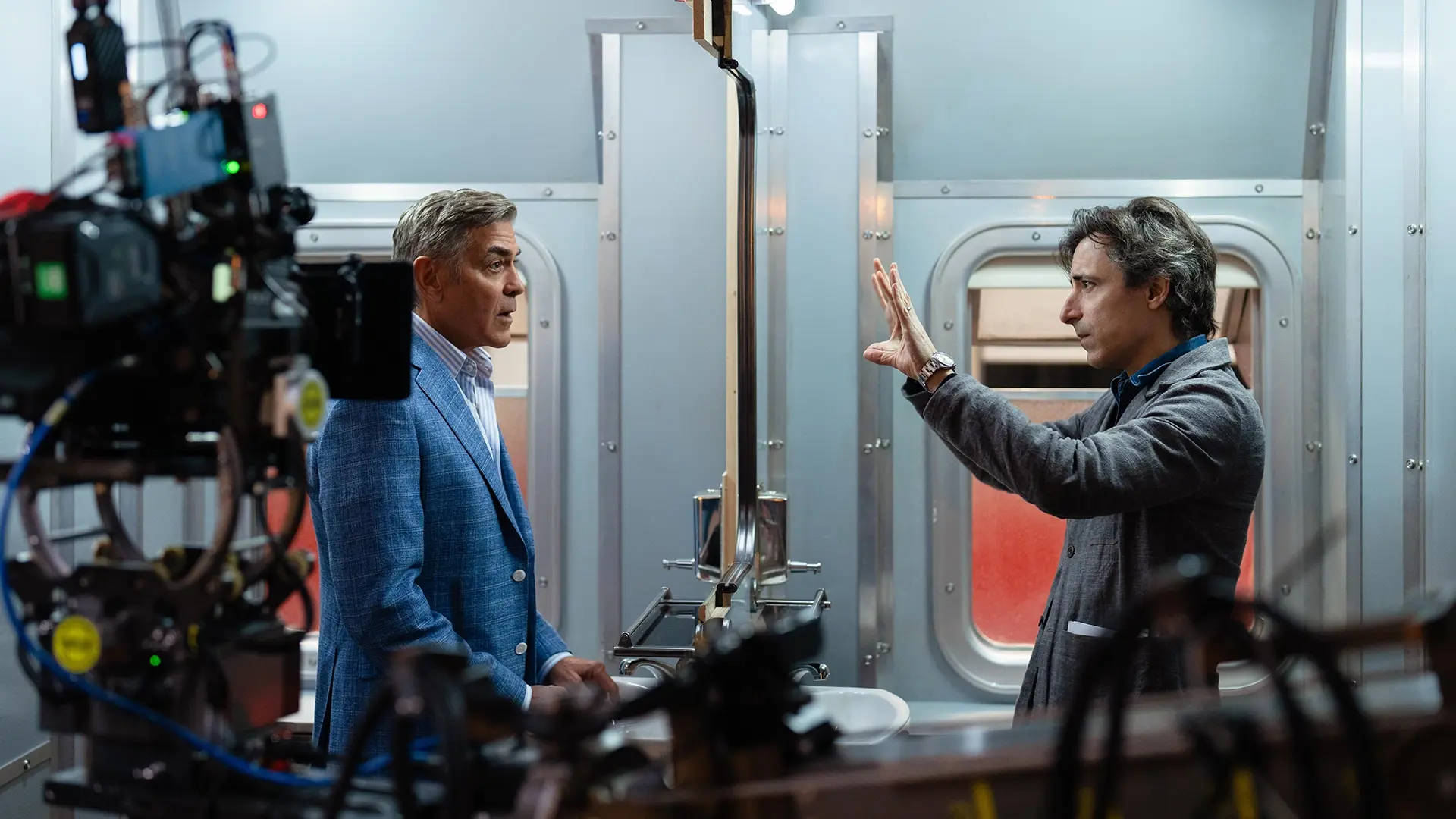
Noah Baumbach Finds His Soft Side with Jay Kelly
The Oscar-nominated writer-director talks to Yasmin Omar about identity crises, the death of the movie star and the true meaning of failure.
Review
One Battle After Another Review: A Bold, Electrifying Political Thriller
Leonardo DiCaprio leads Paul Thomas Anderson’s dynamic state-of-the-nation epic, where grenade-tossing, car-flipping action is counterbalanced by dark, satirical humour, writes Yasmin Omar.
Review
The Mastermind Review: Kelly Reichardt Deconstructs the Heist Movie
Rejecting genre convention, the would-be thriller rushes through the theft, then lingers on its consequences. It’s a satisfying, character-driven choice, writes Yasmin Omar.