
Noah Baumbach Finds His Soft Side with Jay Kelly


The Oscar-nominated writer-director talks to Yasmin Omar about identity crises, the death of the movie star and the true meaning of failure.
Narcissistic artists are the lifeblood of Noah Baumbach’s wry, witty cinema, which has no qualms about flaying its protagonists to expose their peppery personalities and deep-set insecurities. There are the divorcing novelists at opposite ends of their careers in The Squid and the Whale (2005); the resentful carpenter who blew his chance to be a musician in Greenberg (2010); the combative sculptor belittling his adult sons in The Meyerowitz Stories (2017).
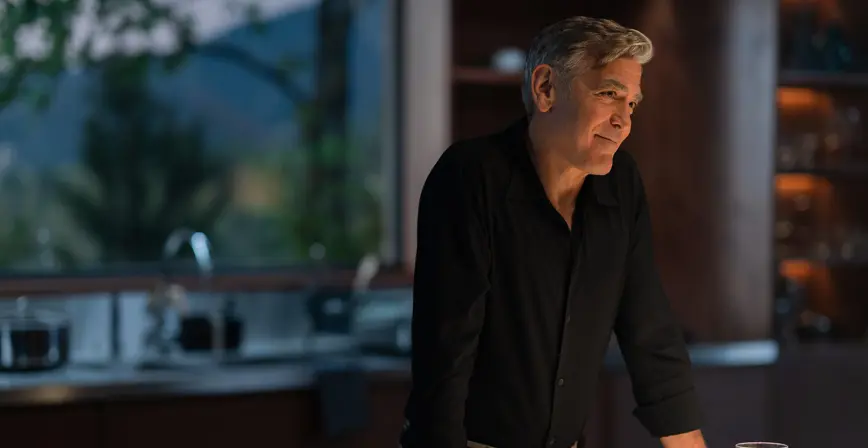
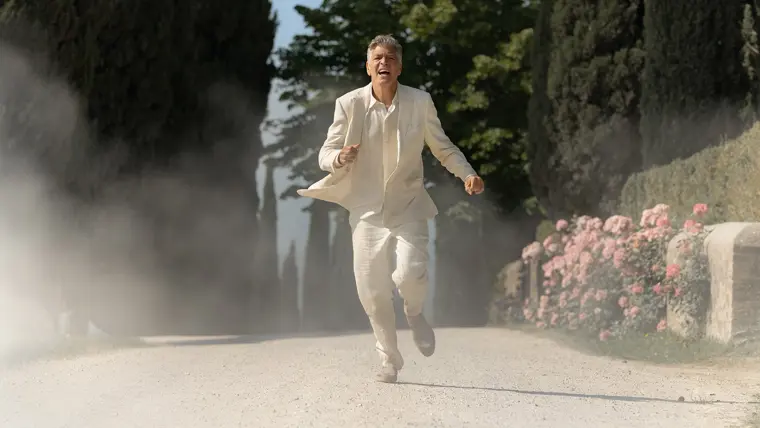
And now, there’s Jay Kelly, the bereft movie star (played by George Clooney) who begins questioning his life choices, and goes on a literal and metaphorical journey of self-discovery across Europe, in the writer-director’s contemplative character study. Why does Baumbach keep depicting creative people in his films? ‘I suppose the lazy response is that it’s a world I know, and can immediately get inside, because I had parents who were writers,’ he explains. ‘I often start a script about a stockbroker or something, then I end up changing it and making them a writer. With this one, an actor became a way to explore identity.’
READ OUR JAY KELLY REVIEW
Click HereJay’s identity is in flux when we meet him. Though he’s reached the summit of the entertainment industry, his cultural capital is waning and his daughters want nothing to do with him, leading him to wonder whether his singular, decades-long dedication to making movies was really the best use of his time. ‘Jay is a work in progress,’ Baumbach says. ‘In the past, I’ve often explored this idea through people who define themselves by their own failure, or sense of failure. I never liked when people would call a character of mine “a failed novelist” or something like that. I mean, he feels like a failure, but that doesn’t mean we call him one.’
For all his current acclaim, transitioning from microbudget mumblecore movies to glossy studio fare, Baumbach is intimately familiar with failure. The 26-year-old who made his debut with the lauded slacker comedy Kicking and Screaming (1995) was disappointed to discover that success isn’t always linear. His follow-up, 1997’s Mr Jealousy, didn’t connect, and it took another eight years for him to be welcomed back into the film business. Baumbach clearly relates to Jay Kelly’s struggles to disentangle his purpose from his job.
Despite the character’s material and professional spoils, he’s positioned as something of an everyman in the movie. ‘An actor essentially represents a crisis that the audience will all go through. What am I being denied by defining myself in a certain way? Am I doing this because it’s comfortable or because I actually want to? These things are major.’
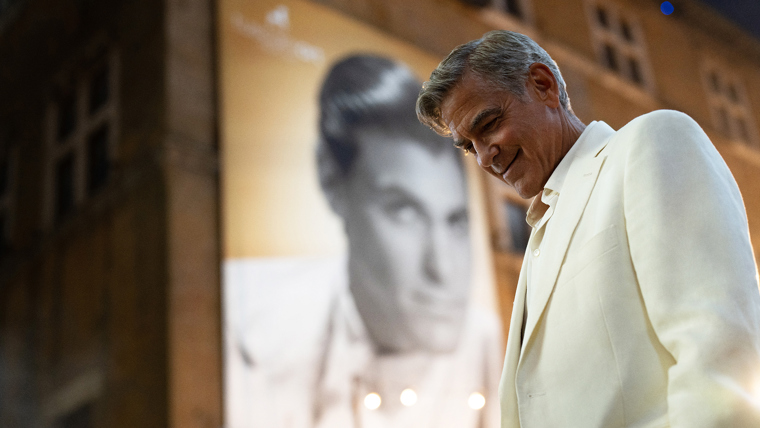
But identity is not static and unchanging. In fact, it’s up for grabs in the filmmaker’s work, where artists frequently pilfer from other people to further their own ambitions. Consider the young woman who mines her friend’s anecdotes for short-story subject matter in Mistress America (2015) or the up-and-coming documentarian cosying up to a veteran to access his contacts in While We’re Young (2014).
Jay Kelly, too, is accused of such underhandedness, since he landed his breakout role at the expense of a classmate, who later seethes, ‘You stole my life!’ Baumbach, who has been known to fold his partner Greta Gerwig’s verbatim observations into his screenplays, is fascinated by this appropriation. ‘I am interested in that conflict of who gets ownership over a story,’ he says. ‘I’m not for [taking] it if it’s mean-spirited, but sometimes you can disguise and transform things. In that case, I think it’s fair game.’
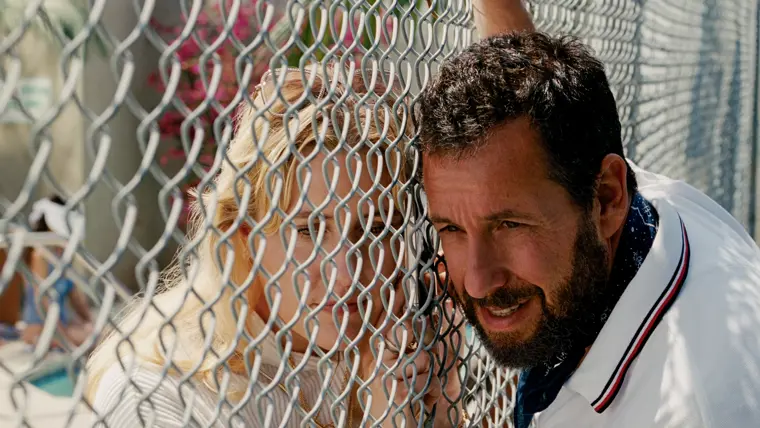
Despite mostly placing his creatively inclined characters in bourgeois, bohemian milieux, Jay Kelly marks the first time Baumbach has ‘made a movie about movie people [that] embraced aspects of my actual job’. From this situation, ‘a shadow theme’ arose: where are movie stars in our culture right now? The film’s script, co-written by Baumbach and Emily Mortimer, prods at the decline of these once dominant figures with withering dialogue.
At one point, a handler of Jay’s tentatively remarks, ‘His box office isn’t what it was. He’s not 25 any more.’ To which his embittered publicist responds, ‘He’s not 55 any more.’ ‘I think the movie is about endings and, in a sense, about mortality,’ the filmmaker says. Indeed, it’s no coincidence that Jay finds himself in a graveyard as soon as he steps off a Tuscany-bound train. Be that as it may, Baumbach ‘felt like the movie should be a pleasure with an undertow. This sense of melancholy is seeping in while you’re enjoying the journey’.
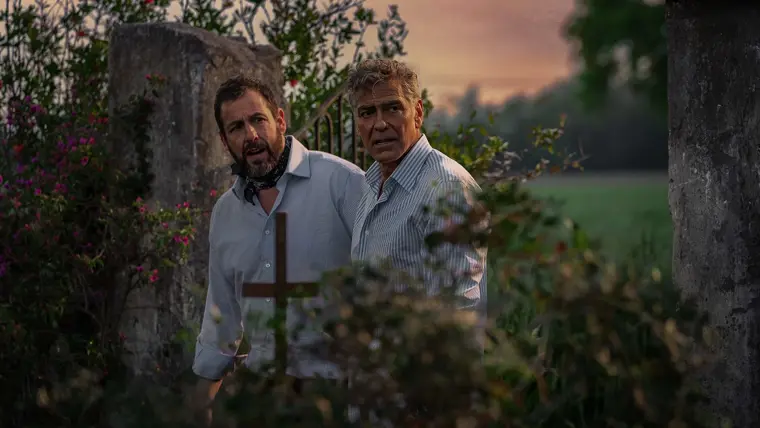
That may sound rather moribund, but Jay Kelly’s tone is notably sunnier than the acerbic nihilism of some of the filmmaker’s earlier efforts (‘Life is wasted on people’ being a genuine quip from Ben Stiller’s permanently dissatisfied Greenberg). The sharp humour has been sanded down to offer a softer, more forgiving vision of humanity.
Take the vibrant memory sequences – wherein present-tense Jay observes his past self by walking from a private-jet cabin into his acting-school classroom, a train carriage onto a movie set – that allow him to reckon with former misdeeds. Baumbach preferred these timeline-collapsing vignettes over conventional flashbacks. ‘A movie gives you a flashback, here the character is giving us the memory,’ he explains. ‘We wanted to visualise that in a way that felt compelling. It was always just on the other side of a door. We built sets right onto each other, so we could run an entire scene in the present then follow George [Clooney] into the next one. It was fun to shoot.’
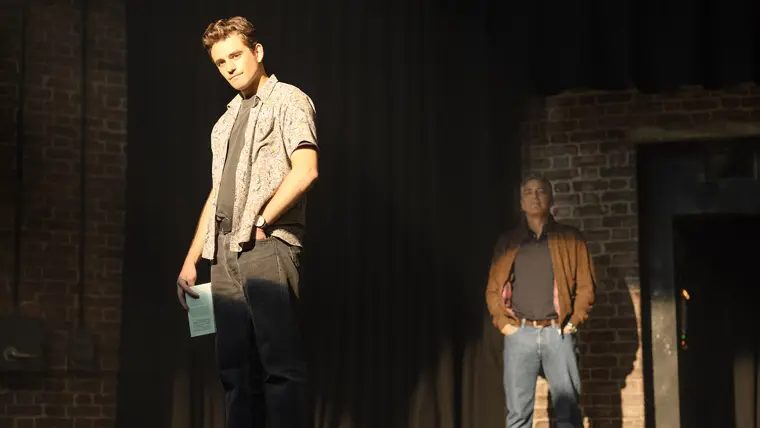
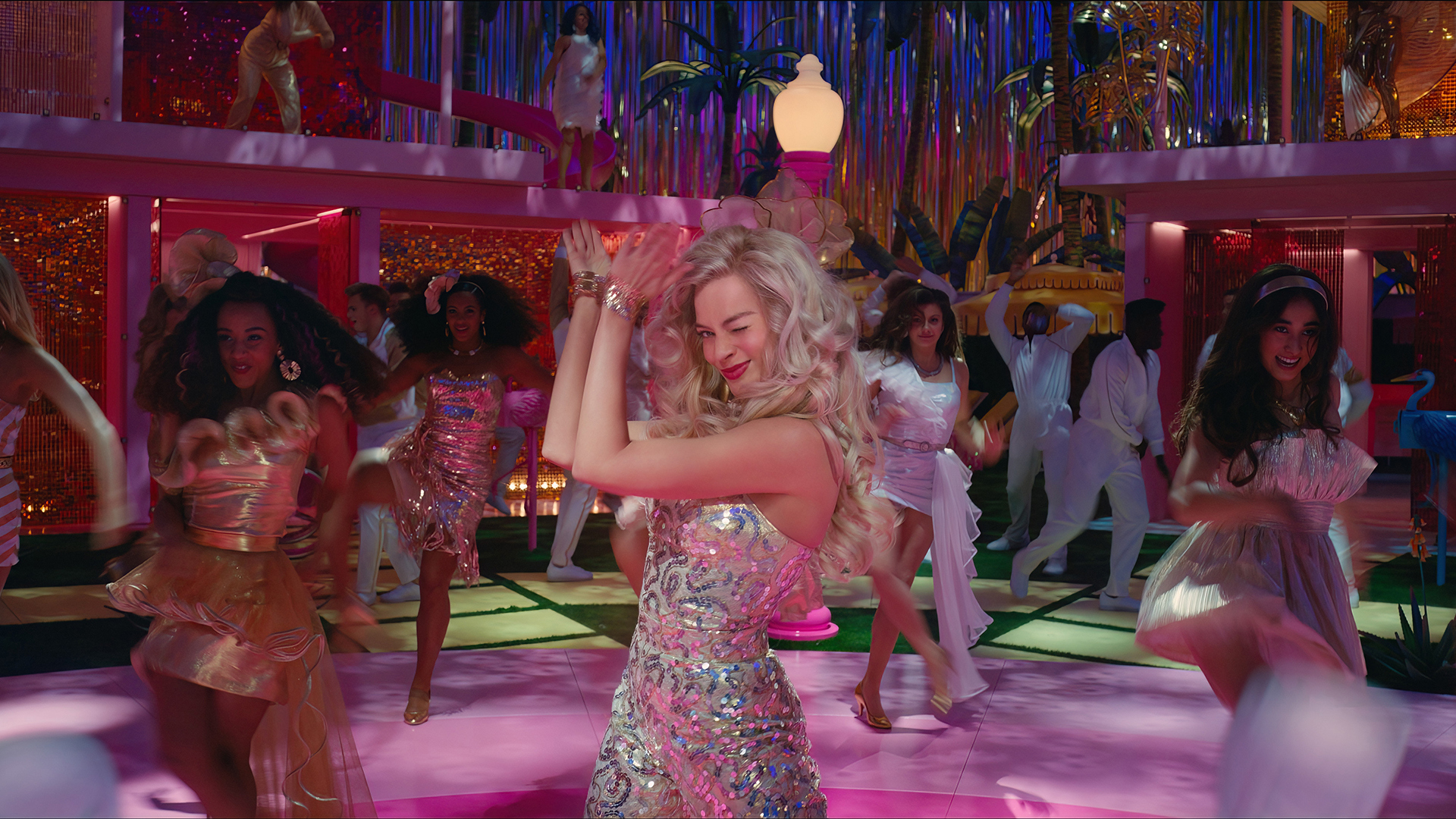
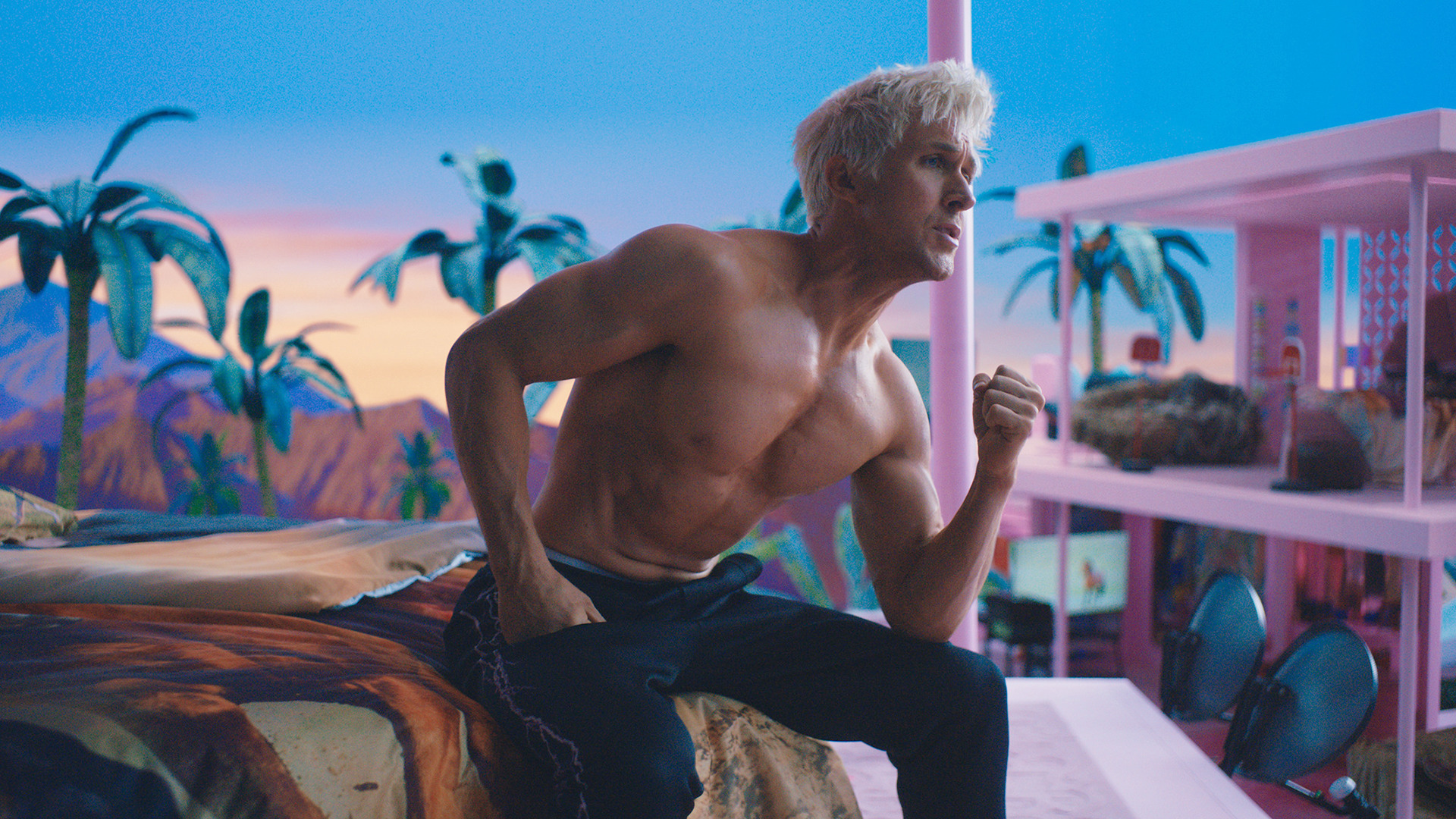
Soundstages, where Jay Kelly was partially filmed, are relatively new terrain for Baumbach. He hadn’t spent much time on them until the hot-pink playground of Barbieland (which he shaped on the page as Gerwig’s co-writer). They’re certainly a far cry from the New York indie-film landscape where he came up in the 2010s, a time when his actors would costume-change in vans on the street and he’d file obscurely titled permit paperwork to keep projects under wraps.
Jay Kelly is undoubtedly the director’s most Hollywood film to date. It makes a narrative asset of its scale, leaning into silver-screen artifice – by repurposing and subverting common tropes – as a means of developing its A-list protagonist, for whom life and cinema are inexorably intertwined. ‘It felt inherently part of Jay Kelly’s film language to bring in elements of movies then land them in some kind of reality,’ says Baumbach. ‘Even being on a train is such a movie place – you want to live inside it. I like that feeling in movies.’
Movies have been the director’s primary medium since his thwarted attempt to televise Jonathan Franzen’s expansive, perspective-shifting novel The Corrections for HBO in 2012 (a project that was shelved due to spiralling costs). And yet, he will soon try his hand at serialised storytelling once more with a TV adaptation of Andrew Ridker’s 2023 book Hope, a family saga about an esteemed Massachusetts doctor whose life falls apart when he’s stripped of his medical licence after falsifying blood samples. He’s made to ask himself who he is if not practising medicine. What could be more Baumbachian than that?
WATCH JAY KELLY IN CINEMAS
RELATED ARTICLES
Review
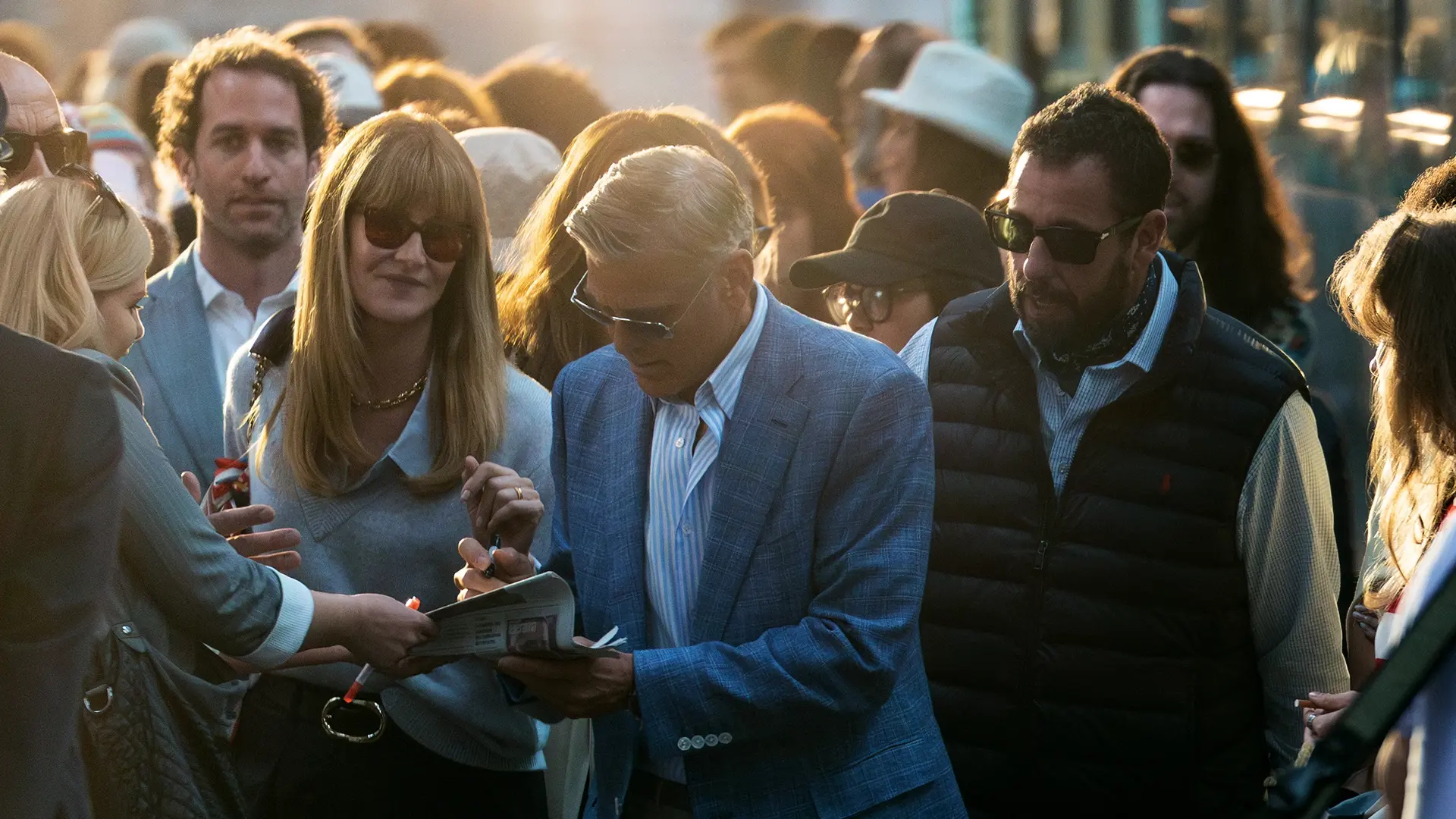
Jay Kelly Review: George Clooney Contemplates His Own Stardom
A lightly metatextual portrait of its A-list actor, Noah Baumbach’s wistful, bittersweet character study explores the personal cost of fame and the artifice inherent in being a silver-screen icon. By Yasmin Omar
Review
Barbie Review: A Smart, Knowing Comedy That Glitter Bombs Gender Constructs
Interview