
Lucy Halliday: The ‘Girlfriend’ Character Shouldn’t be a Bystander


Arriving in an era where ‘imposter syndrome’ is in the popular lexicon, California Schemin’ compellingly tells a true story of people tackling self-doubt when given big stages to show what they can do. There’s a crucial twist, though: the hip-hop duo Silibil N’ Brains undoubtedly had enough requisite talent to get their foot in the door back in 2003, but they completely fabricated their backstory and personas. That’s one thing if you’re a rapper suggesting you’re tougher than you really are, but another altogether if you’re working-class Scottish lads pretending to be both Californian and childhood friends with some of the genre’s biggest names.
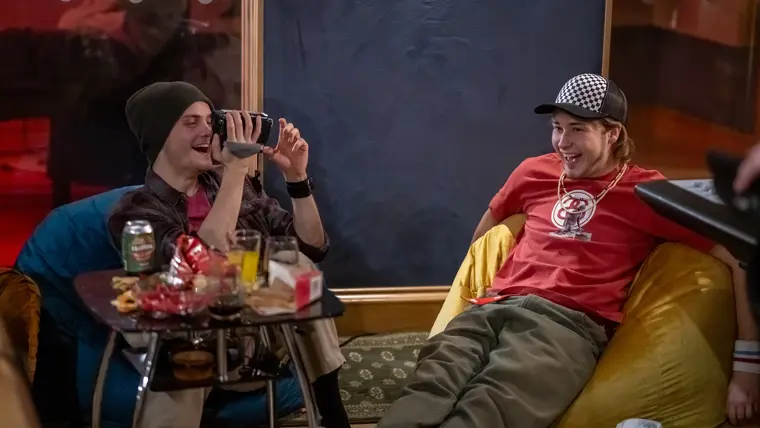
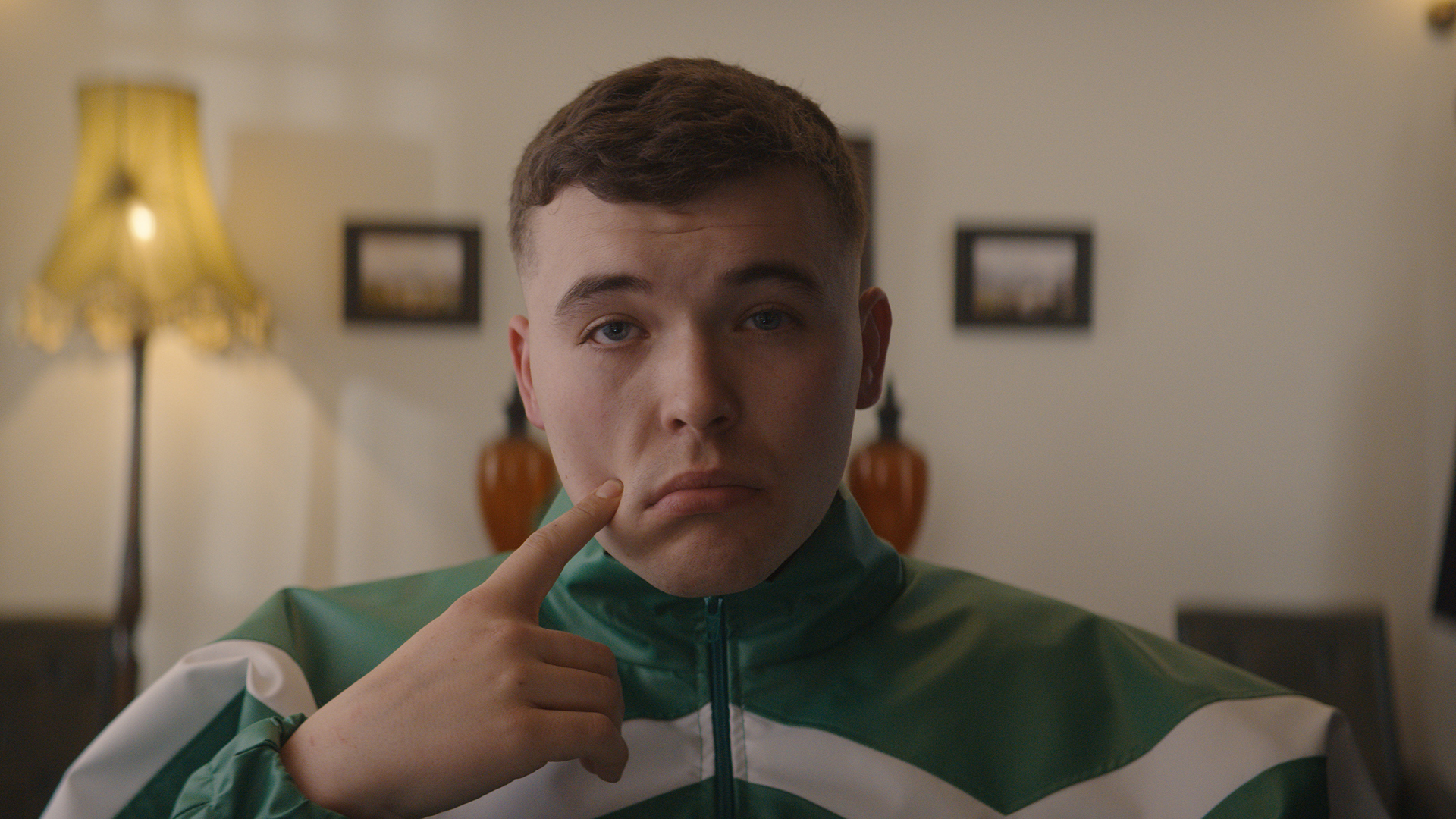
A funny, moving crowdpleaser from debuting director James McAvoy (who also co-stars), California Schemin’ features Séamus McLean Ross and Samuel Bottomley as Gavin Bain and Billy Boyd, the Dundee boys who don’t get taken seriously by scouts and executives when speaking and rapping with their natural voices, but do when they adopt (barely passable) American accents. Joining them on their crazy journey is Mary, Billy’s longtime girlfriend, who supports the duo’s initial plan to reveal their real selves once they’re on a big enough TV platform as a means of exposing the shallow classism of the record industry. But the allure of fame, money and supposed respect clouds their judgement about telling the truth.
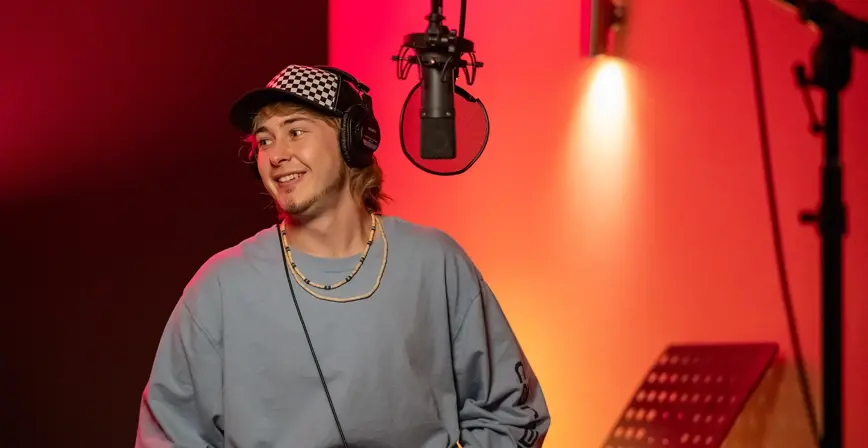
One of the movie’s highlights, Mary is played with great depth and nuance by rising star Lucy Halliday, a BIFA nominee and BAFTA Scotland winner for her debut screen role in Blue Jean (2022). She’s also currently starring in The Testaments – the sequel series to The Handmaid’s Tale – alongside Chase Infiniti and Ann Dowd.
JOSH SLATER-WILLIAMS: Was it a considerably different experience being directed by someone who’s also an actor?
LUCY HALLIDAY: It definitely was. James [McAvoy] is thinking in the mindset of an actor a lot of the time. He very much put himself in the performer’s shoes, and worked in ways I’ve never seen from a director before. He’s keen on monologuing notes to you mid-scene, allowing you to have space to bring yourself to the role, or to just improv when he saw fit. There’s a really lovely level of understanding that I think only [fellow] performers have.

JSW: How do you tend to approach preparing for roles?
LH: Doing as much research as I can, knowing what my character would know at that point in time and allowing myself to have the information easily accessible. If it’s based on a book, you read it. If it’s based on real people, if possible, you meet with them, read every article, watch the documentaries. I took that approach for both Blue Jean and California Schemin’, and even The Testaments, which isn’t a biopic but has source material.
On [California Schemin’], I was able to meet with Mary. She gave me her version of events, which was great to have [because it] differed drastically from the boys’ account. They’re all at the same party but they’re having very different reactions, seeing very different things. Mary’s seeing the illusion the boys are under and realising that this isn’t as glitzy and glamorous as they think, and actually, they’re losing a sense of who they are. Whereas, with the boys, that’s not their conviction in the moment. Mary’s such a self-assured, strong individual in reality that it was very easy to want to do her justice and portray that on screen. James and Mary gave me the space to take artistic licence and create the on-screen character as I saw fit.
WATCH CALIFORNIA SCHEMIN' IN CINEMAS
Book TicketsJSW: California Schemin’ is a case where the potentially sidelined ‘girlfriend’ character in a biopic legitimately is the genuine heart of the movie and a fully three-dimensional person in her own right.
LH: So often, the ‘girlfriend’ character is just a device for other characters to further their own stories. The ‘girlfriend’ character doesn’t really have much to say, and is rarely ever perceived as a whole person with feelings or emotions. But the ‘girlfriend’ in every [true] story is a real person. So often, they’re seen as a bystander or a shadow, when they were there too; they experienced it too. What I loved about [California Schemin’] was that that wasn’t the case. Mary is a fully fleshed part, which has been lovely and different from a lot of scripts I’ve read.

JSW: Speaking of scripts, what kinds of other offers have you received after your BAFTA Scotland award win and BIFA nomination?
LH: I’ve now done another film post-Testaments, which is a British indie called 7 Miles Out by Carol Morley, based on a book she wrote. I’ve been very fortunate to have such an interesting breadth of projects come my way. It’s definitely something I’ve not taken for granted. I am very appreciative of the fact that I’ve got to go from a British indie film to a Disney TV show back to another British indie. That’s a balance I hope I can continue.
JSW: Do you see California Schemin’ as more of a cautionary tale about trying to live a lie, or a celebration of undeterred ambition?
LH: It definitely touches on both, but I don’t think it’s inherently either. If anything, it’s hopefully going to show that we should be able to have value in who we are – without worrying that we need to assimilate into a certain environment or ideal for people to perceive our value, talent or abilities.
What I hope audiences will also take away is that this is just a fun Scottish movie, and I don’t know if we’ve really had many of those before. I like to use the word ‘movie’ and not ‘film’ because it is a movie. It’s big and boisterous. We get a lot of gritty Scottish dramas… well, actually we don’t even get that many Scottish products! But when we do, they’re often quite gritty dramas. Those are amazing and I truly love them and genuinely want to be in one. But having this be a fun movie that showcases a levity to Scottish culture is brilliant. It’s a whole, fully fleshed movie about Scotland rather than just a palatable caricature for audiences. I’m very excited for that and, hopefully, for a shift in Scottish arts to come.
WATCH CALIFORNIA SCHEMIN' IN CINEMAS
RELATED ARTICLES
LGBTQ+
The Importance of Queer Communities in Blue Jean
Interview
How One Battle After Another's Casting Director Found Chase Infiniti
As her craft is rewarded at the Academy Awards for the very first time, Oscar-winning casting director Cassandra Kulukundis talks through her eight-year journey to find breakout star Chase Infiniti. By Yasmin Omar
Article
Kneecap Rewrites the Rules of the Music Biopic
Though the music biopic has received some bad press recently, that hasn’t always been the case. Rōgan Graham looks at the subgenre’s creatively rich offerings – a group to which Kneecap certainly belongs.