
Minotaur Holds Russian Power to Account
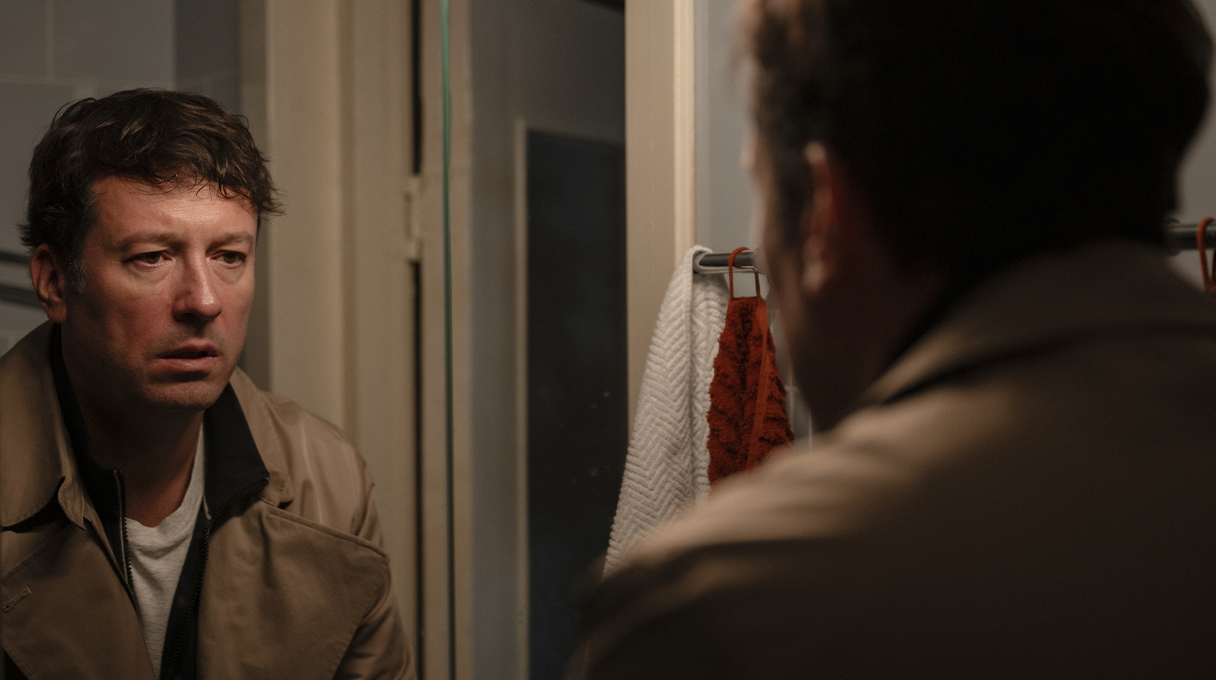

Director Andrey Zvyagintsev once again exposes the corrosive culture of unchecked power and impunity among Russia’s ruling elite – this time through the prism of a 1960s French classic. By Ian Haydn Smith
The starting point for Andrey Zvyagintsev’s Minotaur – a pitch-black portrait of a broken marriage and nation – was Claude Chabrol’s 1969 thriller La femme infidèle. Charting a husband’s realisation of his wife’s infidelity, and the ensuing tragedy when he attempts to find out who her lover is, Chabrol’s film is a perfect distillation of his fascination with the intrigue and moral ambiguities of everyday life. It received a Hollywood remake in 2002, Adrian Lynne’s Unfaithful, which is unremarkable save for the sterling performances of Richard Gere and a career-best Diane Lane. Minotaur, by contrast, not only adds to the sexual frisson and jealousy of Chabrol’s original, it also presents a chilling portrait of Russia’s professional classes since the 2022 invasion of Ukraine.
WATCH MINOTAUR IN CINEMAS
Book TicketsSpeaking at the Cannes Film Festival, where Minotaur won the Grand Prix, Zvyagintsev told Cineuropa the idea for a remake came about after he completed Loveless (2017). He was interested in adapting a French film from the 1960s or 70s when his plan to remake Ingmar Bergman’s Scenes from a Marriage (1974) was stymied by rights issues. He soon homed in on La femme infidèle because ‘you realise very quickly, within three minutes of the [start], that the woman is unfaithful. So it’s a sort of anti-suspense’.
This knowledge underpins Zvyagintsev’s belief that ‘observation is the very essence of cinema’. Moreover, the key moment that takes the film in a different direction plays out without any dialogue. ‘That is pure cinematic genius,’ Zvyagintsev said. ‘When I saw that in Chabrol’s film, I thought to myself that, for someone like me who had always dreamed of directing a very long sequence without dialogue, with only actions, I had plenty of scope to let myself go, to have fun in a way.’
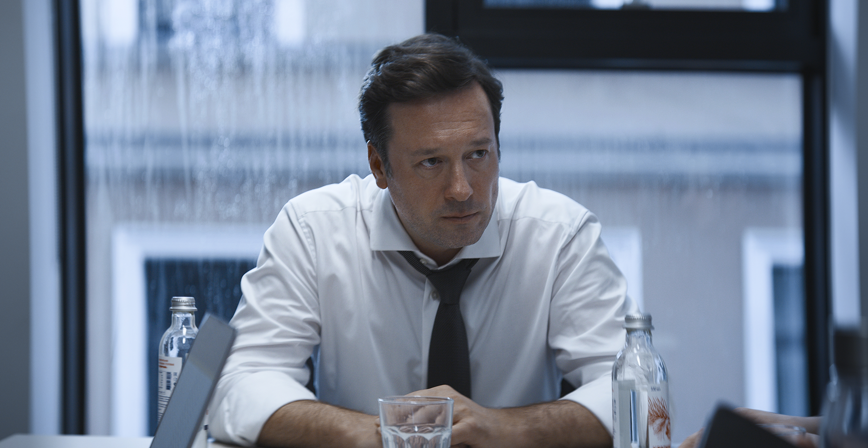
Zvyagintsev noticed that La femme infidèle had little concern for the husband’s professional life. ‘It was something he’d completely left out,’ the filmmaker noted. ‘You didn’t really know what job [he] did. Right away, I thought I’d have to fill that gap, but I didn’t yet know with what.’ He came up with Gleb (Dmitriy Mazurov), the CEO of a transportation company in a fictional provincial city. As a result of the conflict, the company is haemorrhaging young staff, who are leaving the country out of fear they will be conscripted and sent to the front.
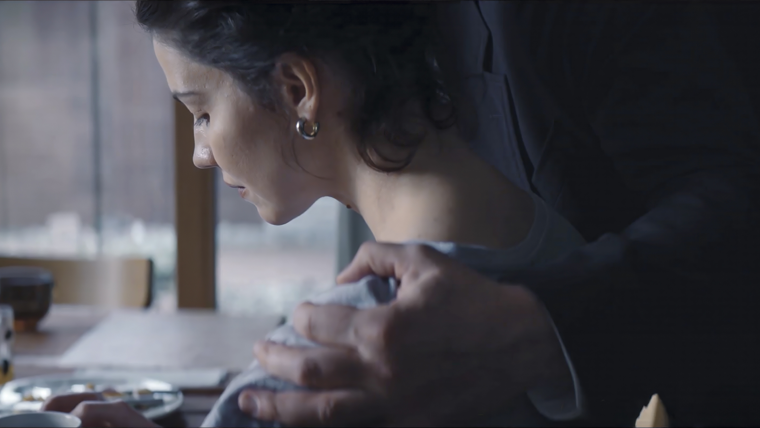
Attending a meeting with the town’s mayor, Gleb is informed that he, along with the other major business owners in the area, have to fulfil a quota of candidates for army service. Failure to do so will result in the random selection of employees from his company, no matter how essential they are to him. At home, in his spacious, rural residence, Gleb lives in quiet, if slightly strained, harmony with his wife Galina (an excellent Iris Lebedeva) and teenage son. But a quick check on his wife’s daily activities makes him suspect she is lying, with his company’s security officer confirming that she’s having an affair.
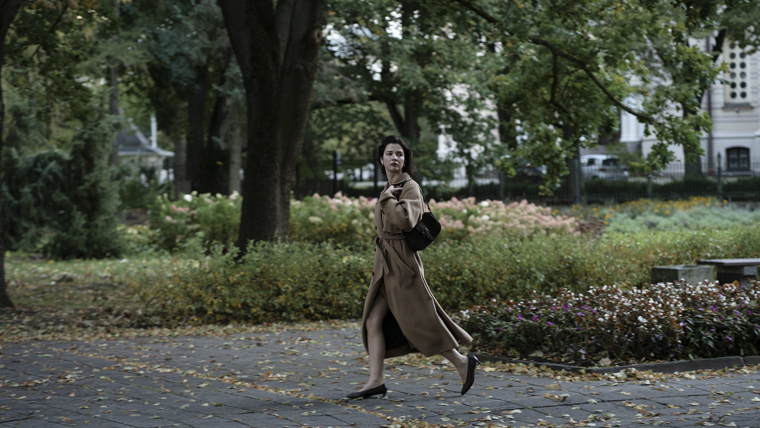
The existence of Galina’s secret life is obvious from the film’s outset, as it was in the original. And save for a few tweaks to the characters (making the investigator an employee of Gleb’s company results in one of Minotaur’s more chilling reveals), Zvyagintsev remains remarkably faithful to the skeleton of Chabrol’s thriller. Some filmmakers might have found such fidelity too limiting, but it gave Zvyagintsev the perfect platform to explore the toxicity of patriarchy across all walks of Russian life.
It’s a constant theme in his work, going all the way back to the director’s startling and assured 2003 feature debut The Return, which saw a longtime-absent father take his two sons on a trip with tragic consequences. Subsequent dramas Elena (2011) and Loveless present unforgiving depictions of conflict at the heart of family life; each is unsparing in revealing their characters’ venality when it comes to shoring up their own interests. The combination of unbridled patriarchy and ruthless self-centredness is what drives Zvyagintsev’s new film.
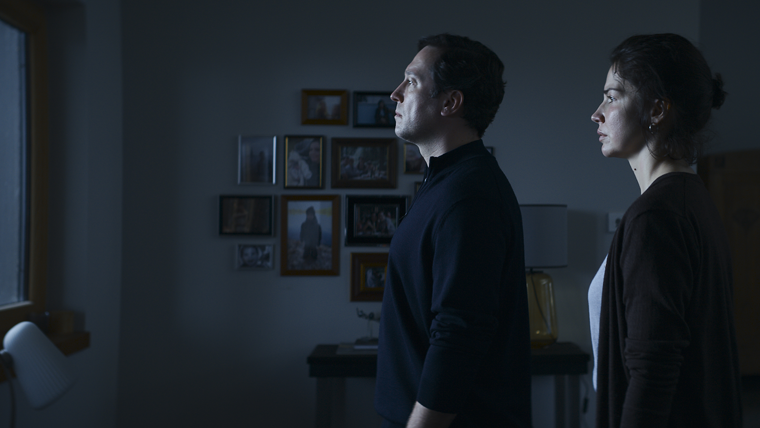
In its balance of the personal and the political, Minotaur plays out as the mirror image of the filmmaker’s celebrated 2014 drama Leviathan. That film charts the errors of a man in a remote part of northern Russia who foolishly takes on the church-justice-state complex, whereas Minotaur sees an acquiescing member of the system reap the rewards of his fealty, at great cost to those he deems expendable, irrelevant or a potential threat – even if their actions were a result of his orders.
Minotaur’s power stems from its contemporaneity. When Zvyagintsev originally considered the remake, Russia had already annexed the Crimean Peninsula and Donbas region in eastern Ukraine, but the possibility of escalation seemed remote. Filming after the outbreak of war in 2022, Zvyagintsev was compelled to dramatise the conflict’s impact on Russian daily life.
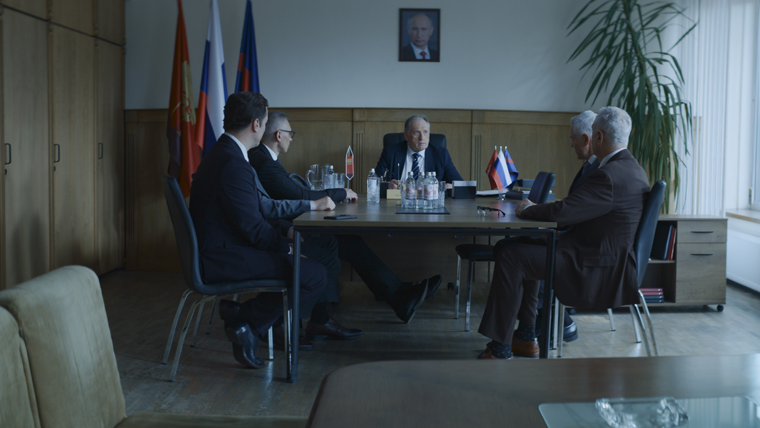
One notable way that Zvyagintsev achieves this – which suits his style of long takes and a glacial, occasionally bemused, gaze – is to create a physical world that is all-too-visible yet stifling. In Gleb and Galina’s lakeside property, every room can be seen from the outside. Likewise, Gleb’s offices are divided by glass walls, presenting an image of transparency. And yet, in both instances, openness is the last thought that comes to mind. ‘It’s to show the characters’ difficulty in being together, in being in the same spaces, in living together,’ Zvyagintsev said.
Minotaur was shot in Latvia, convincingly doubling up for a Russia that Zvyagintsev left in 2022. He now lives with his family in Paris. The film is unlikely to please the current Russian leadership, and his move out of the country might be seen as a betrayal. But, as Minotaur makes clear, the real betrayal is by a government and its lackeys who don’t care for their people and whose interest lies solely in lining their own pockets with whatever spoils this war, and the system behind it, can give them.
WATCH MINOTAUR IN CINEMAS
RELATED ARTICLES
Article
A Beginner’s Guide to Nathan Fielder
Fielder neophytes, gather round. We’re helping you contextualise the comedian’s smash-hit documentary You Can See Everything with this spoiler-free introduction to his career. By Yasmin Omar
Article
Can La Bola Negra Make Queer Cinema History at the Oscars?
The Academy Awards have always had a tricky relationship with LGBTQ+ films. David Opie looks back over this complicated history – and considers whether Los Javis’ gay war epic can overcome the odds.

Article
Sensationalist Journalism is All the Rage at the Movies
Films about reporters used to be uplifting stories of Davids conquering Goliaths. Not anymore. As pitch-black thriller Primetime arrives on our screens, Alistair Ryder investigates why journalism movies have become so cynical.