
Can La Bola Negra Make Queer Cinema History at the Oscars?
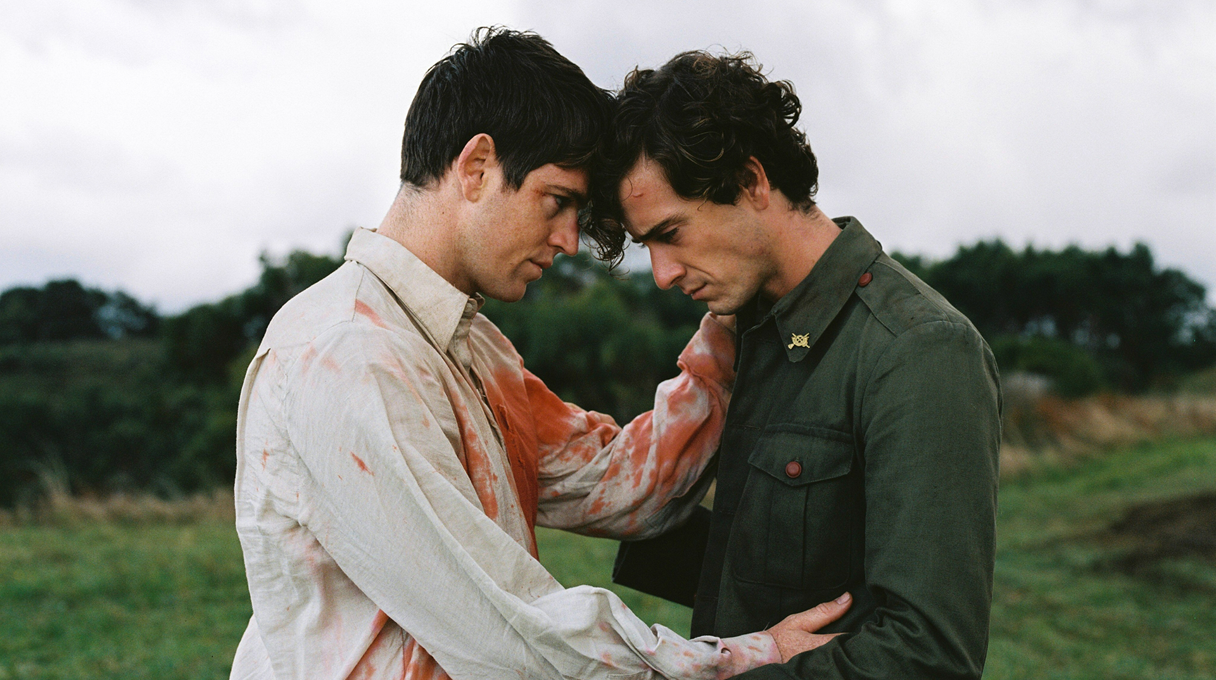

The Academy Awards have always had a tricky relationship with LGBTQ+ films. David Opie looks back over this complicated history – and considers whether Los Javis’ gay war epic can overcome the odds.
While The Odyssey famously depicts a voyage fraught with peril, it appears the film’s journey to Oscar success will be quite the opposite. With both critical acclaim and record-breaking box office, it should be smooth sailing for Christopher Nolan’s early frontrunner to take Best Picture. Dune: Part Three and You Can See Everything are also in the mix, but La Bola Negra – ‘the gayest war movie ever’ according to its queer filmmakers – could upend this race completely, racking up a rare win for LGBTQ+ cinema.
More subversive and arguably even more ambitious than The Odyssey, Javier Ambrossi and Javier Calvo’s queer contender takes a very different look at the impact of war by weaving together the stories of three different men across a time-jumping triptych narrative. Inspired by an unfinished Federico García Lorca work, and Alberto Conejero’s play La piedra oscura (2015), this gay Spanish epic conjures up romance and drama through the lens of desire and persecution.

WATCH LA BOLA NEGRA IN CINEMAS
Book TicketsA runaway hit back home, the film shared Cannes’ director prize with Fatherland helmer Pawel Pawlikowski earlier this year before winning the People’s Choice Award at Toronto. Of its past 16 winners, 14 went on to earn Best Picture nominations, including four wins for The King’s Speech (2010), 12 Years a Slave (2013), Green Book (2018) and Nomadland (2020). Bear in mind that its US distributor Netflix has also given La Bola Negra a 47-day exclusive window in cinemas before streaming online, longer than any of its previous Oscar hopefuls. The studio clearly believes in the film.
While that all sounds promising, none of it actually matters if voters can’t get onboard with La Bola Negra being ‘the gayest war movie ever’. You’d hope that might not be an issue in 2026, but let’s face it: the real ‘odyssey’ is the one queer cinema has taken to reach a point where it can even be taken seriously by the Academy at all.

Unapologetically queer films may take home statuettes – think Milk (2008) and The Favourite (2018) – but they seldom win the biggest awards in the same way their straight counterparts do. To be fair, acknowledging queerness of any kind was practically impossible for the Oscars’ first four decades.
Just five years after the ceremony started, the Hays Code came into effect, sanitising Hollywood filmmaking across the board from 1934 to 1968. The Motion Picture Association forbade ‘sex perversion or any inference of it’, but revisions in 1961 allowed The Children’s Hour, starring Audrey Hepburn and Shirley MacLaine, to slip through with five nominations, despite its lesbian subject matter. Best Picture, however, remained out of reach.

It wasn’t until 1969, one year after the Hays Code was abolished completely, that a film with prominent queer themes was nominated in that category. Midnight Cowboy, directed by gay filmmaker John Schlesinger, won three Academy Awards, including Best Picture, which was hugely progressive at the time (inevitable stereotypes and lack of a central LGBTQ+ protagonist notwithstanding). Unfortunately, that achievement turned out to be a fluke rather than a new trend because, in the 57 years that followed, only one film with a queer lead character has won the Academy’s top prize – and even that didn’t go off without a hitch.
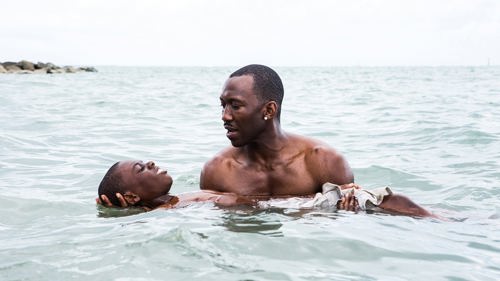
At the 2017 Academy Awards, La La Land was mistakenly announced the Best Picture winner due to an envelope mix-up, before Moonlight was revealed as the actual champion. The film, which took a contemporary look at the challenges queer Black men face in America, also brought home two other awards: Best Adapted Screenplay and Best Supporting Actor for Mahershala Ali. But it was the Best Picture win that made cinematic history in more ways than one.
As monumental as that moment was, it also further highlights just how few queer films have reached those same heights. That only one queer-centric title has been deemed worthy of winning Best Picture in 97 years is truly abysmal, especially when you consider the calibre of the films that were overlooked and, in some cases, the disappointing ones awarded in their stead.

Todd Haynes masterpiece Carol (2015), which received six nominations but couldn’t crack the top category. So egregious was this snub that the term #OscarsSoStraight began to trend on social media, spinning out from the influential #OscarsSoWhite campaign kick-started the year before.
So why did Moonlight succeed where other LGBTQ+ efforts like Carol failed? Beyond the undeniable quality of the film itself, an extraordinary achievement by director Barry Jenkins and all involved, the timing of its win so soon after the aforementioned #OscarsSoWhite backlash surely had at least some impact on voters who had been feeling pressure to diversify the stories they recognise and celebrate.
It's also worth noting that with Carol specifically, the restrained love story at its centre wasn’t typical of the usual queer films that the Academy does occasionally celebrate, ones that tend to emphasise queer pain and grander gestures of love.

But even then, Moonlight only won three awards in total. Impressive, yes, and even unprecedented where the Best Picture race is concerned. Yet this also served as another reminder that there are never awards sweeps for films of an undeniably queer nature. When recognition does come, it’s as if the Academy only allows one film to fully break through each decade. Think Cabaret in the Seventies, Kiss of the Spider Woman in the Eighties, Philadelphia in the Nineties, Brokeback Mountain in the Noughties and, of course, Moonlight in the 2010s.
Most of these examples imply that queerness is most readily rewarded when deemed palatable to mainstream audiences – made by straight people, for straight people. The vast majority of the aforementioned Academy Award winners deliver queer suffering through a heterosexual, cisgender filter that lacks a truly authentic perspective.
Name the most successful queer films of all time, either old or recent, and you’ll be hard-pressed to find one that breaks away from this pattern, from Philadelphia (1993) to Brokeback Mountain (2005) and so many more. Perhaps an occasional nod to queerness regulated by straight creatives helps reassure voters that they have done their duty without ‘going overboard’ in their celebration of marginalised sexual identity.

That this still remains the case says a lot about wider perceptions of queerness in the film industry (and beyond) – but it’s not all doom and gloom. Look at our latest contender. There is pain in La Bola Negra, a film that grapples with repression through the ages, yet the sumptuous beauty of each frame also contains an intrinsically queer yearning, foregrounding lust and desire as much as persecution. Marble physiques, seductive curls, unabashed nudity… La Bola Negra presents male homoeroticism in ways that feel authentic to the queer creative voices behind this film.

Will some voters object to such brazen queerness, the kind that resists more than it conforms? It’s possible that La Bola Negra could end up being snubbed in the way that Carol was. Or perhaps it will receive multiple nominations only to be awarded Best International Feature as a consolation prize of sorts. Whatever happens, we’re long overdue a decade where more than one queer film takes the spotlight, especially since the biggest winner of recent years was 2024’s highly controversial Emilia Pérez.
Let’s just hope La Bola Negra lives up to the buzz and really competes with The Odyssey in its bid for Oscar victory. Odysseus might have overcome gargantuan obstacles to reach home, but the ones that La Bola Negra – and queer cinema as a whole – face are far bigger and more monstrous than Homer could have ever imagined.
WATCH LA BOLA NEGRA IN CINEMAS
RELATED ARTICLES
Article
Dog Day Afternoon’s Complicated Queer History
Laura Venning examines Sidney Lumet’s bank-heist thriller through a queer lens, considering the film’s contentious place in the LGBTQ+ canon as well as its enduring New Hollywood pedigree.

List
Best Christopher Nolan Films
Ahead of The Odyssey, we offer a guide to the mind-bending master Christopher Nolan's most impressive movies.

Article
How Christopher Nolan Became a Brand
As the director follows up his Oscar-winning Oppenheimer with The Odyssey, Matt Maytum considers how the filmmaker achieved his status as a singular visionary who shoots on celluloid, favours practical effects and makes event movies out of the unlikeliest of subjects.