
No, Lynne Ramsay Isn’t ‘The Queen of Darkness’
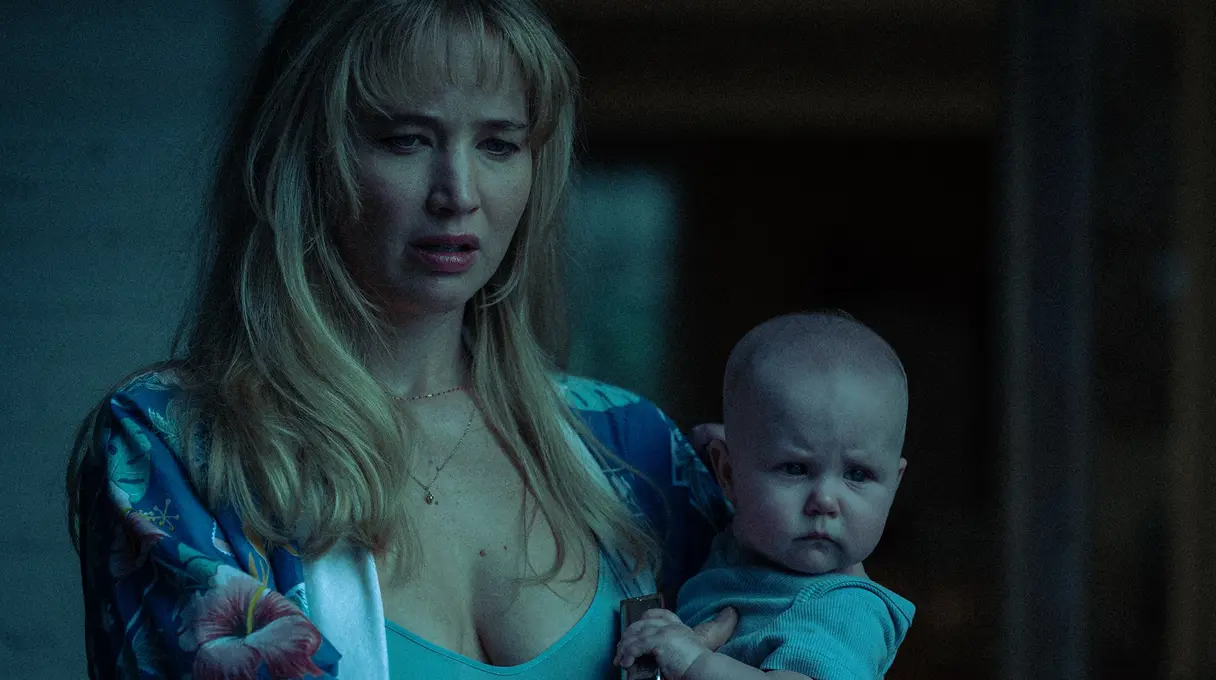

In Die My Love, the BAFTA-winning Glaswegian director Lynne Ramsay isolates Jennifer Lawrence’s new mother Grace, and her deadbeat partner Jackson (Robert Pattinson), in middle-of-nowhere Montana to raise their newborn. Once there, the couple’s relationship disintegrates, their creative potential stultifies and Grace’s postpartum depression sets in.
Based on the novel by Ariana Harwicz, which Ramsay adapted for the screen with Alice Birch and Enda Walsh, Die My Love showcases Lawrence at her best as a woman succumbing to madness. Ramsay adds texture to this moving character study with her signature tactile filmmaking and killer needledrops. Here, she discusses growing up in a music-filled household, working with intimacy coordinators and resisting her reputation as ‘the queen of darkness’.
RÓGAN GRAHAM: I’m interested in the relationship between sex and creativity in the film. Do you think Grace is struggling with writer’s block because she’s not having sex or vice versa?
LYNNE RAMSAY: I think they’ve had this pretty wild sexual relationship. I always saw Grace and Jackson as a young couple who maybe lived in a crappy apartment in New York. She’d written some things that got published, and he’d tried to be in a band. That was all my backstory. She probably was quite wild and feral. I think her sexual frustration and her creative frustration are linked. She’s quite a feral animal. I liked that even in the original source material she’s unapologetic.
WATCH DIE MY LOVE IN CINEMAS
Book TicketsRG: In your previous films, so many of your lead actors deliver really understated, internal performances, whereas Jennifer’s is much more externalised. Can you talk about how you directed her?
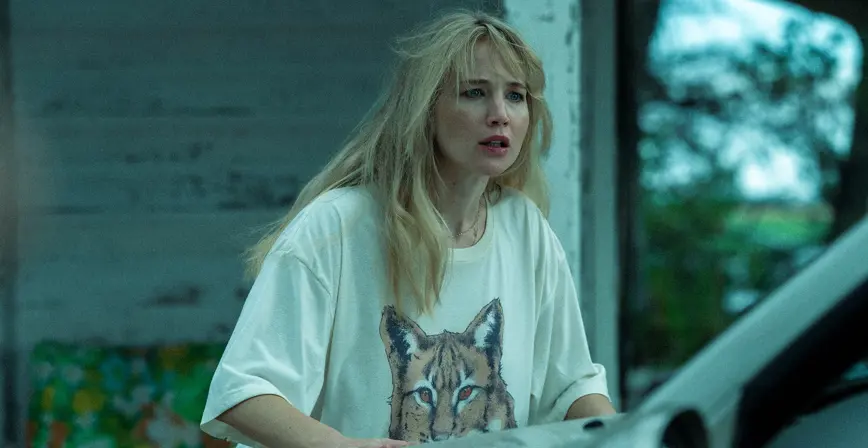
LR: She went for it. I always loved Jack Nicholson in The Shining, that’s a big character and Jennifer similarly inhabited her role as Grace. She’s very instinctive and we talked a lot about Grace being animalistic. I wanted it to be funny as well. I wanted her to be that kind person who will just say the thing that nobody else will say, but it’s the truth. I like to let actors be free. I was just letting Jennifer be. She licked the dirty windows in the house – that’s not a Hollywood-actress thing to do. She has balls.
I really loved working with Robert as well. His character observes Grace and thinks, ‘What am I gonna do with this woman?’ But he does love her. I saw this film as a perverse love story. There is this love between Grace and Jackson, but she’s uncontrollable
RG: This is the first film you’ve made with an intimacy coordinator. How did that work, and how did you develop Jennifer’s animalistic way of moving?
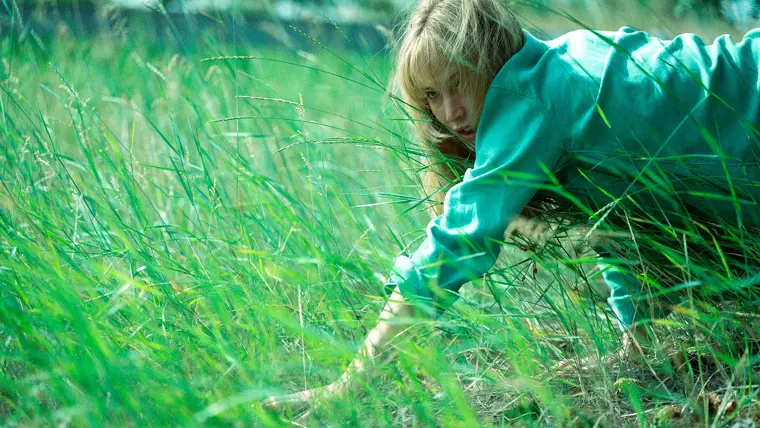
LR: When I walked into the house I thought we could do something where we don’t see Jennifer, we just see her back. She loved that, she liked the movement. There is a line in the book where the author says Grace is prowling through the grass. I love her being like this animal – she’s bored and she’s circling.
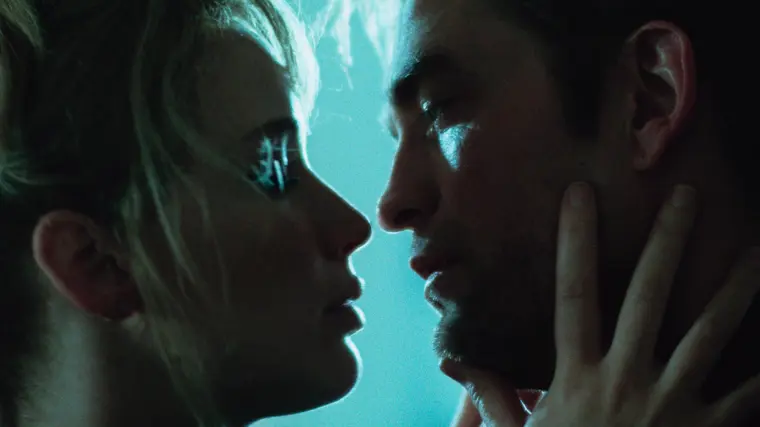
We did have an intimacy coordinator, but I think there was a lot of trust. Jen said to me, ‘I'm gonna be free here, I’m going for it, don’t worry.’ I think Robert was probably a bit shocked! They did some intimate scenes on the first day. I’d learned earlier on in my career that sometimes when you leave those scenes to later, they get too built up, so I threw them in at the deep end and did all these wild sex scenes on the first day. To be quite frank, I was shitting myself and thinking, ‘Oh God, is this going to work?’ But it did. It broke the ice.
RG: You’ve mentioned the house a couple of times, it’s such an interesting space because it feels like it’s testing them to survive.
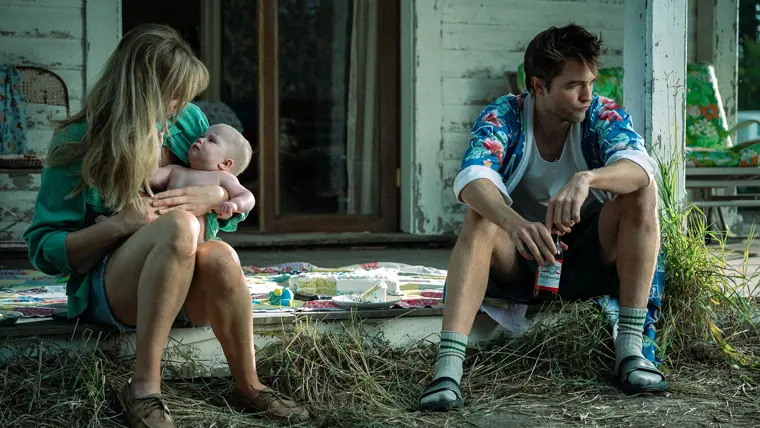
LR: I love the way you put that because I really saw the house as a character as well. We looked at a few places, but this one had these layers to it, and you could see the forest behind, which figures later on.
You could do things like shoot one person going in one door and coming out another in the same frame. In fact, the house dictated the frame because it was very square and a bit trapped. I’d never shot in Academy ratio, which is a much more square frame. At first, we were going to shoot in CinemaScope. I love working in Scope and it’s great for two characters.
So Academy really worked in this house, then I went outside and was like, ‘Oh my God! Where’s my long frame?’ It was like learning a new language, but I really enjoyed it. Thinking of The Shining again, Grace and Jackson are a young couple who have inherited a house – which is great because no one’s got any money these days – but it becomes a creatively oppressive environment.
RG: You still manage to locate humour in this difficult situation. You said in an interview when you were developing the film, ‘I’m working on an all-out comedy.’
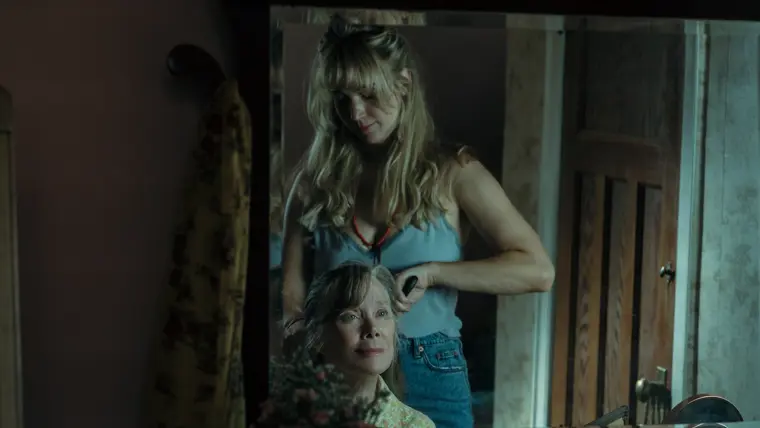
LR: I mean, I definitely did want funny bits. I hate that I always hear ‘You’re the queen of darkness, you do dark films!’ I always try to put tones of humour in my work. There’s an earnest humour to Sissy [Spacek, who plays Grace’s bereaved mother-in-law], and Jennifer’s naturally funny anyway. I couldn’t believe I was talking to Sissy Spacek. I think there’s a recognition between Sissy and Jennifer’s characters – one’s grieving and the other one’s falling apart.
RG: Why did you decide to sing the closing-credits song, ‘Love Will Tear Us Apart’?
LR: Oh that wasn’t me! Well, I keep telling people that wasn't me. I was working with the guitarist of Nick Cave and the Bad Seeds [George Vjestica]. We jammed a bit – I can play a couple of chords. He had exactly the same guitar as me, which was completely bonkers. It was a guitar that John C Reilly [star of We Need to Talk About Kevin] bought me. It was one of the nicest gifts I’ve ever been given. So anyway, it was just used as temp music, but George really loved it and it ended up there. I’ve also recorded, which I want to put somewhere, Jennifer singing ‘The Beast in Me’ by Johnny Cash.
RG: Do you have a playlist in mind when you’re working on a script? Do you give music to your actors, or does it come in much later?
LR: Sometimes I’ll write in a really specific song, then I’ll just be playing stuff while I’m writing the script or when shooting and it changes. I was brought up in a musical household. My dad had a massive vinyl collection and he used to play the stereo. I dunno where he got it, but it was a really good stereo, like a Pioneer one, and we were quite a simple working-class family.
I remember one time when I was a kid, around the Cold War when people were thinking about bombs dropping, my sister and I heard this bomb go off. Usually we fought, but at that moment we were sitting down, looking at each other, holding each other’s hands. The ‘bomb’ was actually Pink Floyd’s The Wall playing. My dad would always play the crazy stuff from Mamie Stuart and The Supremes, and my mum was an Elvis fan. It was just a musical household and we had the best hi-fi system ever.
WATCH DIE MY LOVE IN CINEMAS
RELATED ARTICLES
Review
Bugonia Review: No One’s Doing it Like Emma Stone
Just when you thought she couldn’t possibly push herself any further, the up-for-anything actress throws herself into the role of a villainous, bald-headed girlboss in Yorgos Lanthimos’ kidnapping thriller.
Lynne Ramsay
Pleasure & Pain: On Lynne Ramsay’s Multifaceted Cinema
List
Best Robert Pattinson Performances
As Robert Pattinson returns to our screens, we look back at his best performances, in underseen gems and colossal blockbusters alike.