
Sorry, Baby Review: Eva Victor Upends the Trauma Plot
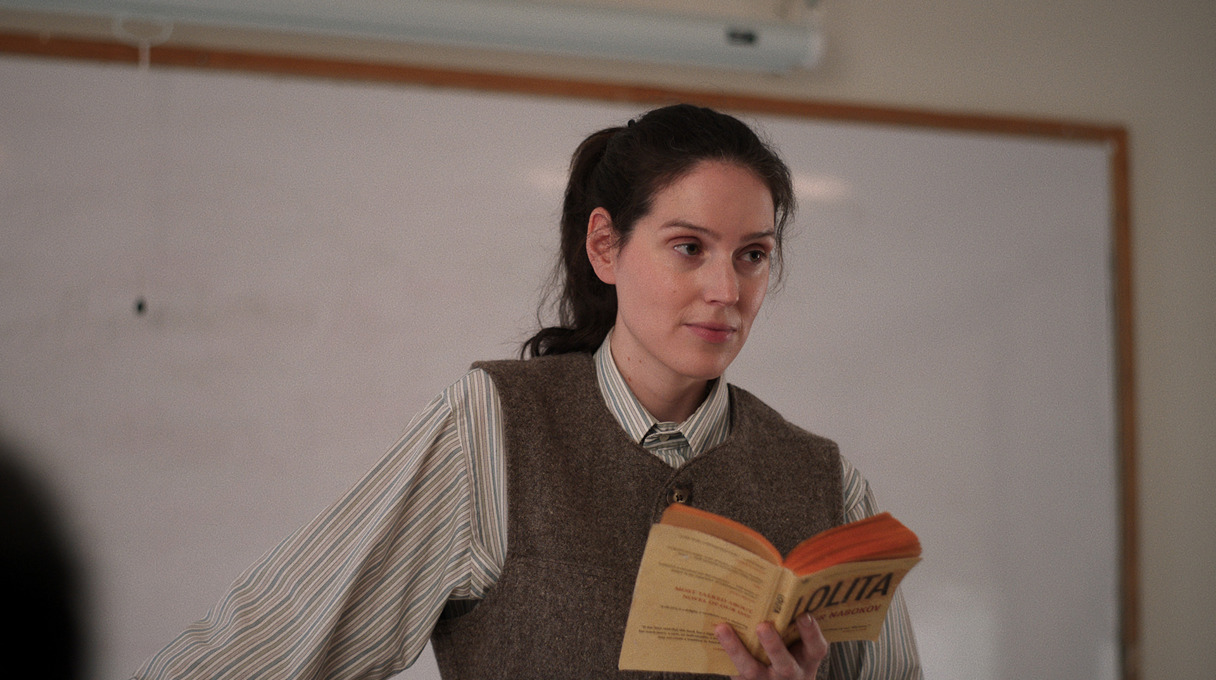

This Sundance-winning tragicomedy is an incisive, mordantly funny investigation into the fallout of a sexual assault that overturns narrative conventions, writes Yasmin Omar.
This article contains discussion of sexual assault that some readers may find distressing.
The trauma plot has a bad reputation. The storytelling device has been cheapened by its current ubiquity in books and films and television, where it flattens the vagaries of human behaviour into a legible step-by-step journey – a tragedy befalls a character (A); they suffer its rippling consequences (B); they, eventually, heal from it (C). But life, as we know, is never a simple chain of causes leading into effects. Sorry, Baby understands this.
WATCH SORRY, BABY IN CINEMAS
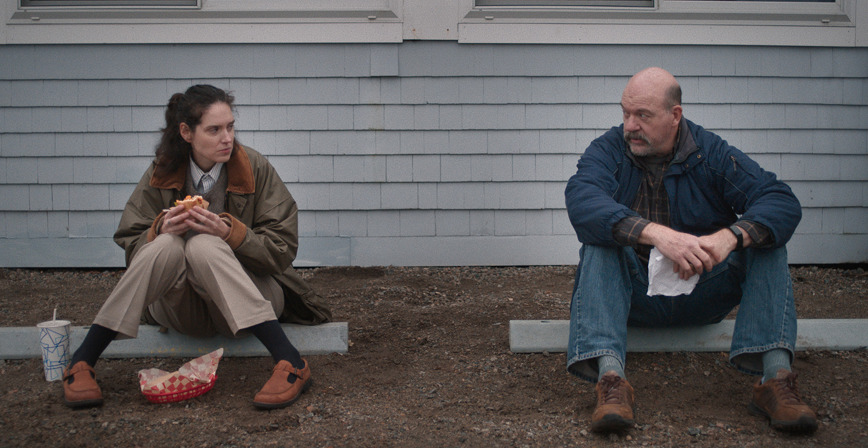
Book TicketsOn the face of it, Eva Victor’s Sundance-winning character study tells a tale as old as time. In a frostbitten New England college town, where the air is crisp and the jumpers are woollen, a literature professor (Louis Cancelmi) takes a shine to his clever, conscientious student Agnes (Victor). So far, so romance novel. Until he abuses his position of power and rapes her. Rupturing the ABC of the trauma plot, Sorry, Baby is separated into five achronological chapters that depict Agnes’ day-to-day pre- and post-sexual assault. This shrewdly nonlinear narrative is designed to mirror the fragmentary nature of recovery where, years removed from an attack, the body can still seize up and the brain self-protectively stutter. It also allows for a series of minor revelations – retrospectively explaining why Agnes’ thesis is sellotaped to her bedroom window, why her winter boots have been shoved into a brown paper bag – that give a fuller picture of this hollowed-out young woman.
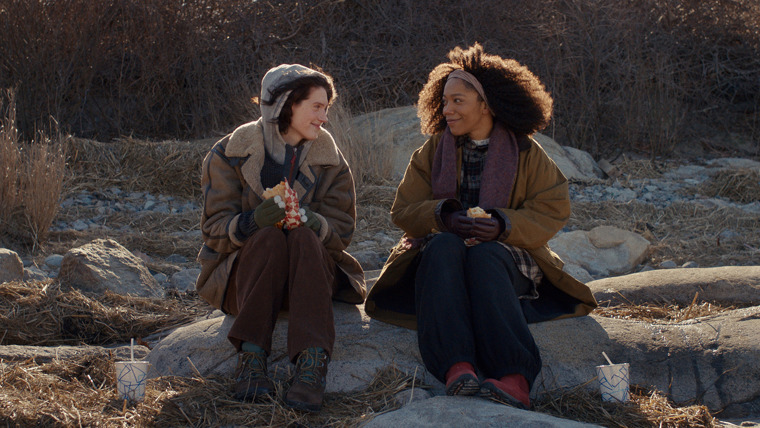
Sorry, Baby’s structure is unexpected even on a sentence level. Difficult conversations, in particular, are linguistically surprising. Case in point: has anyone ever announced their pregnancy the way Agnes’ best friend Lydie (Naomi Ackie) does? ‘I need to tell you something about my body. I have a baby inside it.’ The statement’s odd, almost Joycean syntax is notable in an otherwise naturalistic film, but it’s the euphemism that most stands out and later comes to define the script’s dialogue. Whenever the movie must directly address what happened to Agnes it relies on implication, the so-called ‘bad thing’ cordoned off as unspeakable. It’s a riposte of sorts to the author Jamie Hood, a Massachusetts academic like the fictional Agnes at the time of her 2012 assault, whose recent memoir Trauma Plot: A Life favours explicit, clear-eyed language. Victor, by contrast, makes the empathetic decision not to show the violence on screen, avoiding voyeurism by placing a static camera outside the building, which blinks from day to dusk to night.
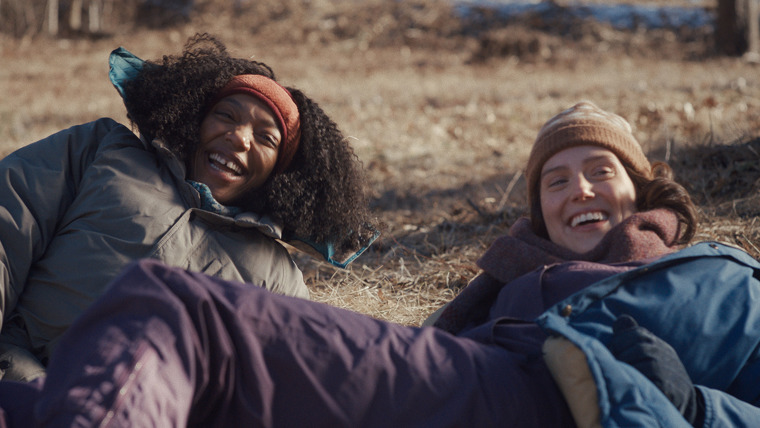
At this point, I must mention that Sorry, Baby is often mordantly funny. A dramedy in the truest sense of the word, it pulls off the delicate tightrope act of moving between harrowing intensity and Sahara-dry gallows humour. Victor, a Billions castmember with a background in satirical internet skits, draws laughs from authority figures’ preposterous reactions to Agnes’ circumstances as a means of condemning institutional failings to support survivors. At the doctor’s office, a shrugging, tactless gynaecologist scolds her for washing after the assault (because now she’s ineligible for a rape kit), to which she deadpans: ‘I’ll keep that in mind for next time.’ At her college, a pair of nervous, fidgety advisors absolve the school of any responsibility, while repeating with off-putting eye contact and practised sincerity, ‘We know what you’re going through. We are women.’ At court, where Agnes is being considered for jury duty, she refuses to explain she’s been the victim of a crime to the prosecutor, reasoning that she might get in trouble since ‘the law makes no sense’. That these scenes are perfectly tragicomic is a testament to the film’s masterful tonal balance.
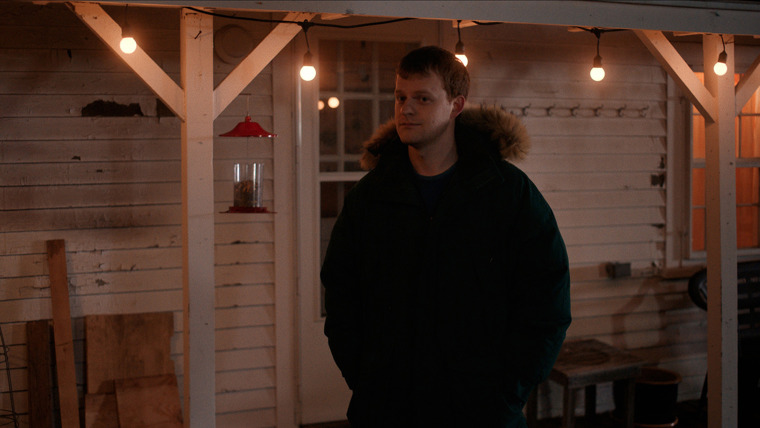
The Sorry, Baby ensemble deftly navigates the shifts from humour to heartache. Eva Victor anchors the film with her disarming blend of affectless comedy and piercing sincerity; while Naomi Ackie transforms brassy banter into softly intoned concern, before seguing into fierce protectiveness. The supporting cast, for their part, are mostly tasked with comic relief. Kelly McCormack, playing a jealous, openly hostile classmate, is a real standout, her lips pursed in a sour pucker as she snidely insinuates why Agnes received a promotion over her. Lucas Hedges also pops up in – you guessed it! – another A24 softboi role (Agnes’ sometime lover). He’s sweetly bumbling, revealing embarrassing truths about his character in that earnest, overeager way of his. Some of those in Agnes’ orbit know about her assault, others don’t. How they interact with her sheds alarming light on their perceptions of women in society: sleep-their-way-to-the-top narcissists, overreacting hysterics, predestined mothers despite their protestations…
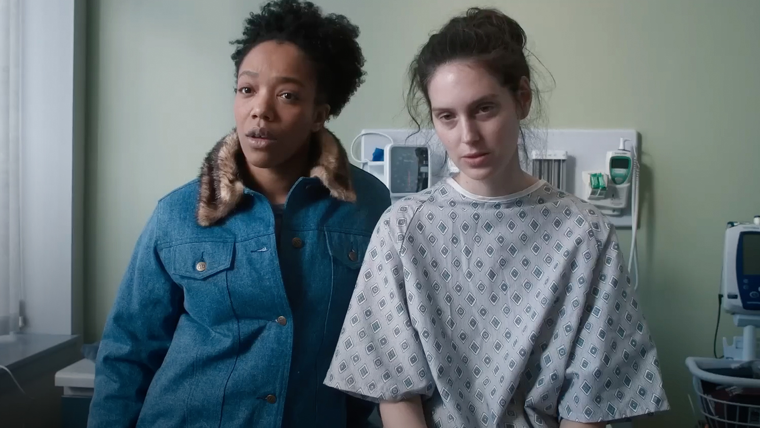
As Jamie Hood writes in Trauma Plot, ‘In the movies, they make it seem like your whole life stops when you get raped, but I kept arriving at the awful truth that nothing about it would stop.’ Sorry, Baby fails to commit this sin, letting the tendrils of Agnes’ terrible experience spread out, and latch onto every aspect of her existence. They’re there when she’s browsing shelves at the supermarket; there when she’s at a friend’s dinner party; there when she’s driving down a motorway. And yet, Agnes finds moments of respite. Such is the nature of healing: it’s jagged and erratic. Victor’s film makes room for the light and the dark – if only other trauma-driven stories were as wise.
WATCH SORRY, BABY IN CINEMAS
RELATED ARTICLES
Events
Prima Facie Review: Jodie Comer Proves Her Chameleonic Talent Once Again

Review
Blink Twice Review: Zoë Kravitz’s Extremely Online Thriller
In her spoiler-free review, Yasmin Omar digs into the actress-turned-director’s immaculately designed ‘eat the rich’ movie, which is deeply indebted to social-media trends.
Article
Dog Day Afternoon’s Complicated Queer History
Laura Venning examines Sidney Lumet’s bank-heist thriller through a queer lens, considering the film’s contentious place in the LGBTQ+ canon as well as its enduring New Hollywood pedigree.