
The Curious Way Pixar Films Change in (Almost) Every Country
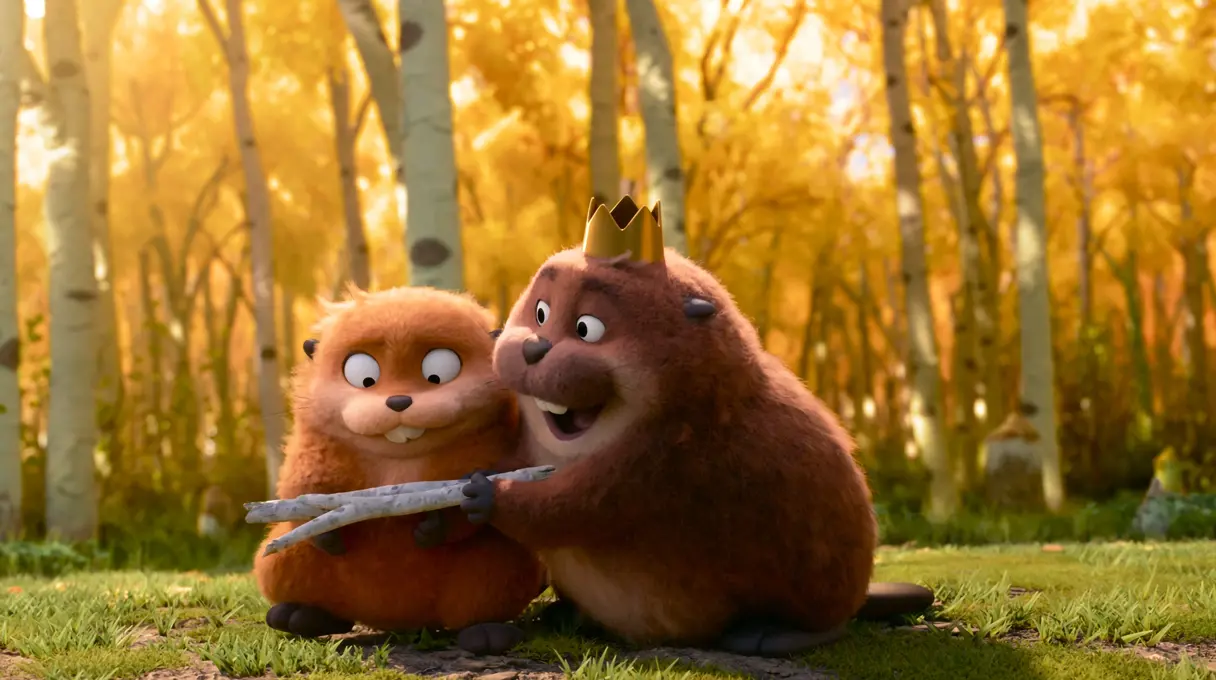

David Opie delves into the animation studio’s strange phenomenon of localisation, whereby cultural signifiers – from Inside Out’s Japanese vegetables to Coco’s Portuguese title – are altered to better serve international audiences.
The appeal of Pixar has long transcended borders, and the studio’s latest animated adventure is no exception. Hoppers follows the story of a girl named Mabel (Piper Curda) who ‘hops’ her mind into a robotic beaver that she uses to communicate with animals in their own language. This bridging of two worlds is rather typical of Pixar – and not just thematically.
Hoppers was developed in the US with an American voice cast (including stars like Jon Hamm and Meryl Streep), but, for UK audiences, two British personalities were added to the local release. TV host Amanda Holden and Celebrity Traitors winner Alan Carr play Amanda the Spider and Alan the Squirrel, two characters who assist Mabel in the British version of the film.

Enlisting household names like Holden and Carr adds cultural specificity that UK viewers can derive extra enjoyment from (even if their inclusion might not register with younger viewers). This localisation in Hoppers is just the latest example of Pixar catering to specific audiences across the globe with changes big and small that resonate differently depending on the country these films are showing in.
In similar fashion to Hoppers, the first Cars movie (2006) enlisted ex-Top Gear host Jeremy Clarkson to replace Jeremy Piven as Lightning McQueen’s agent Harv for the UK release. The fast-talker never appears on screen, regardless of which version you’re watching, but we hear him throughout via speakerphone. For Clarkson’s version, some of Harv’s dialogue was even altered to fit British vernacular (changing ‘GPS’ to ‘sat nav’, for instance). Cars 2 (2011) went down a similar route with a new character named Jeff Gorvette, based on real-life NASCAR driver Jeff Gordon. Gorvette was replaced in some international versions, however, most notably in Spain, where Jeff became Fernando Alonso, voiced by the two-time Formula One World Champion of the same name.

More instances of this can be found going as far back as Pixar’s third movie, Toy Story 2 (1999), in which a US flag behind Buzz Lightyear was replaced with a globe in other territories. The animators rightly surmised that watching a toy give a speech with such fervent patriotism might not resonate with the many audiences watching outside of North America.
While some non-Pixar Disney films also attempt localisation in this fashion, they’re not often as successful (or subtle) in their aims. Just look at Zootropolis (2016), where the animal newscaster changes from country to country. In a world inhabited by anthropomorphic animals, there’s nothing particularly unusual about seeing a panda or koala character. But what does choosing a panda for the Chinese market or a koala for Australia add to the story other than feeding into basic cultural tropes?

Unlike that Disney hit, Pixar’s Inside Out (2015) includes a localisation moment that really gets it right. The scene in question involves a younger Riley – the homesick girl whose brain we inhabit throughout the film – refusing to eat broccoli in most territories, except for Japan where the vegetable is substituted for green peppers. But why go to all that trouble?
‘We learned that some of our content wouldn’t make sense in other countries,’ Inside Out director Pete Docter told Business Insider. ‘In Japan, broccoli is not considered gross. Kids love it. So we asked them, “What’s gross to you?” They said green bell peppers, so we remodelled and reanimated three separate scenes replacing our broccoli with green peppers.’ Such changes work because they’re inspired by direct research, rather than broader cultural assumptions. And it’s just as well, because putting them into effect is no easy feat. According to Docter, his Inside Out team localised 28 graphics across 45 different shots in total.

A common form of this is known as ‘neutralisation’ where English text on screen is reimagined as a graphic that can be understood universally. In Up (2009), a jar labelled ‘Paradise Falls’ was redesigned to have a drawing of Paradise Falls, while in Monsters University (2013) the message ‘Be My Pal’ iced on cupcakes was changed to smiley faces internationally. In both cases, the same message is conveyed without using text, so the production team only has to produce one alternative graphic rather than dozens. This time-saving device also helps very young children – who might struggle to read the original text quickly enough – understand regardless of where they’re born or what language they speak.

There are occasions when neutralisation doesn’t quite cut it, however. Pixar’s director of international production, Cynthia Lusk, gets into the nitty gritty of this in Inside Pixar (2020), a behind-the-scenes Disney+ docuseries that was produced by Pixar itself. At the time it was filmed, Lusk and her team were in the process of developing 43 versions of Onward (2020), altering 150 shots to localise the film for international audiences. One of the most important scenes they worked on involved the letter that magical elf Wilden (Kyle Bornheimer) wrote to his two sons before he died. Knowing he wouldn’t be around to watch them grow up, he intended for the boys to open it when they both turned 16, giving Wilden a way to connect with his children in the future.

‘It was a handwritten message that was so personal,’ explained Lusk, ‘so we wanted our international versions to carry the same feeling.’ She and the team set about reproducing the letter in various languages, asking native speakers already working at Pixar to help capture the rhythms and cadence needed to ensure that each version of the letter felt authentic. ‘The most important thing for us to do is to make sure we capture those story points,’ Lusk added.
Another example given in the series is when Riley’s imaginary friend Bing Bong spelled out a sign with his trunk that read ‘DANGER’ in English versions of Inside Out. In many other languages, the word for ‘danger’ doesn’t include the same number of characters, so Bing Bong’s animation was altered to fit the required actions in each. To complicate things further, languages like Hebrew and Arabic aren’t read in the same direction as English, so Bing Bong’s trunk had to be reanimated in these locales so it moved the opposite way as it pointed out each letter of the word.

In the end, localisation always comes down to accessibility, be it through local celebrity cameos that appeal to specific audiences or a wider recalibration that helps people worldwide connect to the story just as well as a native speaker can. And sometimes, it’s just as simple as changing the title of Coco (2017) to Viva! A Vida É Uma Festa! (aka Cheers! Life is a party!) in Brazil to avoid comparisons with ‘cocô’, the Portuguese word for poo.
Still, these shifts aren’t exactly straightforward to implement and not every territory gets to benefit from them either. Many countries are passed by entirely due to logistics or a lack of manpower, plus some changes are clearly more effective or meaningful than others. But still, it’s heartening to see a studio as successful as Pixar try to connect globally in a world that can often feel US-centric. In fact, this is precisely why Pixar continues to succeed as much as it does. It would be easy to forgo localisation entirely in order to save money. But by prioritising broader emotional connection, Pixar strives to make us all feel like we’re part of something bigger. And that’s true no matter which vegetable Riley hates or who ends up voicing the squirrel in Hoppers.
WATCH HOPPERS IN CINEMAS
RELATED ARTICLES
Article
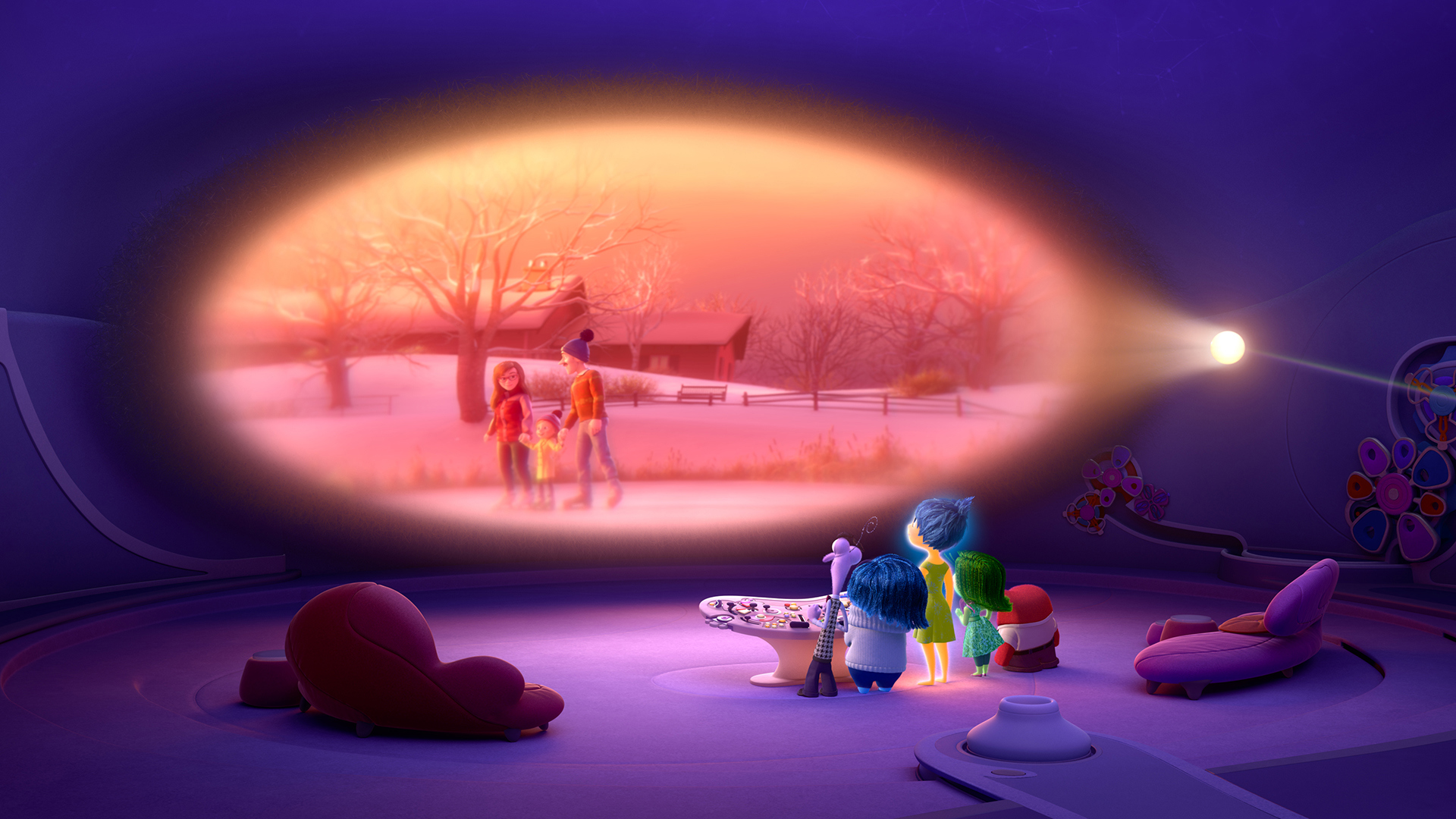
The Power of Memory in Pixar Movies
The most heartbreaking sequences in the animation studio’s filmography tend to revisit the characters’ painful pasts to pave the way for their emotional catharses, writes Yasmin Omar.
Article
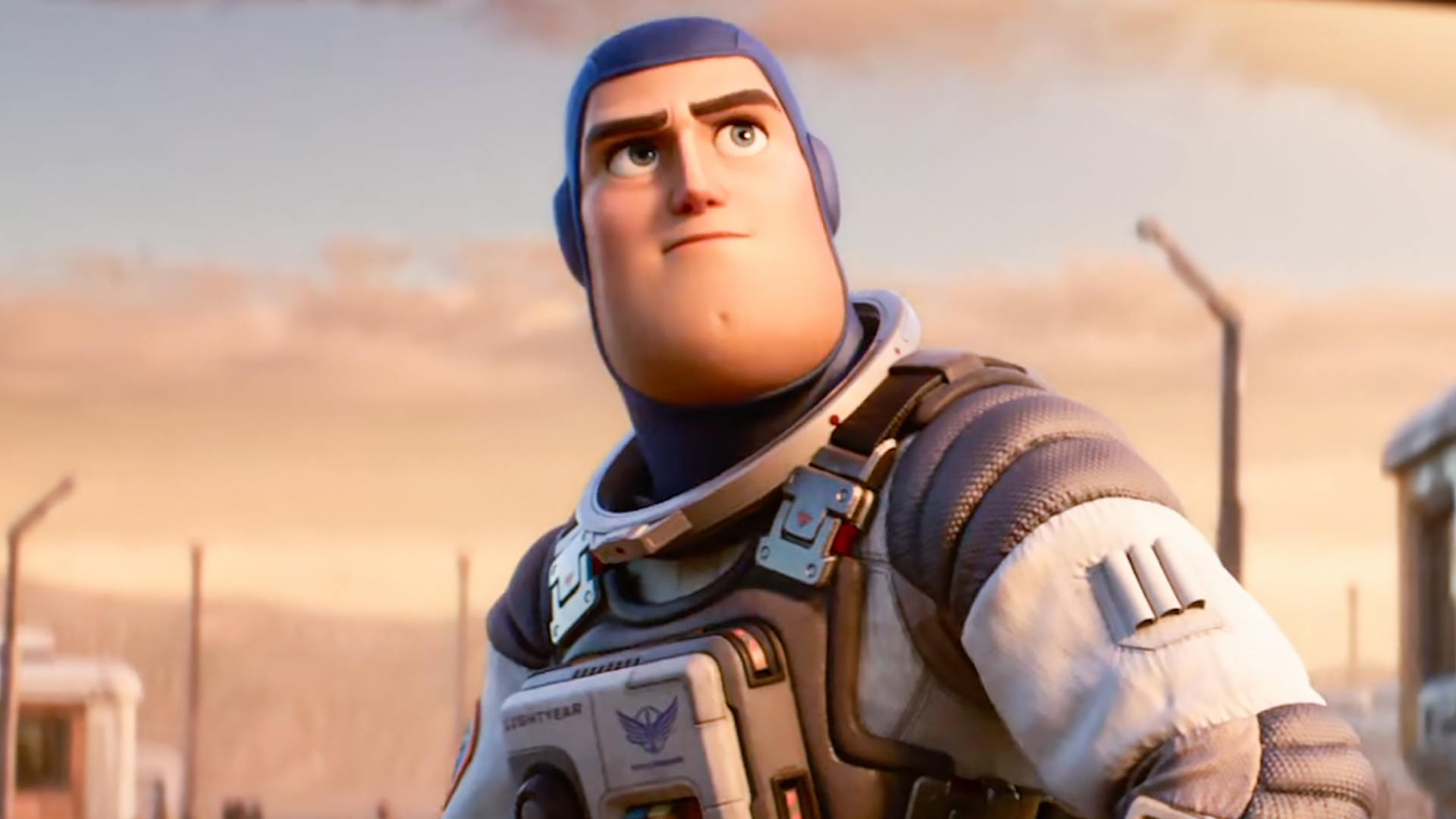
Infinity and Beyond: Buzz Through the Lightyears
List
15 of the Best Animated Movies
From the revered, fantastical animated features of Studio Ghibli to Walt Disney’s hand-drawn masterpieces, the medium presents infinite possibilities. Here, we share our favourite animated movies.