
The Invite Review: An Old-School Comedy of Marital Manners
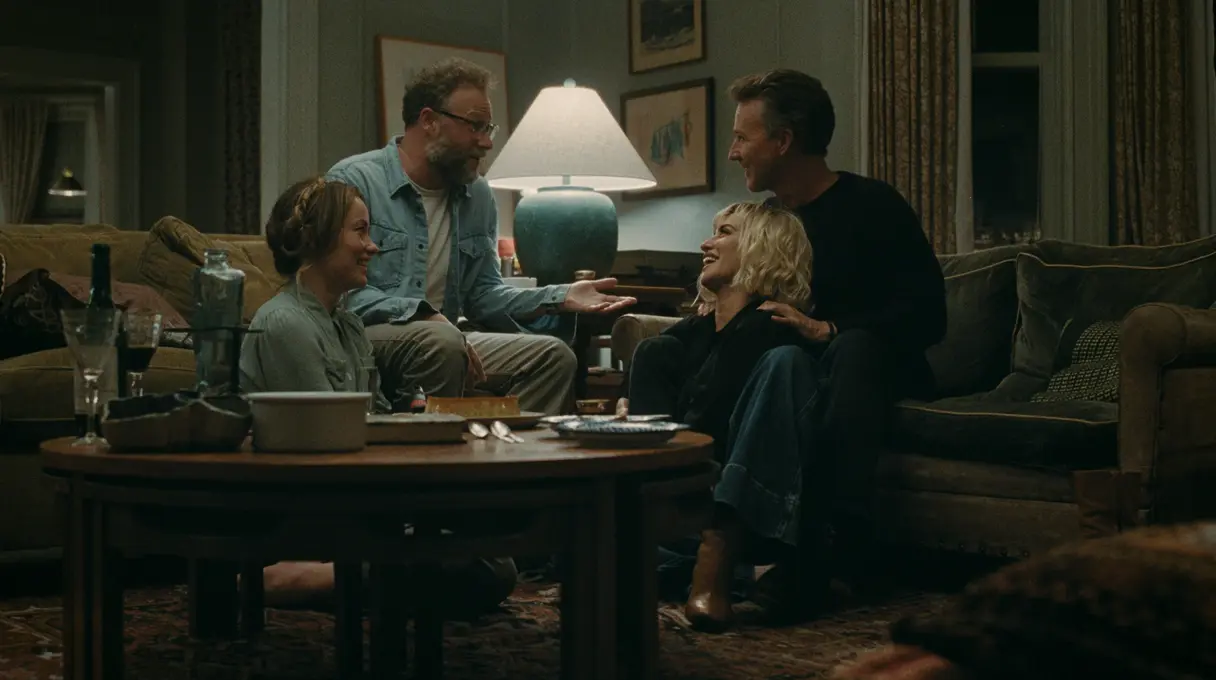

Olivia Wilde returns to form with a stripped-back, adroitly performed character piece that feels like a Seventies movie, writes Yasmin Omar.
There’s a tacit social contract that forms between neighbours in city apartment buildings. You live on top of each other but, for the most part, you don’t talk. Interactions are limited to pleasantries at best – although, depending on your disposition, silence might be preferred. The Invite’s Joe (Seth Rogen), who resides in his late parents’ San Francisco flat, is a silence guy.
An irritable misanthrope, he’s irked that his neighbours try to engage him in conversation in the lift, and positively seething that they keep him up at night with their furniture-rattling, eardrum-perforating sex. When his attention-starved wife Angela (Olivia Wilde, who also directs the film) suggests said neighbours (Penélope Cruz and Edward Norton) come over one evening, the partners’ motives are diametrically opposed. Angela wants to get better acquainted with these fun-loving bohemians; Joe wants to confront them with his noise complaint.

WATCH THE INVITE IN CINEMAS
Book TicketsThe Invite is, for the most part, just four actors talking in a room. Adapted from 2020’s Spanish-language The People Upstairs, the film prioritises characters over concept – and it’s all the better for it. A chamber piece in the vein of Who’s Afraid of Virginia Woolf? (1966), The Invite observes its couples prodding and pushing and testing each other’s boundaries over the course of one emotionally fraught get-together.
Although the film tussles with the evergreen theme of marital dissatisfaction – and arrives after an 18-month glut of women-penned divorce memoirs (Belle Burden’s Strangers, anyone?) – it feels curiously old-fashioned. Remove the smattering of references to podcasts and dating apps, and The Invite could easily take place in 1977, with its Woody Allen clash of uptight, therapised neurotics and liberated, truth-telling interlopers. Rogen’s Joe, running on insecurity and humour-deflection, is the Alvy Singer.

Also familiar – in the context of Rogen’s career, at least – is Joe’s objective, which ultimately boils down to the central conflict of 2014’s frat-house comedy Bad Neighbours, where he plays a new father imploring Zac Efron’s hard-partying brotherhood to ‘keep it down!’. Since the 2000s, Rogen has evolved from incompetent manchild (every Judd Apatow comedy) to happily married parent mourning his pre-baby freedom (Bad Neighbours) to embittered shell of a man constantly spatting with his equally miserable wife (The Invite).
Joe, who was once in a successful band and is now an associate professor at a no-name California conservatory, is mad at the world for giving him a taste of his dream, then ripping it away. The past is painful for him; it promises a future that never materialised. Rogen is reliably funny in the role, a mix of spiky resentment and barely contained rage. It’s a slightly different strain of humour for the actor: fewer pratfalls and dick jokes, more squirming cringe comedy. He knows how to both intensify the tension and cut through it.
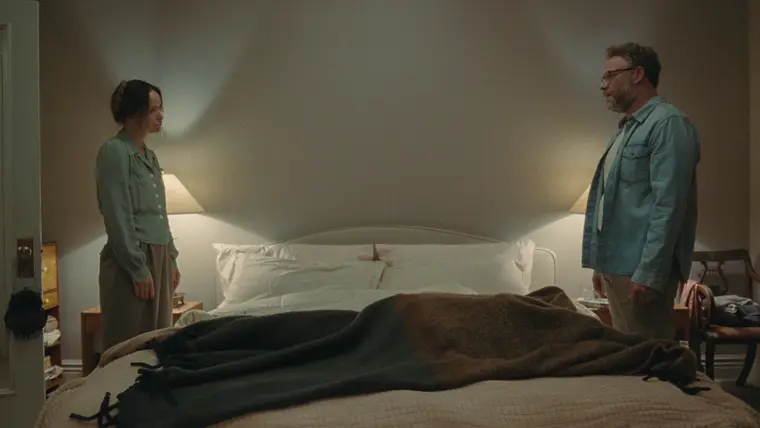
The bickering between Rogen and his on-screen spouse Wilde is brutally realistic – and very funny. The characters’ minor grievances snowball into relationship-ending disagreements before the title card even appears, and continue to wax and wane as revelations ricochet through the night.
This is perhaps an odd remark – given The Invite is only the third movie she’s directed – but it’s something of a comeback vehicle for actor-turned-filmmaker Olivia Wilde. Her second feature, 2022’s baffling pseudofeminist thriller Don’t Worry Darling, was a critical, commercial, reputation-tattering flop. Now, after dusting herself off and poking fun at her fall from grace by playing an outsized version of herself in Rogen’s Hollywood satire The Studio (2025–), Wilde is back. And she’s savvy about her image.
The self-consciously arty visuals of The Invite’s opening minutes – a hazy, honey-glazed sequence of 35mm photography, followed by a series of boxy, style-klaxoning split-screens – practically dares audiences to compare the director to her Studio self, who demands her film be shot on celluloid. After this prologue, Wilde wisely strips away the artifice, letting her unobtrusive camera capture the actors’ body language with wide angles, and facial expressions with close-ups. She recognises that her film’s strength lies in its cast, and steps back to stage their fiery arguments against the cool tones of Joe and Angela’s sea-green apartment.
As Angela, Wilde’s performance is two-fold. The actor is performing a jittery, shallow-breathing people-pleaser; the character is, in turn, performing an idealised version of her marriage for the neighbours. Angela, and her tastefully appointed home, are dressed to impress, each wearing brand-new purchases. Once her guests arrive, she flits around with the ferocious energy of a bluebottle slamming against a locked window, babbling and panicking and perspiring.

Angela has long since renounced her creative ambitions in the service of her family (which includes an absent 12-year-old), and is annoyed that Joe isn’t happier with their current reality or grateful for her sacrifice. Wilde, widening her eyes until they almost pop out of her head, is fantastic as a duty-dimmed woman rekindling her desires.
Cruz and Norton’s couple – Piña and the improbably named Hawk – are, of course, positioned to magnify the issues in our protagonists’ foundering marriage. Their visit jolts Joe and Angela out of their routine, and forces them to reexamine their own relationship. Piña and Hawk are so in sync that they say the same thing at the same time, and spend much of the evening curled around each other, presenting a united, unbreakable front. Most importantly, they’re having sex, lots of it, and Joe and Angela aren’t.
A kittenish, peroxide-blonde Cruz brings European sophistication to the proceedings simply by speaking forthrightly in a Spanish accent, while Norton is hilarious as a former firefighter who’s more Himalayan salt lamp than salt of the earth (this is a man who cries over the beauty of a flea-market rug). Arguing and reconciling, sharing and withholding, the four characters are endlessly compelling.
The Invite’s scale is small and its ambitions modest. With minimal fanfare, it faithfully explores the disappointments and discoveries of middle age with an honesty few studio movies bother with anymore. There’s decidedly more oil than acid in this vinaigrette, but that’s not necessarily a bad thing. Who doesn’t want a little piquancy followed by a smooth, soothing aftertaste?
WATCH THE INVITE IN CINEMAS
RELATED ARTICLES
Article
How Big Tech Became Animation’s Ultimate Supervillain
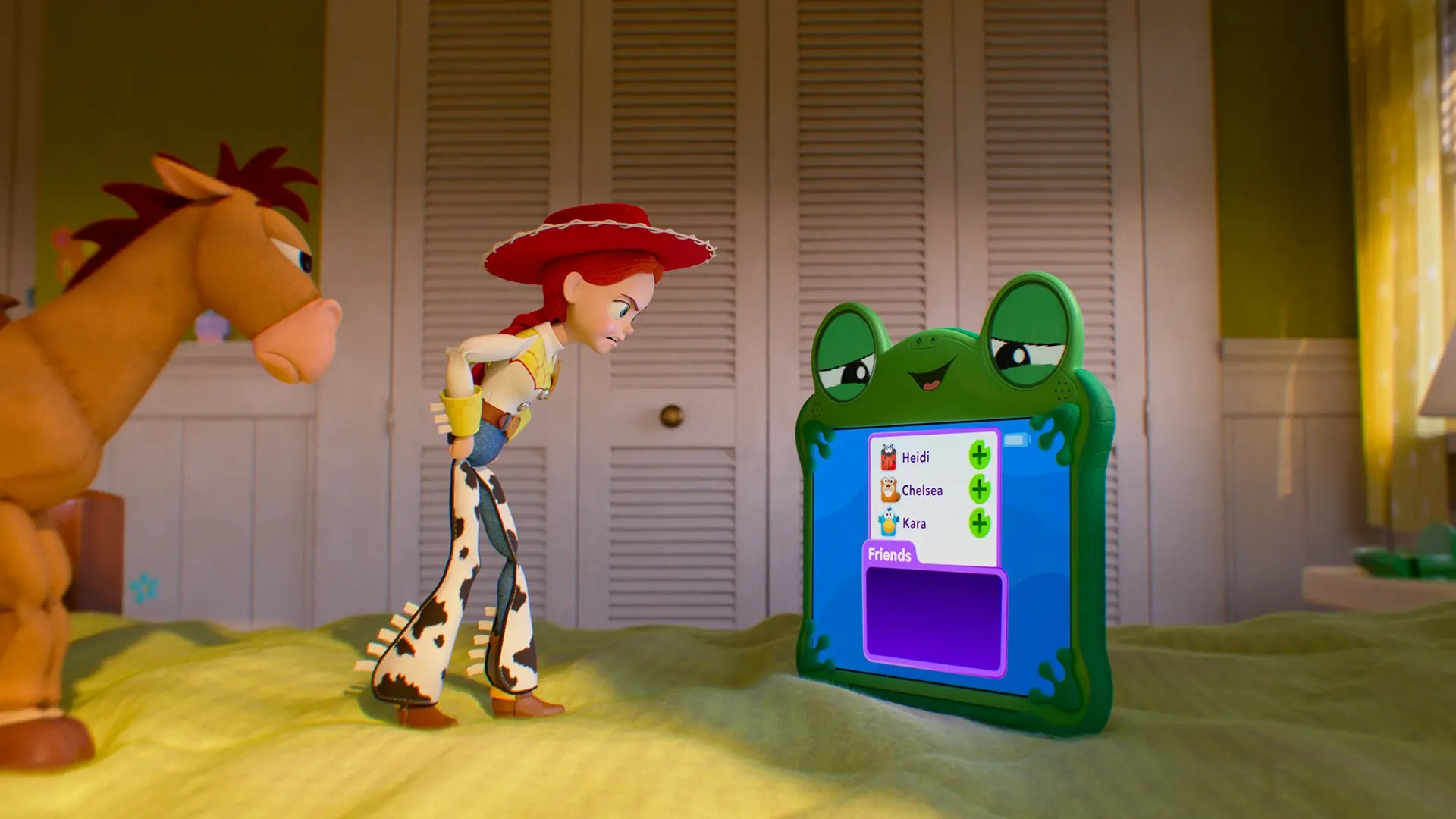
From Ron’s Gone Wrong’s data-mining CEO to Toy Story 5’s attention-sucking AI tablet, there’s been a surprising surge of anti-billionaire techno-pessimism in recent family films. Alistair Ryder investigates the trend.
Article
Spielberg’s Aliens Always Respond to the Moment
From Close Encounters to E.T. and now Disclosure Day, Steven Spielberg has consistently used aliens – and characters’ reactions to them – to comment on America’s evolving sociopolitical anxieties about immigration, government overreach, terrorism and more. By Nadira Begum

Article
Supergirl Has Always Been More Interesting Than Superman
Clark Kent may be an A-list hero, but his cousin Supergirl is the more compelling character. Over nearly seven decades, she’s been a shapeshifting goo, had magic firepowers, dated her superpowered horse and wrestled with real trauma, writes David Opie.