
How Big Tech Became Animation’s Ultimate Supervillain
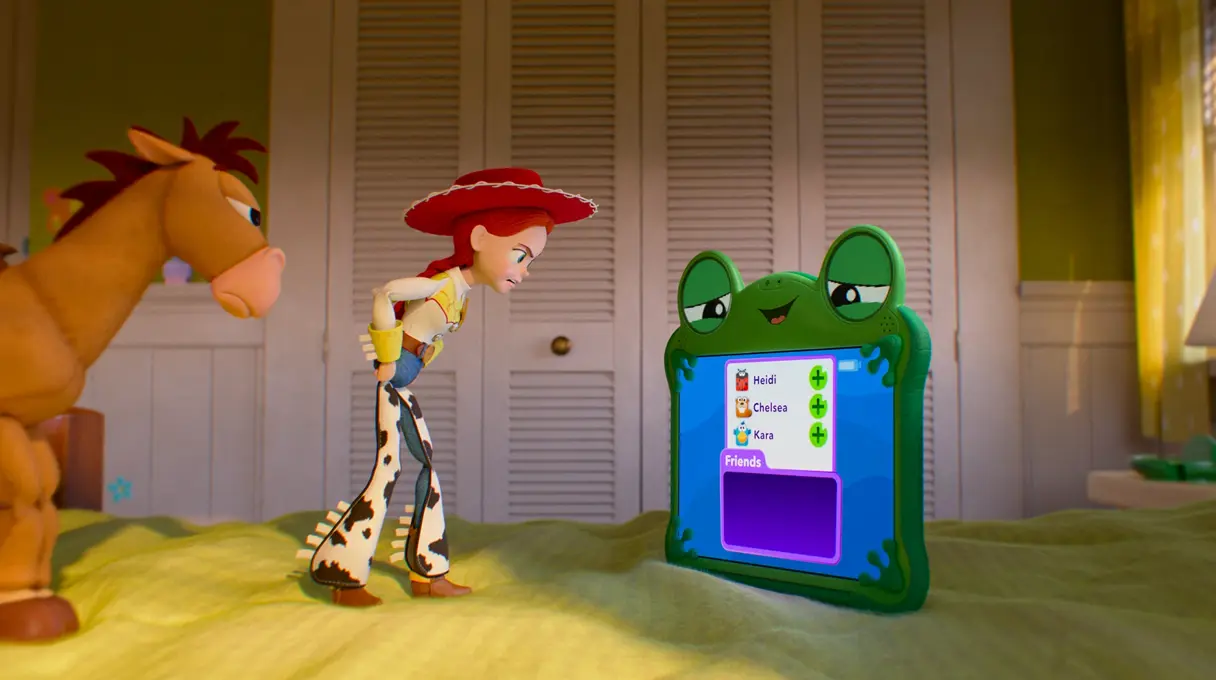

From Ron’s Gone Wrong’s data-mining CEO to Toy Story 5’s attention-sucking AI tablet, there’s been a surprising surge of anti-billionaire techno-pessimism in recent family films. Alistair Ryder investigates the trend.
If you’ve been paying attention to movies over the past few years, you’ll have noticed that villains in popcorn blockbusters have stopped looking like Blofeld and the Joker. Now, they look a lot more like Mark Zuckerberg and Elon Musk. We’re living in the era of the evil tech billionaire, and a whole cottage industry of satirical ‘eat the rich’ movies – particularly Rian Johnson’s Knives Out trilogy (2019-2025), the second of which features its own Musk clone played by Edward Norton – have had their blades sharpened for the world these figures created.
WATCH TOY STORY 5 IN CINEMAS
Book TicketsEven classic villains have been reimagined in their image, with the Lex Luthor of James Gunn’s 2025 Superman reboot proving a threat to humanity because he has as many shady defence contracts as Peter Thiel. This disdain towards Big Tech, and the billionaires in charge of it, is a more recent trend in live action, but it’s far from new. Scepticism arrived a lot earlier in the most unexpected place: family-friendly animation.
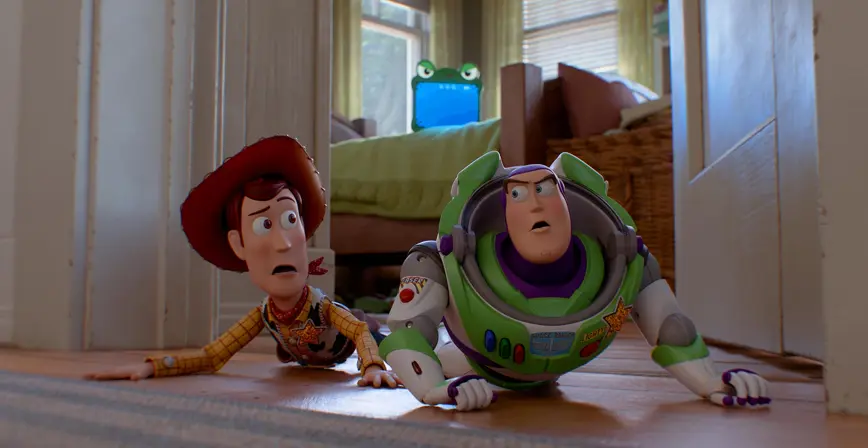
Toy Story 5 doesn’t have a tech-bro supervillain at its disposal, but it does have an addictive, AI-optimised tablet (voiced by Greta Lee) that proves an existential threat for Woody, Buzz and the rest of Andy’s former playthings. Pixar veteran Andrew Stanton, who directed and co-wrote the film, has stated that the Lilypad tablet is far less of a villain than you’d expect, which suggests that the movie will tackle how tech has become integrated into our daily lives, and how we can healthily monitor our use.

This might come as a surprise, as it could be argued that Stanton’s earlier tribute to classic sci-fi – his 2008 masterpiece Wall-E – was one of the key films that helped cement Big Tech as the definitive bogeyman of contemporary animation, long before Zuckerberg or Musk became household names.
We’d seen super-rich baddies and their soulless corporations countless times in the decades up until then, but Stanton’s dystopian tale was particularly prescient. It predicted a bleak future where a rapacious mega conglomerate, Buy n Large, had consolidated such control of every imaginable industry – from agriculture and engineering to government and the media – that the remnants of mankind had long grown complacent and entirely reliant on their support.

There is no human villain in Wall-E; Buy n Large’s AI autopilot is the film’s most evil creation, acting on centuries-old corporate objectives to ensure mankind doesn’t return to the devastated Earth below. Direct lines are drawn between tech, consumerism and environmental collapse in ways that still feel bold for a movie aimed at such a young audience.
In the immediate aftermath of Wall-E, other animators picked up those themes and put a human face on them. Take 2013’s Cloudy with a Chance of Meatballs 2, the pun-heavy animated sequel that featured the voice of Will Forte as Chester V, a Steve Jobs-inspired egotistical CEO and inventor obsessed with capturing the franchise’s food-creation device that wreaks havoc on the environment.

The following year’s Big Hero 6 highlighted the tension between a nepo-baby CEO whose willingness to cut corners cost lives, and a mad scientist keen on obtaining the fleet of high-powered AI drones his corporation had taken ownership of. All these characters adhered to the classic villain blueprint of corrupt geniuses and evil billionaires you’d see in the pages of comic books – with a key difference. They’d been reimagined to respond to the growing anxieties of the digital age.

Interestingly, this shift coincided with Despicable Me’s reformed supervillain Gru (Steve Carell), and his band of bumbling Minions becoming surprisingly enduring family favourites. While other animated bad guys were portrayed as exaggerated mirror images of infamous tech disruptors, there was something quaint about Gru, an old-school evil genius with vague fantasies of taking over the world.
As animated storytellers elsewhere continued to combine current anxieties with classic sci-fi homage to comment on the moment, the Despicable Me franchise feels almost nostalgic. It’s a trip down memory lane to when the bad guys in movies were colourful, eccentric creations that bore no resemblance to destructive oligarchs.

Since today’s animated movies are predominantly aimed at a generation who have grown up in a tech-enhanced world, the films’ social critique has become more urgent. The Mitchells vs The Machines, for example, riffed on longstanding sci-fi tropes of a sentient AI takeover with its depiction of the Olivia Colman-voiced smartphone PAL leading a robot uprising.
But by 2021, when the movie premiered, the approach to telling such a story had transformed to accommodate a begrudging acceptance that we will now always be reliant on technology, and that our devices only become a threat due to addiction and overreliance. PAL’s plan to eradicate humanity only gains steam when she tricks people into using free Wi-Fi, after all.

2021 also saw the release of Ron’s Gone Wrong, which originated from screenwriters Sarah Smith and Peter Baynham’s own concerns regarding their children’s excessive use of devices, and the need to have a wider cultural conversation about the long-term impact of such hardware. Of all these digital-sceptical animated films, theirs is the most damning. Rob Delaney voices the CEO of tech giant Bubble, which has launched a new robot companion with an algorithm that helps children find friends.
Rather than showing how tech can help foster real-world relationships, Ron’s Gone Wrong is deeply critical of this idealised creation. Its tech-bro antagonist openly acknowledges how these devices are a goldmine for harvesting the personal data of a whole new generation. But even while addressing this nefarious practice, the screenwriters are grounded enough in reality to know that these devices can’t disappear. They can, however, be reformed and allowed to co-exist in children’s lives without taking over their playtime altogether.

Which brings us back to Toy Story 5, a full-circle moment for Stanton as it appears to suggest an evolution in the techno-pessimism that defined his earlier Oscar-winning Pixar sci-fi. In an interview with The Wall Street Journal late last year looking back at Wall-E, he said, ‘I’m convinced that AI [...] is going to replace [entertainment-industry] jobs, but it’s not going to replace them seamlessly.’
He believes audiences crave the specific human perspective, and no generative tool can deliver that authenticity. When it comes to the wider labour market, he also remained confident that flesh-and-blood workers would prove resilient – even if they might have to begrudgingly co-exist with machines for a while. ‘I’ve seen the workforce adjust to the disruption of technology several times in my 60 years on the planet,’ he remarked.
It’s a broadly optimistic view that still acknowledges the toothpaste is out of the tube, and that the sensible goal now is minimising the use of this tech as much as possible, especially as corporations are still throwing all they can at new AI software that’s taking over traditional functions on apps and devices. If you’ve tried Googling anything recently, you’ll know how frustratingly unavoidable this has become.

Each of the recent evil tech animated movies acknowledges that, realistically, our devices won’t disappear overnight and make way for a new analogue utopia. Looking back at the near two decades since Wall-E, it’s fascinating how warnings about our reliance on tech in animated movies have transformed into more of a reluctant acceptance of their staying power – without ever pedalling the delusional idea that they could be a force for good.
This terminally online world is the only one the youngest audiences seeing Toy Story 5 will have experienced, and over-the-top supervillains are no longer necessary to illustrate the damage that reliance on these devices can cause. Today’s kids have access to tablets, smartphones and various AI web-search functions that we can’t just get rid of. But we can get them to log off for a little while, and if Toy Story 5 inspires only a dozen kids to do that, it’ll still be a resounding success.
WATCH TOY STORY 5 IN CINEMAS
RELATED ARTICLES
Article
The Power of Memory in Pixar Movies
The most heartbreaking sequences in the animation studio’s filmography tend to revisit the characters’ painful pasts to pave the way for their emotional catharses, writes Yasmin Omar.
Article
The Curious Way Pixar Films Change in (Almost) Every Country
David Opie delves into the animation studio’s strange phenomenon of localisation, whereby cultural signifiers – from Inside Out’s Japanese vegetables to Coco’s Portuguese title – are altered to better serve international audiences.
Article