
Best Unfilmable Book Adaptations


Paul Thomas Anderson’s One Battle After Another sees him tackle another Thomas Pynchon novel. But unlike his more faithful (but still inventive) 2014 adaptation of the author’s Inherent Vice, Anderson’s take on 1990’s Vineland adopts a looser, freer approach. As such, it’s more akin to There Will Be Blood (2007), the filmmaker’s informal interpretation of Upton Sinclair’s 1926 novel Oil! Nevertheless, Anderson has staked his claim as a filmmaker who relishes the opportunity to channel works that some might consider impossible to transfer to the big screen. And he’s not the only one. Here, we’ve gathered a list of the best, most problematic and, in some instances, most inspiring examples of the ‘unfilmable’ novel.
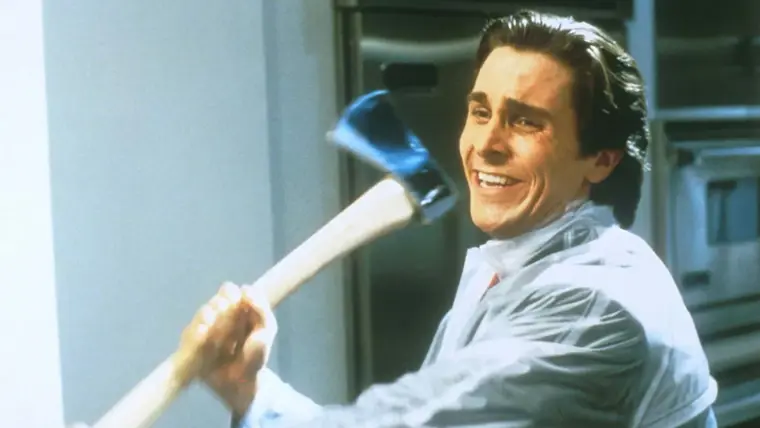
American Psycho (2000)
A faithful adaptation of Bret Easton Ellis’ withering critique of 1980s Wall Street culture would never have made it to the screen. Whether the violence detailed in the novel is actually committed by its bland, narcissistic protagonist, Patrick Bateman, or is merely a figment of his twisted imagination matters little. The scene with the rats and chainsaw alone would likely see the film banned, or heavily censored, in most countries. Mary Harron, the director of I Shot Andy Warhol (1996), co-writing the screenplay with Guinevere Turner (Go Fish, 1994), chose to play to the book’s comic strengths.
Her 2000 film, featuring a star-making performance by Christian Bale, jettisons most of the extreme violence while keeping an edgy unease and building on Ellis’ caustic satire. In spirit, it successfully conveys the novel’s withering takedown of finance bros and features a wealth of comic set-pieces, from the despatching of Jared Leto’s feckless banker to the discussion of who has the best business card. A Luca Guadagnino remake – rumoured to be starring Austin Butler – has been announced, but it’s difficult to imagine anyone bettering what Harron and Bale achieved here.
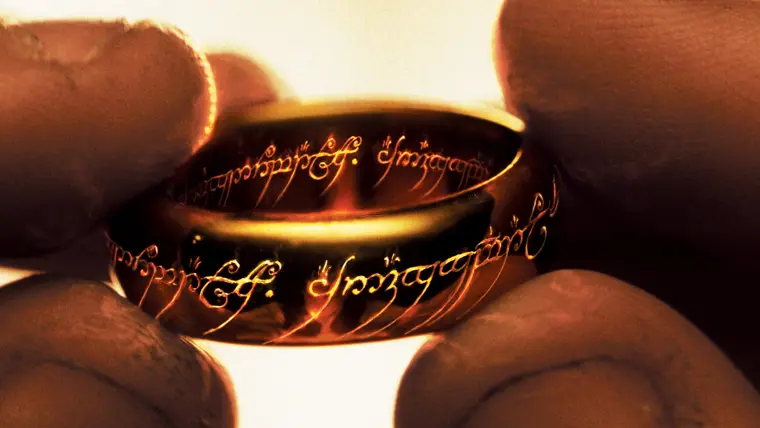
The Lord of the Rings trilogy (2001-2003)
It’s less one ring than the rapid advances of CGI technology that allowed Peter Jackson to rule over Middle-earth with his gargantuan three-part adaptation of JRR Tolkien’s epic fantasy. A feat of screenwriting dexterity saw Jackson, Fran Walsh and Philippa Boyens transform a weighty, list-heavy tome into thrilling cinema on the grandest scale, losing none of the details that made the books so beloved, and giving weight to the expansive cast of heroes, wizards, warlocks and monsters.
Jackson’s ambitions are made clear with the opening to the first film, The Fellowship of the Ring (2001). Cate Blanchett’s Galadriel guides us through centuries of Middle-earth lore – context to the action that’s about to unfold. Take a look at the lumbering two-minute narration at the start of David Lynch’s Dune (1984) to see just how cleverly this opening immerses us in Tolkien’s world. If the final part, The Return of the King (2003), ultimately outstays its welcome with far too many endings, it’s a minor quibble in an adaptation whose pleasures are many.
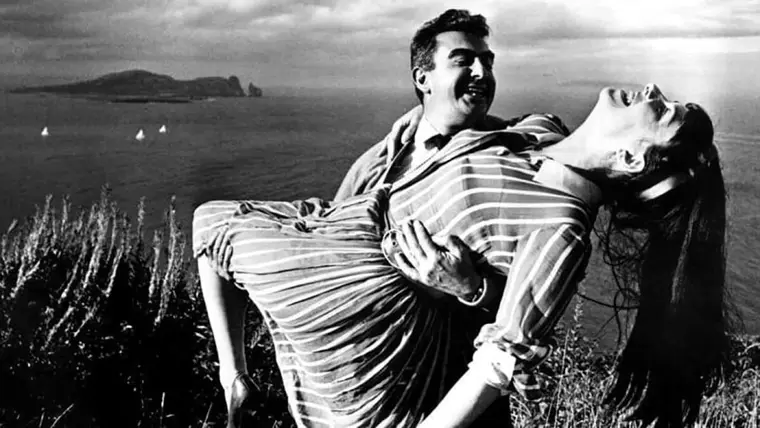
Ulysses (1967)
A novel that unfolds over the course of one day, yet covers a far greater amount of time and history, and whose allusions require a list of footnotes at least as long as the novel itself, James Joyce’s 1922 modernist classic may be a cornerstone of English literature, but it’s hardly the most cinematic of propositions. Step in Joseph Strick. A director, producer and successful businessman, Strick was a camera operator for the US Army during World War II. After a couple of independent features and a provocative adaptation of Jean Genet’s play The Balcony (1963), he travelled to Dublin to film Joyce’s notoriously ‘difficult’ novel.
The result divided critics, with Pauline Kael describing it as ‘an act of homage in the form of readings... plus slides’, while Roger Ebert saw it as entering ‘the minds of recognisable human beings and revealed their thoughts about those things most important to them – expressed in the only words they knew’. If it was a challenge to bring to the screen, it didn’t stop Strick from further literary adaptations. Two years later, he joined forces with classical Hollywood director George Cukor to take on Lawrence Durrell’s Justine (part of the Alexandria Quartet); followed by Henry Miller’s Tropic of Cancer in 1970; and another Joyce novel, the more approachable A Portrait of the Artist as a Young Man, in 1977.
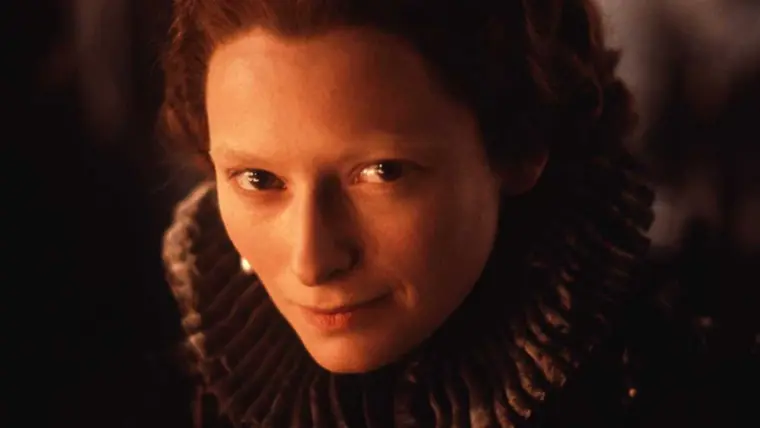
Orlando (1992)
There hasn’t been a moment in the last century when Virginia Woolf’s 1928 tale of a poet who changes sex from a man to a woman, lives for centuries and is a regular of each era’s literary circles, hasn’t felt utterly relevant. But the challenge for any filmmaker lies in finding a way to create an utterly credible protagonist, believable as an idealistic young man and a woman who profits from then suffers and ultimately rebels against patriarchal values.
Sally Potter’s 1992 adaptation is sublime and slyly witty, and would likely have made an excellent adaptation no matter who portrayed the titular hero. But in Tilda Swinton, Potter found the perfect actor to play the androgynous young man whose gender changes as he travels around the world. Moreover, casting Quentin Crisp as Queen Elizabeth I – and Jimmy Somerville as a sweet-voiced member of the royal court, and then a cherub, in the film’s closing moments – adds to the gender-fluid nature of Woolf’s wonderful story. What might have seemed impossible became one of the most original and richly cinematic British films of the 1990s.
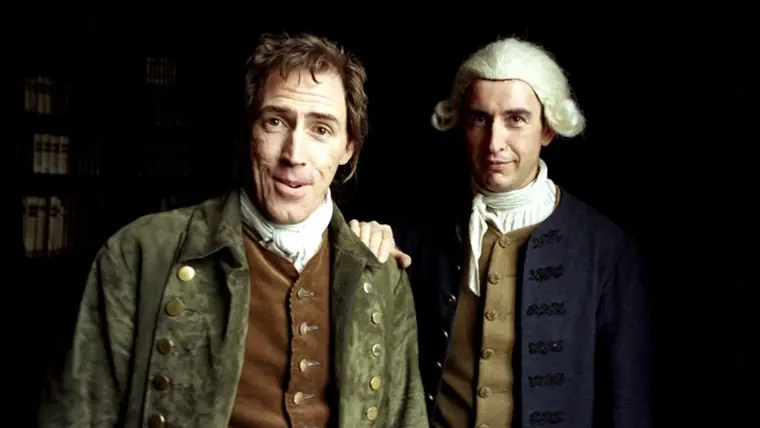
A Cock and Bull Story (2005)
Laurence Sterne’s The Life and Opinions of Tristram Shandy, Gentleman (1759-1767) was published in nine volumes over eight years and intended as a fictional biography of its eponymous hero, novelist and Anglican cleric. This humorous tale is defined by endless – often hilarious – digressions, typographic experiments, extensive referencing of other works of fiction and philosophy, stream-of-consciousness passages and a general unwillingness to shoot straight with his narrative when he can lead an entertaining merry-go-round of obfuscatory discourses. That might sound like a challenging read, but its playfulness and humour is infectious. Though not an immediate choice for adaptation.
Step in director Michael Winterbottom, writer Martin Hardy and a game cast, who bring Sterne’s world exuberantly to life in the 2005 comedy A Cock and Bull Story. Like Gilliam’s Quixote adaptation, Winterbottom steers clear of a literal interpretation, instead presenting a film about an attempted film adaptation. The stars play themselves, as egos, hubris and production woes create chaos. The heart of it is the testy relationship between Steve Coogan and Rob Brydon, whose combination of comic competitiveness and fragile egos would make their subsequent collaboration with Winterbottom on The Trip series (2010-2020) so hilarious. It may be a loose adaptation of Sterne’s novel, but A Cock and Bull Story perfectly captures the spirit of the writer’s work.
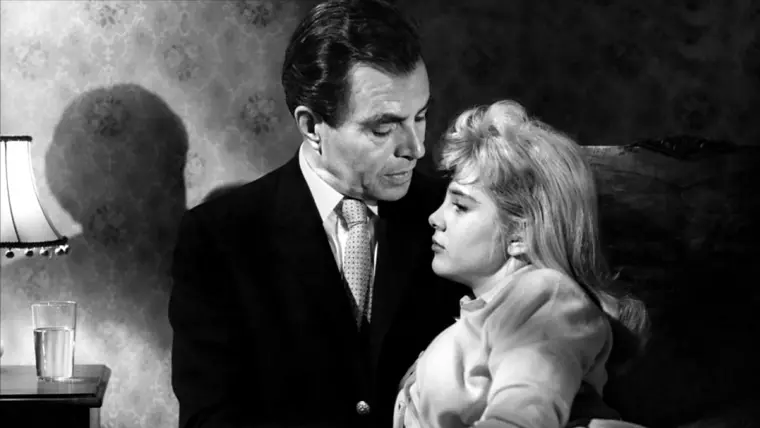
Lolita (1962)
A simple logline for Vladimir Nabokov’s controversial novel makes clear why a film adaptation might prove to be an uneasy proposition. A French literature professor moves to New England, under the pseudonym Humbert Humbert, and enters into an illegal and sexually abusive relationship with a 12-year-old girl after he becomes her stepfather. What this description doesn’t capture is the withering satire at the heart of Nabokov’s most (in)famous work. But this mattered little to campaigners for moral decency, who were outraged that any Hollywood studio would consider adapting it.
Nevertheless, in 1962 Stanley Kubrick pressed ahead with his film, starring James Mason, Sue Lyon and Peter Sellers. Although credited to Nabokov, the screenplay was mostly rewritten by Kubrick and producer James B Harris, with the consent of the author. It’s a masterclass in taking a controversial book and broadening its appeal while losing none of what made it so unique in the first place. It’s also very, very funny. There was a 1997 version directed by Adrian Lyne, starring an impressive Jeremy Irons, but it lacked bite.
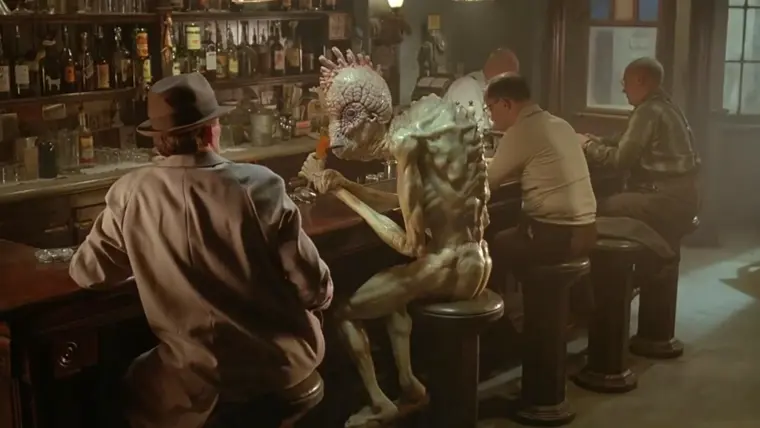
Naked Lunch (1991)
It’s not just that William Burroughs’ most famous and controversial work would be a challenge to faithfully adapt. It’s whether anyone would want to delve that far into the author’s imagination. But if anyone could do it, David Cronenberg could. What emerges from his 1991 feature is a combination of elements from Burroughs’ book, along with other works he wrote and key moments from his life.
At times, with its talking bugs, rectal typewriters and the ubiquitous presence of Dr Benway – one of Burroughs’ most disturbing characters, brilliantly played by Jaws and The French Connection’s Roy Scheider – it can feel like a greatest-hits tour through the author’s neuroses and preoccupations. But there’s no denying the film’s strange pull. Cronenberg would subsequently go on to adapt other problematic, seemingly unfilmable novels for the screen: JG Ballard’s Crash (1996), Patrick McGrath’s Spider (2002) and Don DeLillo’s Cosmopolis (2012).
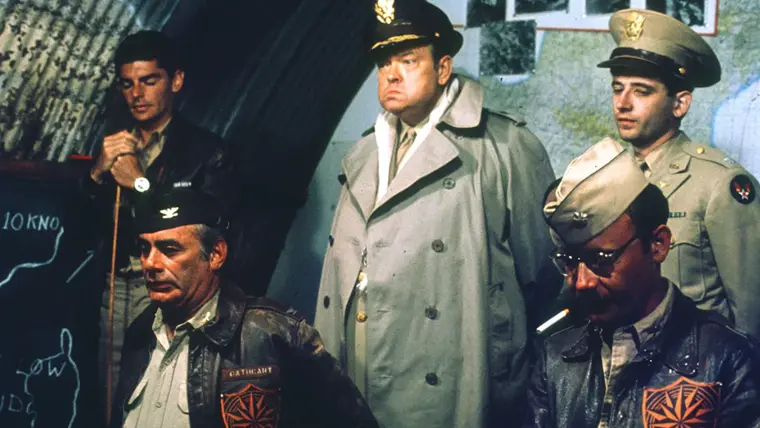
Catch-22 (1970)
Arguably one of the funniest novels ever written, Joseph Heller’s World War II satire, chronicling the absurdity of war and the ineptness of those leading the charge, saw the director and writer of The Graduate (1967), Mike Nichols and Buck Henry, attempt to strike gold again. The result didn’t quite play out that way. The gag quota of Heller’s novel is impressively high, but that humour isn’t easily transferred to the screen. Nichols was also a relatively inexperienced director (his debut, 1966’s Who’s Afraid of Virginia Woolf? was coruscatingly effective, but remained faithful to its theatrical origins, while The Graduate worked because Nichols and Henry maintained a tight grip on the contemporary narrative).
Catch-22 plays out on a huge canvas with a large cast of important speaking parts. When the film finally emerged, it was in the same year as Robert Altman’s M*A*S*H (1970), which seemed far more in tune with the times. Nevertheless, there are wonderful moments, Alan Arkin is sublime as Yossarian, one of the key protagonists, and it’s far better than the woefully inert 2019 TV adaptation.
Don Quixote (1957)
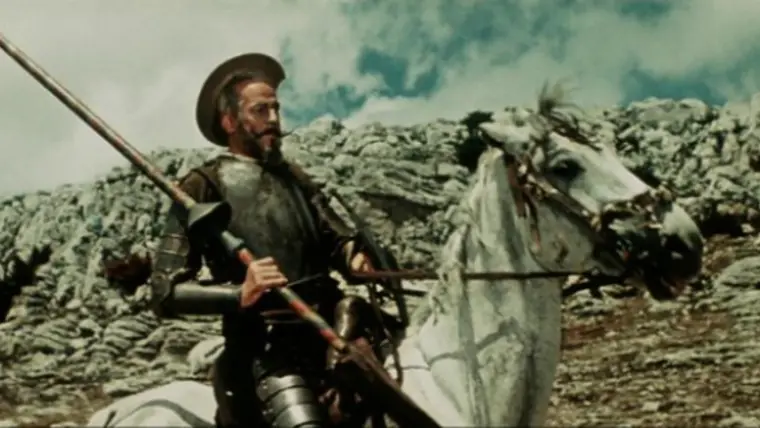
Regarded as the first true novel, Miguel de Cervantes’ 1605 story of the journey undertaken by a man who imagines himself a knight in the order of the chivalric tales that have obsessed him, sees him embark on an adventure with his faithful but doubting squire Sancho Panza. The challenge for filmmakers is whether to render Quixote’s adventures as real. There have been numerous adaptations, including a successful 1960s Broadway musical Man of La Mancha, and its subsequent 1972 screen adaptation starring Peter O’Toole. Before he directed acclaimed versions of Hamlet (1964) and King Lear (1971), Russian filmmaker Grigori Kozintsev directed a 1957 adaptation that is widely admired.
However, the filmmaker most closely associated with Cervantes’ tale is Terry Gilliam. His style of fantastical cinema made him a perfect choice to adapt the book. But his 2018 meta-take, though cleverly constructed, was something of a disappointment after almost three decades of trying to get the project off the ground. He came close once before, in a production that starred Jean Rochefort and Johnny Depp. But it was plagued by a series of mishaps, which made their way into 2002’s hilarious (not) making-of documentary Lost in La Mancha. In it, Gilliam himself comes across as a Quixote-like character and the film might ultimately be the closest in spirit to the original novel: a tale of dreams forsaken by the realities of everyday life.
A Clockwork Orange (1971)
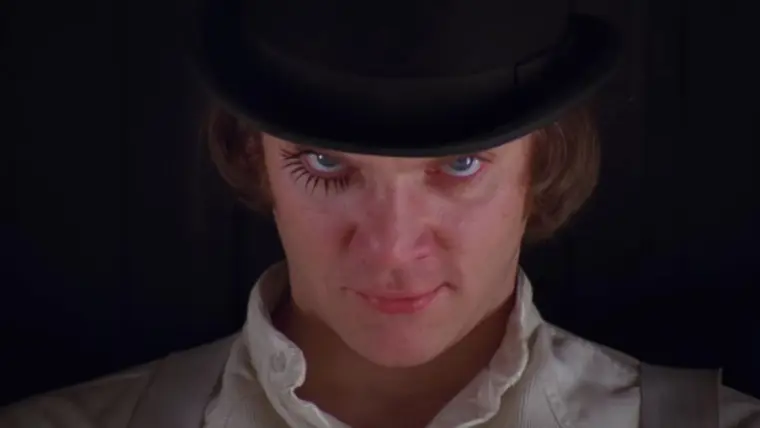
For years, it was almost impossible to see Stanley Kubrick’s 1971 adaptation of Anthony Burgess’ occasionally shocking novel on British screens. A spate of crimes, claimed by the media to be a direct copy of the action in the film, saw Kubrick himself withdraw it from UK exhibition. (It only came back into view following the filmmaker’s death in 1999.) That only added to the film’s legend, which had begun following the announcement that Kubrick would follow up 2001: A Space Odyssey (1968) with the adaptation.
Burgess’ novel was widely admired, but the violence in it was deemed too much for any transfer to the screen. That didn’t stop Kubrick. The first section of his film is unrelenting, but also brilliant in capturing the protagonist’s amoral world. And the director chose to end the film as the American edition of the book does, minus the 21st chapter in which Alex recognises the error of his ways. Instead, we’re left with an image of violent, orgiastic glory.
Dune (2021)
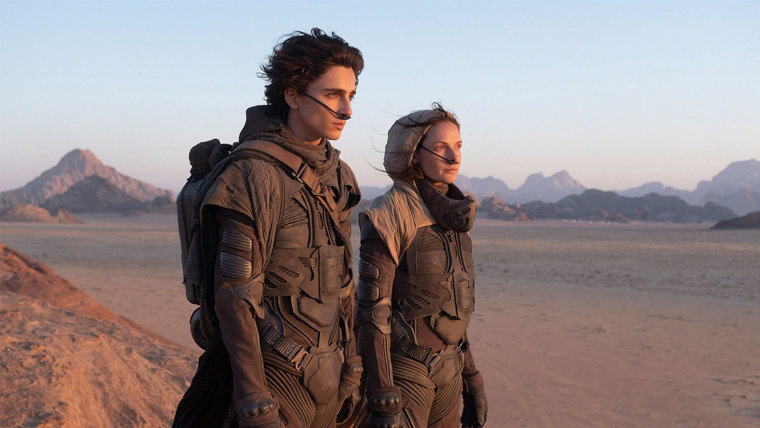
History will likely hold up Denis Villeneuve’s grand saga (2021-) as the definitive version of Frank Herbert’s sprawling space opera. He certainly succeeded in channelling the author’s baggy story into a cogent and mostly coherent narrative with huge multiplex appeal. But along the way Villeneuve lost some of the bizarreness that made Herbert’s novels such a perplexing, quixotic entertainment. Perhaps the best window into how weird an adaptation of Dune could have been is Frank Pavich's immensely entertaining 2013 documentary Jodorowsky's Dune.
It details how Alejandro Jodorowsky, the Chilean director of cult classics El Topo (1970), The Holy Mountain (1973) and Santa Sangre (1989) spent years in the 1970s trying to convince Hollywood studios to greenlight a record budget for an adaptation that would likely have been more trippy than commercial. Then came David Lynch’s much-maligned – even by the director – version. It doesn’t possess the pummelling narrative drive of Villeneuve’s hugely accomplished films, but there is something joyfully off-key and grotesque in Lynch’s version that the recent adaptations (and various TV spin-offs) lack.
A Scanner Darkly (2006)
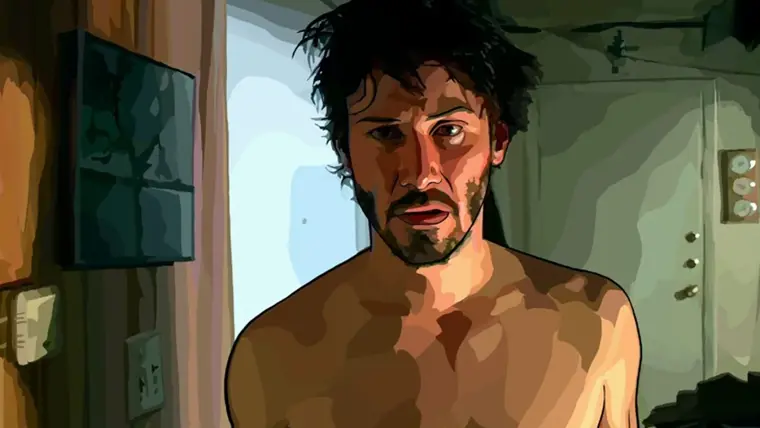
Even in the universe of head-fuckery that is the fiction of Philip K Dick, there’s something truly perverse about this late-career novel. It follows the investigations of Bob Arctor, an undercover police agent surveilling a household of drug users, which includes himself. Because of the substance he is using as the dealer, his personality has been divided into two.
Dick’s work has often made a successful transition to the screen, in films like Blade Runner (1982, adapted from 1968’s Do Androids Dream of Electric Sheep?), Total Recall (1990, the 1966 short story We Can Remember It for You Wholesale) and Minority Report (2002, taken from a 1956 short story). But in adapting A Scanner Darkly (2006), Richard Linklater adopted a unique approach. Having previously employed Rotoscope animation (tracing over motion-picture footage frame by frame) for his trippy Waking Life (2001), Linklater created a weird world of swirling colours that perfectly matched Dick’s vision, aided in no small part by Keanu Reeves, who was rarely better, as the confused and increasingly desperate Arctor.
Life of Pi (2012)
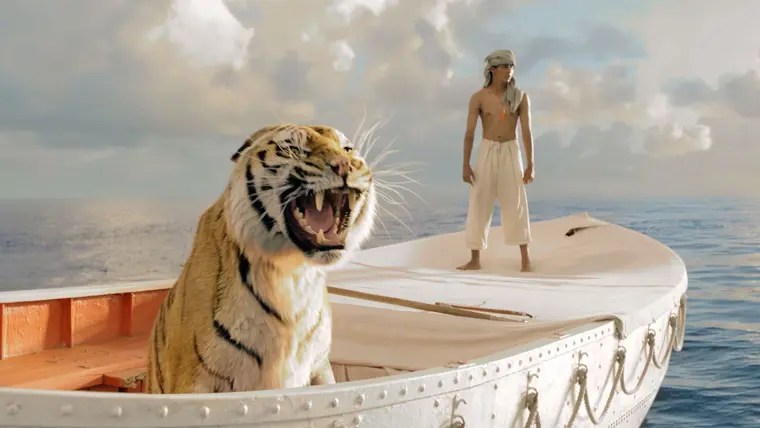
What could be so difficult about adapting Yann Martel’s Man Booker Prize-winning philosophical fable? Aside from the fact that most of the film unfolds on a boat occupied by a young boy and voracious 450-pound Bengal tiger named Richard Parker. A variety of directors came aboard the adaptation, only to find themselves flailing in uncharted waters at the challenge of realising the gorgeous simplicity of Martel’s tale. Then, in 2009, Ang Lee was announced as director and made the decision to shoot in 3D.
As the filmmaker – who went on to win his second Best Director Oscar for the movie – noted, ‘I thought water, with its transparency and reflection, the way it comes out to you in 3D, would create a new theatrical experience and maybe the audience or the studio would open up their minds a little bit to accept something different.’ Life of Pi (2012) is one of the creative highpoints of a much-maligned format, employing 3D technology with state-of-the-art visual effects to realise Martel’s world. A decade on, it’s one of the few effects-laden films not to look dated.
WATCH ONE BATTLE AFTER ANOTHER IN CINEMAS
RELATED ARTICLES
List
What to Watch at the 2025 BFI London Film Festival
The 2025 edition of the BFI London Film Festival features one of strongest line-ups in years. We give the lowdown on the highlights and screenings to look out for at Curzon cinemas.
Article
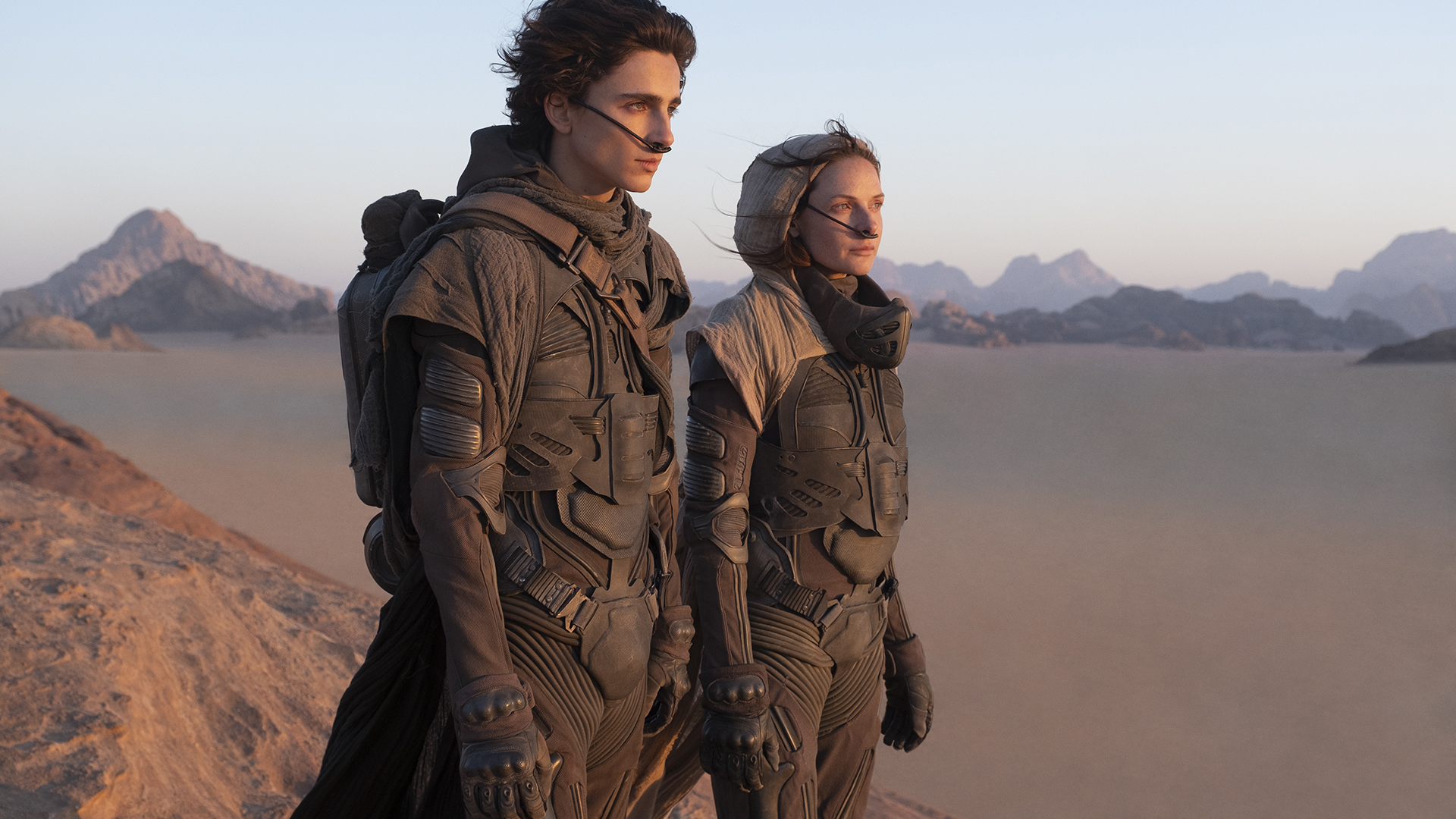
Adapting Dune: The Universe in a Grain of Sand
Article
In Queer, Art Imitates Life
On the occasion of Luca Guadagnino’s screen adaptation of William S Burroughs’ sexually charged novel, Ian Haydn Smith considers how the self-confessed ‘literary outlaw’ folded his personal experiences into the book.