
Plainclothes: 'A Study of Shame'
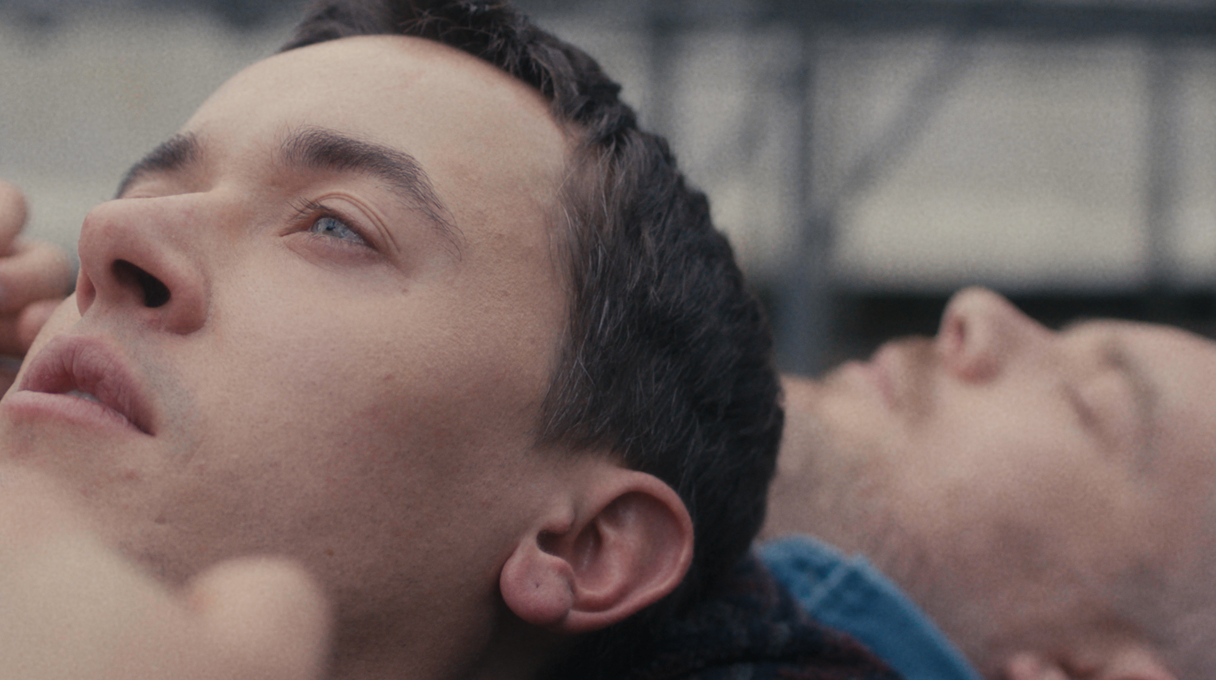

Lucas (Tom Blyth) is a police officer in 1997 with a big secret. As part of his duties, he roams the malls of Syracuse, New York, entraping gay men in public bathrooms. There’s a ruthlessness and detached quality to the work he excels in, but everything changes when he nearly entraps Andrew (Russell Tovey). In an era where homosexuality is illegal, and the constant threat of surveillance and being discovered looms large, Lucas finds himself mesmerised by Andrew, and the feeling is mutual. In writer-director Carmen Emmi’s debut film, Plainclothes, Lucas and Andrew embark on a romance that threatens to destroy both of their lives forever.
When reading the script, Blyth was drawn to Lucas’ layered conflict. ‘[Lucas] is hiding on so many levels; he’s hiding his truth from himself, but also his family, the cops he works for, and the people he’s trying to entrap because he sees himself in them,’ says Blyth. ‘He just seemed intensely complex. There was so much self-hatred, which I wanted to get under his skin and work out his psyche.’ Similarly, Tovey was compelled by Andrew. ‘It’s a study of shame and what shame does to us, and how you overcompensate or become a version of yourself just to survive. And Andrew is a survivor,’ says Tovey.
The protagonists' mutual sense of internalised homophobia was inspired by an incident in Emmi’s upbringing in a grocery store, where he oversaw a woman covering up a magazine that announced Ellen DeGeneres was coming out as gay. ‘I remember clocking that gay was bad, because of the way she was disgusted by it. I remember thinking that’s not something I wanted to be, because it was something people didn’t like,’ he says. It’s a shared experience for countless queer people, as they navigate a world that sees them as other or less than. That’s especially true for Lucas and Andrew, who grew up at the same time as Emmi, where they, and other gay men, had no choice but to live in the shadows. The easiest way to meet other men was loaded with risk: cruising.
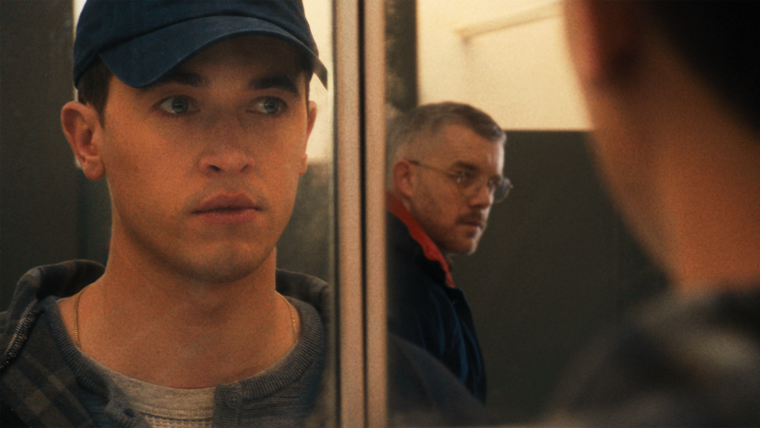
Gay cruising has a reputation for being seedy and underhanded, especially if you’ve seen William Friedkin’s 1980 film Cruising. But Emmi wanted to show something that’s often portrayed as uncouth in a different light: ‘Cruising exists in the cracks of society,’ he says. ‘I wanted to show how beautiful it is. That’s how it feels to me, and that’s how I wanted Lucas’s first experience when a guy touches him. I didn’t want it to be seedy and scary.’
Joy radiates off the screen when Lucas and Andrew are together, and their fears of being exposed as homosexual fall by the wayside. There’s a palpable sense of peace when the two of them are together, which culminates in a remarkably powerful sex scene. It’s one of the most realistic depictions of queer intimacy you can find in a film. ‘I wanted Andrew to have condoms because of the time period,’ notes Tovey. ‘We wanted to capture the reality, the ephemera, of what it is to have sex,’ he adds. It’s an essential moment in Plainclothes – the solidification of Andrew and Lucas’ long-dormant desires – and an explosive connection between two men, whose true feelings are only allowed to reveal themselves when no one else is watching.
‘More than any project I’ve done, the sex scene feels so necessary,’ says Blyth. ‘This whole story is about Lucas trying to be who he wants to be, being with someone he wants to be in love with, and needs to be in love with, and you need to see that.’ While Lucas and Andrew make love, they’re surrounded by darkness, and the music crescendos. ‘It’s almost like the outside world falls away. They’re in this space that’s just for them, and nothing else matters around them. It captures that experience of two people truly in the moment with each other. Nothing else matters,’ says Blyth.
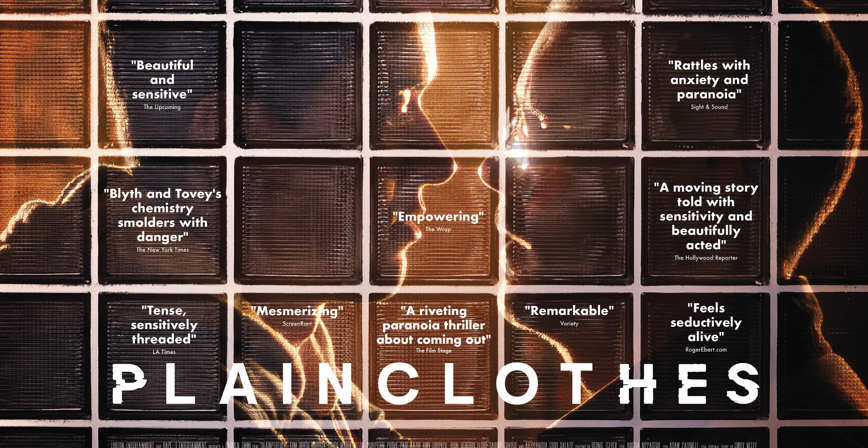
PLAINCLOTHES IS OUT NOW
Book Tickets HereIt’s the film’s pivotal moment, full of unfettered passion, yet Emmi makes a bold choice to cross-cut between the sex and a scene where Lucas is at his mom’s house for Thanksgiving dinner, and is terrified that people have discovered his secret. It’s a moment that reminds us that even when these two men can live as their most authentic selves, that fear of being seen, of being surveilled, is still palpable. ‘I wanted to explore what it might feel like when you’re going through those motions,’ says Emmi. ‘You feel guilty. You’re thinking about what your parents might think, what your uncle is going to say, all while you’re trying to connect with someone.’
Though Plainclothes can be a stressful watch, it’s not a pessimistic one. Historically, queer films are often marred by devastation, and gay characters regularly end up alone and miserable, or in many instances, dead. Bucking the all too common trend, Plainclothes is refreshingly optimistic in the face of Lucas and Andrew’s circumstances. ‘In films of this period, we’re used to the queer narrative being a huge tragedy, and Plainclothes isn’t. It ends with such hope,’ Tovey says. That sense of optimism comes naturally to Emmi. ‘Even though there’s a lot of darkness,’ says Emmi, ‘I always try and find the light. I didn’t want anyone to die in this film. I wanted a hopeful ending, because I wanted to create something that my younger self would have been able to enjoy, and feel safe to come out after watching.’
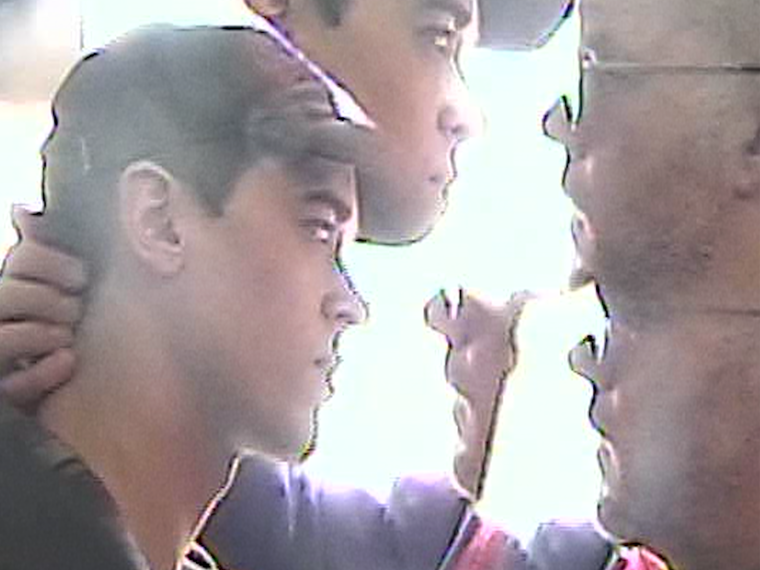
It’s a positivity all the more welcome given that, whilst the film is a period piece, it ‘couldn’t be more on the pulse,’ according to Tovey. That’s because the police entrapping gay men is far from over. Just the other week, Out Magazine reported that since June, police in the US have been using the app Sniffies to entrap over 200 men, who've been arrested for public lewdness at a Penn Station bathroom, and at least 20 have been taken into ICE custody. ‘You don’t realise how, a year after making the film, things would have gotten worse, and be resonating even more,’ says Blyth.
This revelation makes Plainclothes all the more impactful. To see these two men, in the ‘cracks’ of society, finding each other and longing for something greater, is extremely touching. Tovey hopes the film will encourage people to see things differently: ‘I hope that people will discover this film and humanise these characters – not other them, which is what a lot of journalism and rhetoric from the government is trying to do [these days]. The film is not a period piece anymore. It’s contemporary.’
PLAINCLOTHES IS IN CINEMAS TODAY
RELATED ARTICLES
Interview
Deaf's Cinematic Language
Eva Libertad, the writer-director of the moving drama Deaf, discusses the inspiration behind the story and how that informed the film’s cinematic language.
Review
The Mastermind Review: Kelly Reichardt Deconstructs the Heist Movie
Rejecting genre convention, the would-be thriller rushes through the theft, then lingers on its consequences. It’s a satisfying, character-driven choice, writes Yasmin Omar.
Review
Jay Kelly Review: George Clooney Contemplates His Own Stardom
A lightly metatextual portrait of its A-list actor, Noah Baumbach’s wistful, bittersweet character study explores the personal cost of fame and the artifice inherent in being a silver-screen icon. By Yasmin Omar