
Deaf's Cinematic Language

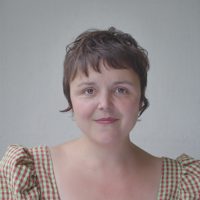
Eva Libertad, the writer-director of the moving drama Deaf, discusses the inspiration behind the story and how that informed the film’s cinematic language.
SOPHIA SATCHELL-BAEZA: WHAT WAS THE ORIGIN STORY OF DEAF?
EVA LIBERTAD: Deaf came from a desire to explore the connections between the hearing world and the deaf one. My sister, Miriam Garlo, who plays Ángela in the film, is deaf and we’ve shared these worlds all our lives. A few years ago she wanted to become a mother and shared her concerns with me, which inspired a short film about the fears of motherhood as a deaf person, but that character wasn’t pregnant and I felt there was more to explore. For the feature, I interviewed several deaf mothers about pregnancy, childbirth and childrearing, and used those testimonies to build the main structure of the feature. Central to the story is the dramatic world of the couple, exploring the complications of love and how relationships force us to confront ourselves. I put a lot of myself into the character of Héctor, Ángela’s partner. Even though he wants to do the best for her, he still makes mistakes. I made many growing up with Miriam. I’m still learning.
SSB: HOW DID YOU CREATE THE CHARACTER OF ÁNGELA?
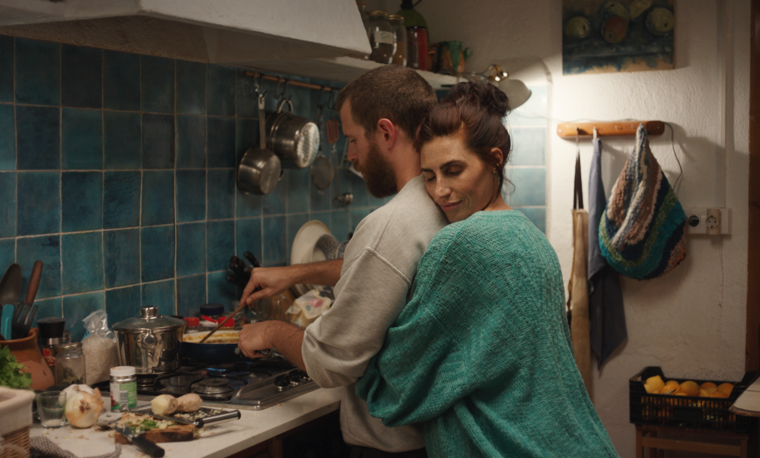
EL: I didn’t want to create an exemplary deaf character; I’m drawn to figures (particularly women) who are full of contradictions. I didn’t want to fall into the trap of only representing minorities in a positive light. When communities haven’t been represented properly in cinema, there is an anxiety about how to portray them, as if they need to be representative. I wanted to show a deaf woman who could change her mind, who wasn’t sure, and who makes decisions audiences might not agree with. I had several mentors give feedback on the script that Ángela might come across as dislikeable. ‘Good,’ I thought. I don’t think she’s any better or worse than the average woman.
SSB: HOW DID YOU COMMUNICATE ÁNGELA’S EXPERIENCE AND EMOTIONS THROUGH THE CINEMATOGRAPHY?
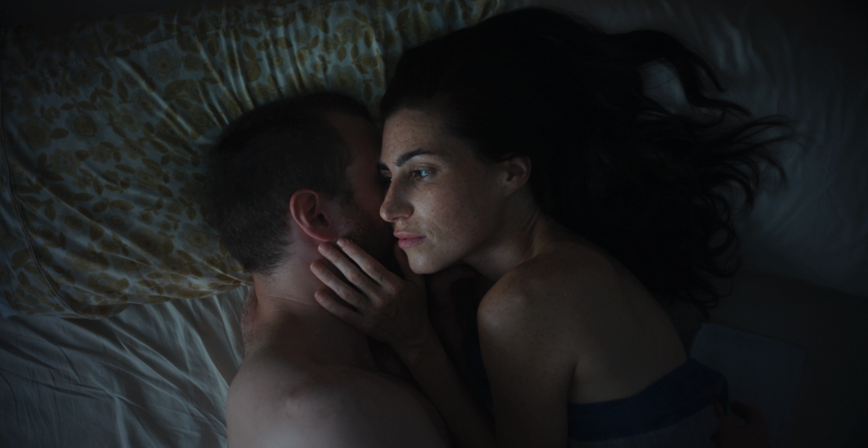
EL: Gina Ferrer, the cinematographer, and I tried to keep the imagery rooted in the deaf world. For deaf people, their eyes are their ears: they capture a lot of their reality through looking. That’s why the film camera is always at Ángela’s eye level; we didn’t want to lose a lot of depth of field. There are also many close-ups on Ángela and eyeline matches. I wanted the film to be accessible to all, so we never lose the presence of sign language. That affected the scenography a lot as we didn’t want any voices out of shot, and sign language was always in the frame. We worried this could make the action very rigid, but we workshopped a lot, and the filmic language developed from there. The film begins with the couple in long two-shots, but as their relationship strains, Ángela appears more isolated from Héctor and the world of the film. In terms of sound, Ángela starts off barely using her voice with Héctor, only sign language, and Héctor is largely whispering. As the film progresses, Héctor’s voice gains volume. Ángela is also forced to use her voice: at first, she only uses it with hearing people, but by the end, she’s using it with Héctor too. In the last part of the film, the perspective switches, and everyone – cast and crew – really threw themselves into making this work visually.
DEAF IS IN CINEMAS FROM FRIDAY
Book Tickets HereSSB: HOW DID YOU WORK TO COMMUNICATE THE CONTRAST IN ÁNGELA’S EXPERIENCE BETWEEN THE DEAF AND HEARING WORLD?
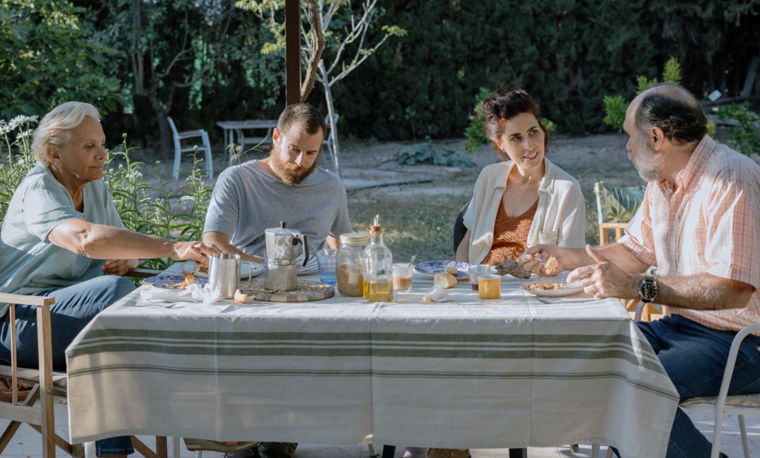
EL: Sadly, the experience that Ángela has with Hector’s friends is very common for deaf people in the hearing world. I’ve seen Miriam go through it countless times. Hearing people can try to wait their turn to speak, but we just don’t realise the amount of information we receive from our ears. I wanted to communicate the level of comfort Ángela has in the deaf community, where she doesn’t need to exert herself. When deaf people who sign come together, it can be like a party; their struggle to be understood in the hearing world – overexerting themselves to vocalise, to lipread – means coming together can feel like a relief. Among Héctor’s hearing friends, I tried to show her isolation from the group. As much as they might want to be inclusive, hearing people often don’t have the tools and aren’t taught how to do so, unless they know someone who is deaf.
SSB: THE BIRTH SCENE WAS EXTREMELY POWERFUL. HOW DID YOU GENERATE THAT TENSION?
EL: The medical team in that scene was a real one. I wanted to work with real medics who know the atmosphere, the terminology and the rhythms of childbirth. We kept Ángela and the medical team separate until the day of filming. Miriam wanted it to be as authentic as possible to capture the impact of going through that experience. The rest was acting. She was really living that moment – it was very intense. The scene was based on many of the experiences that deaf mothers shared with me. Their testimonies of navigating childbirth as deaf women were very critical, and they described the experience as negative. The communicative barriers that the hearing world applies to deaf people are brutal enough – if medical institutions already tend towards violence or a lack of understanding of how best to serve women, then imagine what it must be like for deaf mothers. But I didn’t want to speak about deafness from a negative perspective. I’ve spent my life watching my sister live her life with grace and luminosity, experiencing it not as an ‘illness’ but as a way of being in the world. Instead, I wanted to explore the world of the couple, the dramas of everyday life. I didn’t want to poeticise anything. Deaf shows a woman navigating barriers, but she also has a beautiful, intimate relationship with her Deafness. It’s the hearing world that isn’t prepared for her.
DEAF IS IN CINEMAS FROM 12 SEPTEMBER
RELATED ARTICLES
Review
Sorry, Baby Review: Eva Victor Upends the Trauma Plot
This Sundance-winning tragicomedy is an incisive, mordantly funny investigation into the fallout of a sexual assault that overturns narrative conventions, writes Yasmin Omar.
Interview
The Dardenne Brothers on Young Mothers
In Young Mothers, Belgium’s most famous filmmaking brothers, Jean-Pierre and Luc Dardenne, plunge us into the intersecting stories of five pregnant and postpartum teenagers. They are all minors, whose unstable family backgrounds are offset by the compassionate environment they now occupy.
Interview
Celine Song on Living and Loving Under Capitalism
Academy Award-nominated writer-director Celine Song tells Hannah Strong how her brief stint as a matchmaker inspired her thought-provoking new romance.