
The Birth Montage is the Most Important Scene in The Testament of Ann Lee
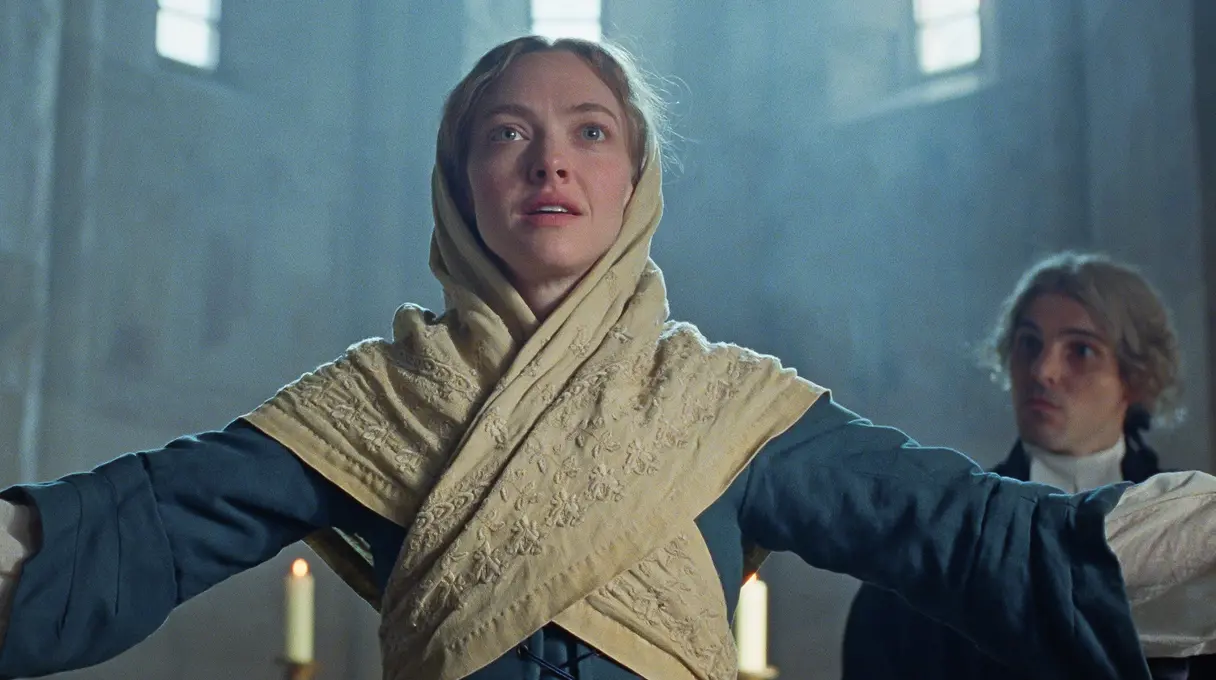
The heart-wrenching sequence – which offers more guttural authenticity than Hollywood’s typically squeamish depictions of childbirth – is the emotional crux of the entire film, argues Sophie Monks Kaufman.
Motherhood is having a big year at the movies. Jennifer Lawrence, Jessie Buckley and Rose Byrne have put their twists on this most haloed role in Lynne Ramsay’s Die My Love, Chloé Zhao’s Hamnet and Mary Bronstein’s If I Had Legs I’d Kick You respectively. Yet the most radical portrayal of what tends to be a traditional character is embodied by Amanda Seyfried in The Testament of Ann Lee.
In Mona Fastvold’s third feature, Ann Lee’s motherhood extends beyond bloodlines and into the community she nurtures into existence. Leading by example, Fastvold corralled a dedicated team of artisans to fashion a spellbinding 18th-century musical driven by the woman who – believing herself to be the second coming of Jesus Christ – led a loyal subset of Quakers from Manchester to the New World of America.
WATCH THE TESTAMENT OF ANN LEE IN CINEMAS
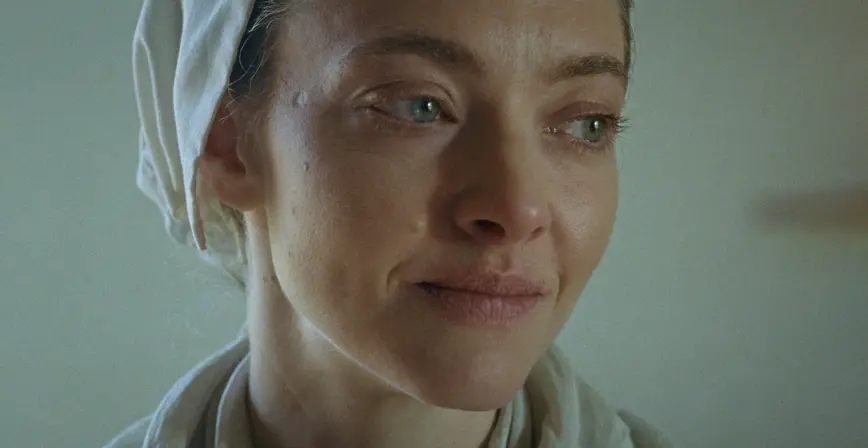
Book TicketsThe most crucial sequence takes place in the first half of the film, nesting this ambiguous biopic in devastating psychological roots. A montage shows how newlywed Ann became pregnant four times and, four times, whether from stillbirth or another complication, no child lived beyond the age of one. Prior to this earthly suffering, Ann is a conventional working-class woman, save for an instinctive devotion to the Shakers, a peaceful tribe of Quakers who use song and dance to rid the body of the devil. She has a blacksmith husband (Christopher Abbott) to whom she is sexually subservient.
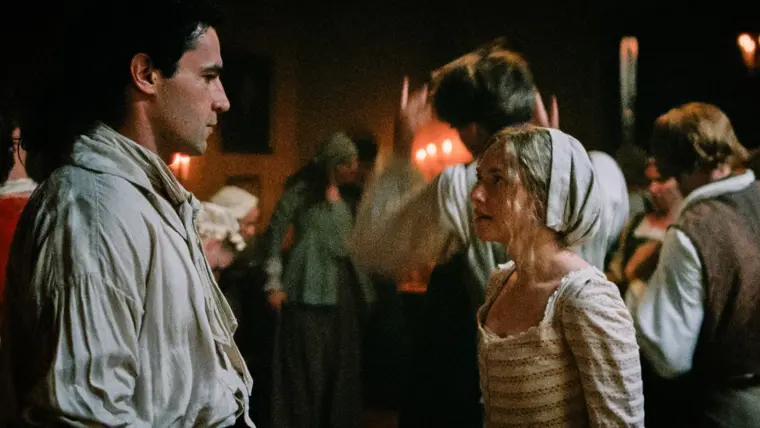
After these losses, Ann renounces sex to preach celibacy. She awakens in jail to the realisation that she is ‘Mother’ Ann Lee, the second coming of Christ. Fastvold has too much respect for the complexity of her main character to imply straightforward causality between trauma and religious escapism. She doesn’t need to. The miserable fate otherwise awaiting Ann makes legible and, indeed, aspirational, her decision to head up a community based on peace, equality and the crafting of high-quality wooden furniture.
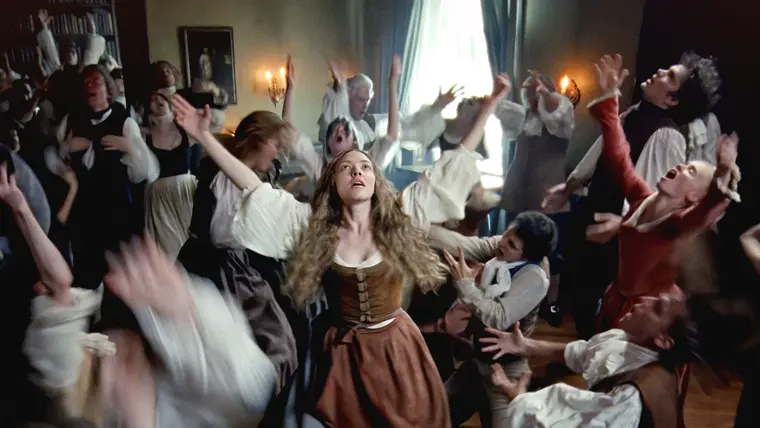
‘Amanda and I were aligned in wanting to be very frank about how we were going to see her body and see the birthing sequences and the sexuality of it all,’ Fastvold told Collider in reference to the intimacy of this montage. ‘We felt that it was very important that you were allowed to be very close with Ann through this sequence in order to understand her journey, ending up ultimately imposing celibacy on all of her followers. We couldn’t hide that journey from the audience or do the Hollywood version of it. We wanted the blood and the breast milk and the eroticism and all of these real babies that we brought in.’
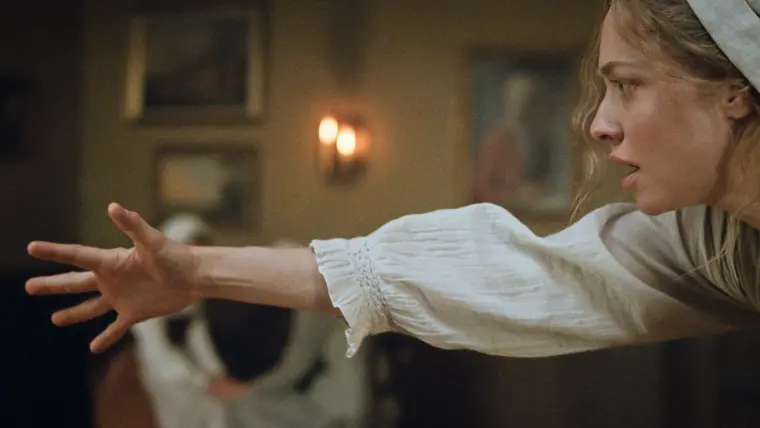
You wouldn’t guess from the visionary scale of The Testament of Ann Lee, but the production was contending with the constraints of indie filmmaking. This meant a $10 million budget and a 34-day shoot. Aware of the need to nail the emotional and technical might of a montage with a lot of moving parts (nudity, prosthetics, intimacy coordination and babies), Fastvold spent a precious four days (over 10 percent of the entire shoot) with Seyfried capturing its component parts. These were: sex, labour, birth, nursing, grief, and a dance movement that mirrored the emotional touchstones of these gruelling cycles.
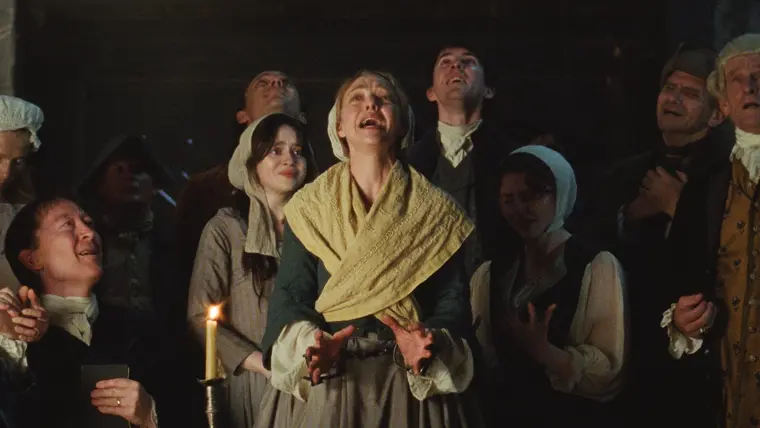
Amanda Seyfried has always brought a zealous brightness to her roles, from the ditsy Karen in Mean Girls (2004) to the spirited Sophie in Mamma Mia! (2008). Only now can we appreciate the full spectacle of her acting commitment. Gently nudged into the role by Fastvold amid self-doubt over her 18th-century Mancunian accent, Seyfried is Ann Lee. Her moonbeam eyes are filled with conviction and she pushes through pain towards a greater purpose. We’re all familiar with childbirth scenes where the camera is focused on a woman’s roaring face and then out pops a baby. Here, the camera is with Ann’s naked body on all fours, bloody and sinewy and effortful.
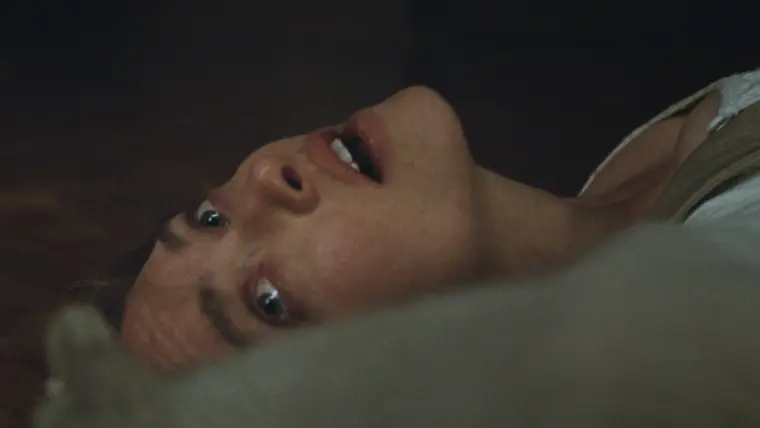
Director of photography William Rexer had worked with both Seyfried and Fastvold before on two TV miniseries: The Crowded Room (2023) and Long Bright River (2025). He told the Motion Picture Association how he cleared the set for the birth sequences and wielded the camera himself, yet none of this would have translated to cinema if not for the production’s trusting, double-headed female leadership.
‘Mona creates an environment where everyone on set is so respected. And Amanda creates an environment where everybody feels heard. It’s a very safe place to work, and because of that, people make themselves very vulnerable. I wanted that intimacy, I wanted that closeness. I’m a father, I have two kids, I’ve witnessed birth with my wife, and I have five sisters who’ve all given birth. It was really important to me that that be told honestly.’
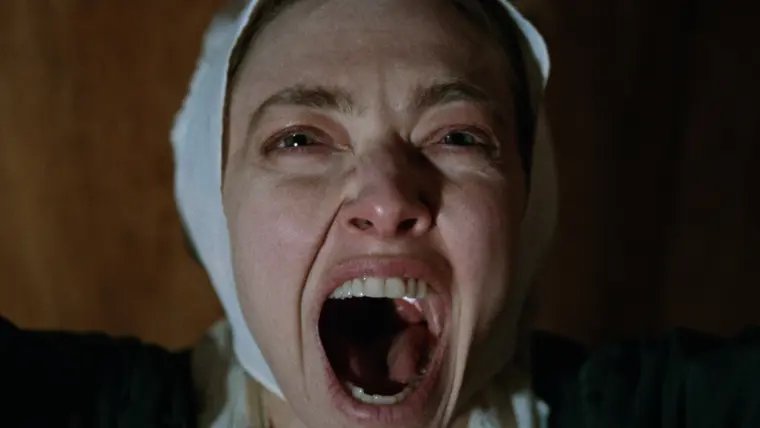
Once the honest portrayals were in the bag, figuring out how to cut all the elements together in one fluid movement proved instructive for Fastvold. In addition to the footage itself, editor Sofía Subercaseaux was working with offerings from two additional heads of department: composer Daniel Blumberg and dance choreographer Celia Rowlson-Hall. Blumberg’s original song ‘Beautiful Treasures’ – as performed by Seyfried – forms part of the soundscape, along with screams and cries and other bodily noises.
Rowlson-Hall, meanwhile, was tasked with devising abstract movements to embed us even more deeply in Ann’s emotional state. Since she grew up within a Christian Science family, the choreographer felt an intense connection to the film. ‘I wanted to be Jesus when I was a little girl,’ she told Vanity Fair. To IndieWire, she explained the first question she asked every actor collaborator, ‘What is their character going through and how can dance get them to the next place?’
In the case of Ann Lee in this montage, the character is going through a mother’s agony and ecstasy on a loop. And the next place? Spiritual awakening and human history.
WATCH THE TESTAMENT OF ANN LEE IN CINEMAS
RELATED ARTICLES
Article
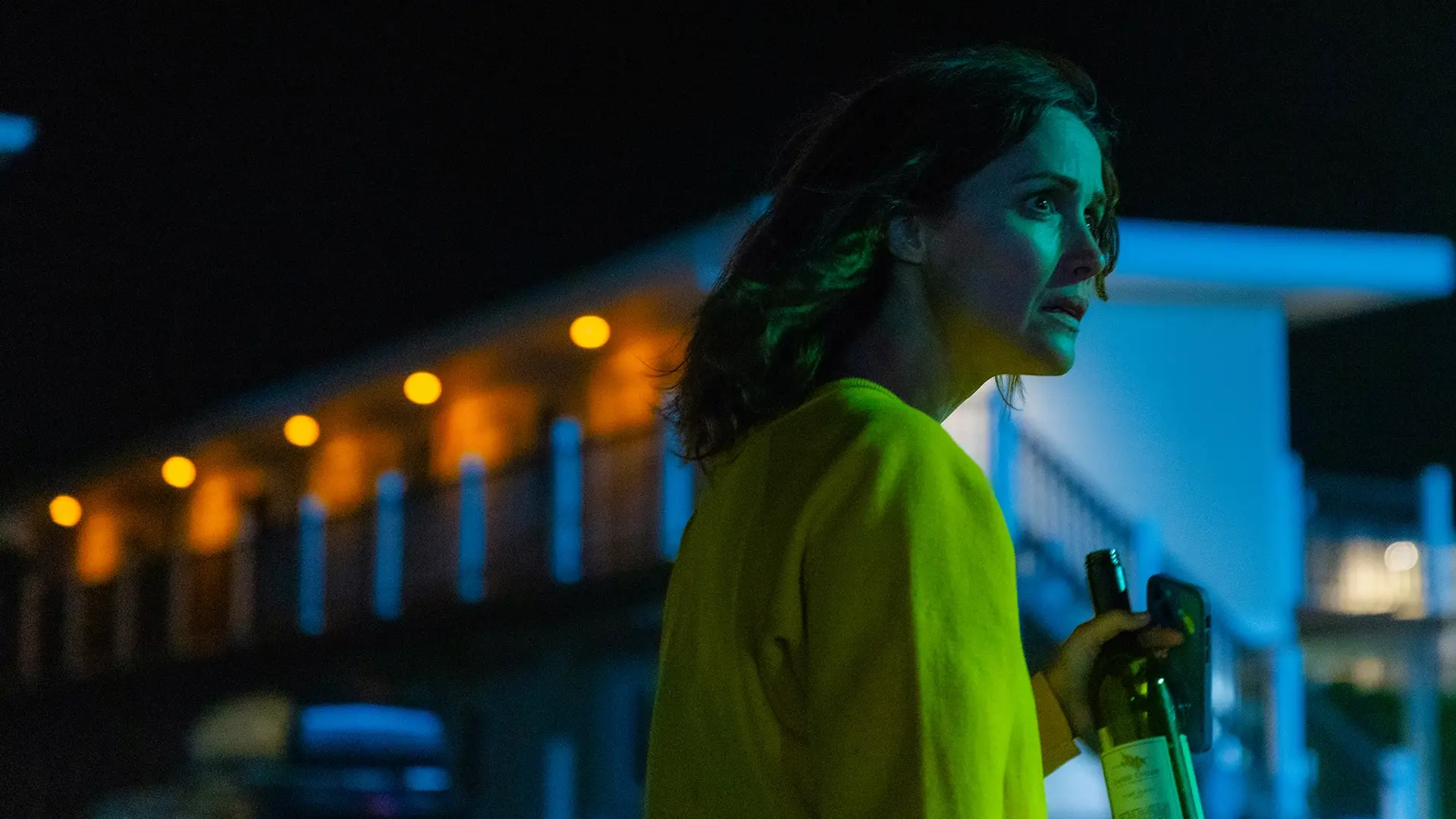
Rose Byrne’s Comedic Skills Power If I Had Legs I’d Kick You
There may be panic attacks and anxiety spirals in this high-intensity drama, but the brilliance of Rose Byrne’s Oscar-nominated performance is rooted in her facility with comedy, writes David Opie.
Interview
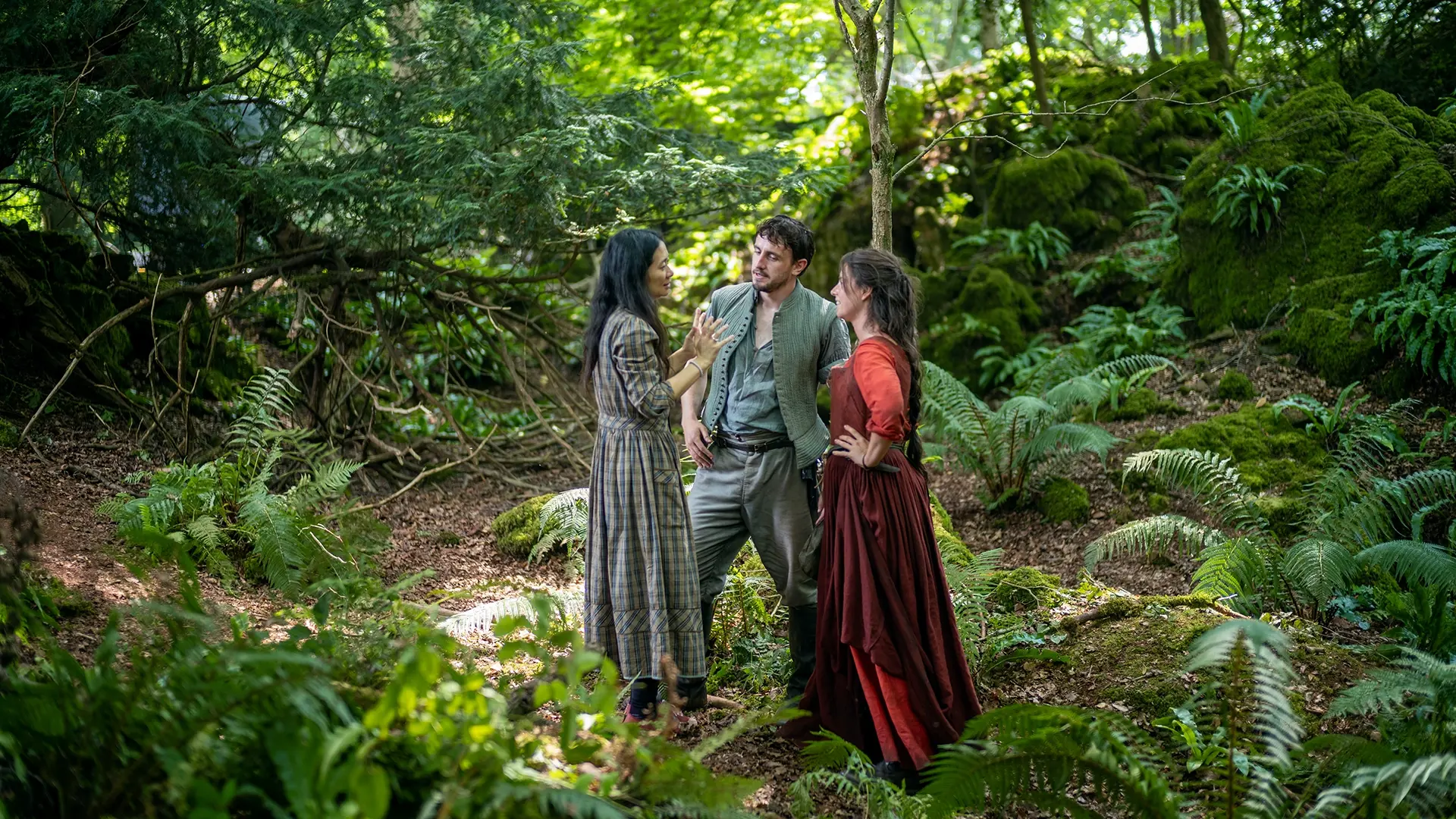
Jessie Buckley & Chloé Zhao on Hamnet
By harnessing dreamwork and tapping into the subconscious, actress Jessie Buckley and writer-director Chloé Zhao respectively built a lived-in character and world for their poignant period drama. By Hannah Strong
Interview
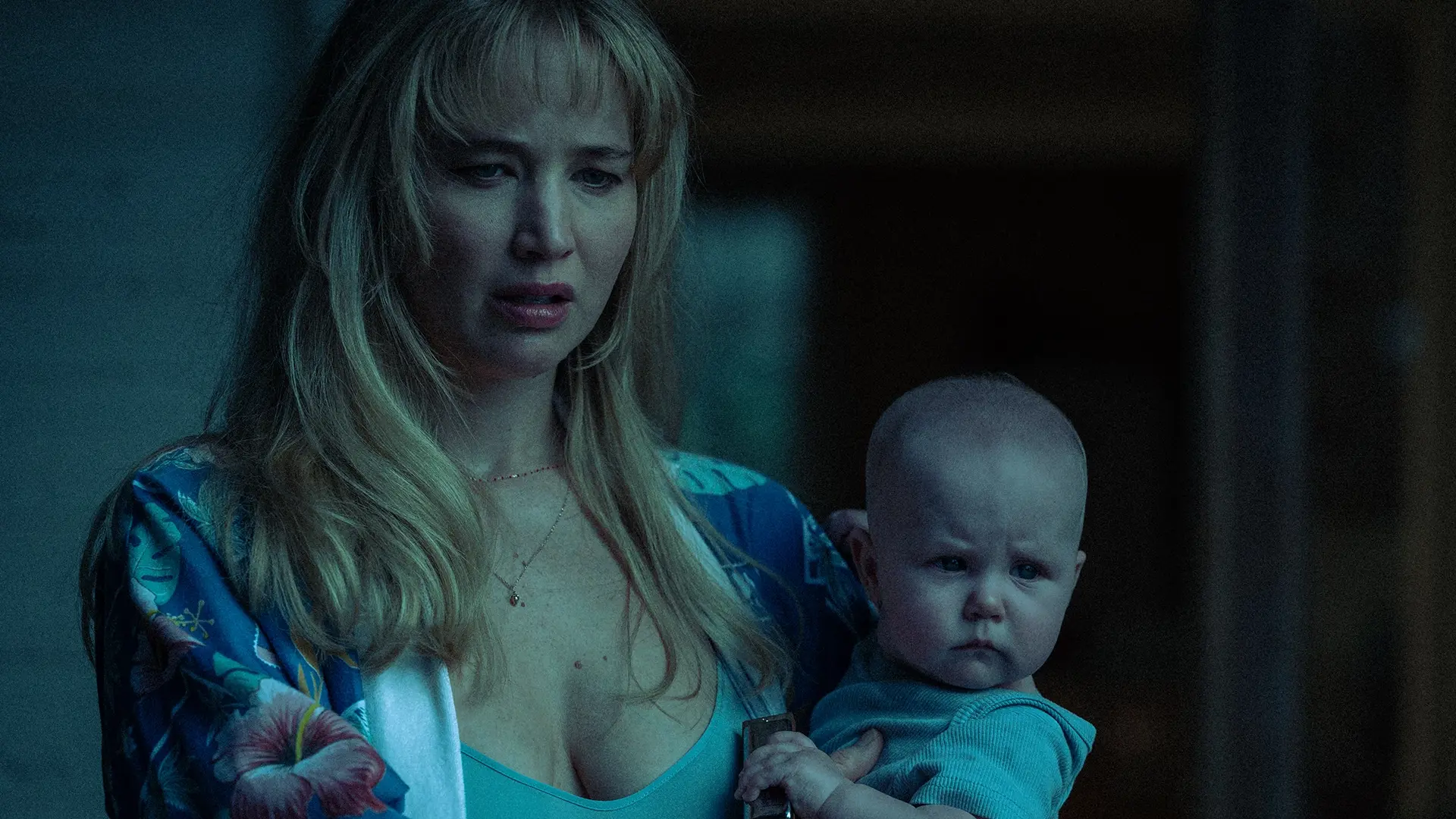
No, Lynne Ramsay Isn’t ‘The Queen of Darkness’
Ahead of her visceral relationship drama Die My Love, the director discusses her musical education, the relationship between sex and creativity, and adding humour to her films. By Rógan Graham