
Jessie Buckley & Chloé Zhao on Hamnet
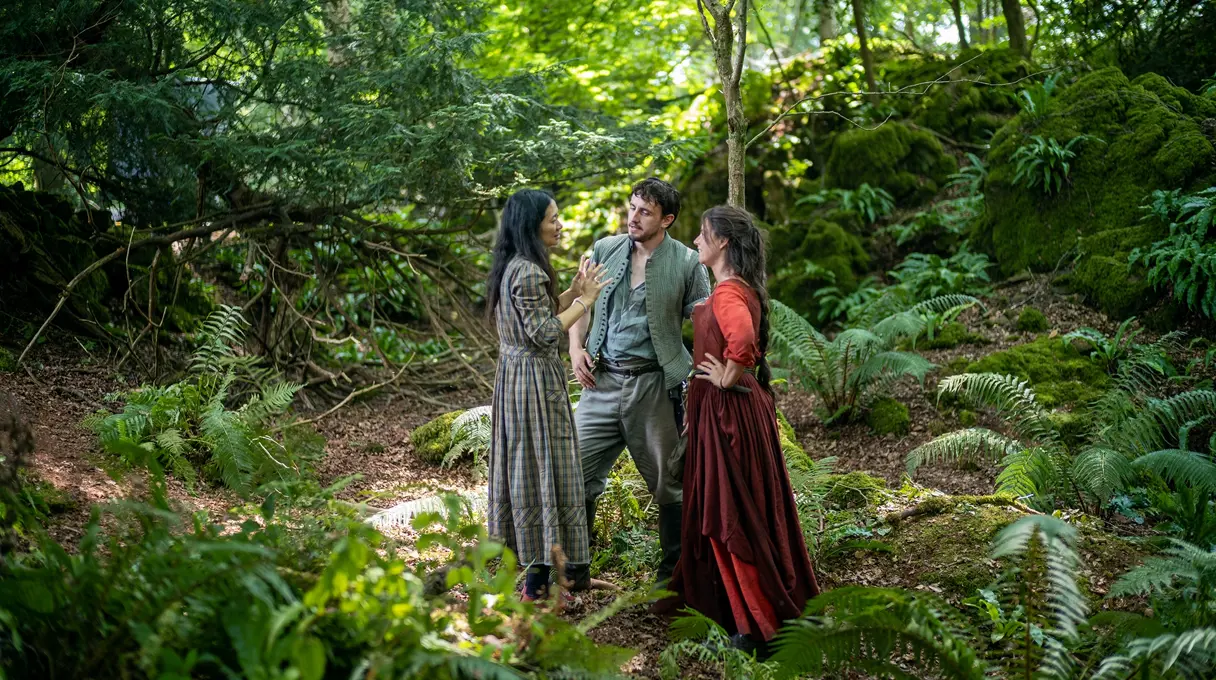
By harnessing dreamwork and tapping into the subconscious, actress Jessie Buckley and writer-director Chloé Zhao respectively built a lived-in character and world for their poignant period drama. By Hannah Strong
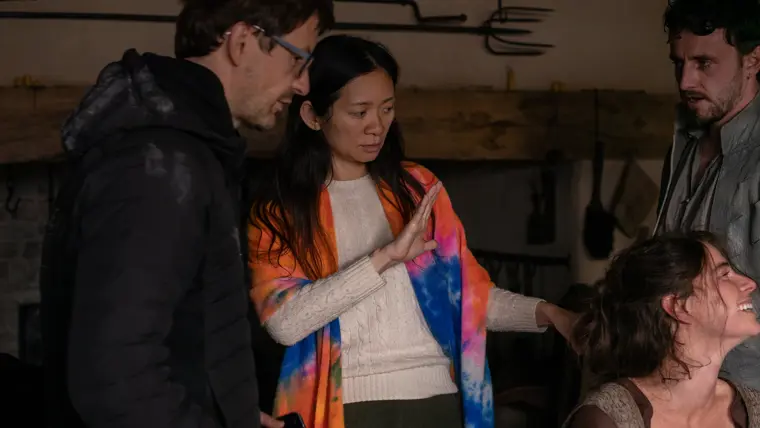
Chloé Zhao nearly passed on directing Hamnet. When she was approached about an adaptation of Maggie O’Farrell’s novel – a speculative fiction based on the death of William Shakespeare’s young son and how that tragedy informed the writing of Hamlet – Zhao initially thought it wasn’t something that she could relate to. ‘I was on my way to the Telluride Film Festival, and I got this call about it,’ Zhao explains. ‘I said, “No, no, I’m not a mother. How can I tell this story?”’
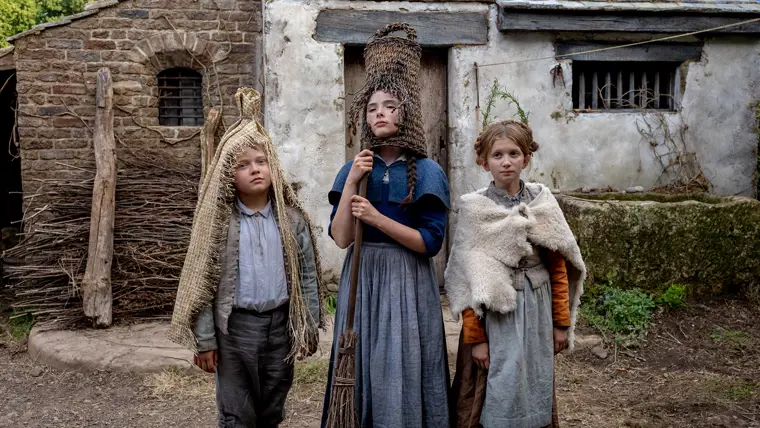
But once she arrived, a chance encounter with a young actor changed her mind. ‘A couple of hours later, I met Paul Mescal for the first time. I hadn’t seen Normal People [2020] or Aftersun [2022], but I just had this feeling. We sat by the river and I looked at him and said, “You know, I think you could play young Shakespeare.” He responded, “Oh my God, is this Hamnet?! You’ve got to read the book, it’s the best, and I really want to do this. Please at least read the book.” So I read the book and it blew me away. I was excited about Paul. I thought, “If someone so fresh and authentic and interesting [is on board], I can do this.”’
Zhao already knew who she had to cast opposite Mescal. Jessie Buckley plays Shakespeare’s wife Agnes, a wild and enchanting woman of the woods who becomes the love of the playwright’s life. ‘There was no doubt in my mind it was going to be her,’ Zhao says. ‘For this project I needed actors who were willing to give me something raw and honest, which isn’t always easy. When I work with professional actors, the first thing I do is watch interviews with them to try and get a sense of who they are as human beings. With Jessie, there was just something about her.’
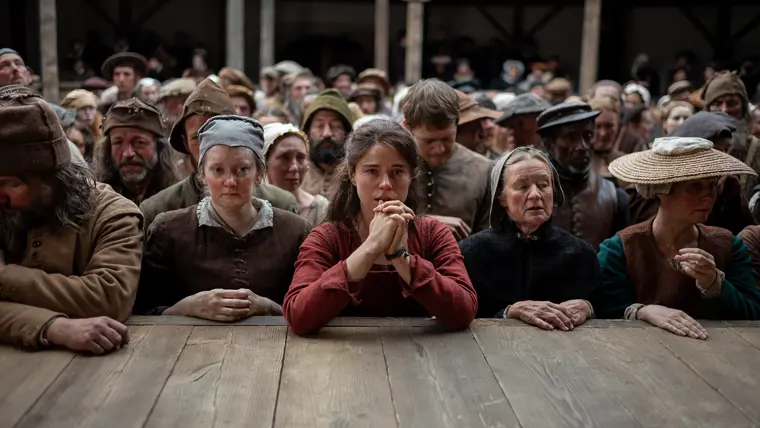
Buckley had no idea the role was even on the table. ‘The first time Chloé and I spoke I didn’t know about the book. I didn’t know about the script. She just asked for a general meeting,’ the actress explains. ‘In hindsight, we were already swimming around the textures of the book – talking about nature and mothers, and death and doulas. Then my agent called me and said, “She really wanted to meet you about Hamnet.” So I read the book, which was its own kind of earthquake. There was Agnes, this incredible woman, and a world on the precipice of life and death... having had this very instinctual conversation with Chloé without knowing what project [it] was for, [I was] then actually being handed a world to step into. I didn’t have to think about it. I was already in.’
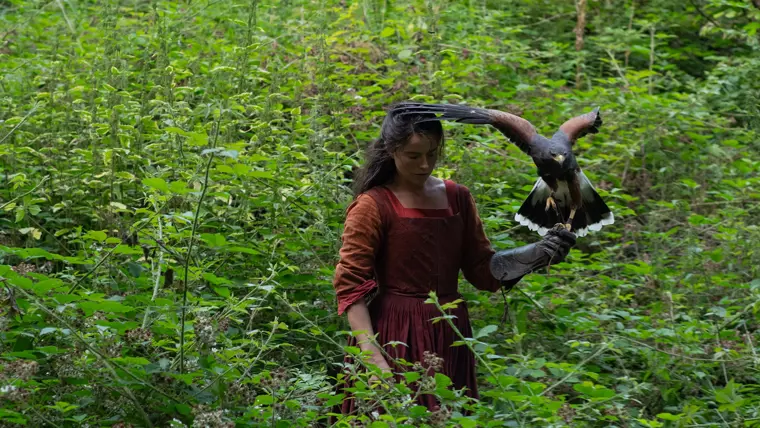
Despite Zhao’s initial apprehension about the subject matter, she found the difficulties of Hamnet came from elsewhere. ‘It turned out that the motherhood element was not so intimidating because it’s so universal,’ she explains. ‘But I’d had a break for four years. With Hamnet, I wanted to challenge myself. I was thinking, “How far can I go?” [I had] to descend into my own psyche, confront the stillness we’re so afraid of as a species [and] go inward. It was challenging because, in order to ask my actors to go there and to understand the journey of the characters, I had to do it myself.’
The role of Agnes, who mystifies the locals as she wiles away the hours in the forest with her hawk, foraging for herbs and mushrooms, fits into a body of work Buckley has been cultivating throughout her career. It’s defined by defiant, irrepressible and memorable characters, from Beast (2017) to The Lost Daughter (2021). ‘With Agnes, we were giving her a language, which was autonomous to her, that could stand beside this great man of words,’ Buckley says. ‘Her language is of nature and spirituality and ancestry and death and life and medicine. It’s a very tactile, physical, embodied relationship to the earth. Maybe that’s why people are so afraid of her. She’s incredibly connected to something that the world was beginning to disconnect from.’
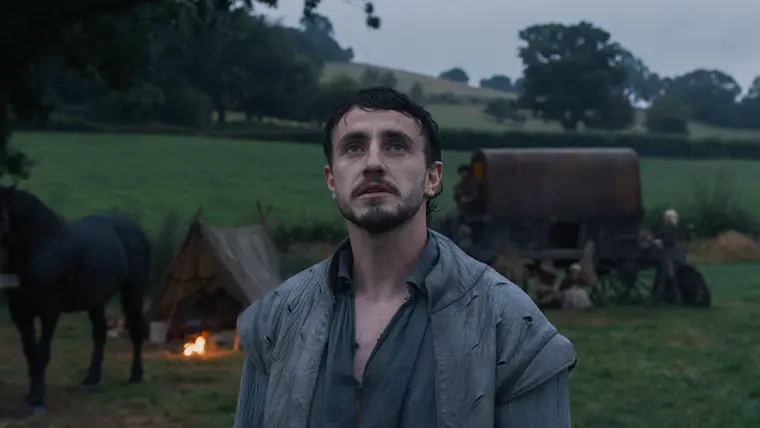
A key tool in Buckley’s journey to understanding and playing Agnes was accessing her own subconscious, particularly through dreamwork, which she also introduced to Zhao and Mescal. ‘I really don’t know how to describe what it is, apart from it’s about working from an unconscious, somatic abstract landscape,’ she says. ‘I find I create much richer, deeper and more interesting [characters] when I work with my dreams. Really, it’s about being curious and following my instincts. If I have a very visceral reaction towards a certain colour for a character, then that’s the route I’m going to go down. When you start opening up a script, your unconscious is naturally swimming within it. I feel if I don’t pay attention to my dreams, which are really the purest part of our subconscious, then I might be missing something.’
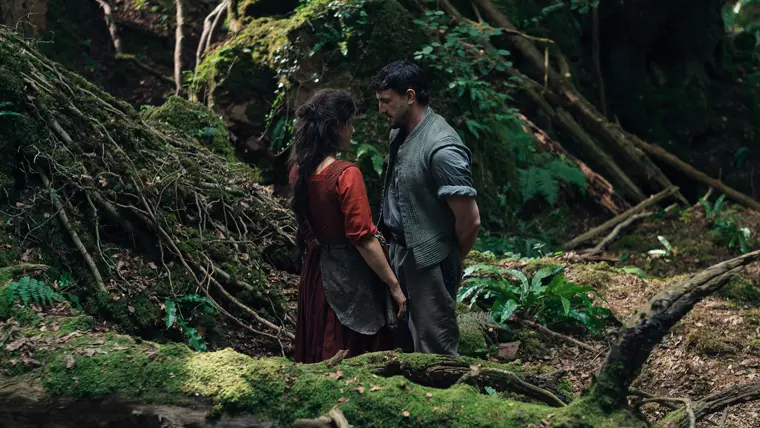
Zhao echoes the importance of the subconscious within Hamnet. ‘With a great performance, you want the actor to sort of stand somewhere between consciousness and unconsciousness,’ she says. ‘As a writer and a director, I’m also trying to see how much I can hold that tension. It’s not about the things I make up, but the things I could channel [to] help pull out something much bigger than me,’ Zhao says, smiling. ‘That’s what excites me as a storyteller.’
This article originally appeared in the Awards Journal. You can pick up a free copy at your local Curzon cinema while stocks last.
WATCH HAMNET IN CINEMAS
RELATED ARTICLES
Interview
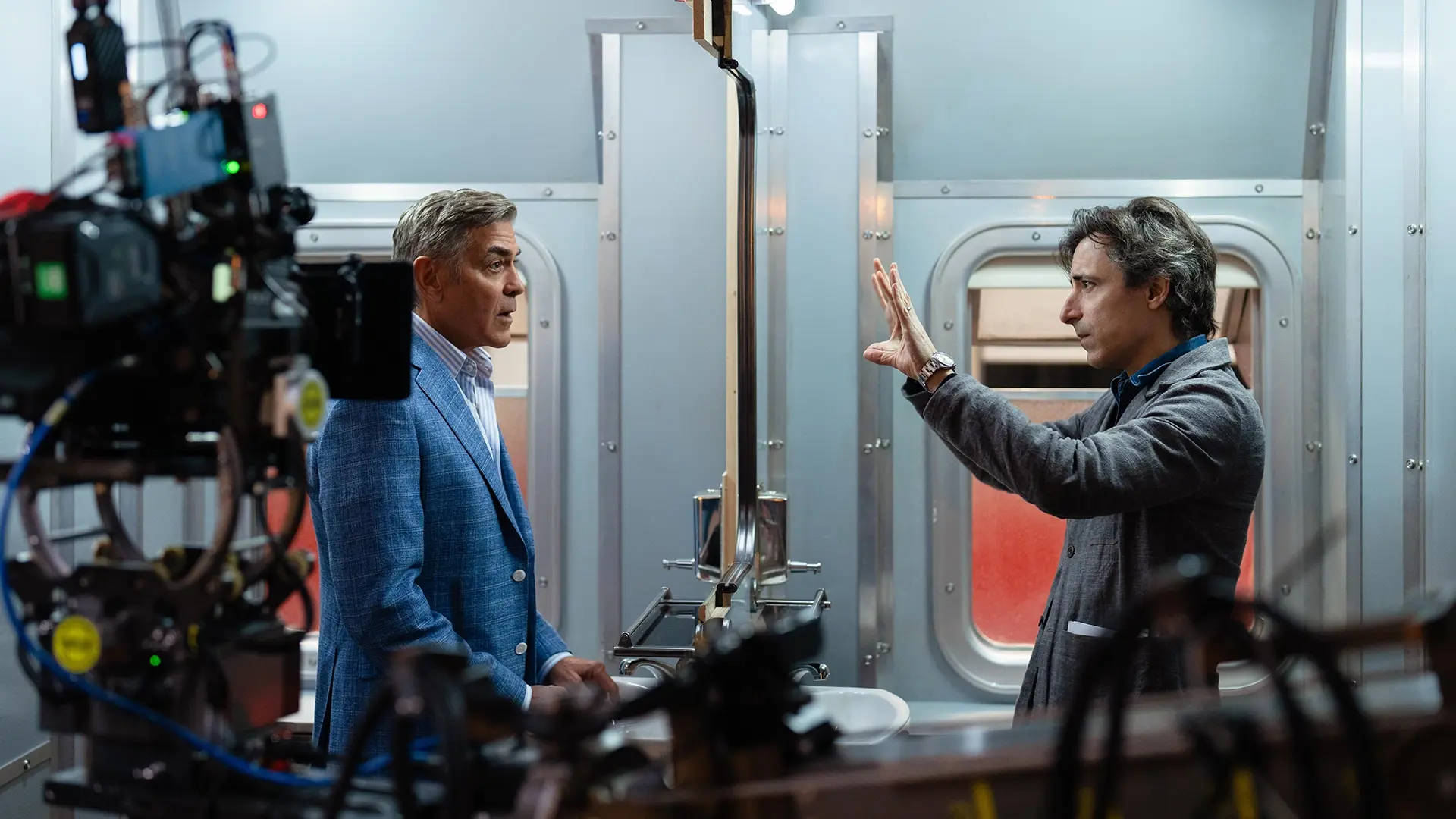
Noah Baumbach Finds His Soft Side with Jay Kelly
The Oscar-nominated writer-director talks to Yasmin Omar about identity crises, the death of the movie star and the true meaning of failure.
Interview
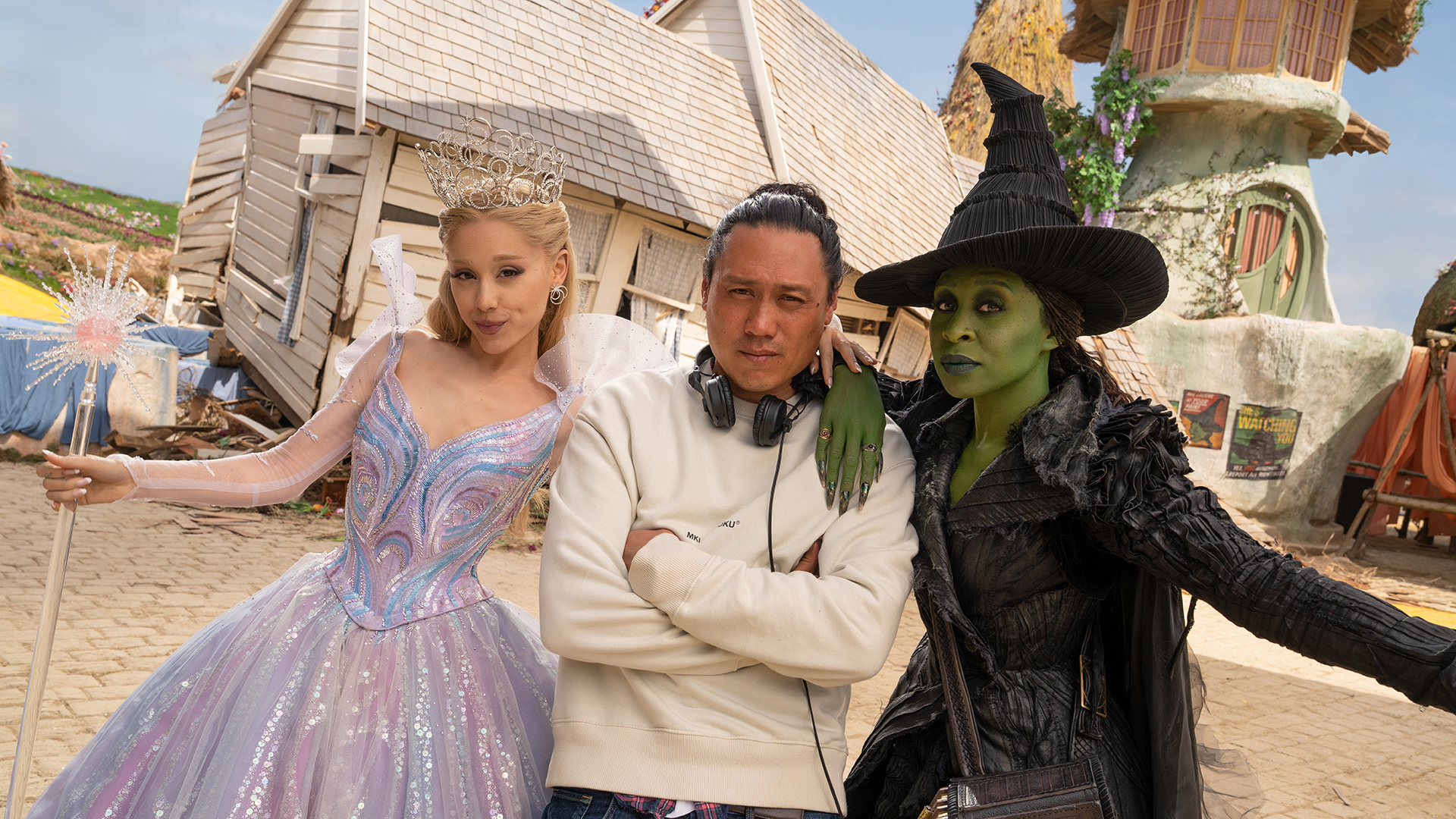
Wicked: For Good’s Jon M Chu on Saying Goodbye to the Franchise: ‘I Was Bawling’
As the director concludes his fantastical musical saga, he discusses seeing the stage play before its Broadway debut, relating to Glinda and bidding farewell to Oz. By Lillian Crawford
Article
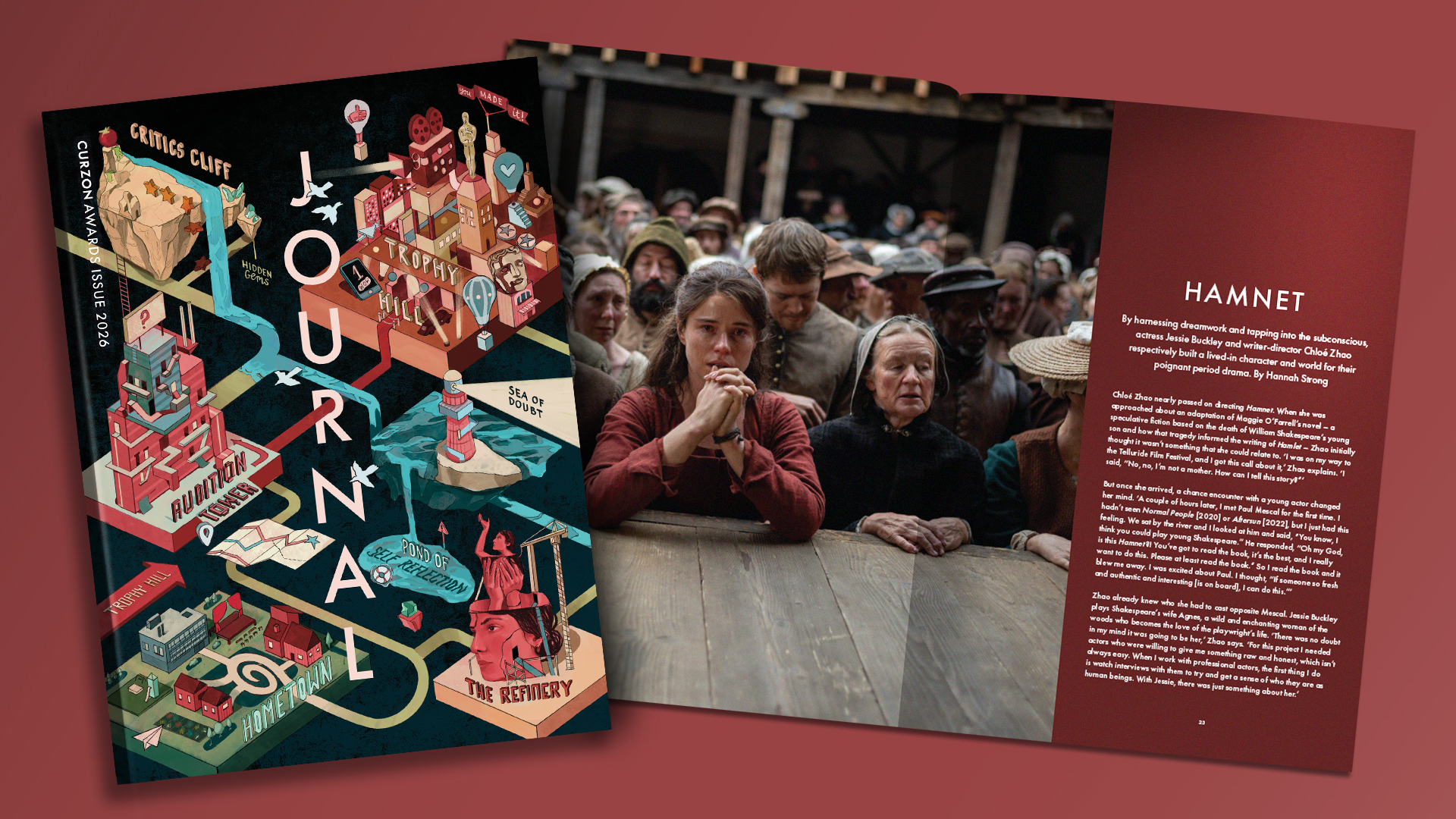
The 2026 Awards Journal is Here
The latest edition of the Awards Journal – which includes interviews with the season’s top contenders, expanded category predictions and more – is now available for free in all Curzon cinemas. Here, we share Yasmin Omar's editor's letter, which teases what you'll find in the magazine.