
Wicked: For Good’s Jon M Chu on Saying Goodbye to the Franchise: ‘I Was Bawling’
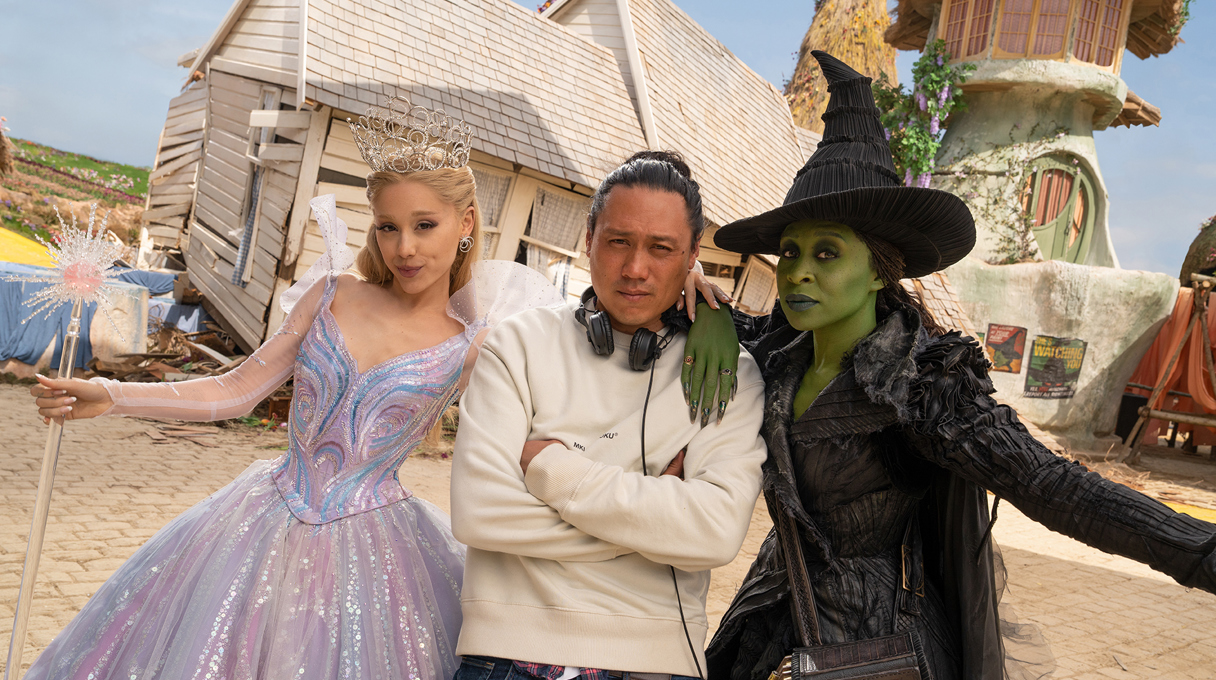
As the director concludes his fantastical musical saga, he discusses seeing the stage play before its Broadway debut, relating to Glinda and bidding farewell to Oz. By Lillian Crawford
It’s been a year since the first act of Jon M Chu’s great and powerful vision of Wicked delighted audiences across the world. Chu, who’d had recent success with beloved romantic comedy Crazy Rich Asians (2018), got the call to direct the film during Covid lockdown. He was not certain that this was the story that needed to be told at that time. But then he read the lyrics of ‘Defying Gravity’: ‘Something has changed within me/Something is not the same.’
‘That really affected me,’ Chu remembers. ‘This is a time of change, and we need guidance. Stories can do that.’ Now he’s ready to share the second act of his magnum opus, Wicked: For Good. After befriending pink princess Glinda (formerly Galinda), played by Ariana Grande, at Shiz University in part one, green-skinned Elphaba (Cynthia Erivo) is now villainised across Oz as the Wicked Witch of the West.
WATCH WICKED: FOR GOOD IN CINEMAS
Book TicketsWhen Chu’s family came to the US from China, the American Dream was encompassed in The Wizard of Oz (1939). ‘I believe in that fully. The idea that this is a great land and the Yellow Brick Road is meant for us, and that there’s a man behind the curtain who’s going to give you your heart’s desire.’ Now a father himself, Chu thinks about the world he’d like his children to see on screen. He wanted to offer a lesson about how to survive in a frightening and changing world, but also ‘not [to] lose the optimism and the magic and the colour of going beyond the rainbow’.
That magic and colour came to life for Chu when he first watched the stage musical of Wicked as a film student at the University of Southern California. It was 2003 and he saw the show with his mother during its pre-Broadway tryouts at San Francisco’s Curran Theatre. ‘I was changing, I had just left home,’ Chu recalls. ‘I was wondering, are my high-school friends still my friends? Are we different now? Do we talk to each other every day? Do we not?’ These questions carry the story of Wicked, as Elphaba, Glinda and co. attend the magical Shiz University; they are then forced into the adult world in the second film. ‘The friendship between Glinda and Elphaba just grabbed me by the throat. It spoke so deeply about choices, about consequences, about growing up and reality shattering your fantasy about what the world is.’
The second film features several beautiful flashback sequences to a time when the two witches of Oz were friends, surrounded by their peers, enjoying sunset picnics in the countryside. Chu was given breathing space to develop the narrative of Wicked beyond the limited runtime of the stage musical by expanding the story into two films. Chu felt that the first film had been the story of Elphaba reckoning with her social estrangement and eventually embracing ostracism with her performance of ‘Defying Gravity’.
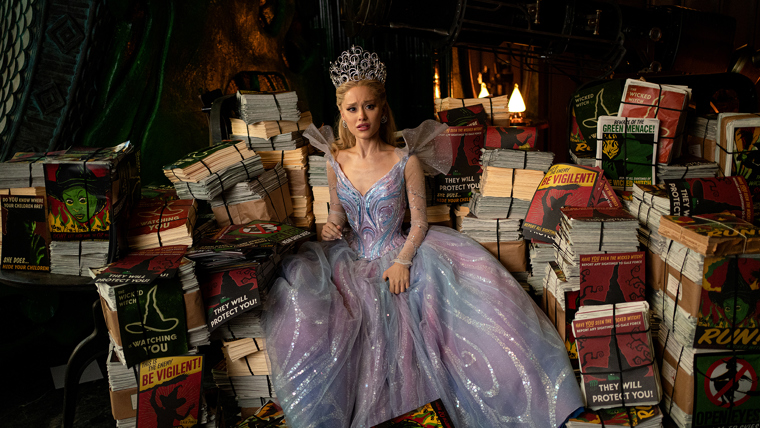
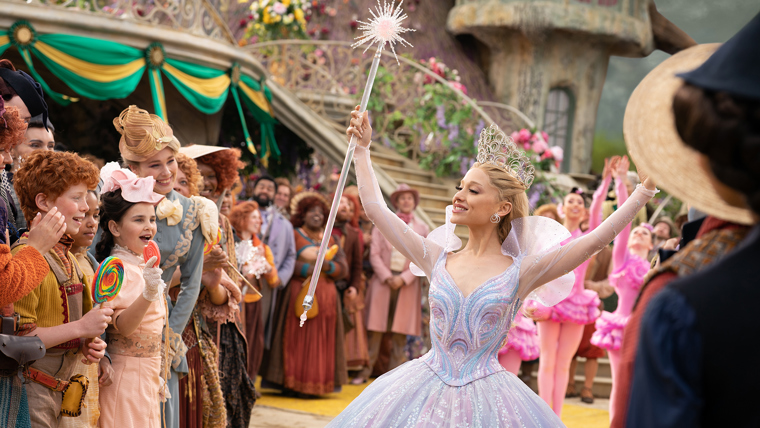
Wicked: For Good became about exploring where that had left Glinda, who Chu believed was more relatable to an audience. ‘We wish we could be Elphaba, but Glinda is the one who hesitates and she doesn’t have to deal with the injustices or truth of other people. She could live a very privileged life.’ But Glinda decides to embrace friendship with Elphaba and support her even after she is condemned across Oz. ‘I love that it was a choice that she would have to make for herself. Not for a boy, for politics or any other reason. She had to make the choice to be good.’
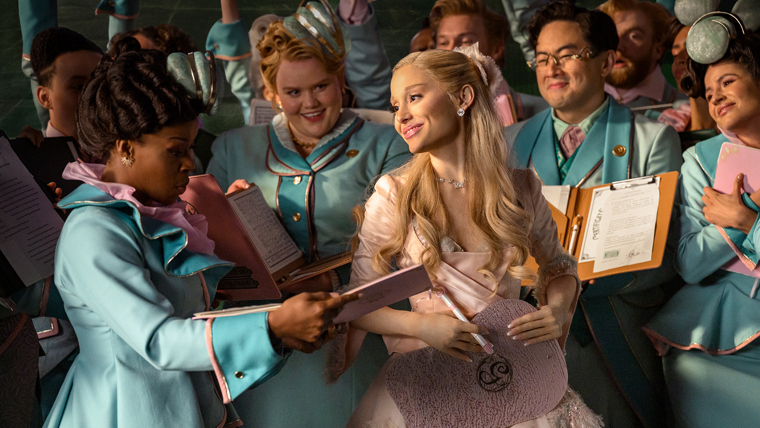
In addition to new scenes and songs in part two, a significant change to the stage musical is the impact of Elphaba’s spell on her sister, Nessarose, who uses a wheelchair. Chu consulted disabled actors and was affected by their story that they had finally seen themselves represented in Wicked, only for the disabled character to walk. ‘That hurt my heart,’ Chu says. ‘They said, “You know, walking isn’t all of our dreams.”’ He felt it was a vital opportunity. Working with Marissa Bode, who plays Nessarose, helped him to understand how to create an accessible fantasy world. There are ramps everywhere in his Oz. ‘No one says, “Oh, I’m glad you have the accessibility.” It just exists. The Lord of the Rings doesn’t have that. We built it in as if it was a part of this society.’
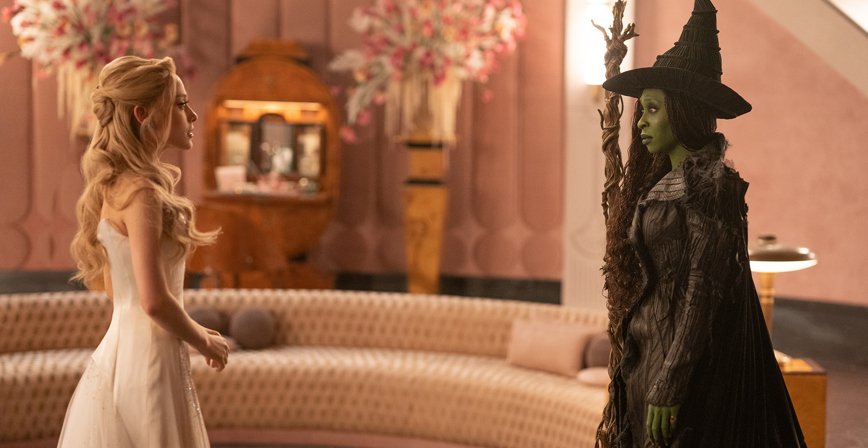
Chu was also keen to take the relationship between Elphaba and Glinda a step further than is seen on stage. The emotional climax of Wicked: For Good comes during the final scene between the witches. As Elphaba braces herself to be confronted by Dorothy after she has been sent by the Wizard to bring him her broomstick, Glinda hides in a closet and the camera holds on the two of them experiencing a huge wave of loss and emotion, bisected by the door as if in splitscreen. ‘That shot was not in the script,’ Chu reveals. ‘When they come together in that scene, it’s that tension in the air, that first time you see your friend that you haven’t seen in a long time, and you’ve [both] changed so much. They played that so well. They were these characters.’
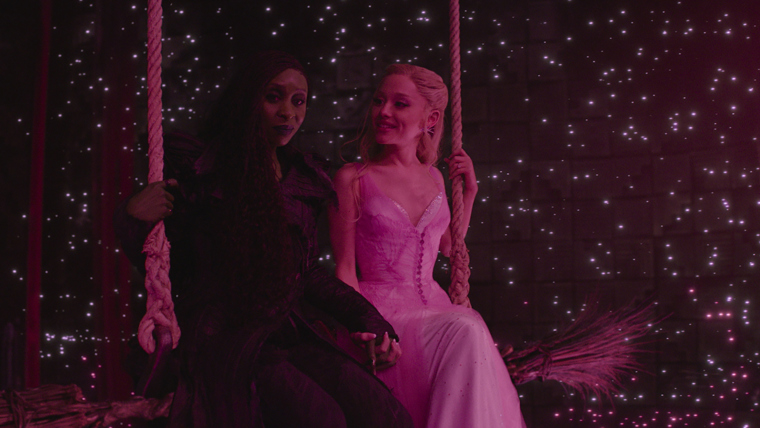
Chu rehearsed the scene alone with Erivo and Grande – a pianist was the only other person in the room. ‘This is the end of the whole two-movie saga. Should we be helicoptering around them on a cliffside and doing it? Musicals can do the 10,000-foot thing or they can actually bring you closer and deeper into people.’
Chu is certainly no stranger to the epic, as evidenced in the show-stopping finale of the first film. But when the actors sang together it was a very simple moment. ‘So simple it made me scared. And you just have to look at them and watch what they’re saying. I didn’t call cut on their rehearsal,’ Chu continues. ‘They just started saying things to each other. I was bawling listening to them. It was more painful than even the song itself.’ Where the first film was a blockbuster epic of Ozian proportions, Wicked: For Good closes in on the more private and intimate drama of Elphaba and Glinda, while the glorious Technicolor events of The Wizard of Oz take place in the wings.
WATCH WICKED: FOR GOOD IN CINEMAS
RELATED ARTICLES
List
Best Movie Musical Sequences
With Wicked arriving in cinemas, we salute the most needle-shifting song-and-dance numbers from the best musicals.
Interview
Noah Baumbach Finds His Soft Side with Jay Kelly
The Oscar-nominated writer-director talks to Yasmin Omar about identity crises, the death of the movie star and the true meaning of failure.
Review
Bugonia Review: No One’s Doing it Like Emma Stone
Just when you thought she couldn’t possibly push herself any further, the up-for-anything actress throws herself into the role of a villainous, bald-headed girlboss in Yorgos Lanthimos’ kidnapping thriller.