
Project Hail Mary Review: Ryan Gosling Shines in Sci-Fi Buddy Comedy
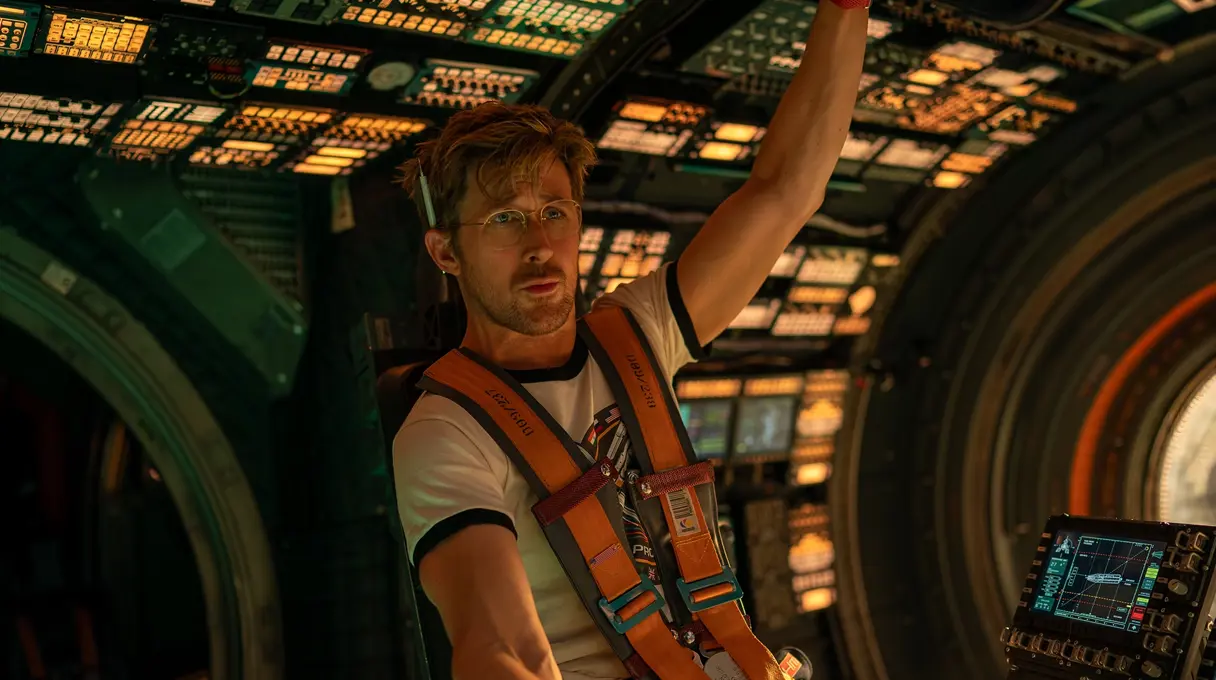

Piloting this star vehicle with practised finesse, the actor transforms his lovable-idiot astronaut into a selfless empath in Lord and Miller’s initially silly, ultimately poignant space movie. By Yasmin Omar
Ryan Gosling, one of contemporary cinema’s great movie stars, largely operates in three registers. He plays strong-and-silent types, laconic heroes hiding their inner turmoil behind an implacable mask (Drive; The Place Beyond the Pines; Blade Runner 2049). Smooth-talking wise guys with their suave, silken confidence in their own – often misguided – convictions (Crazy, Stupid, Love; The Big Short; La La Land). And, finally, buffoons and weirdos, a well-meaning but ineffectual bunch gently mocked for their stupidity (The Nice Guys; Lars and the Real Girl; Barbie). The last time Gosling was in space – in the criminally underrated First Man (2018) – he dimmed his charisma and stowed away his feelings to portray the notoriously reserved Neil Armstrong. Project Hail Mary requires him to be something altogether different; he’s asked to blur the lines separating his various onscreen personae.
WATCH PROJECT HAIL MARY IN CINEMAS
Book TicketsInitially, though, Gosling goes full goofball as Dr Ryland Grace, a molecular biologist-turned-middleschool teacher who’s recruited by Nasa to help prevent an extinction event. An ice age is coming that will wipe out a quarter of the Earth’s population, and leave the survivors starved of resources. In an attempt to stop the sun dying, Grace is sent 11.9 light-years away on a last-ditch exploratory trip to investigate astrophage, the interstellar microbe devouring the star that sustains our solar system.
What was supposed to be a three-man mission abruptly becomes a solo one when Grace awakens, disoriented from an induced coma, to discover that his crewmates died in transit. If humanity is to have any chance of survival, he must go on alone. Sounds heavy, but in the hands of directors Phil Lord and Christopher Miller – the Oscar-winning duo behind the hilarious, shenanigan-filled Jump Street movies – it’s as buoyant as a helium balloon.

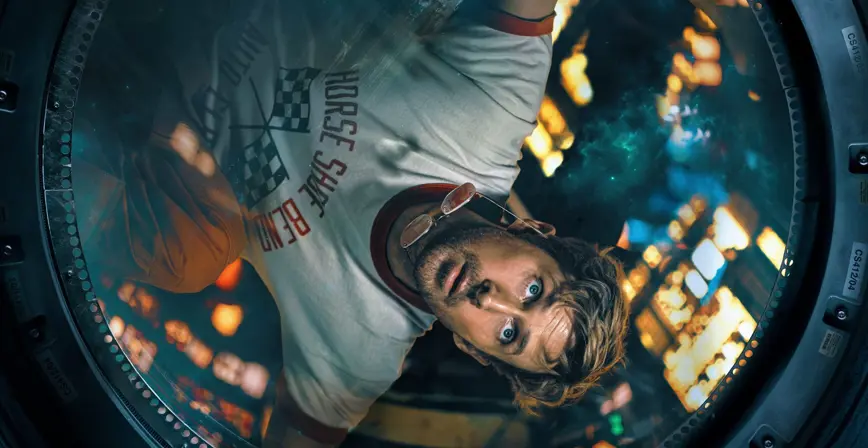
The first hour or so of Project Hail Mary, which switches between Grace’s pre-launch planning and post-launch expedition, is powered by sight gags. Without another actor to bounce off in the space timeline, Gosling heavily relies on slapstick. He sloppily swigs vodka from a vacuum-sealed pouch; thrashes to put on his spacesuit in zero gravity; and lets out a couple of his signature dog-decibel screams.
Down on Earth, surrounded by other people, he doesn’t need to go quite as big and, crucially, can enjoy repartee with other characters (among them Sandra Hüller’s project director, Lionel Boyce’s security guard and Ken Leung’s astronaut, all subdued compared to him). As he’s done so brilliantly before, Gosling bounds around with a puppyish excitability, making himself the butt of the joke and obscuring the effort that goes into his precise comic timing. The film’s humour is of the slightly cheesy, middle-aged-white-guy variety, featuring outdated cultural references, sexual innuendo and punning logo T-shirts. Mileage may vary on whether that’s endearing or cringe.
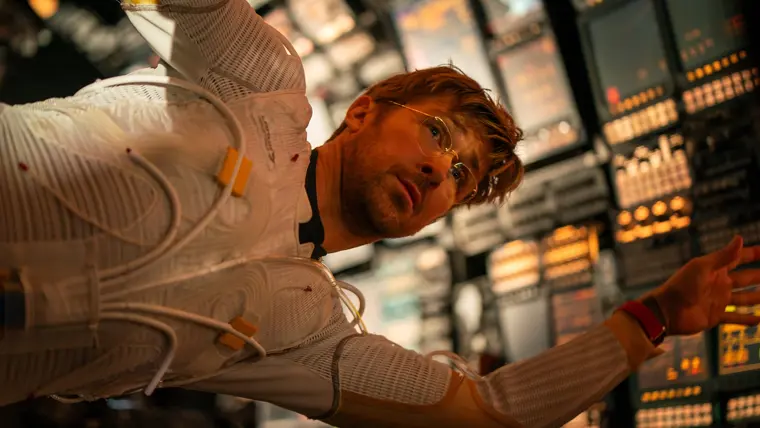
Either way, it’s an unexpected tonal choice for a space movie, a genre that tends to weigh existential questions – about the meaning of life and the relative insignificance of man – with considerable gravitas. Universe-ending stakes notwithstanding, there’s a lot of clowning around in Project Hail Mary. It even morphs into an extraterrestrial buddy comedy when Grace is confronted with an intelligent alien lifeform that looks like The Thing’s pet tarantula and is trying to communicate with him.
The rascally being, whom he names Rocky, is soon smashing through Grace’s spaceship like an overeager toddler freed from their reins. Rocky is a useful narrative device. Like the film’s video diaries, whiteboard scribblings and speaking computer system, it allows Grace to externalise what he’s thinking in the absence of other humans. But mostly, Rocky is there to supercharge the odd-couple, culture-clash antics, squawking in its incomprehensible language and copying Grace’s dad-at-a-wedding dance moves. It’s all very silly. Until it isn’t.
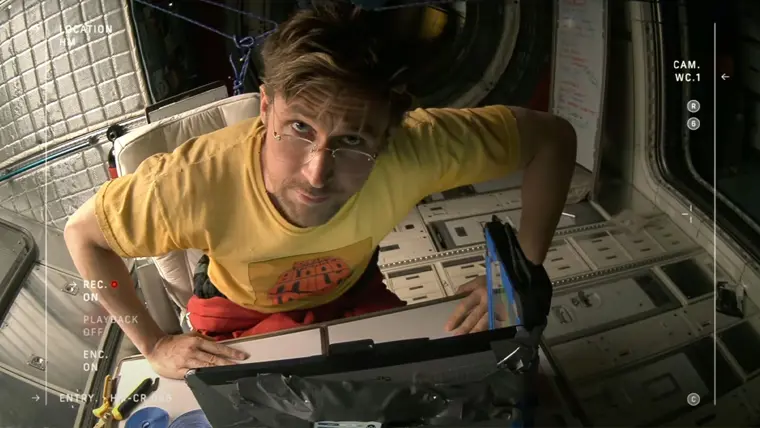
Project Hail Mary is a rare film that holds its cards close, biding its time, then reveals its winning hand with a flourish. It works on a delay, in a sense: you don’t realise quite how emotionally invested you are in our dopey-knucklehead astronaut until a sudden moment of pure movie magic. One of Gosling’s greatest skills is reaction – so much so that his heart-melting looks at scene partners cap off both La La Land and First Man. As Project Hail Mary’s tomfoolery subsides, and the seriousness mounts, the actor adapts his approach.
In the film’s standout scene, Hüller’s stern, clipped Nasa manager, who has proven immune to Grace’s bumbling charm, surprises him by singing ‘Sign of the Times’ at a farewell party. Never has a karaoke performance of a Harry Styles song been this devastating. All Gosling has to do is watch. But watching him watching her, misty-eyed and contemplative, is riveting. Frankly, Project Hail Mary works as well as it does because its star can do it all; most importantly, he understands when to do what.
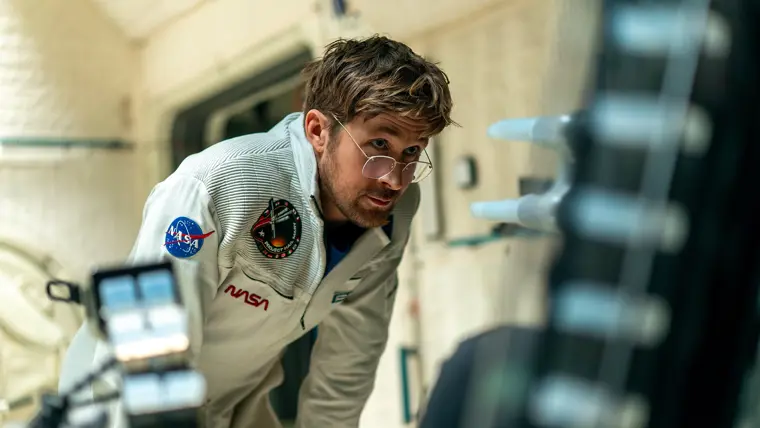
It’s hard to make a space movie. A textbook’s worth of (quasi)scientific information needs to be imparted as dynamically as possible. The editing of the space- and earthbound sequences needs to be carefully balanced. Plus, the genre’s iconography is so ingrained, filmmakers often can’t help iterating on Stanley Kubrick or Ridley Scott or Denis Villeneuve. Like its plucky protagonist, Project Hail Mary is an adept problem solver. It weathers some turbulence – with its slippery tone and murky action set-pieces – before Ryan Gosling, the pilot of this star vehicle, safely lands the rocket ship.
WATCH PROJECT HAIL MARY IN CINEMAS
RELATED ARTICLES
Article
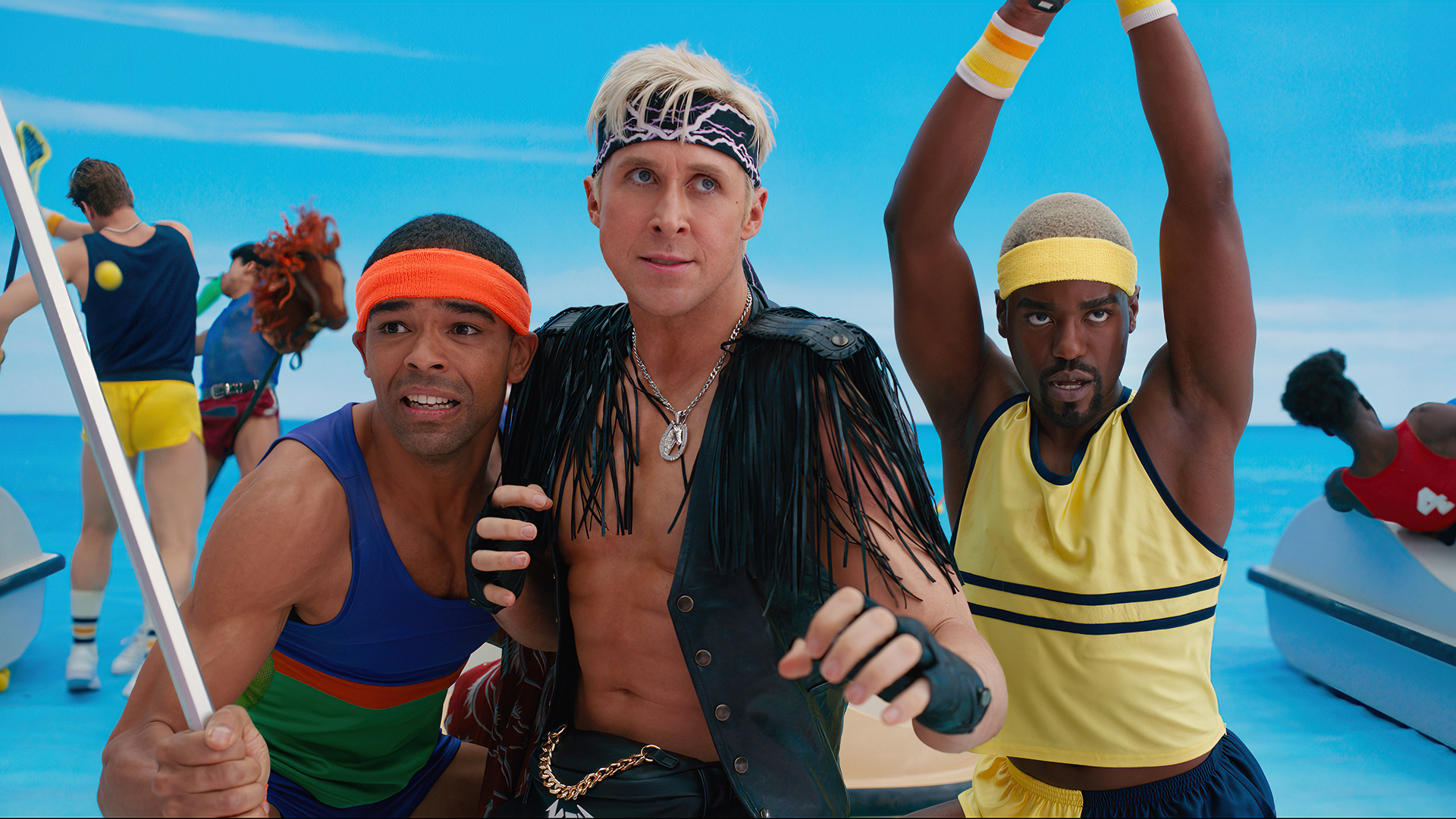
Play For Laughs: A Celebration of Ryan Gosling’s Comedy Credentials
As The Fall Guy arrives in cinemas, we're looking back at Hannah Strong's paean to Gosling’s boundless enthusiasm, penchant for silliness and impeccable comic timing in Barbie and beyond.
Deep Focus
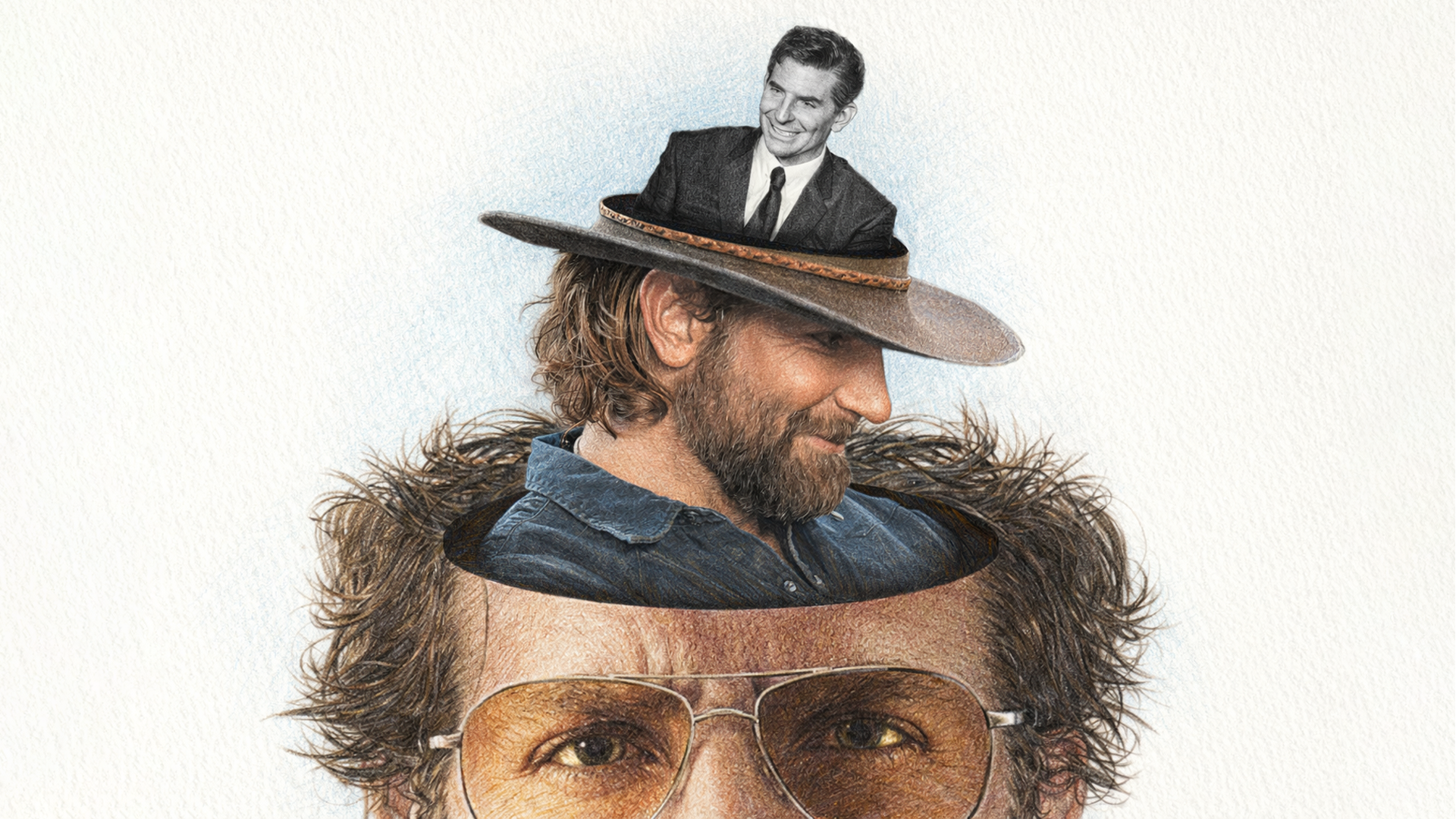
Bradley Cooper is (Finally) in on the Joke
From the douchey bro of The Hangover movies to the deadly serious actor-director-writer-producer of Maestro, Bradley Cooper has had quite the rebrand. Here, Yasmin Omar explores his evolving stardom – and the surprising levity of his latest persona.
List
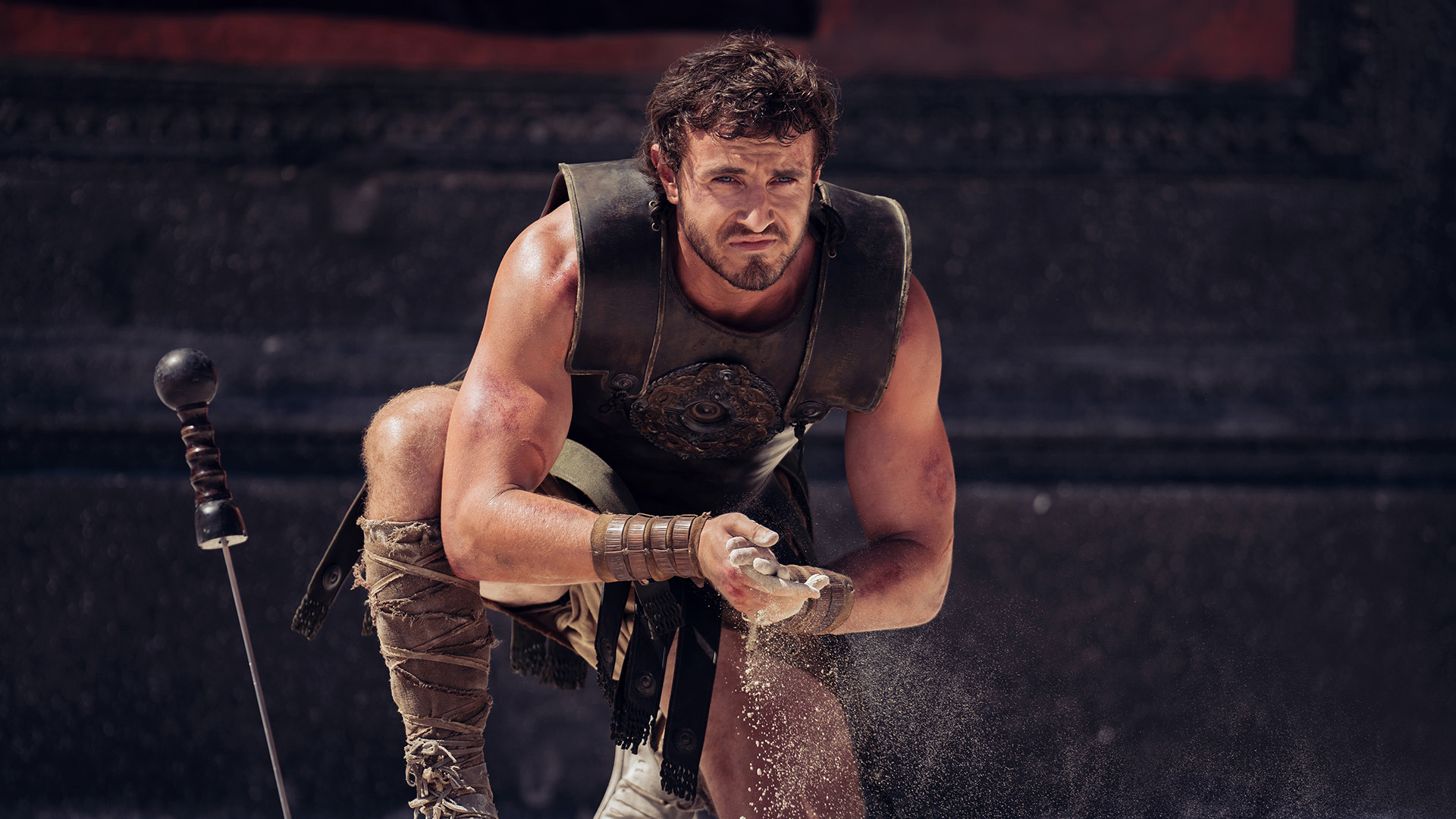
Best Movies Directed By Ridley Scott
Ahead of Gladiator II, we look back at the very best Ridley Scott movies that showcase the prolific director’s varied, groundbreaking filmography.