
The Rise of the Rom-Commentary


As we’ve seen with The Drama, romantic comedies that strike a chord today directly engage with pressing issues, from capitalism to sexual harassment. Charlotte Golzari investigates this spiky new subgenre.
This article contains spoilers for ‘The Drama’, ‘Materialists’ and ‘Eternity’.
Romantic comedies have always been a product of their time, reflecting, and idealising, contemporary attitudes about how love should look within a neat boy-meets-girl, boy-loses-girl, boy-wins-back-girl framework. Over the decades, these films nodded towards wider sociocultural forces – gender dynamics, class divides, intolerant families – though rarely in a way that would jeopardise their inevitable happily ever afters. Until now.
The 2020s have heralded the arrival of what we’re calling the ‘rom-commentary’, a subgenre that uses its central romance to roundly critique aspects of modern life. The most recent example is The Drama, a wedding comedy powered by a rattling ethical dilemma, but last year’s Materialists and Eternity both fit the bill, too. With their thought-provoking themes and dripping cynicism, all three films are rom-commentaries. Unlike love stories past, they raise uncomfortable, of-the-moment questions – and make a real effort to grapple with them.

WATCH THE DRAMA IN CINEMAS
Book TicketsThe Drama traces the relationship between Emma (Zendaya) and Charlie (Robert Pattinson), which goes off the rails when she reveals, days before their wedding, that she almost committed a school shooting as a teenager. In a traditional rom-com, such a secret would likely be refashioned as a misunderstanding that causes minor distress until it’s frictionlessly resolved by the final act. In its refusal to follow this narrative template, The Drama is more daring than its predecessors.
The film relies on cringe-comedy to show Charlie’s attempts to come to terms with this disturbing discovery, most notably when he pictures Emma on their bed, suggestively holding a gun as if it were a sex toy. This discomfort bleeds into his daily life: he physically recoils at the word ‘shoot’ in banal contexts and, overcome with desperation, makes an ill-judged advance on a colleague.
This isn’t the light-hearted bumbling of a romantic lead – it’s the behaviour of a man visibly spiralling. Were Charlie the hero of, say, a Nineties Hugh Grant movie, his awkwardness would make him endearing; here, we’re left wincing at his downfall. The film takes the classic ‘wedding jitters’ trope and turns it on its head, commenting on the impossibility of truly knowing the person you plan to spend the rest of your life with.

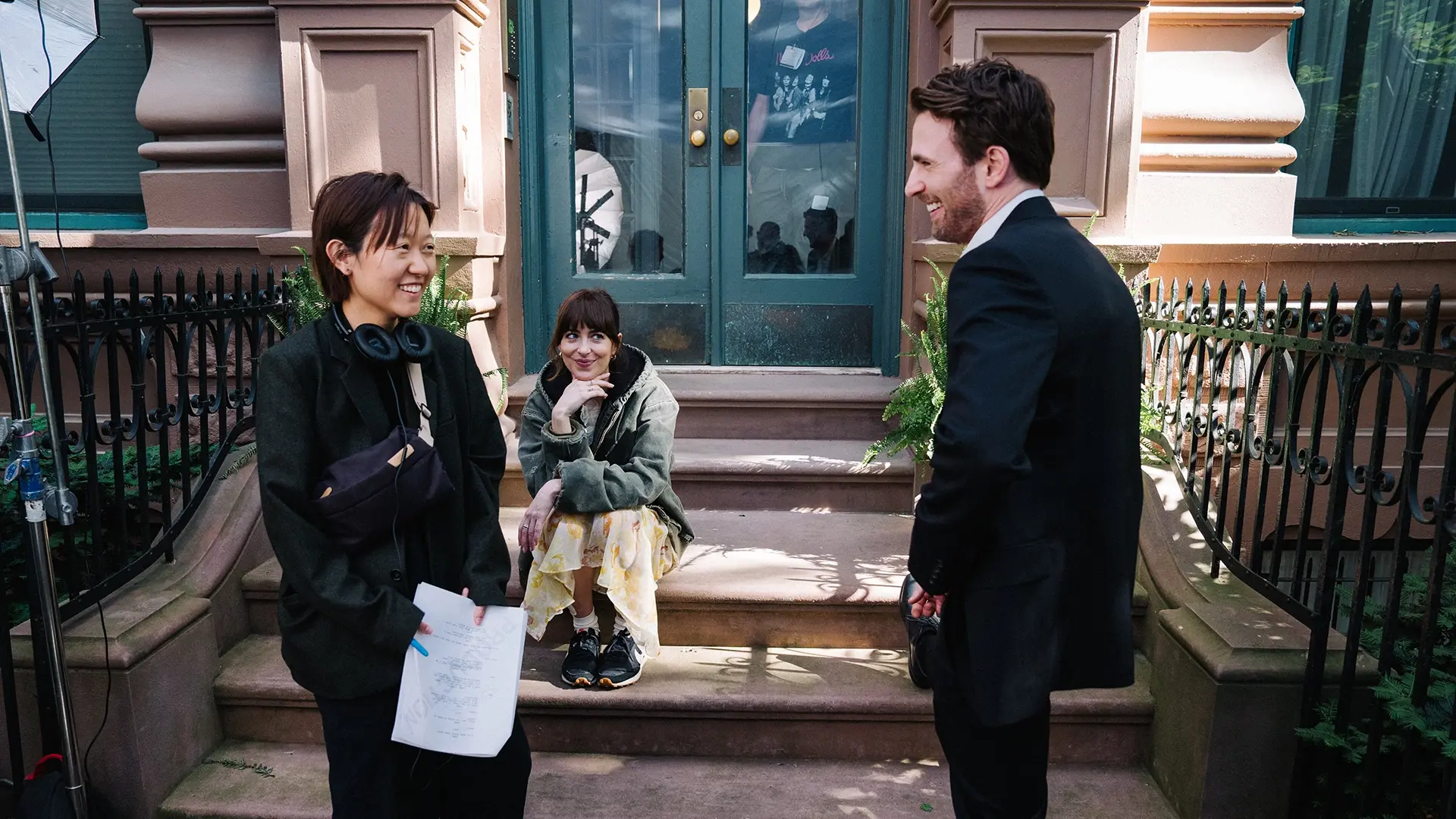
If The Drama uses the rom-com to ask how well we really know our partners, Materialists questions whether we’re choosing them for the right reasons. New York City matchmaker Lucy (Dakota Johnson) finds herself torn between two archetypes: the ‘perfect catch’, Harry (Pedro Pascal), who promises the financial and emotional stability she has always wanted, and her ex John (Chris Evans), a struggling actor who represents the life she has already tried to leave behind.
Much like The Drama, the film pivots on a revelation that lands with more weight than a standard rom-com twist. When Lucy discovers that Harry underwent leg-lengthening surgery to make himself taller and, therefore, more desirable, we witness their mutual recognition. Lucy sees his surgical enhancement as a savvy business move, and compares it to her own cosmetic tweakments. This treatment of the body as a brand is a vital expression of the film’s broader argument that, for some, love is a commodity.

But interestingly, Materialists’ most uncomfortable moment has nothing to do with Lucy’s relationships. When a woman she sets up is sexually assaulted, it exposes the limits of both her judgement and profession. She discovers that no amount of careful matchmaking can account for who a person truly is, and ponders whether packaging people as products is the most humane way to find love. It’s a realisation that feels closer to home than she’s ready to admit.

Lucy’s eventual decision to leave Harry isn’t because of the surgery. She’s come to question the value of quantitative data in matchmaking, and realises she wants an emotional connection, not a cerebral one. This leads her back to John, a man whose idea of an engagement ring is a daisy wrapped around her finger.
In another kind of film, this proposal would be a triumphant ending: love conquering consumerism. In Materialists, it’s left deliberately open. The ambiguity deeply divided audiences. Where some dismissed it as ‘broke-man propaganda’, others labelled that take cruel and classist. Either way, the film poses the question: in a world where everything is a commodity, is choosing the ‘unprofitable’ option the only way to find something real?

If Materialists reconfigures the love triangle to represent economic survival, Eternity employs the same structure to explore a more existential crisis. Joan (Elizabeth Olsen) has one week in the afterlife to decide whether to spend eternity with her first love, Luke (Callum Turner), or her second husband of 65 years, Larry (Miles Teller). The idea may be high-concept, but it expresses a very real anxiety at its core.
By forcing a choice between the fiery intensity of a past flame and the enduring bond of a decades-long partnership, Eternity is a metaphor for today’s ‘grass is greener’ mentality where endless dating-app swiping and decision fatigue breed constant doubt. Like Lucy in Materialists, Joan decides to stay with her life partner, prioritising shared history above everything else. All three films arrive at endings that are an acceptance of a nuanced reality, rather than a perfect fantasy.

So, what does this mean for today’s rom-coms? While films like Anyone But You (2023) and People We Meet on Vacation (2026) have effectively tapped into nostalgia for a simpler kind of love story, they rarely spark the same discourse or linger in the mind the way The Drama has. Perhaps for a rom-com to truly enter the zeitgeist, it must offer something more probing – a commentary sharp enough to keep pace with an increasingly sceptical audience.
From the cost-of-living crisis reinforcing the financial benefits of marriage to a dating landscape reshaped by manosphere misogyny, we have become a generation hardened by romantic despair. The blindly optimistic cinema of the past feels, increasingly, like a fantasy we can no longer buy into. Maybe the most powerful love stories aren’t the ones that offer us a way out, but the ‘rom-commentaries’ that force us to look more closely at the world we really live in.
WATCH THE DRAMA IN CINEMAS
RELATED ARTICLES

Review
The Drama Review: A Bitterly Funny Anti Rom-Com
Zendaya and Robert Pattinson navigate wedding-week woes in Kristoffer Borgli’s pointed, provocative rug-pull of a film, writes Yasmin Omar in this spoiler-free review.
Interview
Celine Song on Living and Loving Under Capitalism
Academy Award-nominated writer-director Celine Song tells Hannah Strong how her brief stint as a matchmaker inspired her thought-provoking new romance.

Deep Focus
The Very Specific Appeal of Hugh Grant’s Romantic Declarations
To celebrate 25 years of Notting Hill, Yasmin Omar looks back at how its star has delivered heart-soaring amorous speeches over the years, with all the attendant fumbling and eyelash-fluttering.