
Rental Family & American ‘Gaijin’ Cinema


Although made by a Japanese director, the Hollywood-backed drama belongs to a long tradition of films centring American characters navigating the East Asian nation’s cultural specificities. Here, Josh Slater-Williams dives into this pocket of cinematic history.
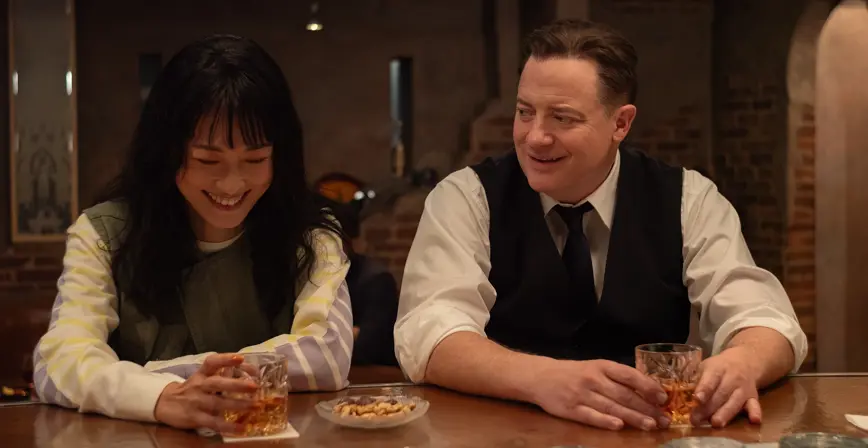
Early in Rental Family, Tokyo-based American actor Phillip (Brendan Fraser) has a drink with his new colleague Aiko (Mari Yamamoto), not long after his first gig at their ‘rental family’ service nearly goes wrong after he gets cold feet about the task. The company hires out its staff to play one-off or recurring stand-in roles in strangers’ lives, such as being a weekly in-person companion for a reclusive gamer or pretending to be a young woman’s fiancé to get her parents off her back about not settling down.
WATCH RENTAL FAMILY IN CINEMAS
Book TicketsAs Phillip expresses his struggle to comprehend why so much of the Japanese population might seek out their service, Aiko’s response includes the suggestion that he will never understand the Japanese mindset because he is a ‘gaijin’ (a Japanese word for foreigners in Japan). Soft-spoken when he’s not in performance mode, Phillip warmly responds, ‘You’re right, I am gaijin. But Japan is my home now. I want to understand.’
Rental Family is far from the only film about a gaijin outsider navigating isolation and culture shock in a Japanese metropolis, yet alone the only one made by a female writer-director about an American actor struggling with work in Tokyo, specifically. But among the many key ways that Rental Family differs from Sofia Coppola’s Lost in Translation (2003) is in its perspective. For one thing, Rental Family’s director and co-writer Hikari (Netflix’s Beef), is herself Japanese. And while Coppola’s film follows Americans on extended, temporary assignment in Japan’s capital, Fraser’s near assimilated Phillip is someone who’s been living there for almost a decade. Although a goofy toothpaste commercial is apparently what brought Phillip to the country in the first place, something compelled him to stay and make Japan his home. Something in him wants to keep learning.

While infrequently made, Hollywood-backed films set and/or principally filmed on-location in Japan date back to at least the 1950s, though compared to, say, Rental Family and Lost in Translation, earlier examples are rooted much more heavily in political factors of their time; most specifically, the US post-war occupation of Japan.
With a cast that includes Japanese-cinema titan Machiko Kyō (star of Akira Kurosawa’s popular export to the US, 1950’s Rashomon), The Teahouse of the August Moon (1956) satirises the occupation and spread of Americanisation in Japan, though isn’t helped by having Marlon Brando play an Okinawa native rather than one of the American characters. (The Method actor was made up in ‘yellowface’ to ‘look’ Asian.) Brando somewhat redeemed himself the following year with Sayonara (1957), set near Kobe, in which he plays an Air Force Major reassigned to a Japanese air base during the Korean war, coming into conflict with US racial prejudice against the Japanese. For her supporting role as the Japanese bride of Brando’s character’s soldier pal, Miyoshi Umeki became the first East Asia-born woman to win an Oscar.

On the less prestigious side of studio output, crime thrillers with Americans in Japan also emerged in this post-war period of Hollywood. 20th Century Fox and director Samuel Fuller served up a potent noir example with House of Bamboo (1955). Starring Robert Ryan and Japanese actress Yoshiko ‘Shirley’ Yamaguchi, it follows an undercover American agent infiltrating a gang of ex-American servicemen operating in Tokyo. Fuller would later mine vaguely similar territory but with the countries reversed in The Crimson Kimono (1959), in which a Japanese detective is among those hunting a killer in the Japanese quarter of Los Angeles.
Over the next few decades, the crime film became the most popular means by which American filmmakers explored Japan as a setting, including through co-productions between major studios from both countries. Warner Bros and Toei notably joined forces for The Yakuza (1974), directed by Sydney Pollack, starring Robert Mitchum, and written by Robert Towne and Paul Schrader. It’s based on a story by the latter’s brother, Leonard Schrader, who’d lived in Japan since the 1960s, who would go on to work in both the American and Japanese film industries as a screenwriter.

With the organised-crime syndicate’s strict codes of conduct and unconventional rituals providing fertile ground for stories of culture clash, the yakuza have proved a popular plot device for Hollywood’s gaijin cinema even to this day (2018’s The Outsider with Jared Leto being a recent example), though they can often be light on nuanced characterisations and veer towards sensationalism. That’s one thing if your tone is either a literal comic-book world (James Mangold’s Japan-set The Wolverine) or a spiritual one (Quentin Tarantino’s Kill Bill: Vol. 1, or Justin Lin’s The Fast and the Furious: Tokyo Drift), but another if your goal is ostensible real-world grit.

Ridley Scott’s Black Rain (1989), which pits New York City cops (Michael Douglas and Andy Garcia) against yakuza members in Osaka, is an example of the latter. It’s an aesthetic marvel, with Scott essentially reverse-engineering the Tokyo-inspired look of Blade Runner (1982) to apply it to an actual Japanese city. But it’s also a problematic artefact of a time when Japanese-American relations in American media were leaning towards extremes of either scary or silly, partly in response to Japan’s staggering rise as an economic power – i.e. a threat to American market dominance – during the country’s pre-crash period that’s now referred to as the ‘bubble era’. On the sillier side of things at this time, you had the comedy Mr. Baseball (1992), which sees a brash American ball player (Tom Selleck) traded to the Japanese league.

Despite that period generally producing some of the least culturally sensitive examples of gaijin cinema, one American-indie outlier actually presents the clearest lineage to Rental Family today. Directed and co-written by Fran Rubel Kuzui (who later helmed 1992’s Buffy the Vampire Slayer movie), the sweet Tokyo Pop (1988) follows an American singer (Carrie Hamilton) travelling to Tokyo on a whim, finding both a creative outlet and companionship among Japanese misfits exploring lives that don’t always make sense to others. In a small genre of American movies that can be too reliant on cultural clichés, sincerity over sensationalism in films like Tokyo Pop and Rental Family is an endearing quality that doesn’t get lost in translation.
WATCH RENTAL FAMILY IN CINEMAS
RELATED ARTICLES
Interview
Jessie Buckley & Chloé Zhao on Hamnet
By harnessing dreamwork and tapping into the subconscious, actress Jessie Buckley and writer-director Chloé Zhao respectively built a lived-in character and world for their poignant period drama. By Hannah Strong
Article
No Other Choice is Not Your Average Revenge Thriller
Where the desperate characters of Park Chan-wook’s Vengeance Trilogy punished the people who wronged them, this mordant, anti-capitalist film takes a different tack, with its protagonist attacking the systems that oppress him instead. By David Opie
List
Films We’re Looking Forward to in 2026
Ryan Gosling heads to space, Meryl Streep puts on her Prada, Margot Robbie yearns for Jacob Elordi and Tom Cruise leads – checks notes – a comedy?! Here are the 2026 movies we can't wait to watch.