
What to Watch at the 2026 BFI London Film Festival

With Olivia Colman marrying a straw man, Adam Driver encountering the Russian mafia and Keke Palmer stealing clothes from Demi Moore, there’s plenty of enticing cinema to sink your teeth into at the 70th edition of the BFI London Film Festival.
In her introduction to this year’s BFI London Film Festival brochure, its director Kristy Matheson compares the event to the recent eclipse. Both the LFF and the astronomical phenomenon draw people from all walks of life together, creating an experience of shared interest – even if personal tastes differ.
Running from 7 to 18 October, the 70th edition of the BFI London Film Festival has something for everyone, with a programme that includes thrillers, comedies, dramas, documentaries and horrors from some of the world’s most renowned filmmakers. Over 200 features and shorts – from more than 30 countries – will screen, alongside interviews and discussions, and an Expanded programme that explores new technologies.

Opening the festival is Simon Stone’s Elsinore, which stars Andrew Scott as actor Ian Charleson, who most famously played Scottish runner Eric Liddell in Chariots of Fire (1981). He later stepped into the role of Hamlet at the National Theatre, knowing that his health was failing. A heartbreaking portrait of creativity and one man’s blazing desire to hold on to life, it’s already a bookies’ favourite in the upcoming awards season thanks to Scott’s sensitive performance.
Rounding out the festivities is Jesse Eisenberg’s third feature as writer-director, and the second with Julianne Moore in the lead. She plays a housewife and mother who decides to break from her domestic routine when she auditions for a musical directed by Paul Giamatti’s theatrical tyrant. Following on from Eisenberg’s 2024 breakout success A Real Pain, The Debut cements his status as a filmmaker with a gift for comedy and character.

There’s a rich array of gala screenings each night from some of the best directors at work today. Romanian writer-director Cristian Mungiu, who won his first Cannes Palme d’Or in 2007 with his dark, sardonic 4 Months, 3 Weeks and 2 Days, picked up his second this year with Fjord, which stars Sebastian Stan and Sentimental Value’s Renate Reinsve as a conservative Christian couple who move to a small Norwegian coastal town and chafe against its liberal values.

La Bola Negra, the dazzling debut of Cannes Best Director winners Javier Ambrossi and Javier Calvo, moves between three time periods in Spain – 1933, 1937 and 2017 – to create a thrilling, unique drama that grapples with the rise of fascism, homophobia and the legacy of history.
There’s even a scene-stealing cameo by Penélope Cruz as a variety singer. She has a larger role opposite real-life husband Javier Bardem in Bunker, Florian Zeller’s take on the insidiousness of tech wealth and power. And Bardem also appears, on career-best form, as a megalomaniacal director who casts his daughter in his latest film, in Rodrigo Sorogoyen’s stirring The Beloved.

Other contemporary auteurs are out in force. Paweł Pawlikowski, the director of Oscar winner Ida (2013) and Cannes winner Cold War (2018), keeps to his Academy-ratio format and black-and-white cinematography for Fatherland, a riveting account of writer Thomas Mann’s travels with his daughter Erika through East Germany at the height of the Cold War. It’s a beautifully controlled drama, dominated by Sandra Hüller’s embittered Erika. The actor also takes the lead (and won Berlin’s Silver Bear for her work) in Markus Schleinzer’s compelling monochrome tale Rose, about a woman in 17th-century Germany who disguises herself as a man to earn the respect and rights that women are denied.
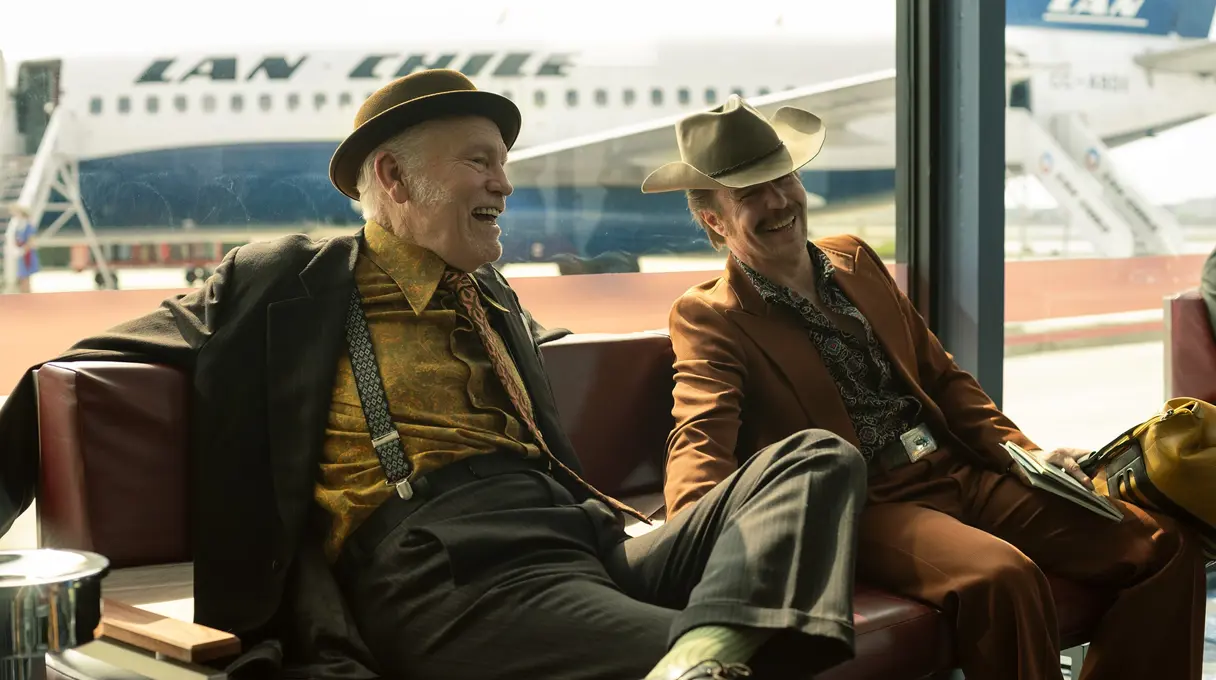
All of Us Strangers (2023) and 45 Years (2015) writer-director Andrew Haigh returns with A Long Winter, an adaptation of Colm Tóibín’s acclaimed novella. Martin McDonagh follows up The Banshees of Inisherin (2022) with Wild Horse Nine, which sees John Malkovich and Sam Rockwell play two CIA agents in 1973, who travel to Easter Island as they await the overthrow of Chile’s leftist government. Mogul Mowgli (2020) director Bassam Tariq journeys to Houston where two-time Oscar winner Mahershala Ali – who will be in conversation for a Screen Talk at Curzon Soho – plays a recently widowed father of three who desperately tries to balance parenting with his day job of being a sword-wielding hitman in Your Mother Your Mother Your Mother.

James Gray, the director of We Own the Night (2007) and Armageddon Time (2022) – and one of the finest cinematic chroniclers of life in New York City – offers up a scintillating crime thriller with Paper Tiger. It stars Adam Driver and Miles Teller as two brothers from Brooklyn whose involvement with the Russian mafia upends their lives.
Lee Chang-dong, whose Burning (2018) proved one of the major Korean successes in recent years, returns with Possible Love, an intelligent critique of class difference and media intrusion. And like his previous film, director Lee skilfully plays with expectations, giving us more than a few surprises. And Marie Kreutzer, who attracted international acclaim with her punky period drama Corsage (2022), moves into darker territory with Gentle Monster, starring Léa Seydoux as a woman who discovers her husband’s deeply unsettling secret.

Boots Riley, whose surrealist 2018 feature debut Sorry to Bother You was as outrageous as it was original, is back with the outré I Love Boosters about a trio known as the Velvet Gang (Keke Palmer, Naomi Ackie, Taylour Paige) who steal (or ‘boost’) clothes from Demi Moore’s wealthy designer, but then get the idea of forming their own brand.
It’s likely to be one of the festival’s must-see sensations – especially since we’ve been waiting for the film to arrive in the UK since its May US release. Club Kid, similarly, has only grown in stature since its May premiere (at Cannes). I Love LA’s Jordan Firstman writes, directs and stars as a cynical club promoter with a complex personal life who discovers that he’s a father.

One of the standouts of this year’s Sundance Film Festival, winning the Grand Jury Dramatic Prize, was Beth de Araújo’s Josephine. It tells the story of a young girl who witnesses a violent crime, and details how her parents (Channing Tatum and Gemma Chan) attempt to deal with the trauma that follows in its wake. It’s likely to be one of the most talked about films at the festival.
In 2021, Andrey Zvyagintsev succumbed to a COVID-related illness whose subsequent complications saw him hospitalised for 11 months, and severely impacted his speech and ability to walk. It’s nothing short of a miracle that the filmmaker behind Leviathan (2014) and Loveless (2017) retuned to Cannes this year and received a rapturous reception for his powerful anti-Putin thriller Minotaur. A remake of Claude Chabrol’s La femme infidèle (1969), it follows a businessman involved in shady government deals who suspects his wife is having an affair. It’s a stunning work by one of contemporary cinema’s greats.

Great directors also feature throughout the festival’s strands, from Love and Thrill to Cult and Create. Ira Sachs, who impressed with Peter Hujar’s Day this January returns with The Man I Love, starring a never better Rami Malek as a gay artist in 1980s New York who is forced to face his own mortality. Social-realist master Mike Leigh has insinuated that Tender Loving Care may be his final film. Here, the octogenarian director of Hard Truths (2024) once again presents the kind of portrait of contemporary family life that has long earned him a sizeable following and critical respect.
German auteur Angela Schanelec isn’t as well known in the UK as she should be. That might change with My Wife Cries, a typically sublime relationship drama from one of the most articulate and probing voices in contemporary European cinema. And we see the return to form – in some style – of Italian auteur Nanni Moretti (The Son’s Room, 2001) whose It Will Happen Tonight is a quirky romantic comedy-drama starring Louis Garrel and Jasmine Trinca. A highlight from the Treasure selection of restored classics is La dérive, the only feature by Paula Delsol. She was a friend of François Truffaut’s and her 1964 drama, about a young woman having to deal with the advances of men, deserves to be included among the canon of the French New Wave.

All of a Sudden, the ruminative, soothing drama from Drive My Car’s Ryusuke Hamaguchi, is a beautiful portrait of friendship, driven by Virginie Efira and Tao Okamoto’s luminous performances. Hamaguchi’s style is like a rich conversation, with a languorous three-hour running time to match, yet it never outstays its welcome. It’s also not the longest film in the festival.
There’s Alex Gibney’s excoriating Musk, an inventive documentary profile of the world’s richest man, which comes in at 225 minutes. But even that pales against two other films. Julia Loktev’s My Undesirable Friends: Part II – Exile, which focuses on the lives of the filmmaker’s journalist friends who are forced to leave Russia following the country’s invasion of Ukraine, is an immersive 355 minutes, while Mariano Llinás’ immensely entertaining Life of Jorge Luis Borges is a snip at 330 minutes.
The competition strands also feature a wealth of new and established talent, including Carol Morley (7 Miles Out), Two Prosecutors (2025) director Sergei Loznitsa (Imperium), Hirokazu Kore-eda (Look Back) and Adolescence actor-turned-director Ashley Walters (Animol). There’s also Ben’Imana, which won the Caméra d’Or at Cannes and tells of a community attempting to come to terms with the horror of the Rwandan genocide.
A Common Story is one of two films starring gifted Italian actor Alba Rohrwacher. Here, she plays a woman facing up to her disintegrating marriage after her children leave home. (In the other, Stéphane Brizé’s sobering A Good Little Soldier, she plays an HR exec at a large insurance company who comes to understand the ruthless nature of the bottom line.)

Lukas Dhont follows up his 2022 festival favourite Close with World War I drama Coward. Clio Banard, the British filmmaker behind The Selfish Giant (2013) and Ali & Ava (2021) returns with the exuberant I See Buildings Fall Like Lightning, an adaptation of Keiran Goddard’s 2025 novel about a group of friends navigating professional, personal and sociopolitical challenges in Birmingham. Other films dealing articulately with coming of age include Rafael Manuel’s Filipiñana, about a young woman working at a country club in Manila who begins to understand the nature of servitude; Hyun Lee’s French Girls, a savvy exploration of contemporary twentysomething life; and Marine Atlan’s La Gradiva, wherein a group of pupils clash on a school trip to Pompeii.
Documentaries run the gamut at the LFF, from those dealing with specific issues to wider portraits of people or places. Ava DuVernay continues her exploration of how aspects of the US Bill of Rights have been dismantled in 14th. Tutu and Carl Sagan: We Are Made of Star Stuff offer insightful portraits of two towering figures of the 20th century. Making Marie Antoinette allows an unprecedented behind-the-scenes look at Sofia Coppola’s reclaimed classic by her mother, Eleanor, who previously enjoyed success as a filmmaker with the excellent Hearts of Darkness: A Filmmaker's Apocalypse (1991). The Slightest Touch is a moving portrait of the friendship between Colin Farrell and Emma Fogarty, who lives with a rare genetic condition that causes her skin to tear upon physical contact. And All About the Money, the latest film by Sinéad O'Shea (Blue Road: The Edna O'Brien Story, 2024), focuses on the scion of a wealthy family who attempts to distance himself from the 1% he belongs to, unaware that his entitlement drives his every action.

There’s also an array of future cult favourites. Takashi Yamazaki delivers on the promise of Godzilla Minus One (2023) with his rip-roaring Godzilla Minus Zero. The dreadful alleged serial killer Elizabeth Bathory is portrayed as a vampire and played by Isabelle Huppert in Ulrike Ottinger’s The Blood Countess. Olivia Colman is a woman who marries a straw man (albeit one played by Alexander Skarsgård) in Alex Huston Fischer and Eleanor Wilson’s wonderfully offbeat and frequently hilarious Wicker. (Colman also supplies the voice of a talking fox who advises a cuckolded man in the marriage satire The Fox.) The Love Witch (2016) writer-director Anna Biller channels Roger Corman for the bloodily colourful The Face of Horror, shot on 35mm. And Léa Seydoux makes a second festival appearance in The Unknown, a body-swap horror from Anatomy of a Fall writer Arthur Harari that sees a photographer hook up with a woman at a party and awaken the next morning inside her body.
But perhaps the biggest shocker of the festival is a film that was made over 50 years ago but receives its UK premiere in the form that its director originally envisioned. Ken Russell’s The Devils, whose controversial release in 1971 prompted calls for an overhaul of film classification, pretty much transgresses most taboos. It stars Oliver Reed, Vanessa Redgrave and a clutch of the best British character actors of the era. The Devils distils the wildest elements of Ken Russell’s cinematic style into a film that is as beautiful as it is grotesque, moving as it is shocking, and more daring than most contemporary releases. There’s no doubt that it will be one of the most sensational films of this year’s festival.
CHECK OUT THE BFI LONDON FILM FESTIVAL PROGRAMME
RELATED ARTICLES
Interview
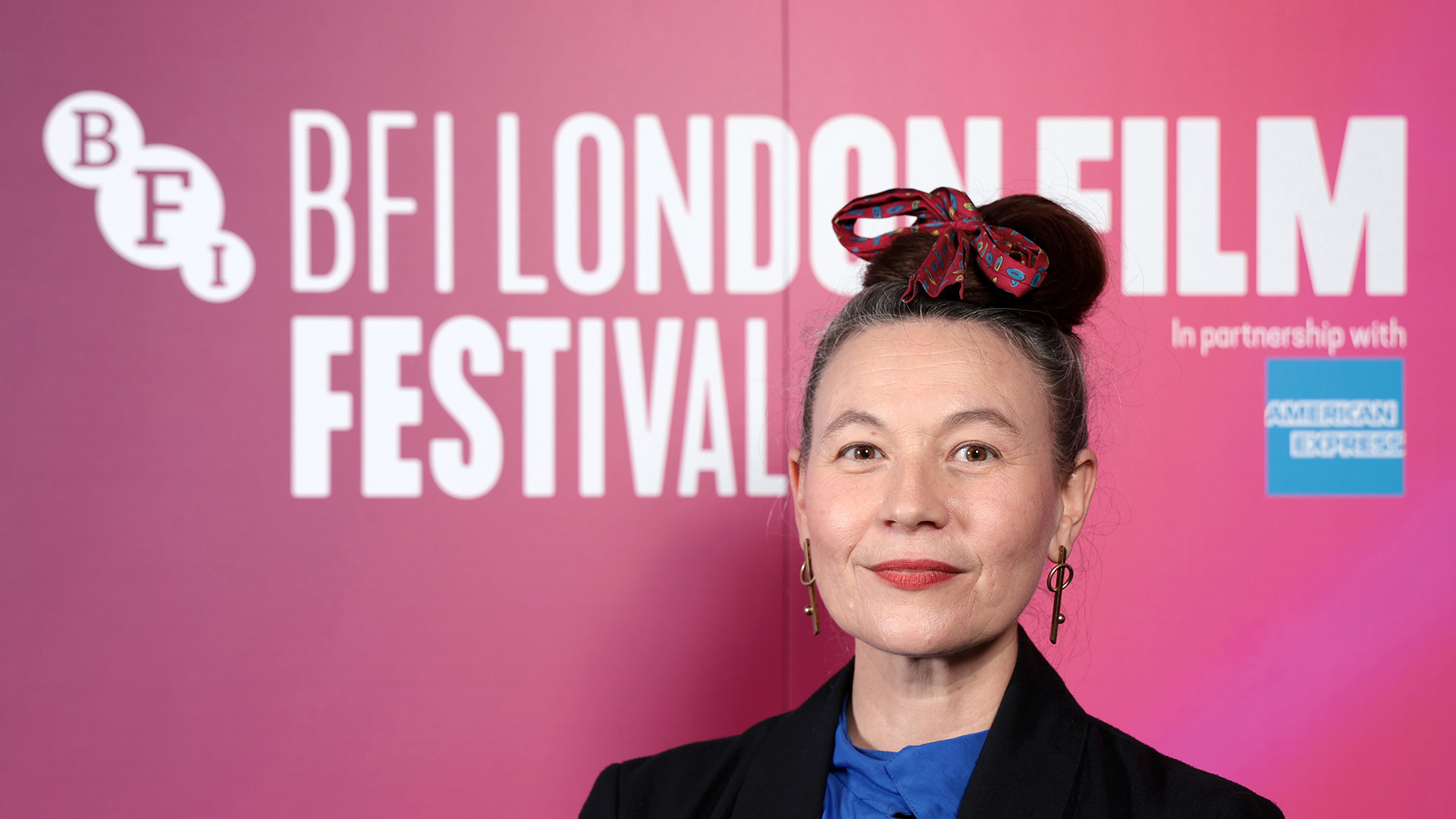
LFF Director Kristy Matheson on Putting the Film Programme Together
BFI London Film Festival Director Kristy Matheson talks to Curzon about the year-long marathon it takes to bring the expansive programme together.
Interview
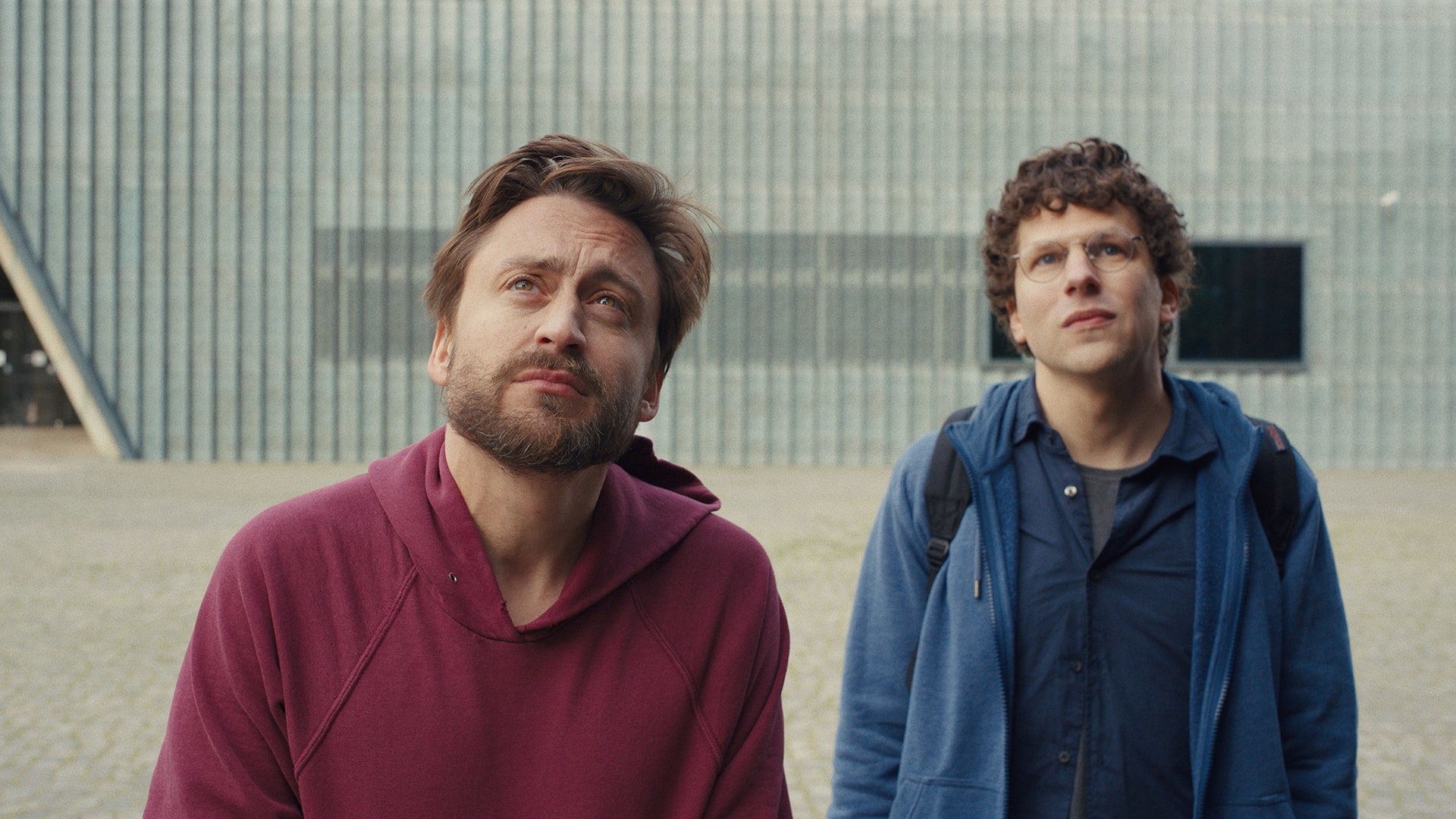
Jesse Eisenberg: I Hear the Characters' Voices in my Mind
Gabriella Geisinger speaks with writer-director-actor Jesse Eisenberg about crafting his characterful screenplay, balancing tone and finding humour in darkness.
Armageddon Time