
Richard Linklater: I Owe a Debt to the French New Wave
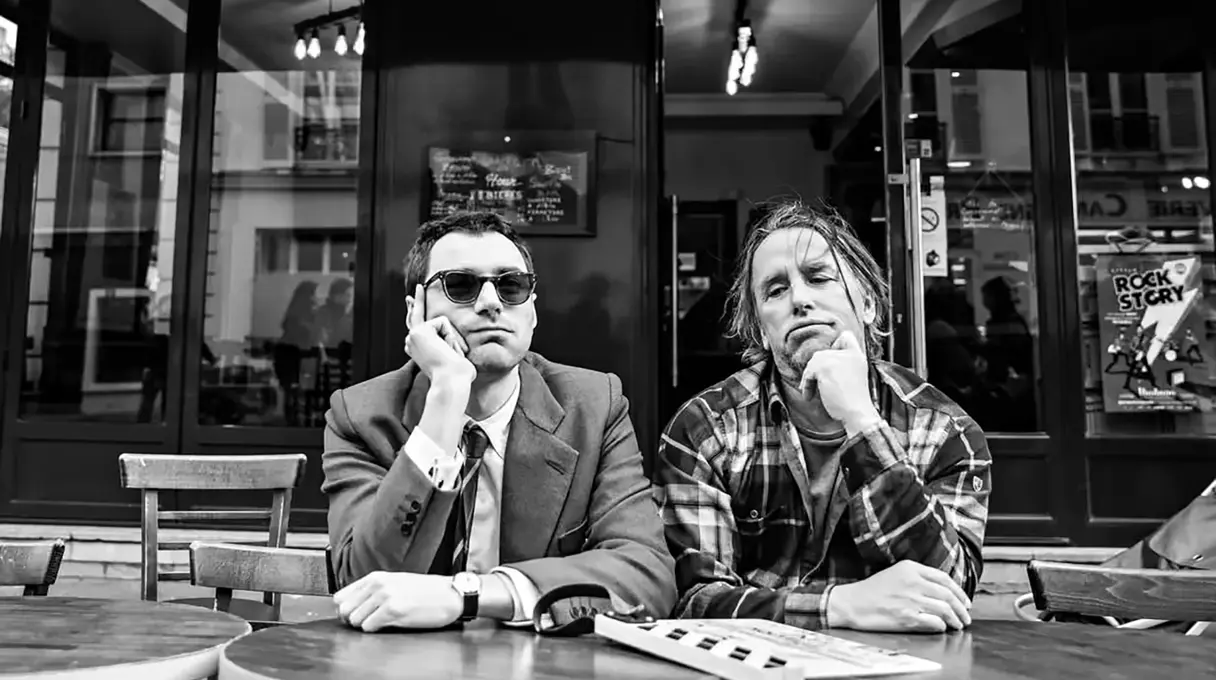
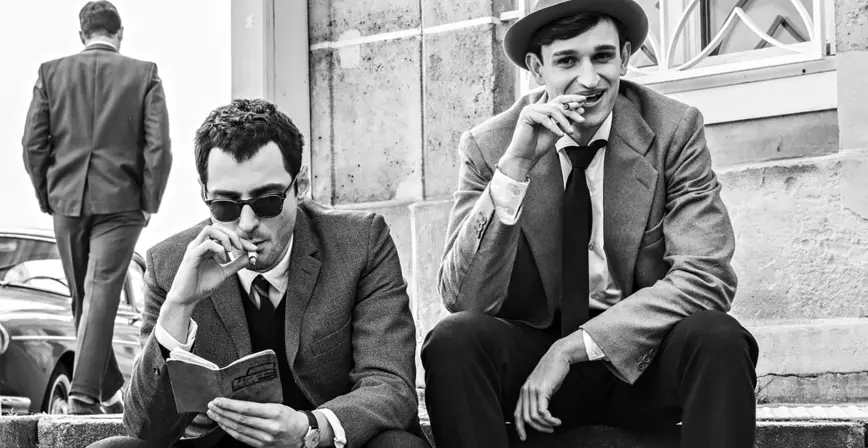
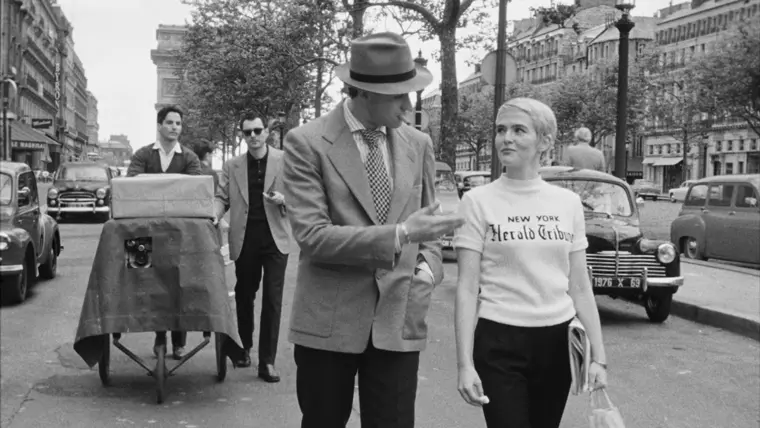
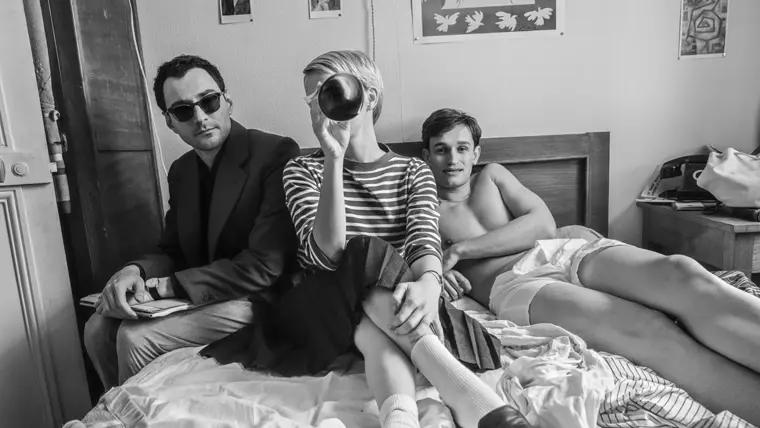
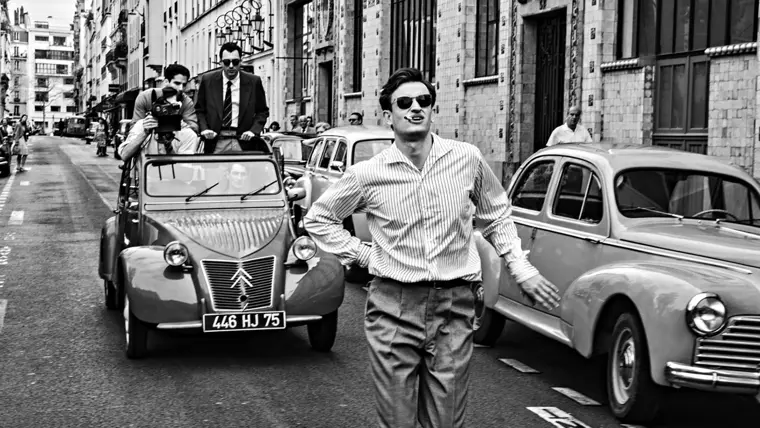
Like many Richard Linklater films, from the pre-graduation pot-smoking of Dazed and Confused (1993) to the meandering Viennese walk-and-talks of Before Sunrise (1995), his latest is essentially a hangout movie. Nouvelle Vague, which premiered in competition at Cannes, breezily chronicles the chaotic, 20-day shoot of one of the foundational texts of the French New Wave: Jean-Luc Godard’s Breathless.
The 28-year-old filmmaker’s rule-breaking debut – and the hugely influential movement at large – redefined what cinema could be, upending conventions and rewriting its language. Simply put, the French New Wave changed Linklater’s life, expanding his horizons and informing his approach to filmmaking. Here, the director sits down with Yasmin Omar to discuss his early training as an actor, the rise of personal cinema and his experiences inside the Nineties’ indie-film explosion.
YASMIN OMAR: Tell me about the first time you watched a French New Wave film.
RICHARD LINKLATER: Appropriately, it was Breathless. My dad took me to see it at a local university in the early Eighties when I was about 20 and just getting interested in cinema. I liked it, but didn’t really understand it. I hadn’t been exposed to that much international cinema in those days. The second time I saw it, I realised what was going on.
Then I started watching everything I could get my hands on – Godard, Truffaut, Rohmer, Rivette – making up for lost time. Back then, you had to wait for films to show up at a theatre, you couldn’t just rent them at the click of a button. I started the Austin Film Society so I could show a bunch of movies and, in the spring of ’88, I screened 17 Godard films.
WATCH NOUVELLE VAGUE IN CINEMAS
Book TicketsYO: What did you initially find inspiring about the movement?
RL: It was very influential immediately, I don’t think there’s ever been anything quite like it. With all the spontaneity and improv, the filmmakers were like great jazz musicians. Their films are the prototype for what we now call indie cinema or personal cinema. This revolution lowered the [narrative] stakes. Up to that point, a film had to be a big story in a genre: a musical, a melodrama, an epic... No one made a film about three days in the life of some kid, a film about some guy walking around.
After the French New Wave, you could make a film about anything – a trip you took, a love affair. Film, to me, became about freedom and personal expression. By the time I picked up a camera, I had incorporated that idea into my thinking. The debt I, and every generation since, owes to those filmmakers is pretty substantial.
YO: You’ve joked that you feel like you have a master’s in the French New Wave since working on this film. What did your research process look like?
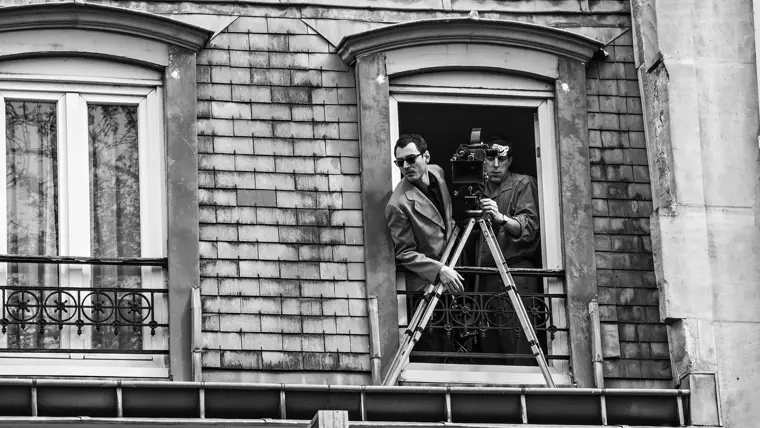
RL: I went from a master’s to a doctorate! [Laughs] It’s a well documented production, everything was archived. I could tell you which lens they’re using, what they shot on a particular day, how many takes they did. It’s interesting to me that they had a set photographer, but not a sound crew. I think they had an eye on marketing. Maybe that’s [Breathless producer Georges de] Beauregard, maybe that’s Godard. They had an awareness of their own image, like when Godard agreed to go along with the story that he robbed a gas station at gunpoint to finance the film. That created a little myth. I think he was aware, in a modernist way, of the idea of the antihero artist.
YO: Although your films are meticulously planned, they often feel improvised and laidback. How do you reconcile that push-pull between tightness and looseness during rehearsal?
RL: Early on, I trained as an actor a little bit. Not that I ever wanted to be one, I just knew performances were going to be important in what I wanted to do. I learned that, for me to be confident as an actor, I had to work really hard. I liked rehearsal, talking about the material and finding new ideas was fun. The process was also useful to me as a writer – it made the script better.
I have a sports background and was taught that if you practise really hard, you do your best in the game. You don’t have to think about it. I wanted actors to be that comfortable. I’m trying to break down this wall, and make the characters and situations seem real. So, on my very first film, I took the time to rehearse. I didn’t have any money but what did I have? Time. I put that film together in rehearsal and made the final tweaks. Then, when I was shooting, I could be relaxed.
YO: You came up during the independent-film boom in the Nineties, alongside filmmakers like Quentin Tarantino, Paul Thomas Anderson and Steven Soderbergh. How does today’s independent-film scene compare to when you were first working in that space?
RL: No one ever appreciates the moment they’re in. They usually complain that they’re not getting the support they need, which is what I did at the time. Looking back, I was so blessed that a studio would even give me money. Independent filmmaking hasn't changed at all in 65 years, but studios have changed enormously. They used to make a slate of all different kinds of films and see if they worked: a couple of low-budget films, a couple of mid-budget dramas and romantic comedies, a big-budget Tom Cruise action movie. Now, they only make the biggest movies. Their business model is to make six $180 million films a year, and they need five of them to make $400 million and one to make a billion.
Today they’d think it’s too much effort to give punks like me $6 million to make a movie, so they just go straight to the money. All that to say, I was lucky when Universal Studios gave me $6 million to make a rock ’n’ roll hangout movie with no stars [Dazed and Confused]. That’s gone away now. It’s a different landscape 30 years later, but it’s still a great time to make a film with new technology. It's just hard to get your film seen the way you used to. Film doesn’t permeate the culture the way it once did – but nothing does! I don’t want to pick on film, it’s the same with literature, music…
YO: Everyone’s trapped in their own echo-chamber algorithms.
RL: We all lament what’s going on with film, but it’s going on with the human brain. There’s so much information coming at us everywhere we go. We’re attention-challenged. Advertising’s the enemy. You have to focus on cinema, seek it out and watch it to the exclusion of all else.
YO: You’ve long been experimental in your approach to filmmaking, whether using rotoscope animation or embarking on years-long projects like Boyhood and the upcoming Merrily We Roll Along [which began shooting in 2019 and will be released around 2040]. What’s a cinematic frontier you’d still like to conquer?
RL: So much of filmmaking is really just narrative and problem-solving, it doesn’t feel like a frontier. A lot of times I make choices on films because that’s how I think they should look. On Boyhood, I needed 12 years for it to feel like the film in my head. That was the only way I could do it. I don’t think there’s anything I’m itching to do that I haven’t – I just want to tell stories I’m obsessed with, about stuff I really feel I understand and appreciate.
Every filmmaker thinks they can do anything, but what are they interested in? The other day, Ethan [Hawke] told an interviewer that Blue Moon fits into the Linklater oeuvre because it’s set in one room, in real time with people talking. I hadn’t really thought of that. I didn’t think it fit into my ‘thing’, but it was a film I was interested in trying to make work, so I guess it does. It all makes sense in retrospect, but when it’s happening, like anything in life, you’re just following your impulses.
WATCH NOUVELLE VAGUE IN CINEMAS
RELATED ARTICLES
Article
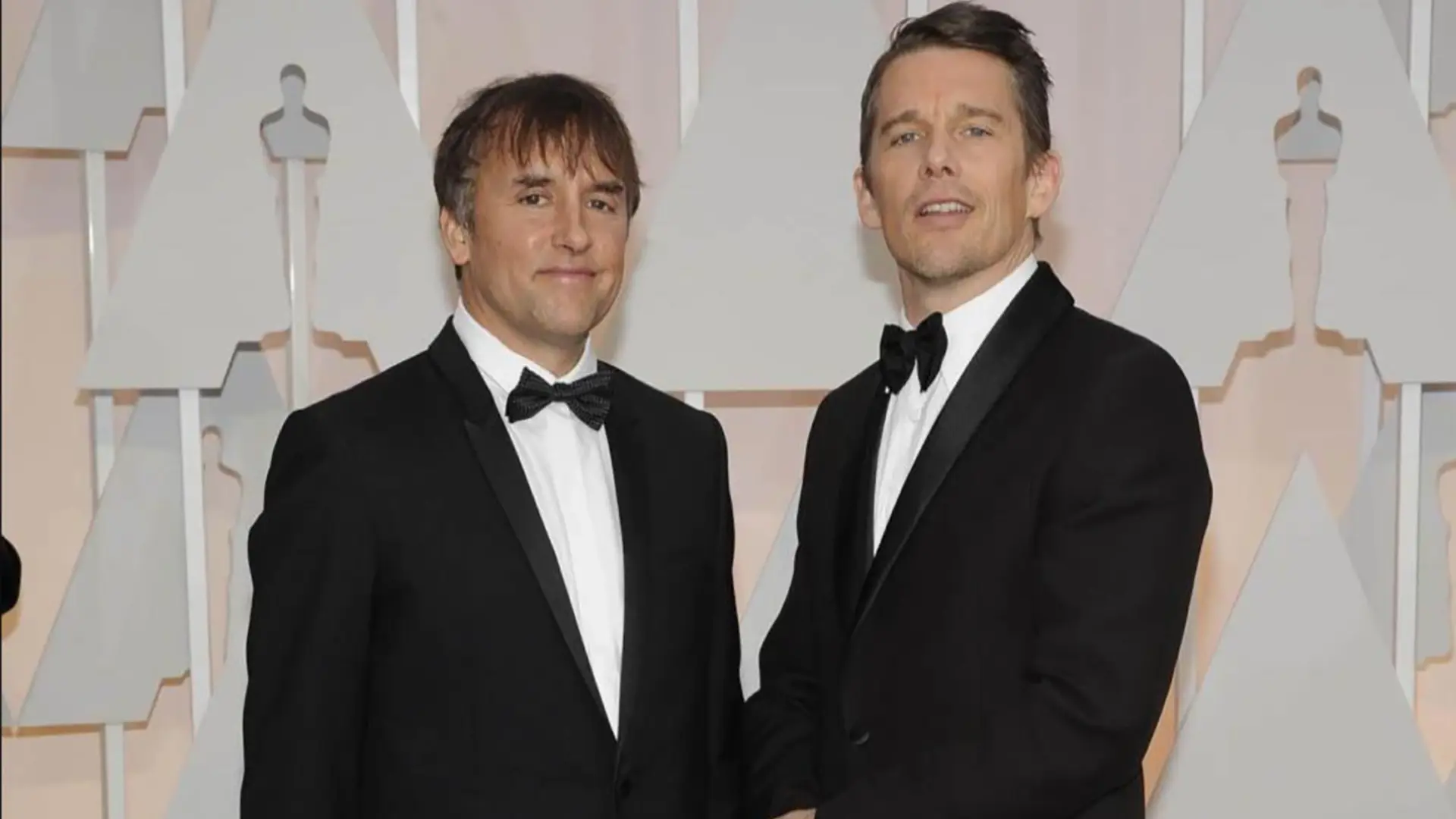
Are Ethan Hawke and Richard Linklater American Cinema’s Greatest Collaborators?
Across three decades, the actor-director duo have joined forces on wide-ranging projects that have pushed the boundaries of filmmaking, from the Before trilogy to Boyhood. Their latest team-up is, of all things, a break-up movie. By David Opie
Interview
Noah Baumbach Finds His Soft Side with Jay Kelly
The Oscar-nominated writer-director talks to Yasmin Omar about identity crises, the death of the movie star and the true meaning of failure.
Interview
Jessie Buckley & Chloé Zhao on Hamnet
By harnessing dreamwork and tapping into the subconscious, actress Jessie Buckley and writer-director Chloé Zhao respectively built a lived-in character and world for their poignant period drama. By Hannah Strong