
Truth to Power: Cinema as Opposition
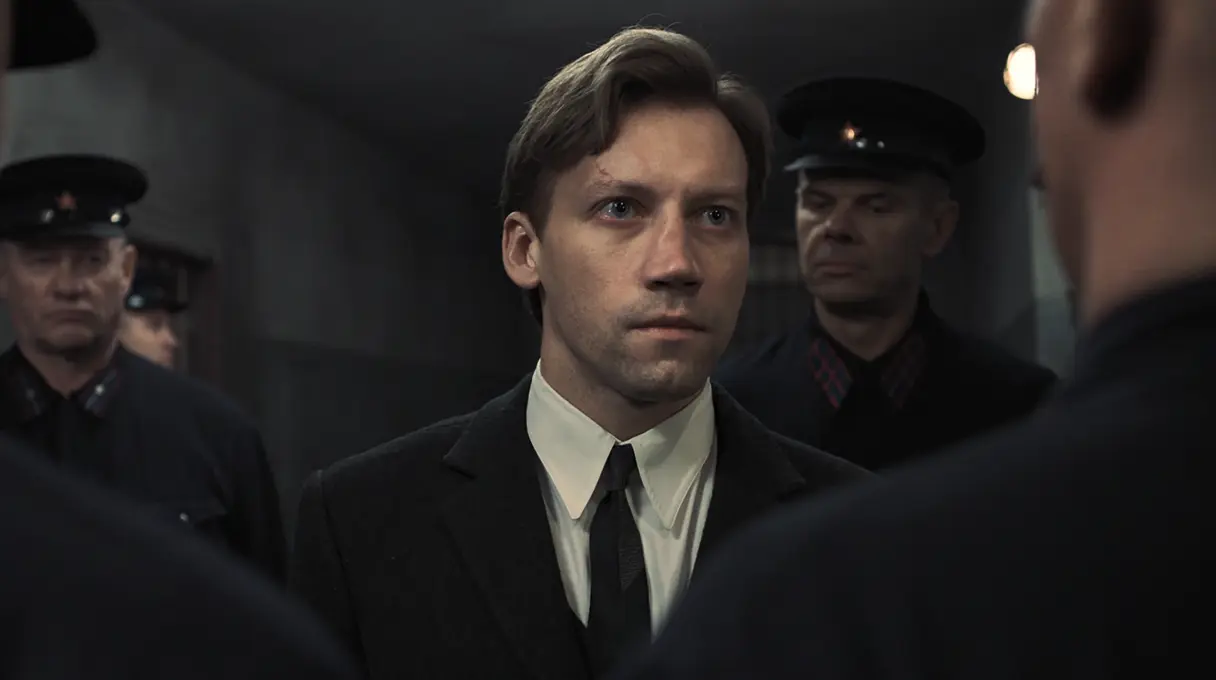

As a number of international directors interrogate oppressive regimes of the past – to shed light on those of the present – in their politically charged films, Guy Lodge explores contemporary cinema’s vehement opposition to authoritarianism.
‘Every film is political,’ said Wim Wenders, before going on to explain that goes most of all for entertainment that pretends not to be. ‘In every frame they tell you everything’s fine the way it is. They are a continual advertisement for things as they are.’ That is true enough, though in times of political upheaval, somewhat more forthright messaging comes to the fore. It’s been a year of boldly rhetorical cinema, presenting stories of political resistance, rebellion and revolution in no uncertain terms.
The tone was set at this year’s Cannes Film Festival, where the Palme d’Or was presented to dissident Iranian auteur Jafar Panahi for his mordantly comic thriller It Was Just an Accident – the tale of a group of former Iranian political prisoners who are unexpectedly handed the chance to exact revenge on one of their past tormentors, and must weigh up the moral cost of catharsis. It’s a career-capping work from Panahi, the director once convicted by the Iranian government for creating propaganda against the regime – and whose films still function as acts of rebellion, made in secret outside the system.
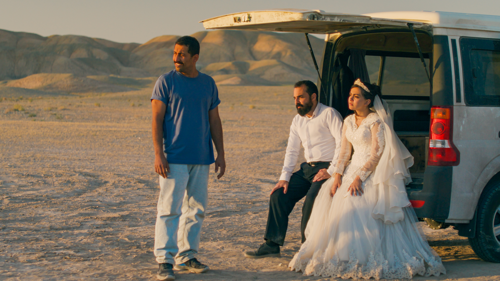
It wasn’t alone at the festival: Brazilian director Kleber Mendonça Filho was celebrated for his rollicking political thriller The Secret Agent, which followed last year’s Oscar-winning I’m Still Here in its vivid depiction of life in the crushing grip of Brazil’s military dictatorship in the 1970s, while Israeli director Nadav Lapid’s Yes was a blistering attack on his country’s nationalistic military culture and the invasion of the Gaza Strip. Months later, at Venice, Kaouther Ben Hania’s wrenching docudrama The Voice of Hind Rajab furiously surveyed the genocide from the other side of the border.
Meanwhile, American filmmakers are responding to their own divided country’s political turmoil with unusual candour, whether in Ari Aster’s wicked Covid-era satire Eddington or in One Battle After Another, Paul Thomas Anderson’s absurdist vision of chaotic resistance to a militarised American state. At a moment where global headlines are dominated by the rash, polarising leadership of Trump, Putin, Netanyahu et al, the overtly political message we’re getting from contemporary filmmakers is that nothing is fine the way it is.
Or indeed the way it was. Amid a surfeit of standout films this year that unfold against the backdrop of oppressive political regimes, three more awards-season releases are vivid historical dramas that reflect pointedly on the present, too. Sergei Loznitsa’s Two Prosecutors, Annemarie Jacir’s Palestine 36 and Hasan Hadi’s The President’s Cake all rewind immersively to dark eras in the 20th-century histories of the former Soviet Union, Palestine and Iraq, respectively, but these aren’t sealed-off period pieces. In each, the filmmaker holds a mirror to the country today, inviting audiences to consider what has changed, and what injustices have been repeated.
‘It’s in our DNA to be afraid to say something,’ explains Aleksandr Kuznetsov, the Ukrainian-born star of Two Prosecutors – a scorching, darkly comic depiction of institutional corruption in the midst of Soviet leader Joseph Stalin’s Great Purge from 1936 to 1938. With a Kafkaesque sense of surreal, shadowy paranoia, the film pits Kuznetsov’s character Kornyev, a morally upright young prosecutor, against a profusion of bureaucratic deception and obfuscation as he attempts to defend an elderly Old Bolshevik wrongfully jailed by Stalin’s secret police. The lies are as unclear as the truth in this world of grey municipal corridors and overcast prison yards. Loznitsa, the Ukrainian auteur celebrated equally for his narrative films and his politically rigorous documentary work, finds an overwhelming visual language for an age of totalitarian control.
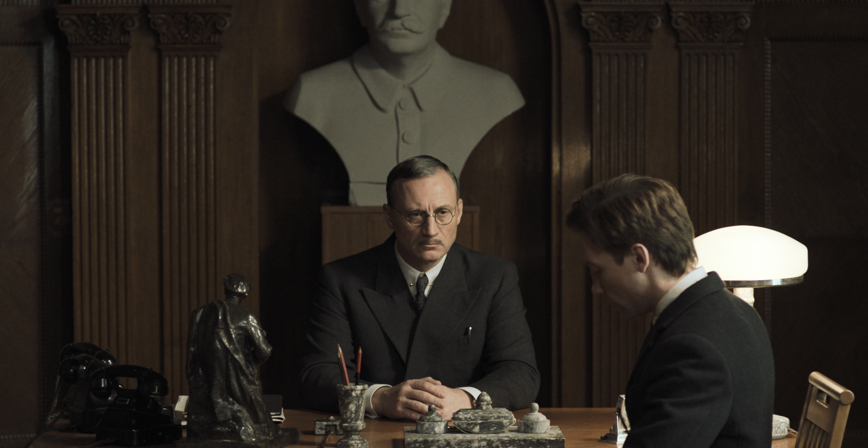
Two Prosecutors is in cinemas from 27 March
Book Tickets HereThe film may be set in 1937, but held against the misdeeds of the Putin regime, it doesn’t feel that way. Kuznetsov – who studied and began his acting career in Moscow, but has since been exiled from Russia for his vocal criticism of Putin’s invasion of Ukraine – was drawn to the timely nature of the film. ‘It might sound like we made a statement with such a political film,’ he says. ‘But actually, I didn’t risk anything. Because I risked much more before, when I was in danger, at the beginning of the war. The film [unfolds] nearly 100 years ago, but we have the same [kind of] president, the same repressions. Some of my friends are being starved and tortured in Russian political prisons. We need to speak openly.’
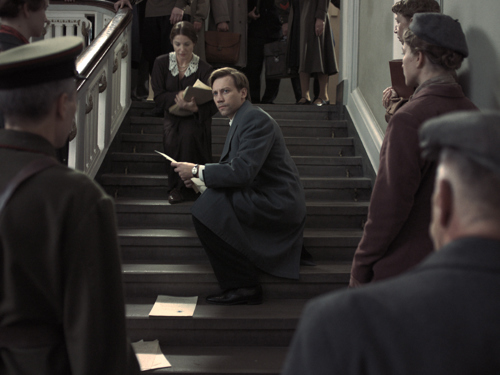
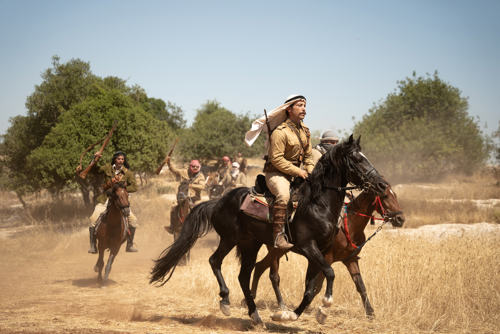
Set nearly concurrently with Two Prosecutors, Palestine 36 is no despairing chamber piece but a robust, soaring historical epic in the classic tradition – nesting its candid political commentary in stirring doses of adventure and romance. Old-school storytelling tropes are thus used to shed light on what for some outside viewers may be an unfamiliar chapter of Palestinian history – depicting a time when the territory was still under British rule, and the 1936 Arab Revolt against the colonists. In doing so, Jacir’s film also outlines the roots of the Israel-Palestine conflict raging to this day as Gaza burns, as the British occupiers, too, are divided along pro-Zionist and pro-Arab lines.
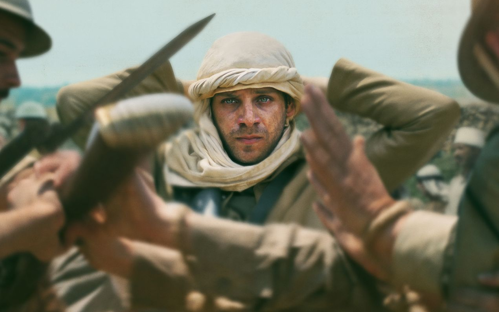
For Jacir, the Palestinian director who has previously explored the fallout of this conflict in such films as Salt of This Sea (2008), Palestine 36 represented a rare chance to present on screen a Palestinian perspective on this colonial era. ‘People talk about the First Intifada in 1987, but we know it started before that and it’s never really ended,’ she says. ‘Because it’s just been an uprising that waxes and wanes, but we haven’t reached our freedom yet.’ Filming the story as a genocide continued in Palestine was difficult for Jacir, not least because by necessity the shoot had to be relocated from its actual setting. ‘We had to look at Turkey, Cyprus, Greece, Morocco, Malta, but this film is so much about the land. It was heartbreaking. But I kept insisting that we would finish the film in Palestine. And we did in November 2024. So Jerusalem is Jerusalem, Jaffa is Jaffa. It was a bittersweet victory.’
Relative to these other territories, Iraq is presently in a period of stability and rebuilding, though the 1990-set The President’s Cake imaginatively casts us back to a time when Saddam Hussein held the country in a dictatorial grip. First-time feature director Hadi was a mere boy growing up in Baghdad when Hussein’s rule came to an end, so it’s apt that his film views the era through the simultaneously innocent and perceptive eyes of a child: nine-year-old girl Lamia (delightful newcomer Baneen Ahmed Nayyef), who is selected by her teacher for the dubious honour of baking a cake for Hussein’s upcoming nationwide birthday celebrations. Lamia is young enough not to understand the exact authoritarian implications of this occasion, but sensitive enough to know the task shouldn’t fall to her. At a time of punishing economic sanctions leaving her and her fellow villagers in extreme poverty, merely sourcing the ingredients for a cake comes at an impossible price, and for whose reward?
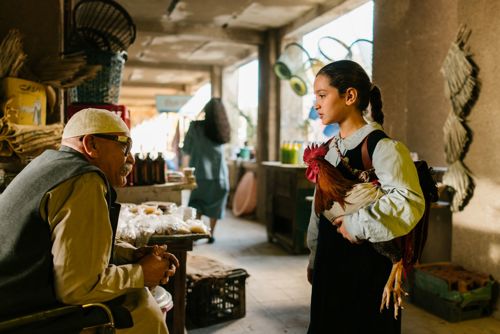
Lamia’s pragmatic, context-shorn perspective highlights both the absurd vanity and elitist cruelty of the regime she lives under. For Hadi, meanwhile, the film evokes his own gradual understanding of the chain of command that exists in a dictatorship, from the remote leader to the lackeys and government workers acting out his will. ‘He was a symbolic figure to me,’ he says of Hussein, ‘but as a child, the person I was scared of was my teacher. I didn’t understand that he was under someone else’s power.’ Accounts of Iraq’s recent history from the inside are still few and far between on international screens – Hadi is the first Iraqi director ever to present a film at Cannes. He’s hopeful that the country is now a safe place to tell stories of the past, though the film’s fable-like telling doesn’t obscure the reality of still raw national wounds.
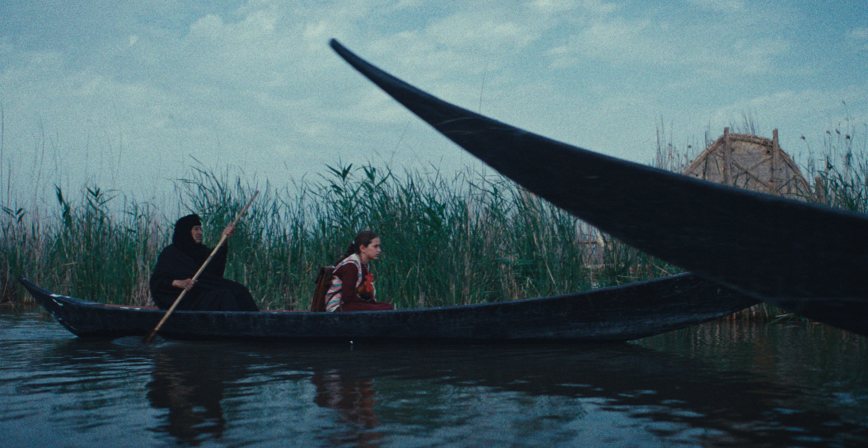
The President's Cake is now in cinemas
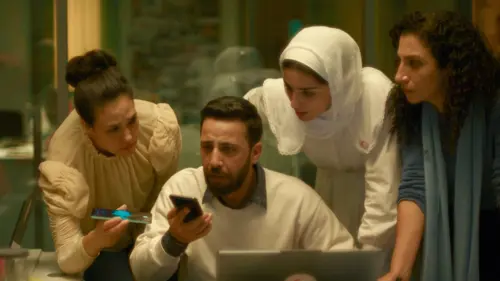
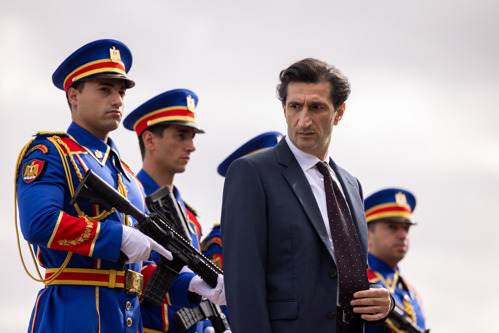
Book Tickets HereMeanwhile, the challenges and pitfalls of presenting politics on film are sharply and playfully addressed in an altogether different drama: Eagles of the Republic, from Swedish-Egyptian director Tarik Saleh. Saleh’s film, however, ventures intrepidly into the now, satirising Egyptian censorship culture and the authoritarian government of the nation’s current President, Abdel Fattah El-Sisi. It revolves around a fictional movie star (charismatically played by Fares Fares) forced to portray the President in a propagandistic biopic celebrating Sisi’s controversial military career, with escalatingly dangerous consequences for the hapless actor. The film is at once a propulsive entertainment and a damning state-of-the-nation address – as well as a canny reminder to audiences to watch all cinema with a questioning political mindset.
TWO PROSECUTORS IS OUT FROM 27 MARCH
RELATED ARTICLES
Interview
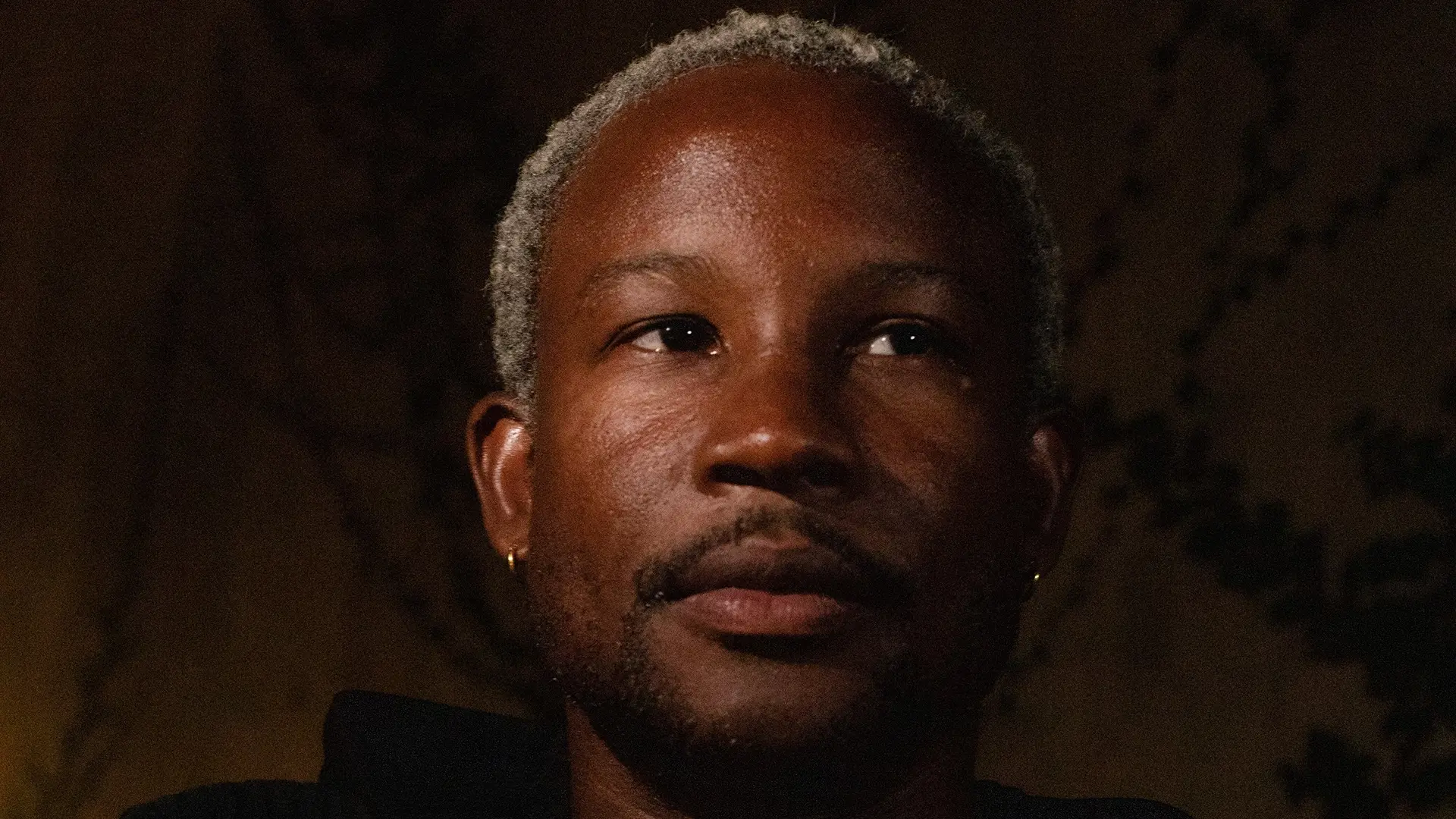
BAFTA-Winning Director Akinola Davies Jr on My Father’s Shadow
The British-Nigerian filmmaker speaks to Josh Slater-Williams about performing masculinity, shooting in Lagos and compiling playlists for his heads of department.
Interview
Cinematographer Autumn Durald Arkapaw Made History with Sinners
Oscar-nominated cinematographer Autumn Durald Arkapaw felt like she was convening with her ancestors when working on Ryan Coogler’s Black history-tinged supernatural horror, which she shot on 65mm IMAX film. By Leigh Singer
Article
Rose Byrne’s Comedic Skills Power If I Had Legs I’d Kick You
There may be panic attacks and anxiety spirals in this high-intensity drama, but the brilliance of Rose Byrne’s Oscar-nominated performance is rooted in her facility with comedy, writes David Opie.