
Jane Schoenbrun: ‘My Only Goal is to Make a Constantly Evolving Body of Work’
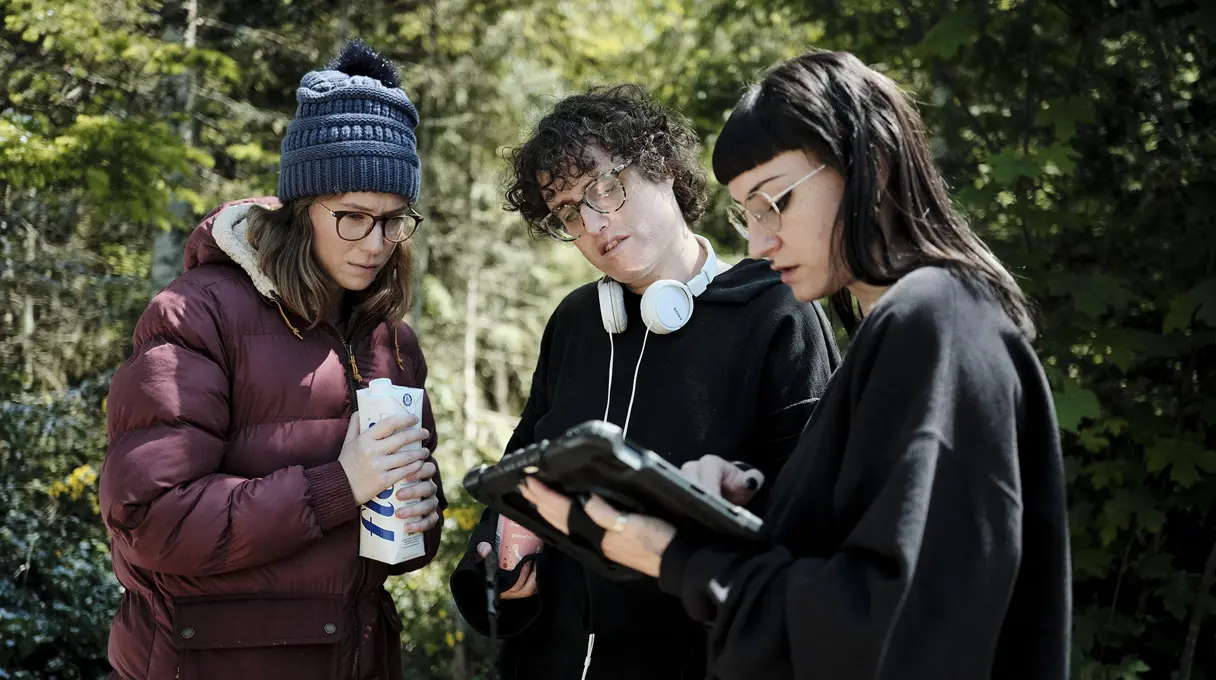

‘If it gets too real, you can always turn it off.’ These words become a mantra early on in Teenage Sex and Death at Camp Miasma, a nostalgic yet forward-thinking love letter to VHS sleaze and slasher flicks from a bygone era. But the characters we meet in Jane Schoenbrun’s third feature aren’t quite ready to ‘turn it off’, not when the perverse pleasures of this blood-drenched nightmare turn them on so readily.
Young queer filmmaker Kris (Hannah Einbinder) is hired to direct a reboot of the Camp Miasma franchise, so she reaches out to the film’s original star, Billy Presley (Gillian Anderson). As they connect, long-forgotten urges reawaken in and around the remote cabin where they stay until the primal need to live gives way to carnal desire above all else.
Following the online nihilism of We’re All Going to the World’s Fair (2021) and the neon-hued dysphoria embodied in I Saw the TV Glow (2024), Schoenbrun takes a horny midnight odyssey into the problematic slashers they grew up loving from decades past. Grappling with the joy, fear and allure of such danger, Teenage Sex and Death at Camp Miasma asks us to step through a screen within a screen within a screen in search of something profane yet profound – and even freeing.
Here, Schoenbrun discusses their evolving body of work, recreating past worlds, the design of the killer Little Death and more.
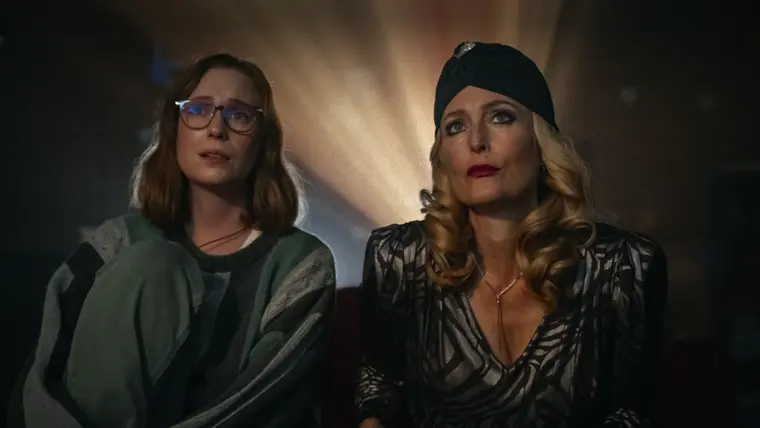
DAVID OPIE: THERE’S THIS FASCINATING TENSION BETWEEN ART AND ENTERTAINMENT THROUGHOUT, PERHAPS MOST EVIDENT IN KRIS’ FRAUGHT ZOOM CALLS WITH HER PRODUCERS. DID YOU FEEL PRESSURE TO FOLLOW UP I SAW THE TV GLOW WITH SOMETHING MORE OR LESS COMMERCIAL?
Jane Schoenbrun: I was aware even before I had finished TV Glow that that was going to be an interesting film to follow up. I understood that that film was sort of like a shout into the void. It’s very tense and specific.
As an artist, my only goal is to make an expansive, diverse and constantly evolving body of work that feels really truthful to me. Even before TV Glow came out, I was thinking about not getting pigeonholed. I didn’t want the vibe and tone of TV Glow to be thought of as the only thing I could do. I remember really early on being like, ‘I want to make another movie quickly, and I want it to be a little bit out of left field.’
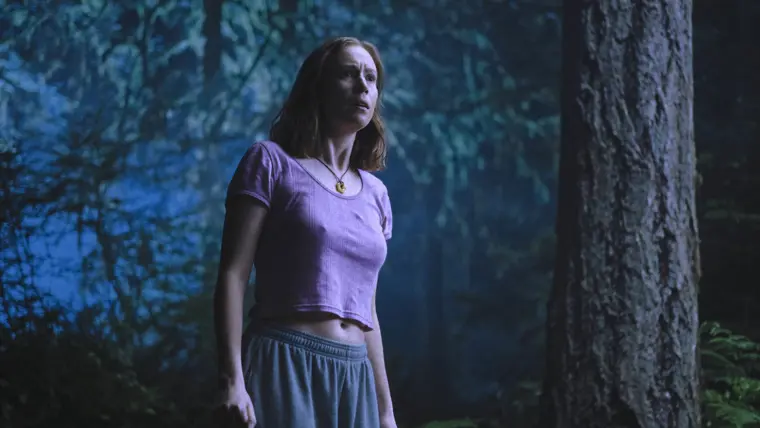
I also very quickly knew that I wanted to make something really joyful. Like an exhale from the torment of TV Glow, which is one of the reasons why this movie is so goofy and campy and wacky and funny. Because I think I am all of those things, but the work to date hasn’t really shown that. I was excited about making something that continued to evolve what I, as an artist, am allowed to do, even to myself.
Putting a geyser of blood in the first scene felt like a line in the sand. Things are going to be a little stickier this time around.
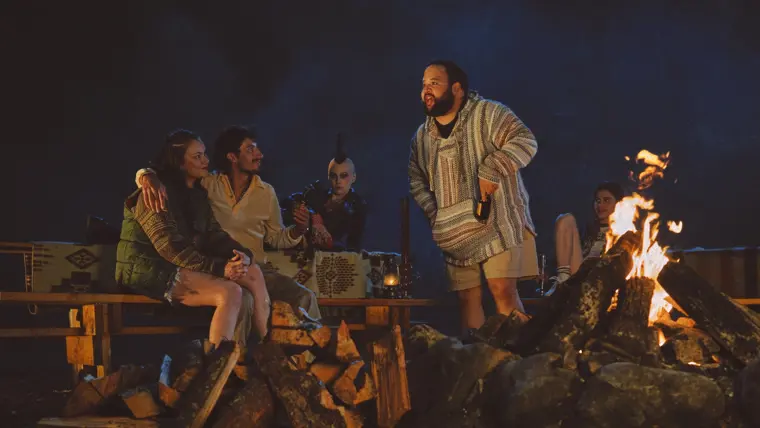
DO: YOU LOOK BACK AT PAST HORROR MOVIES AND THEIR LEGACY IN THE FILM, REFRAMING THEIR INTENT THROUGH YOUR OWN OUTLOOK AND AESTHETIC. HOW DID YOU APPROACH MAKING THE OLDER FILM WITHIN THE FILM LOOK SO AUTHENTIC LIKE YOU DID WITH THE PINK OPAQUE SHOW IN I SAW THE TV GLOW?
JS: It was really wonderful to get to do more of that. It’s definitely been an aspect of all of my work so far. I almost feel like it’s me giving myself permission to go ‘full genre’.
All of [my previous] films, [whether] they’re the media within the film or not, are still speaking in that vernacular, be [that] weird internet video or Nineties teen fantasy drama on TV or in slasher movies. The whole movie is made within that spirit. But when you have the characters literally watch that artefact [the original Camp Miasma] within the film, it’s me giving myself permission to go full camp and really turn that knob up to 11.
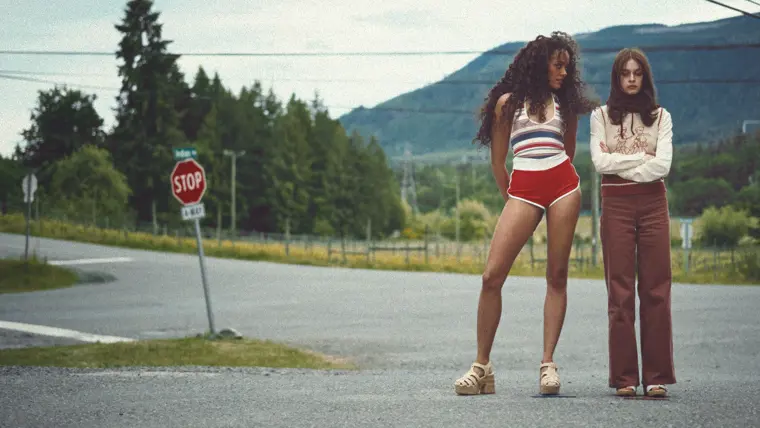
What was so cool about it in this case is I really do feel like it earns its runtime. When I was making TV Glow, it was very clear that we could only show you so much of The Pink Opaque before you started to feel ‘Where’s the emotional core of the movie?’, and get antsy about returning to Owen and Maddy. Whereas here, the structure of the movie is something I’m quite proud of because we really just watch the movie within the movie for 20, 30 minutes and lose our ‘reality’.
It’s something that I want to do more of in my films because there’s a dreamlike quality in going through one screen into another screen into another screen while you in the audience are staring at a screen.
In terms of crafting that world, a lot of it is just love… It’s not pastiche exactly. There’s something hauntological about my gaze on it. I’m not trying to make what feels like an actual slasher that would have come out in the Eighties. It’s 70% that, and then 30% my dream version of it. The week when we were shooting the movie within the movie, I had everyone read a Joyce Carol Oates short story that I loved because the tone of this is not exactly just schlock. It’s something more tender.
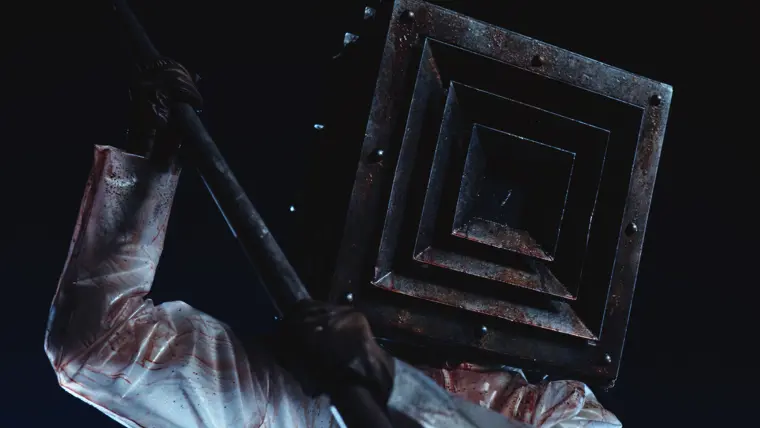
DO: THE 'MONSTER', LITTLE DEATH, REALLY ENCAPSULATES THAT IDEA OF DEPTH WITHIN ‘SCHLOCK’ SO WELL. TALK US THROUGH THE SYMBOLISM OF THE UNUSUAL HEADPIECE THEY WEAR AND THE SPACE THEY INHABIT UNDERNEATH THE LAKE.
JS: ‘There’s a hole at the bottom of the lake where the movies come from.’ I made sure that line was in the first trailer because there’s just something so evocative about it. In many ways, the mythology formed around those words. It almost became a mantra that made a sort of emotional sense, and then I had to discover the logic of the story to justify it.
I hesitate to put it too deeply into words because the film is trying to express it, but Little Death is the embodiment of a certain kind of profane desire that’s lurking under the surface of our culture and maybe comes out of the water a little bit more through these nasty movies in the horror section of the video store. It’s really with us all the time, some kind of libidinal Freudian impulse.
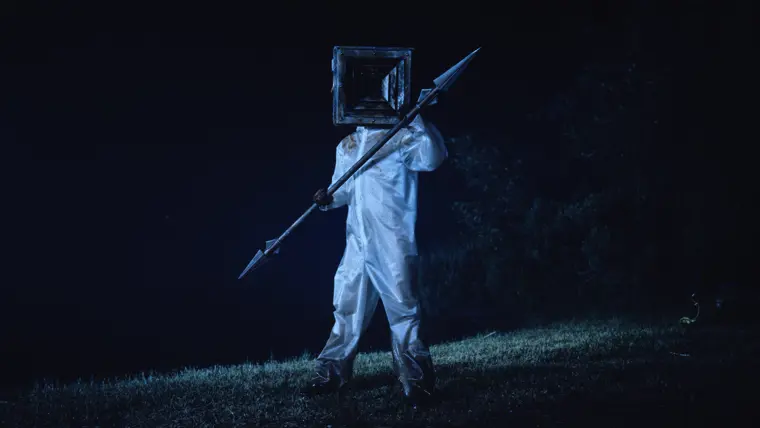
These are things that the movie is having fun exploring within the confines of the slasher genre, finding ways to evolve or remake that language to say something almost Deleuzian.
In terms of the helmet and the design, I always look for hidden things, things that are in front of us but that we don’t see so much. I know in the UK you don’t have them, but here in the US, that window vent… If you’re from the US and you see Little Death, you think of what you see on the ceiling of most rooms here. It’s like that exact design. It’s as ubiquitous as cable lines stretching across the country. We see it every day, but we don’t think about it.
I saw it one night in bed, just staring up at the ceiling, thinking about what this character’s mask could be, and I didn’t overthink it. I was like, ‘There it is.’ It was in front of my eyes this whole time. I just didn’t notice it.
WATCH TEENAGE SEX AND DEATH AT CAMP MIASMA IN CINEMAS
RELATED ARTICLES
Article
How Christopher Nolan Became a Brand
As the director follows up his Oscar-winning Oppenheimer with The Odyssey, Matt Maytum considers how the filmmaker achieved his status as a singular visionary who shoots on celluloid, favours practical effects and makes event movies out of the unlikeliest of subjects.
Article
Spoilers are the Real Big Bad of the Marvel Cinematic Universe
After the Spider-Man team-up rumours that dogged No Way Home, Marvel has been very tight-lipped about the web-slinger’s latest adventure Brand New Day. David Opie welcomes the secrecy, and argues that cryptic trailers and character obfuscation only build intrigue.
Review
The Invite Review: An Old-School Comedy of Marital Manners
Olivia Wilde returns to form with a stripped-back, adroitly performed character piece that feels like a Seventies movie, writes Yasmin Omar.