
Supergirl Has Always Been More Interesting Than Superman


Clark Kent may be an A-list hero, but his cousin Supergirl is the more compelling character. Over nearly seven decades, she’s been a shapeshifting goo, had magic firepowers, dated her superpowered horse and wrestled with real trauma, writes David Opie.
Superman is stronger than a locomotive, yes, but he’s also duller than watching paint dry if his critics are to be believed. DC’s iconic boy scout is too powerful to be beaten, too goody-goody for modern-day audiences. It’s not only the Man of Steel who’s fighting for his life, though, not when it comes to such unfair accusations.
Superman’s cousin Supergirl has fared much worse over the years, dismissed as merely a pointless carbon copy of Krypton’s Last Son. Even her successful CW show, which ran for six seasons from 2015 to 2021, couldn’t dissuade some of the notion that Supergirl is essentially ‘Superman in a skirt’.
WATCH SUPERGIRL IN CINEMAS
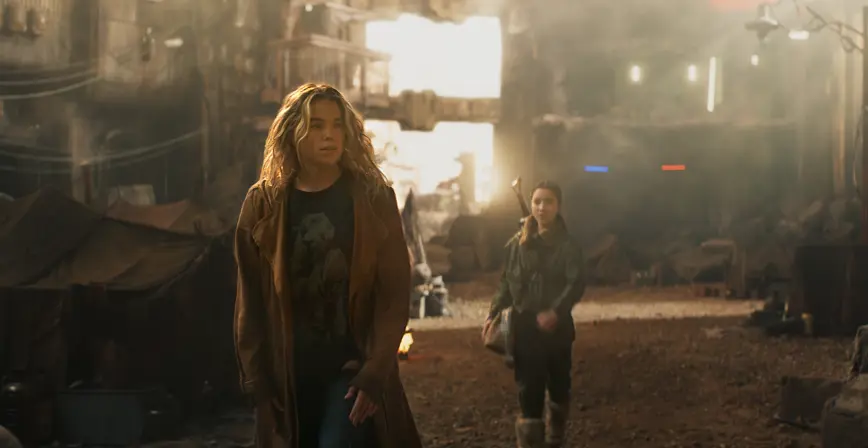
Book TicketsDirector James Gunn went out of his way to dispel all that with his Superman reboot last year, reminding people of not just Superman’s star appeal but Supergirl’s too. With a scene-stealing cameo, Milly Alcock’s take on Supergirl redefined the character as loud and brash (and all kinds of drunk) in ways Kara Zor-El had never been portrayed before. Here at last was a Maid of Might who really was made of sterner stuff, setting up a whole new interpretation of Supergirl ahead of her solo outing this summer.
But the truth is that Supergirl was interesting long before she crashed Superman’s Fortress of Solitude on a bender. In fact, she’s always been a lot more interesting than her cousin – and not only because she once dated her own superpowered horse Comet.

Making her debut in 1959, Supergirl got into the usual wacky hijinks that many did in the Silver Age of superhero comics, each more ridiculous than the last. Horseplay aside, Supergirl did everything from fighting tiny Superman duplicates to casting black magic against her cousin. Outrageous, sure, but none of this really differentiated Supergirl from the Man of Steel or any of the other DC heroes on newsstands at that point.
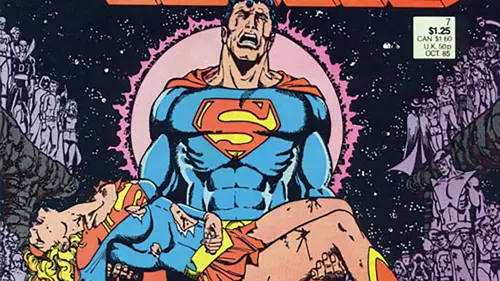
As such, Supergirl was considered fair game when DC executives decided someone needed to die in the Eighties comic-book crossover event Crisis on Infinite Earths. After a (very) brief period of mourning, the character was retconned into being the daughter of an Atlantean wizard who’d been tricked into believing she was Superman’s cousin, because why not?
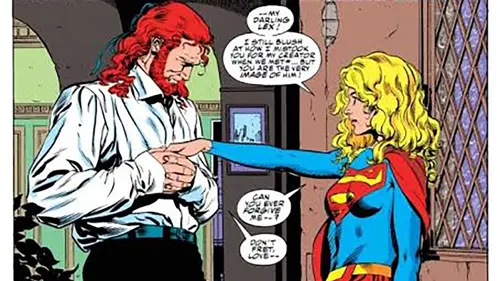
Things got even weirder when a new ‘Supergirl’ introduced in the Nineties turned out to be a shapeshifting glob of goo called Matrix that just so happened to take on the form of Supergirl. She made out with Lex Luthor a lot around the time, back when he’d been randomly de-aged and sported surprisingly luscious locks of hair. As if that wasn’t strange enough, the interdimensional creature now known as Supergirl went on to lead her own series where she transformed into an ‘Earth-born angel’ with magic fire powers.
Eventually, a more typical version of Supergirl was reintroduced, as seen in various cartoons and that aforementioned CW show. But, beyond all those bizarre quirks of history, this modern take on the Girl of Steel is fascinating regardless – especially in comparison to Superman. And that’s because she’s a survivor.
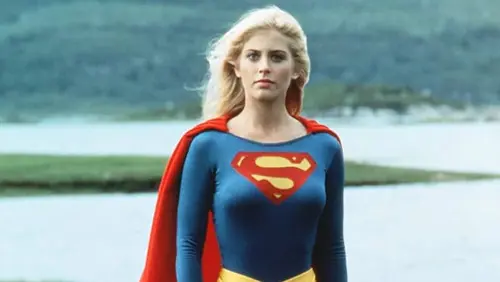
Across almost seven decades, Supergirl has consistently been mistreated far more than other heroes of her fame and stature. From sacrificial martyr to amorphous goo and everything in between, the Girl of Steel has had to be as resilient as her namesake. Even when Hollywood took a chance on her in the Eighties – hoping to capitalise on the success of Christopher Reeve’s Superman – Supergirl’s solo movie bombed both critically and commercially.
Still, 1984’s Supergirl, the first in live-action, has since become a cult classic, enjoyed for its campy dialogue and cheesy special effects (not to mention a villainous performance from Faye Dunaway, who chews the scenery every chance she gets). Supergirl actress Helen Slater later appeared in different roles across various Superman-themed projects, demonstrating the enduring legacy of her Eighties spinoff.
One such title, the CW’s Supergirl show, was the first to centre Kara in live-action since the movie. Yet even then, this version remained an underdog of sorts, three decades on. Melissa Benoist’s plucky Supergirl was a throwback to simpler times, channelling the fun and absurdity of Silver Age comics. But the series was also progressive in its stance on feminism, refugees and queerness especially.
It was known for one of TV’s highest-profile lesbian ships and for featuring the first trans superhero on screen, Nicole Maines’ Dreamer. All of which animated trolls to direct a hate campaign against Supergirl; they review-bombed the show for being too ‘woke’.
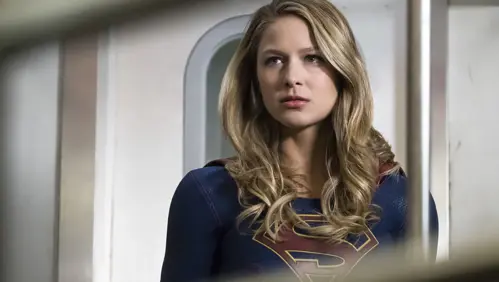
Attempts to other Supergirl are nothing new. She’s always been an outsider, a so-called second-rate female version of a male A-list superhero. But rather than try to shake that stigma, the best Supergirl stories have always embraced this about Kara. That’s especially true of 2021’s comic-book series Supergirl: Woman of Tomorrow, which is widely recognised as one of her greatest outings to date.
The Eisner Award-nominated work – written by Tom King and illustrated by Bilquis Evelyn – introduces a remarkably flawed version of Supergirl, one who’s wracked by the pain that comes with a survivor’s guilt unlike any other.
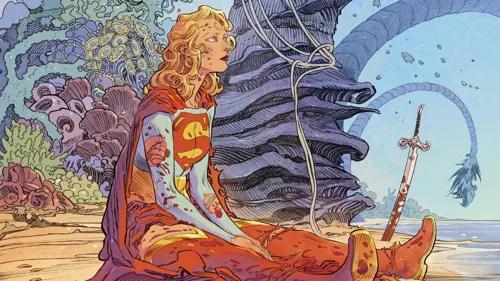
While Earth-dwelling Superman mourns the loss of a world he can’t remember, Kara is all too familiar with their shared planet Krypton, having lived there for years before it was tragically destroyed. Is it any wonder that she seeks a red sun that can cancel out her powers so she can get drunk and try to forget? This Supergirl isn’t quite as keen to get obliterated as Alcock’s was in last year’s film, but the parallels are clear nonetheless.
In fact, Ana Nogueira’s screenplay for the new Supergirl film was directly inspired by this series, which puts Kara’s flaws front and centre in a space-set adventure that’s as much about healing as it is fighting. Red sun aside, she and Clark are both invulnerable, but Supergirl is wounded in ways Superman could never be.
This makes her more sceptical of humanity and other aliens alike. Kara’s driven by both trauma and a desire to help. When she does offer a hand, she’s overcoming her own deep-rooted pain (and arguably alcoholism) to do so, which will always be more interesting than watching someone seemingly perfect like Clark save the day.
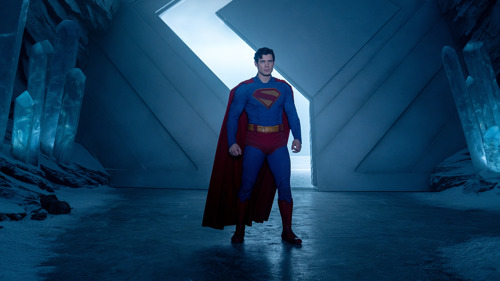
While there is more to Superman than being strong and doing good deeds, his iconic status brings with it certain preconceptions that can be hard to navigate when scripting new adventures for him. Although Gunn, who co-wrote the superhero’s 2025 film, did lean into that with much success, Supergirl has never come with that same baggage.
To be overlooked is to be underestimated, which is why Kara has so much more potential. And that’s precisely why her character has so often been revised in the comics, because Supergirl is free to be as flawed and complicated as she wants without decades of expectation weighing her down.
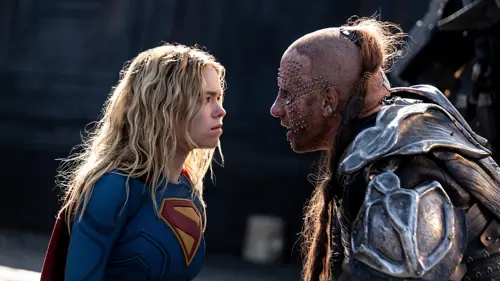
Despite spending less time on Earth than Superman, Supergirl feels more human as a result, even if she does wield the exact same powers as her more famous cousin. While Superman is the basis of the hero archetype as we know it today, Kara is a different kind of hero – her rebellious struggles add important new wrinkles to the Kryptonian mythos that help her stand out as unique and special.
Stronger than a locomotive and more interesting than her cousin could ever be, Supergirl is about as far from ‘Superman in a skirt’ as you can get.
WATCH SUPERGIRL IN CINEMAS
RELATED ARTICLES
Article
James Gunn Returns Superman to His Roots
Departing from Zack Snyder’s dark aesthetic, the new co-CEO of DC Studios draws on the character’s comic-book past for his reboot, which favours paintbox-bright imagery. Here, Lillian Crawford explores the superhero’s enduring iconography.
Article
How to Create a Superhero Universe
Superhero summer is upon us with Superman and The Fantastic Four: First Steps. Here, Helen O'Hara gives studio executives some (mostly) helpful advice on how to build an interconnected cinematic universe that'll keep audiences invested.
Article
How Big Tech Became Animation’s Ultimate Supervillain
From Ron’s Gone Wrong’s data-mining CEO to Toy Story 5’s attention-sucking AI tablet, there’s been a surprising surge of anti-billionaire techno-pessimism in recent family films. Alistair Ryder investigates the trend.