
The Internet Origins of Backrooms
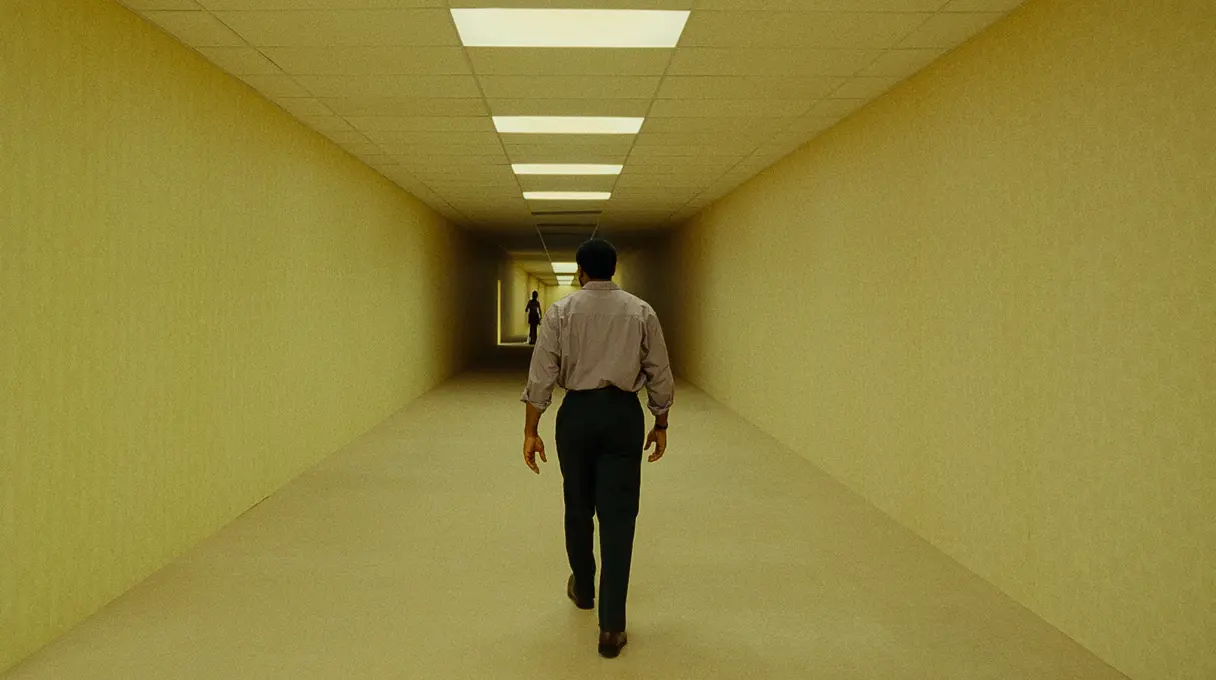

Disentangling 4chan images, YouTube films, video games and ‘creepypasta’, Kambole Campbell explains the very online backstory of Backrooms.
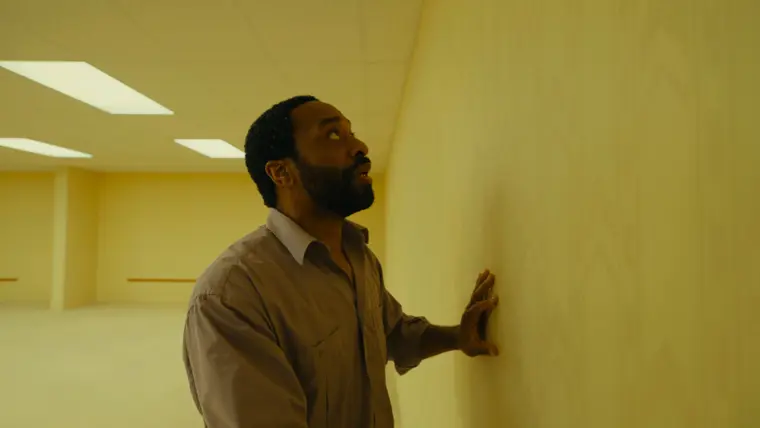
‘The store just… continues. It just keeps going, like a copy of itself,’ furniture-shop owner Clark (Chiwetel Ejiofor) breathlessly raves about the impossible space of Backrooms, after discovering an entrance in the basement of his business. It’s an apt description for the idea of the liminal space: a transitional, in-between place that gains an uncanniness, and perhaps hostility, through its plainness and state of abandonment.
Many stories across mediums have leveraged the haunted vibe of the liminal space, such as the hit Apple TV+ show Severance (2022-), whose creator Dan Erickson traces its origins to the same internet-forum posts that inspired Kane Parsons’ Backrooms. The oppressive emptiness and mostly blank walls of the Lumen offices recall the empty feeling of those original images and, like Parsons’ film, twist these office spaces into a disorientating maze.
WATCH BACKROOMS IN CINEMAS
Book TicketsFirst-time director Parsons (aka Kane Pixels) adapts the film from his series of eponymous Youtube short films based on ‘creepypasta’ (essentially internet folk tales), which, in turn, sprung from an image of an empty office shared on 4chan. In the feature film, the liminal space is a maze of nondescript rooms unfurling from an entry point below Clark’s furniture showroom. This showroom, and its mostly vacant car park, fit the (fairly vague) internet definition of the liminal space, since they’re both public places made for humans with no humans inside.
Backrooms transforms 4chan’s spooky, empty-office image into a labyrinth of tunnels and corridors that incoherently sit alongside domestic spaces and other illogical elements. There’s a disquieting contradiction of form and function: shabby office ceiling tiles clash with ornate arches and balconies, and even red-toned carpets better suited to a modernist house. What makes these spaces liminal is how they’ve been stripped of humanity and cultural ephemera. The Backrooms look strange because they’re built from memory: they’re a loose recollection of a space, a simulacrum rather than an exact replica. That this memory becomes garbled, and even terrifying, illustrates the futility of trying to recapture a moment in time that has long since passed – something Clark himself struggles with.
Parsons, who grew up playing video games, builds on the creepypasta tales by translating gaming imagery of liminal spaces to film. It’s an inspiration that feels a little circular, since the original Backrooms forum posts actually inspired a number of video games (as others have observed).
A prime example is Exit 8, which, like Backrooms, was recently given the big-screen treatment. Rather than a dilapidated mix of office and domestic spaces, Exit 8 is set in a Japanese subway. One of its many exits is a bright white corridor that turns into a trap for unsuspecting commuters. To escape, you must be observant, identifying anything that looks out of place to regain your freedom. Exit 8 overlaps with Backrooms’ definition of the liminal space in that it too features a place designed for people, but from which people are absent.
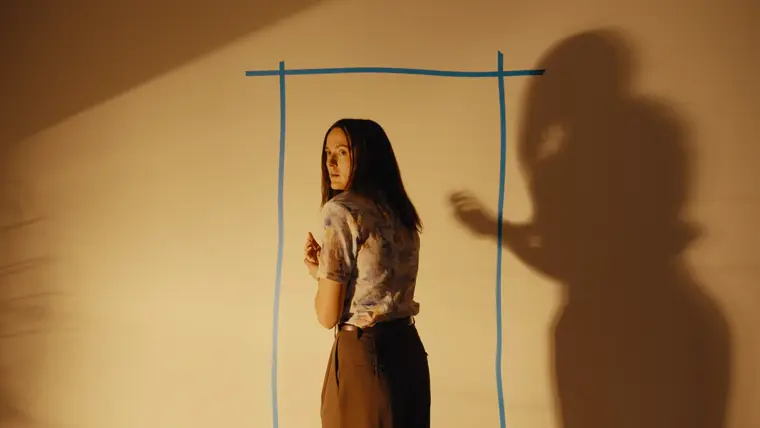
For Backrooms and Exit 8, the liminal space represents a form of imprisonment. This interpretation is also evident in the 2019 game Control, created by Remedy Entertainment’s Mikael Kasurinen and Sam Lake. In much the same vein as Backrooms, its design is a labyrinthine expanse of modernist offices.
A further similarity is that Control and Backrooms each feature organisations covertly studying this architectural phenomenon of looping rooms leading nowhere. In the former it’s the Federal Bureau of Control, which works to keep supernatural forces away from unsuspecting civilians. The original Backrooms Youtube shorts involve Async Research Institute, an organisation that wishes to harness the space for storage.
In both cases, the contrast between mundane bureaucracy and the supernatural seems to mirror the idea of the liminal space itself. It too twists recognisable patterns into something that, taken as a whole, feels wrong. Perhaps the discomfort around liminal spaces stems from the fact that they’re often found in places of work or on the journey to work: audiences can relate to Exit 8’s endless commuter hell or Control’s aggressively plain offices.
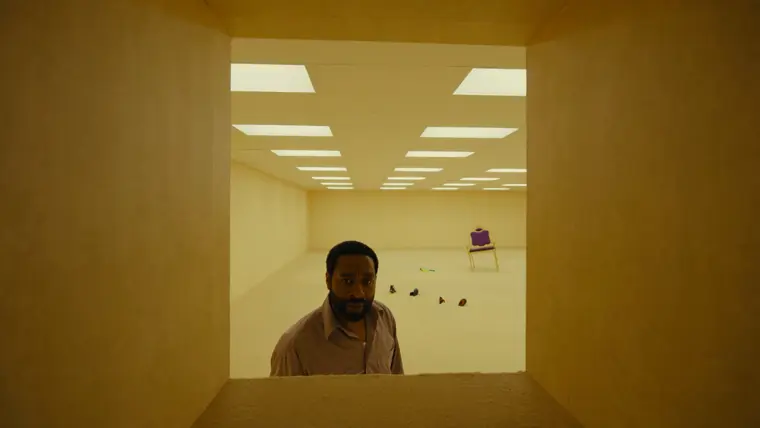
In addition to borrowing video-game themes, Backrooms also implements their visual language. It recreates the glitches observed on computer screens where objects and assets overlap in logic-defying contortions. In the film, banners suddenly jut out of ceilings; sofas are buried in the floor as if it were sand; cabinets and chairs blend together, and stick out of walls. The director’s found-footage camerawork reinforces this connection: the lens takes up the position of a viewer’s eyeline, much like a first-person video game might.
Video games direct and manipulate a player’s perspective and, inversely, players direct and manipulate the game space (purposefully or otherwise). The film’s premise of accidentally slipping into a world just outside of ours comes from the idea of ‘noclipping’, a term often used in relation to Backrooms, where video-game players glitch out of the boundaries of a level, into a space where they’re not meant to be.
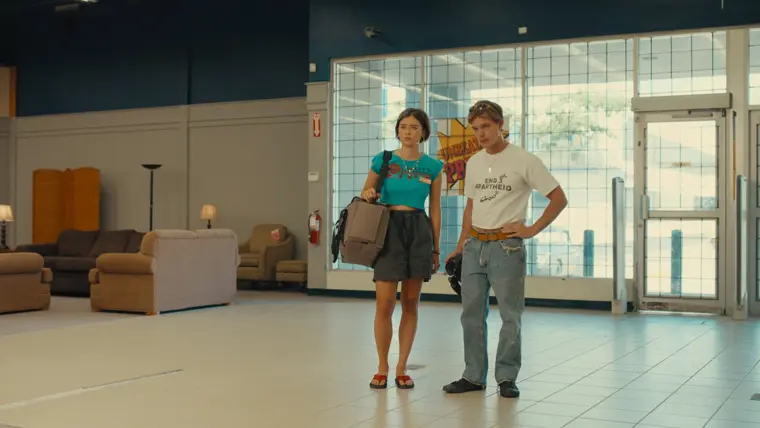
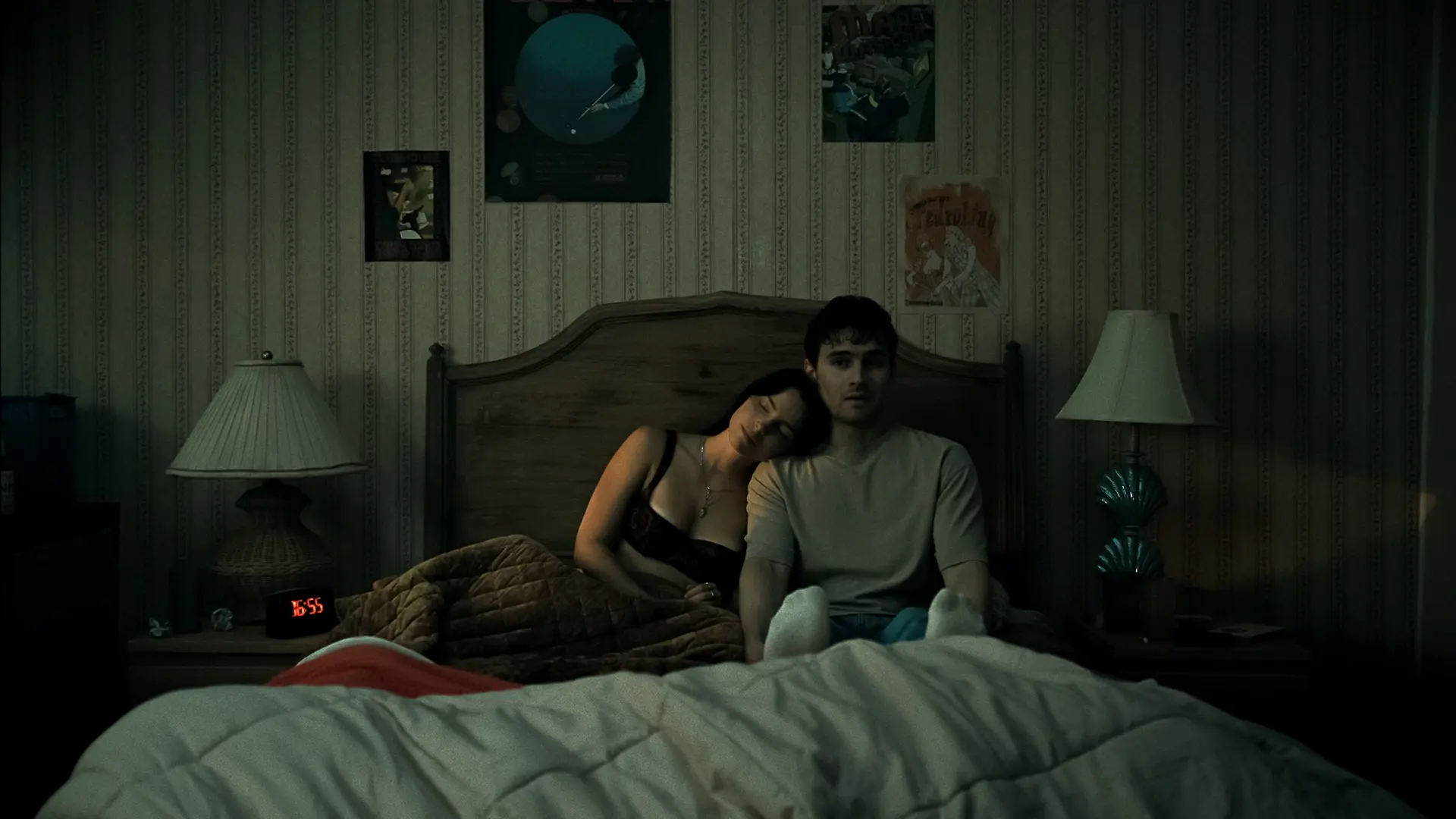
Since Backrooms can’t count on player interaction to communicate the uncanny experience of walking through a looping transitory space, Parsons’ film plays with different lensing and textures instead. At first, the style is akin to his web shorts: he captures a narrow field of view with the digital fuzz of a camcorder to create a claustrophobia that masks the impossible expanse of the Backrooms and evokes the time period when the original creepypastas were dreamt up. Later, Parsons emphasises their vastness, switching to more modern cameras and favouring wide-angle shots. This mix of digital aesthetics evokes the feeling of discovering an unearthed folk tale.
Another key influence for Backrooms is Nineties nostalgia. The director’s original internet description for the Backrooms short was ‘poor recollections of the 1990s and 2000s’, a statement that recognises he (as a 2010s kid) wasn’t culturally conscious for the new millennium, and any distorted remembrances in the film can be chalked up to that.
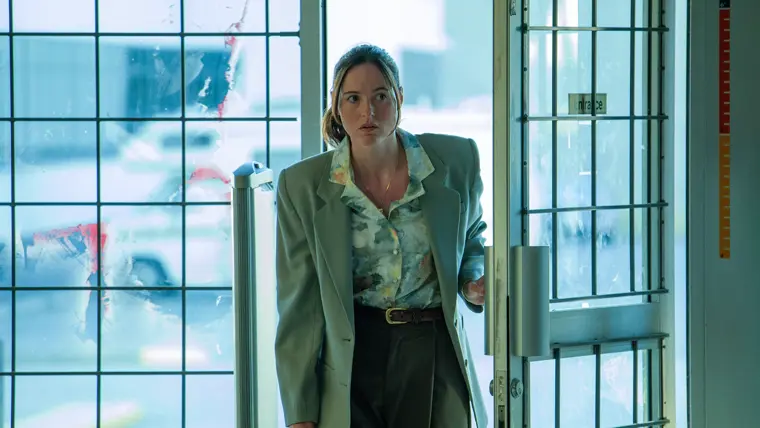
The writers of the Backrooms creepypastas are a touch older than Parsons and, as they told Vice, believe their upbringing during ‘the transitional period of the 2000s’ established their fascination with abandoned spaces. Parsons’ film replicates this through its mini Digital Video tapes, found footage and an assemblage of archaic commercial technology.
Internet lore and video-game inspirations are deeply embedded in Backrooms, from its production design to its camerawork and beyond. Appropriately for a horror director who got his start on YouTube, Parsons builds digital quirks, stories and aesthetics into a creepy – and uncanny – cautionary tale. Don’t get lost.
WATCH BACKROOMS IN CINEMAS
RELATED ARTICLES
Article
Why Are So Many Sketch Comedians Making Horror Films Now?
From Jordan Peele to Zach Cregger and Ari Aster, a growing number of sketch comedians are pivoting to horror. As Curry Barker follows suit with Obsession, Alistair Ryder explores the trend.

List
How to Make a Star Wars Film Soar
Ahead of The Mandalorian and Grogu, Matt Maytum offers some tips on the best ways to construct an entertaining, franchise-supporting Star Wars movie.
Article
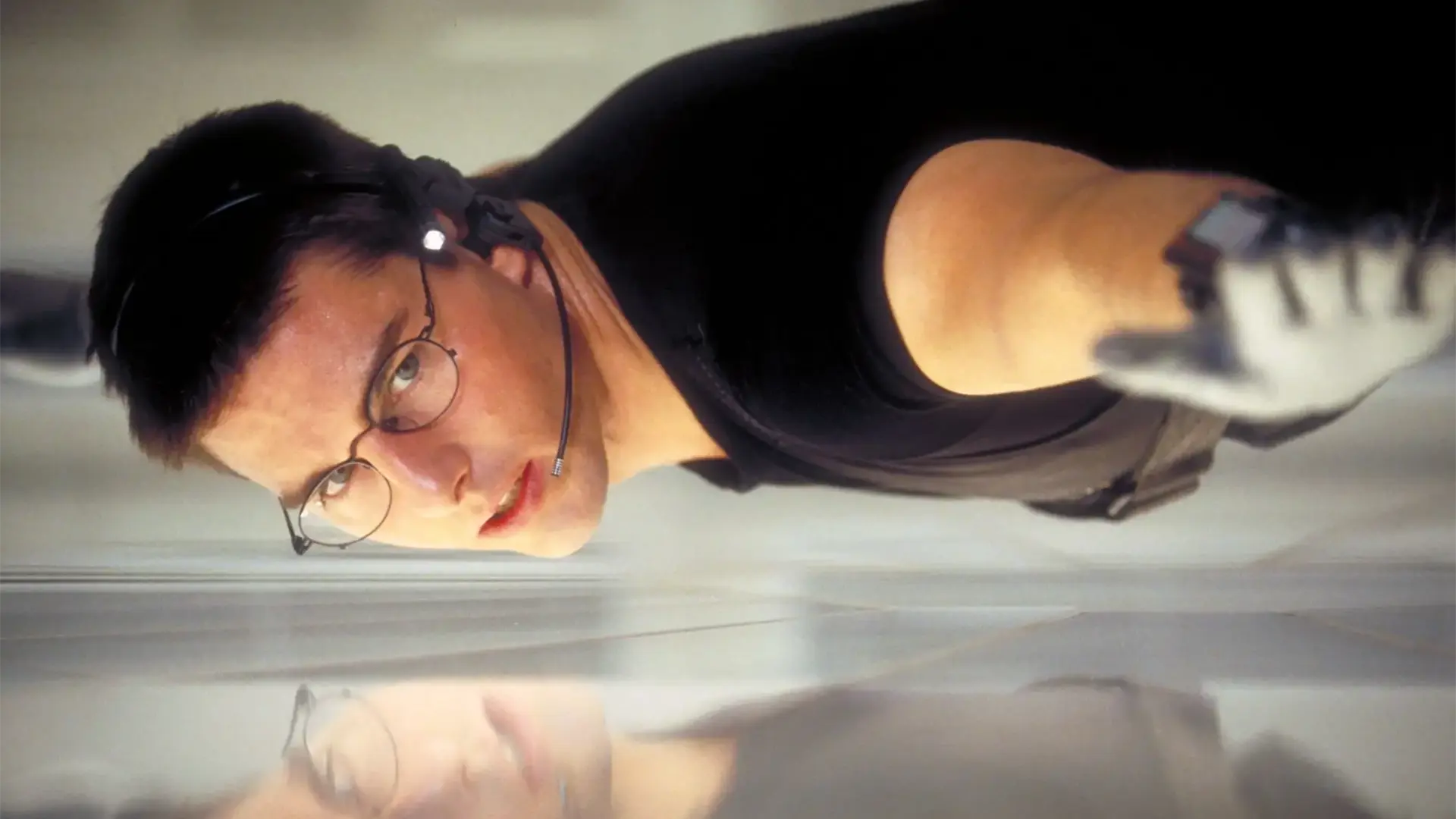
Why We Still Love Mission: Impossible’s Ethan Hunt
As the original Mission: Impossible celebrates its 30th anniversary, Nadira Begum argues that the film serves as a blueprint for the action franchise as a whole, particularly with regard to Tom Cruise’s character. Since 1996, he’s been a self-assured but sensitive spy whose deadliest weapon is his charisma.