
BAFTA-Winning Director Akinola Davies Jr on My Father’s Shadow
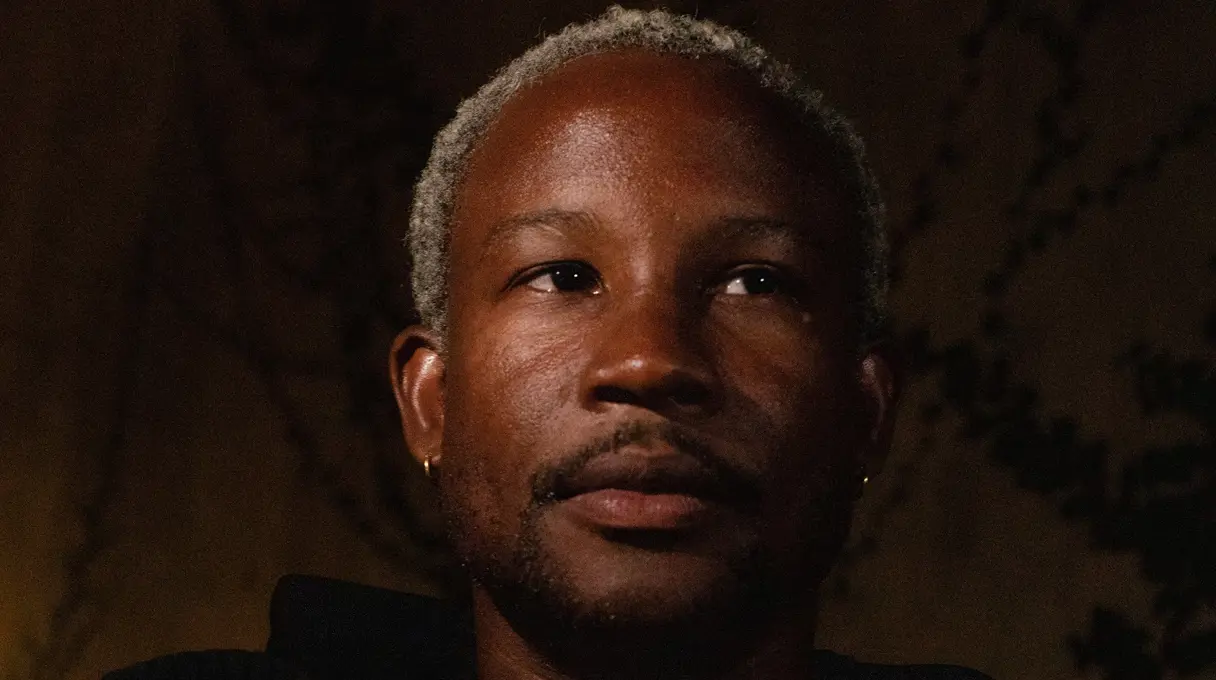

Since My Father’s Shadow, his beautifully assured feature directorial debut, received a Special Mention for the Caméra d’Or (First Feature prize) at Cannes last year, Akinola Davies Jr has ridden a wave of awards recognition around the world. Among them, a BAFTA win for Outstanding Debut by a British Writer, Director, or Producer (shared with his co-writer and brother, Wale Davies); a BIFA win for Best Director; and a Gotham Independent Film Award for Breakthrough Director, with the movie’s star, Ṣọpẹ́ Dìrísù, also picking up a Gotham for Outstanding Lead Performance. Now, the film’s finally on general release in the place Davies calls home.
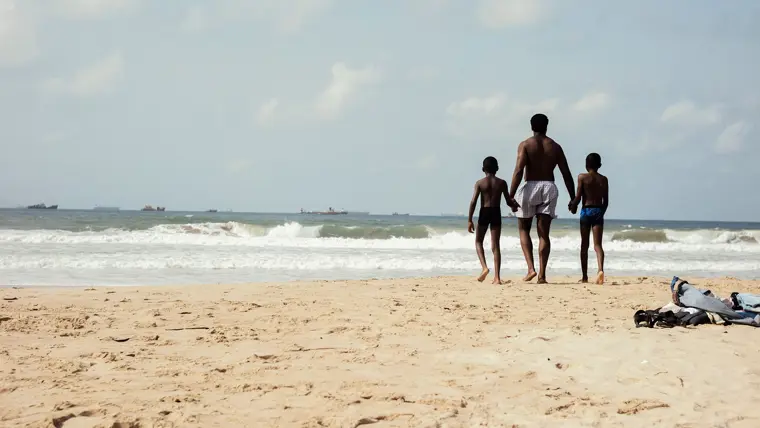
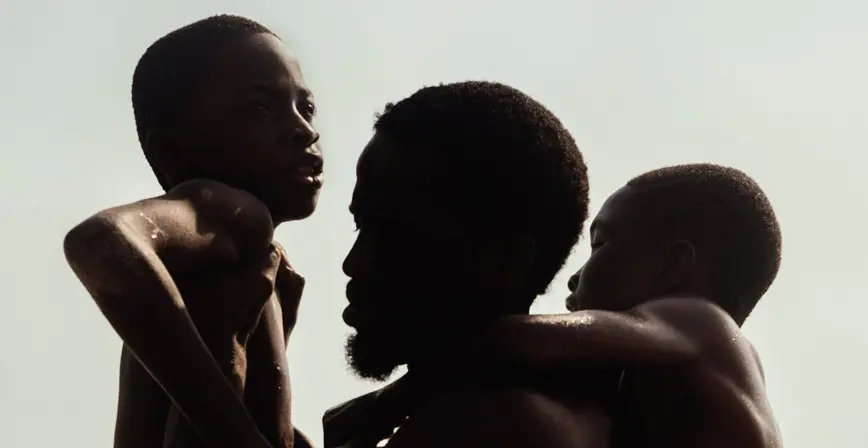
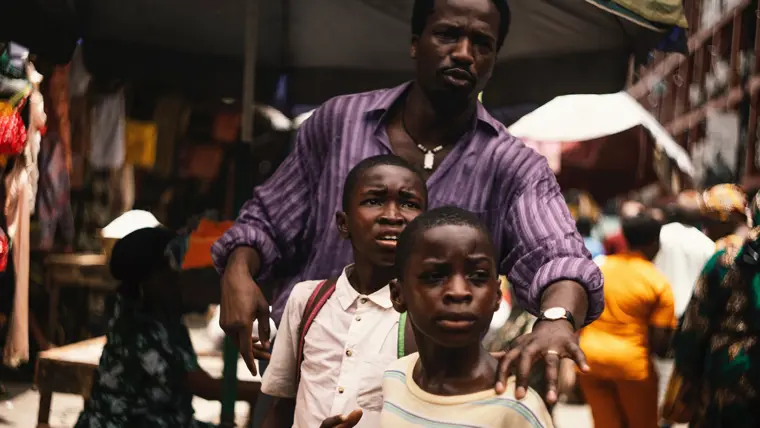
Inspired by the Davies brothers’ childhood experiences growing up in Nigeria, with a father who they barely know, the intimate film chronicles two boys (real-life brothers Chibuike Marvellous Egbo and Godwin Egbo) spending some rare time with their dad (Dìrísù). Almost always absent from home while working in Lagos, the enigmatic patriarch decides to bring his sons to the city while their mother is away from their village, all as Lagos is bustling on the ill-fated day of the 1993 presidential election results. Here, Davies Jr discusses performing masculinity, shooting in Lagos and compiling playlists for his heads of department.
JOSH SLATER-WILLIAMS: How crucial for the texture and authenticity of this story was it for you to make this film in Lagos, without compromises on the shooting locations?
AKINOLA DAVIES JR: There are aspects of our film that could work to a certain degree if transported elsewhere, but when it came to that 10 per cent that pushes something over the line, I think it would fall apart. To be Nigerian is to be something quite specific. To film Lagos is quite specific, too. And then to have those things combine is, again, very specific.
Loads of people shoot South Africa for Lagos. But I think the people you are going to struggle to convince are Nigerians. The light, the tone at which people speak and the ethnic make-up of how people look is completely different. If you’re trying to tell any story, the more specific you are about where it’s set and the nature of what’s surrounding it, the better it’ll be.
WATCH MY FATHER'S SHADOW IN CINEMAS
Book TicketsJSW: You used to DJ. Do you feel that practice has informed your direction at all?
ADJ: I make a playlist for every project and then send it to the [heads of department], whether they want to listen to them or not. But I’m like, ‘This is the mood.’ So maybe that helps in a way, in and of itself. But I would say DJing is more about curation, right? And I would say directing is like curation of not only your cast, but your crew as well. If you mix the right people together, maybe you’ll get a good blend.
JSW: Was My Father’s Shadow always the film’s title?
ADJ: It was, but my brother did want to change it at one point. He wanted to call it Red Clay Road because in the villages where our parents are from, a lot of the roads aren’t tarred and they’re clay, earth roads, which is very synonymous with sculpturing and pottery in Nigeria. We thought about that for a little while, but I feel My Father’s Shadow was quite a strong name. It felt perfect for the script, and also leaned into something mythological and mysterious.
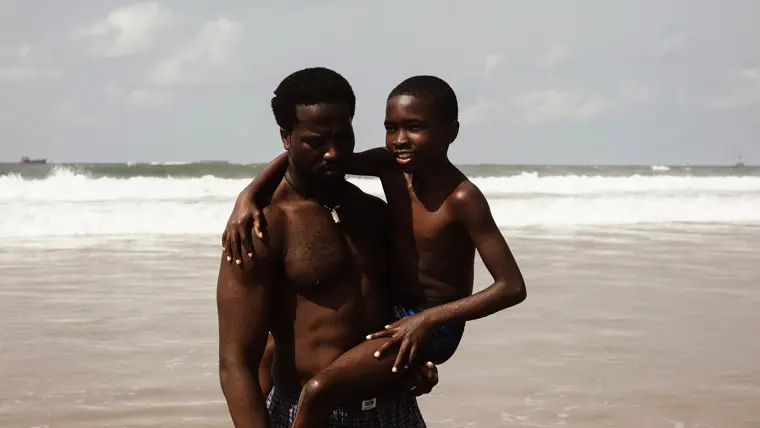
JSW: Why did you choose this particular dramatic turning point in Nigeria’s history for your first feature?
ADJ: It was important – story-wise and thematically – to have some tension, which that day presented for the father and the boys. I think [we chose] that [election] day specifically because it’s something we lived through. We remember the enthusiasm and the hope that people had, in terms of where Nigeria was gonna go and how this country was finally gonna take its place as an African giant. We equally remember the disappointment when the election was cancelled.
Even to this day, my brother says, ‘I think Nigeria is still reeling from that and dealing with it.’ It wasn’t until the last administration that the day became a national holiday. But equally, during the military dictatorship, history wasn’t taught in schools. So, a lot of younger Nigerians don’t know this part of their contemporary history. And then the older generation has never seen the history they lived through visualised on screen.
So, for so many reasons, it felt right. We don’t really get into it much, but [presidential candidate MKO] Abiola was supposed to be the father of the country. And we thought there was a parallel between him and [Ṣọpẹ́ Dìrísù’s character] Folarin. Part of fatherhood is this idea of passing down values to benefit the next generation, which is in conversation with the promise of a statesman hoping to grow the country. In both cases, the [respective] promise is [taken away prematurely], never quite being delivered on.
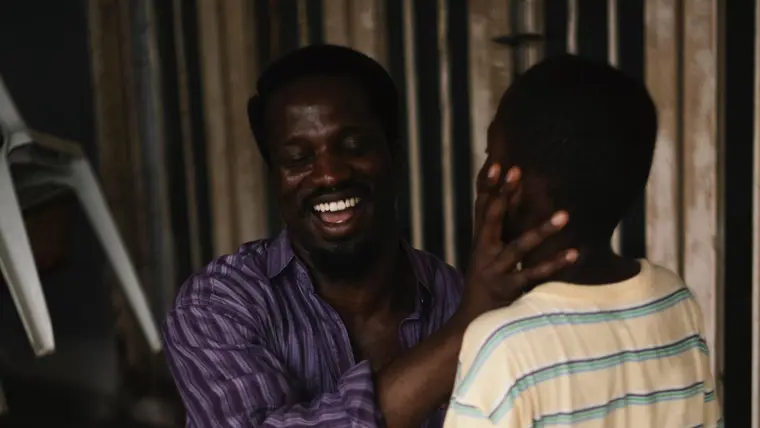
JSW: Why was it important for you and your brother to frame this story through a father and sons dynamic?
ADJ: We think masculinity isn’t a monolith. There are very different performances of masculinity that can sometimes get thrown in the same box. In some instances, Black absent fathers aren’t treated with [appropriate] nuance. If you’re working class and have to travel to a metropolis to provide for your family, there is [necessarily] gonna be absence. We just felt that idea often doesn’t get the nuance and context that it deserves.
But equally, we hadn’t seen too many depictions of how you hold that same type of masculinity accountable and have those difficult conversations. I hadn’t seen that on screen in a Nigerian and West African context. We’re both men. My brother became a father during the process. My other siblings all have children. We never knew our father, so I think there was something cathartic to work through, whether we realised it or not. I’m sure we’ve certainly realised it now! But we just really wanted to create something that was for our younger selves and for our families, and then every community beyond that.
WATCH MY FATHER'S SHADOW IN CINEMAS
RELATED ARTICLES
Article
Why Do Filmmakers Keep Whitewashing Gothic Literature?
As another white actor takes on the canonically brown role of Heathcliff, Nadira Begum investigates the worrying trend of directors refusing to engage with the racial politics of Gothic novels when bringing them to the big screen.
Deep Focus
Bradley Cooper is (Finally) in on the Joke
From the douchey bro of The Hangover movies to the deadly serious actor-director-writer-producer of Maestro, Bradley Cooper has had quite the rebrand. Here, Yasmin Omar explores his evolving stardom – and the surprising levity of his latest persona.
Interview
Richard Linklater: I Owe a Debt to the French New Wave
The Nouvelle Vague director discusses his early training as an actor, the rise of personal cinema and his experiences inside the Nineties’ indie-film explosion.