
Cho Yeo-jeong on Possible Love
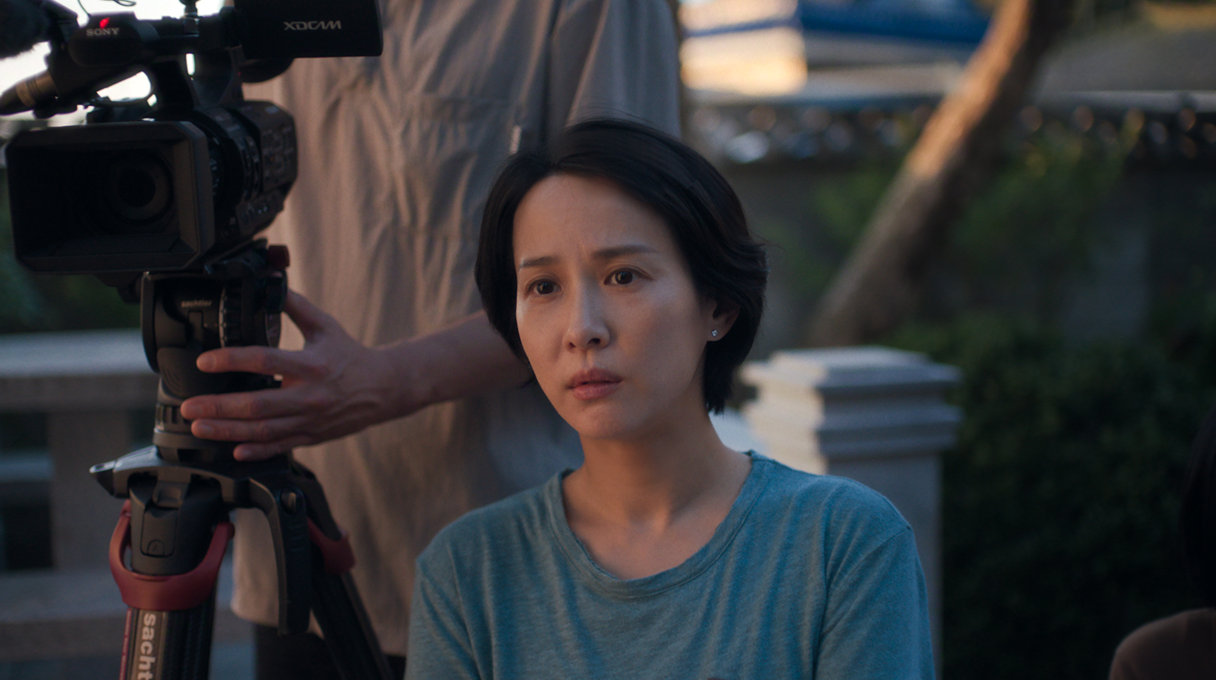

The actor talks to Josh Slater-Williams about working with Lee Chang-dong, the film’s thought-provoking questions and her approach to playing a documentarian.
Since transitioning from novels to screenwriting and then directing in the 1990s, Lee Chang-dong has become one of South Korean cinema’s defining voices of the last 30 years: from his debut Green Fish (1997) through to Peppermint Candy (1999), Oasis (2002), Secret Sunshine (2007) and Poetry (2010). The trouble for enthusiasts of his particular brand of psychologically probing dramas – slow-burn, densely packed stories with often challenging subject matters (e.g. the scars of military rule, how society treats people with disabilities), regularly described as ‘novelistic’ by critics – is that after a certain point, the films stopped coming out so frequently.
WATCH POSSIBLE LOVE IN CINEMAS
Book TicketsLee’s highly acclaimed Haruki Murakami adaptation Burning (2018), starring Steven Yeun, broke an eight-year absence from the movies, while his new film, Venice award winner Possible Love, took another eight to reach our screens. But if you think it’s tough just being a fan waiting to see the latest film from director Lee, try being a major actress of South Korean cinema who desperately wants to work with him. Thankfully, Cho Yeo-jeong finally got her shot at a Lee script with Possible Love.
‘I watched those earlier films and that was one of the main reasons I wanted to work with him,’ Cho tells me during the London Film Festival, regarding whether Lee’s CV or word of mouth from his past collaborators is what primarily motivated her itch. In the film, she plays Ye-ji, a documentarian with a rich speculator husband, Sang-woo (Zo In-sung, recently seen in Na Hong-jin’s Hope).
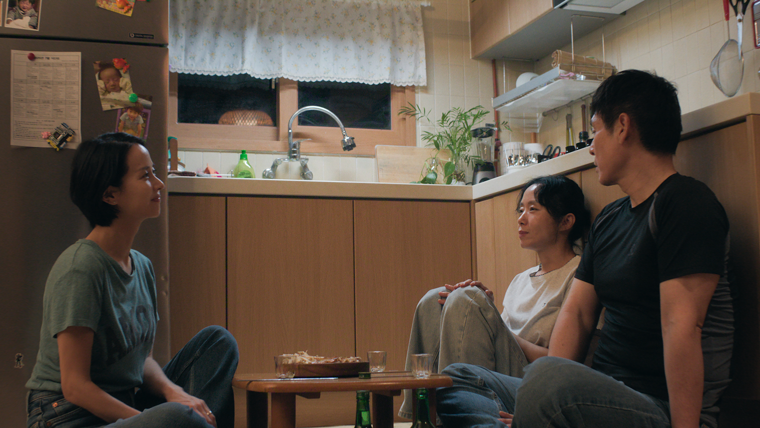
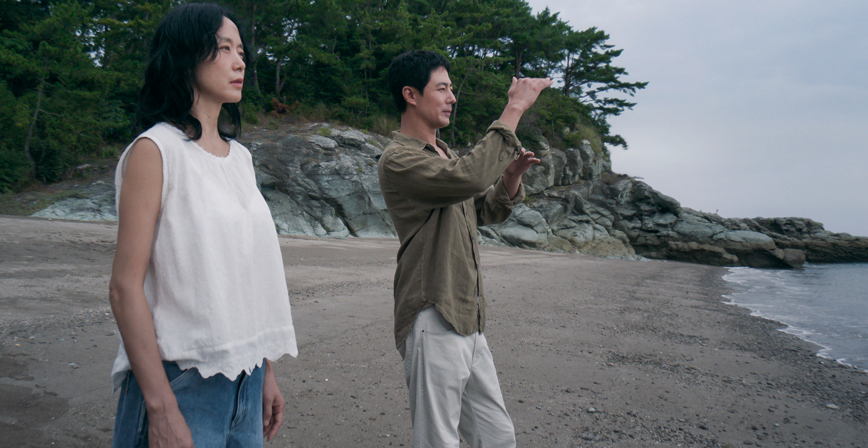
As part of her latest project (made with public funding, rather than her spouse’s financial support), she’s exploring labour exploitation in South Korea, with her attention being drawn to a married couple, Mi-ok (Jeon Do-yeon, the lead of Lee’s Secret Sunshine) and Ho-seok (Sul Kyung-gu, star of Peppermint Candy and Oasis), who were laid off by a company. The latter is transformed both mentally and physically by the scars of job loss, and the punishments inflicted on workers striking for better conditions.
‘Director Lee, using his language of film, wants to send questions to the world,’ Cho says of the thematically rich drama, in which the making of the documentary forces both couples to confront repressed trauma and hidden desires. ‘There’s a lot of meaningful messages in there. I was longing to work on something like this and finally it came to me.’ And did the long wait to work with director Lee live up to her expectations? ‘I think it goes with the title,’ she says, ‘It was a totally possible love, far beyond what I was expecting. It was a lot better.’
Speaking of the title, which has sparked many discussions since the film’s premiere in competition at Venice, Cho has her own interpretation of its meaning. ‘Director Lee Chang-dong recently said that his films are his effort to understand humans,’ she tells me. ‘However, every time he goes through that process, he finds it more difficult to understand humans. I watched all his previous work again and I think that [theme] unfolds throughout his films.
‘It’s very weighty and it goes through the entirety of his filmography. I could feel that. And he not only talks about the relationships between humans, but the possible love between everything in the world – about your work, your job, people’s relationships. It’s a very inclusive language and inclusive thing, talking about a possible love. Your effort is love and you’re living in the world with every effort to love everything.’
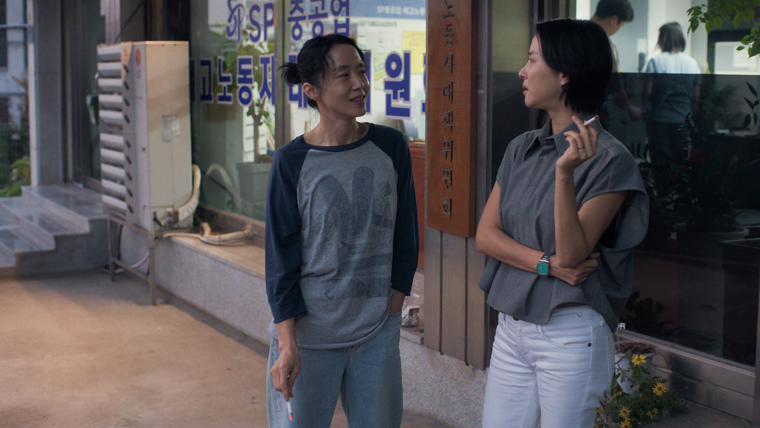
Cho is best known internationally for playing wealthy matriarch Yeon Ko in Bong Joon Ho’s Parasite (2019). And while there’s probably an extent to which the stars of that film may be weary of their roles since so frequently being compared to their great work in that Oscar-winning smash, Possible Love and Parasite do explore some similar topics – albeit through considerably different stylistic registers and overall tones. Portraying a woman in Possible Love who, in contrast to Yeon Ko in Parasite, is less keen to play up her vicinity to wealth when exploring her own goals and wants outside the home, Cho wants audiences to be compelled by the movie’s exploration of social class, in particular.
‘Ye-ji comes from a very middle-class, ordinary background,’ she says. ‘Sang-woo has got the wealth, which I think is naturally desirable for some women. Mi-ok also desired similar things to what Ye-ji has. However, the difference is that Ye-ji made the choice to marry Sang-woo. And so, [the two women] experienced different paths. That doesn’t mean their [respective] path is right or wrong. They’re a different thing; different situations, circumstances. There are always deficiencies to different things. So, you have to live with any deficiencies that come from the choice you made. When it comes to [a late] scene in the film when [characters observe] the moon, I think that is something that really speaks to how people live. The moon shines for everyone equally. There’s no difference to it. Everyone has the same moon. Through that, we actually look for and try to have solidarity to live together.’
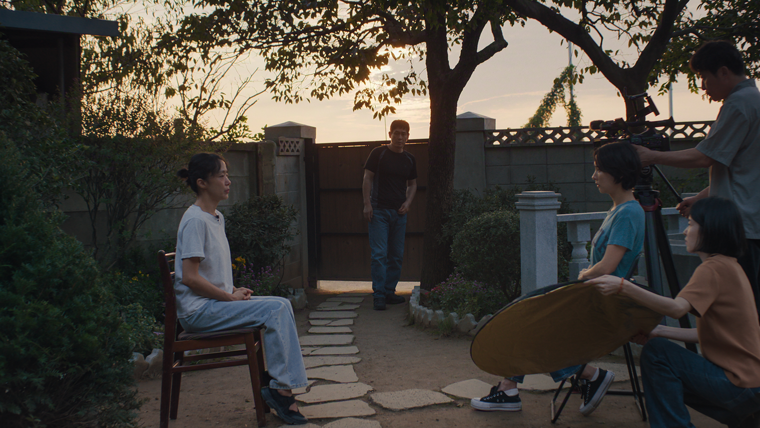
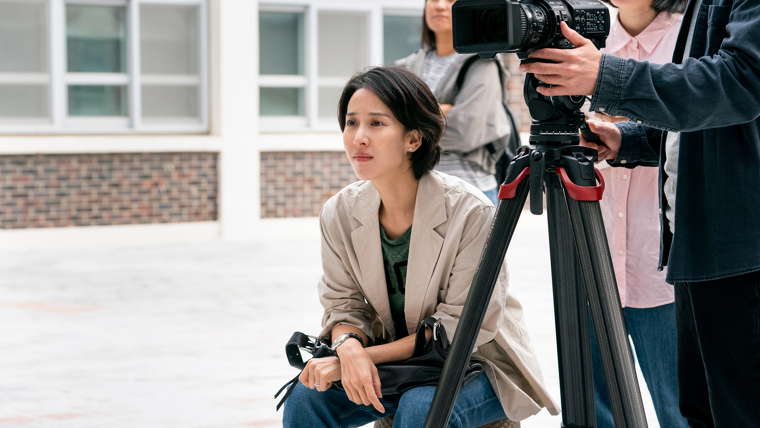
When it comes to long-established actors playing directors on screen, cinephiles may be inclined to speculate about whether the performances are at all informed by the stars’ previous experiences with filmmakers. For Cho, though, her embodiment of a focused documentarian drew not from reference points of any specific directors, but instead from the chance Lee gave her to effectively make a mini-movie on set.
‘Director Lee did not direct me to look like a director,’ she says with a laugh. ‘He gave the opportunity and environment to help me to live as that character, as Ye-ji. So, for example, within the film I have my own crew, which is director Lee’s crew themselves. They are real professionals, they’re not actors. I had the professional cinematographer and my producers that you see, that’s my crew. I was actually filming my film. Director Lee allowed me to have my own film documented, so that way I could live in the role as a natural. I had a real film going on as much as possible. Director Lee gave [limited] direction, but helped me to be living in [the headspace of] Ye-ji, in the way he gave me the [space] and trusted me.’
WATCH POSSIBLE LOVE IN CINEMAS
READ ON THE JOURNAL
Article
Tom Cruise Reframes the Narrative
Instead of reprising one of his beloved action-movie characters, the actor does something in Digger he hasn’t tried in years: reveal his humanity. By Yasmin Omar
Article
Sense and Sensibility Has Always Been About Sisterhood
Georgia Oakley’s Regency drama is the latest adaptation of a woman-penned classic novel that foregrounds the bonds between sisters over romance. All the best ones do, writes Nadira Begum.

List
Best Robert Pattinson Performances
As Robert Pattinson returns to our screens, we look back at his best performances, in underseen gems and colossal blockbusters alike.