
Sense and Sensibility Has Always Been About Sisterhood
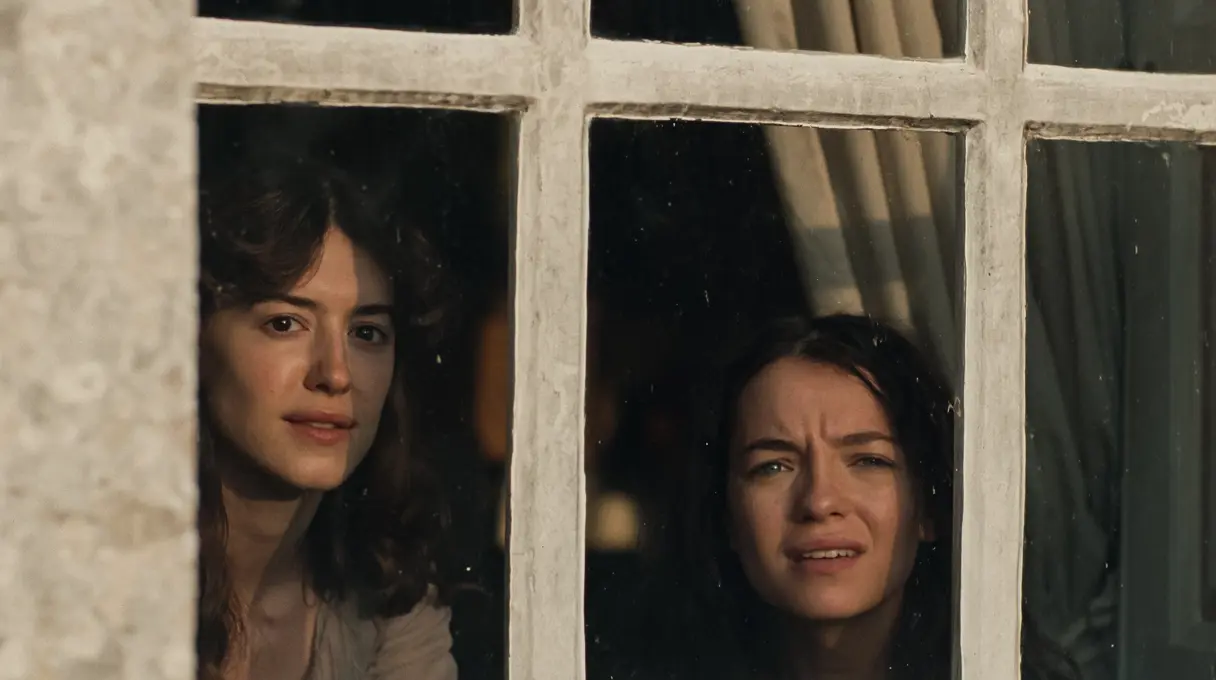

Georgia Oakley’s Regency drama is the latest adaptation of a woman-penned classic novel that foregrounds the bonds between sisters over romance. All the best ones do, writes Nadira Begum.
Girlhood is having a moment. A hangover from the great ‘Barbenheimer’ summer of 2023, the image of ‘girlhood’ in the cultural consciousness has been sullied by superficial social-media trends (slap a pink bow on anything and it’s #girlhood) and soulless corporations eager to monetise human experience.
But in cinema, it remains a concept still worthy of exploration. From Sofia Coppola’s vision of female adolescence in The Virgin Suicides (1999) to Sarah Gavron’s picture of found family in Rocks (2019), girlhood is constantly being renegotiated on screen. So saturated is this field, in fact, that it prompted one Vogue writer in 2025 to pose the question ‘Where does girlhood go from here?’

WATCH SENSE AND SENSIBILITY IN CINEMAS
Book TicketsThe answer is simple – we return to the classics. In my opinion, some of the most earnest depictions of girlhood can be found in modern adaptations of classic literature, where the ebbs and flows of sisterhood are offered as much depth and nuance as the concept of romantic love. There is no finer line to be found between love and hate than in the bond between sisters, and no one understood this better than the great women writers of our past, like Little Women author Louisa May Alcott.
Her 1868 coming-of-age novel about four sisters – Meg, Jo, Beth and Amy – has endured the test of time, but until recently, adaptations focused heavily on the March sisters’ romantic endeavours. In Greta Gerwig’s 2019 adaptation, however, the sisterly bond at the heart of Alcott’s story takes centre stage, resulting in a film that is at once a love letter to sisterhood and an elegy mourning the fleeting nature of youth.
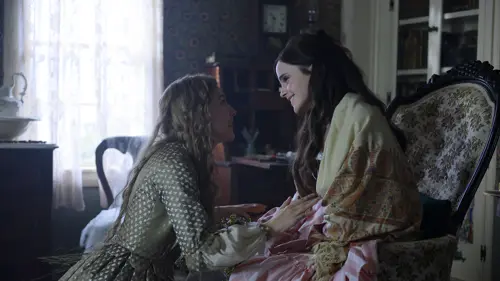
Through Gerwig’s lens, female adolescence is rendered holy – every scene set in the March sisters’ youth radiates with an amber glow, each moment suffused with the rose-tinted bliss of a childhood that feels eternal. The first time we see them together, the sisters are bickering in the warmth of candlelight in a shared bedroom. Sisterhood, according to this film, is as volatile as it is precious. When we see them as adults, separated from one another and forced to face adulthood alone, the golden haze of their childhood gives way to tones of grey and blue, and the constant hustle and bustle of the March family home is swapped for an oppressive silence. Life away from one’s sisters is a monotonous affair.
The anger of their youth fades by adulthood. ‘Life is too short to be angry at one’s sisters,’ Jo (Saoirse Ronan) declares by the end of the film. Gerwig’s reverence for sisterhood is made clear in the film’s denouement, which ends not with an engagement, as in Alcott’s novel, but with Jo proudly cradling a freshly printed novel about her childhood inspired by Beth’s (Eliza Scanlen) dying wish for her to continue writing. Marriage may be a central point of contention in Alcott’s story, but for Gerwig, it’s simply a consequence of adulthood; sisterhood is the mercurial thing of wonder to be held close to one’s heart.
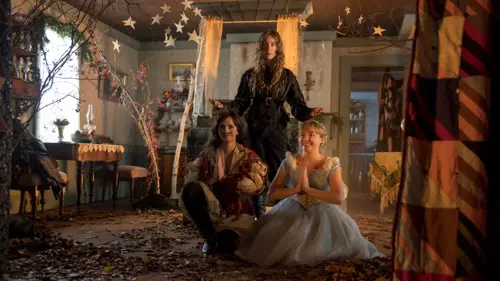
In a tender scene towards Little Women’s third act, Jo lays beside a dying Beth and begs her to keep fighting. This desperate request whispered in the quiet darkness of their childhood bedroom is characteristic of stories of sisterhood. To the uninitiated, such scenes may come across as melodramatic – too mawkish, or cloyingly sentimental in setting and tone – but for siblings, they’re all too familiar.
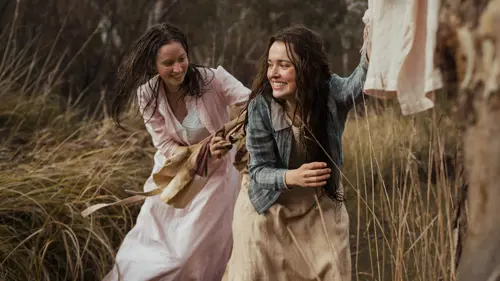
I, personally, have never been more honest to anyone, anywhere than to my sisters in the safety of our childhood bedroom. In Netflix’s miniseries My Brilliant Career (2026), a shared bedroom is also where sisters Sybylla and Gertie Melvyn lay their hearts bare; younger sister Gertie is dismayed at the prospect of Sybylla sacrificing her freedom for the sake of their family, but Sybylla is determined to save her sister from future hardship.

This version of Sybylla – artfully adapted by Liz Doran from Miles Franklin’s 1901 novel, and impeccably performed by actress Philippa Northeast – is defined by a carefree insouciance that is matched only by her love for her sister. Sybylla, with her outdated clothes and unkempt hair more knotted than the brambles of the Australian bushes she grew up in, is the epitome of an unruly young woman.
Her brashness frightens everyone but her sister, who begs her not to surrender her freedom so easily. When she’s sent away in the hopes of securing a lucrative marriage, Sybylla finds herself drowning in a tide of societal expectations with only a steady stream of letters from Gertie to keep her afloat.

Where Gertie provides words of encouragement, Sybylla recounts her experiences, every fleeting new attraction and taste of the new world described in exquisite detail as if she couldn’t fathom the idea of not sharing her life with her little sister. Whenever the two occupy the screen together, the score takes on a mystical, fairytale quality – in Doran’s vision, it seems the most wondrous thing on Earth is the ability to experience the world with your sister.
That Sybylla readily hands herself over to be a governess in place of Gertie feels poignant; for a protagonist who crackles with defiance and a fierce passion for life, only a deep love for her sister could force her to sacrifice her freedom.
Complete and utter devotion to one’s sister is a familiar trope in literary classics. Alcott and Franklin were undoubtedly inspired by Jane Austen, whose own deep affection for her sister bled into the fabric of many of her novels. Pride & Prejudice’s Elizabeth Bennet is the prime example of a character whose every decision is informed by the wellbeing of her sisters. Her approach to potential suitors is dictated by their treatment of her family: the duplicitous Mr Wickham first gains her favour by charming her younger sisters, and Mr Darcy is lowered in her estimations after interfering with her sister Jane’s budding new romance.
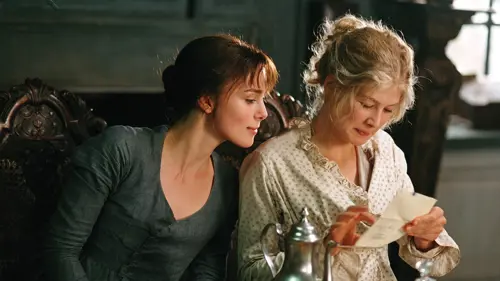
In Joe Wright’s 2005 adaptation, the director captures this devotion through numerous shots of Lizzie (played by Keira Knightley with a grin constantly teasing the edges of her mouth) gazing fondly upon her sisters, always elated at the sight of their happiness. In a scene that embodies the giddiness of adolescence, Jane and Lizzie huddle under a duvet to whisper excitedly about the men they encountered at a ball.
If early promotion is anything to go by, then Georgia Oakley’s upcoming adaptation of Sense and Sensibility promises to follow in these footsteps: in clips that recall Wright’s take on Austen, Elinor (Daisy Edgar-Jones) and Marianne (Esmé Creed-Miles) are seen giggling together in their bedroom, passing notes on the men in their lives. According to Edgar-Jones, the film will be ‘a love story between sisters’, promising yet another foray into the realm of female adolescence.
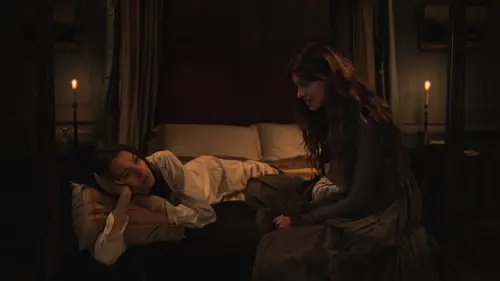
It’s true that ‘girlhood’ – that buzzy, hackneyed phrase now drained of all meaning – is having a moment. But who better to remind us of the word’s true essence than the women writers who first defined the term all those centuries ago? I look forward to Oakley’s adaptation, because sitting beside your sister in an overcrowded cinema, both eager to judge whichever male actor thinks he could possibly be worthy of embodying an Austen man – this too is girlhood.
WATCH SENSE AND SENSIBILITY IN CINEMAS
RELATED ARTICLES
Article
Why Do Filmmakers Keep Whitewashing Gothic Literature?
As another white actor takes on the canonically brown role of Heathcliff, Nadira Begum investigates the worrying trend of directors refusing to engage with the racial politics of Gothic novels when bringing them to the big screen.

Review
Barbie Review: A Smart, Knowing Comedy That Glitter Bombs Gender Constructs

Sofia Coppola