
Tom Cruise Reframes the Narrative

Instead of reprising one of his beloved action-movie characters, the actor does something in Digger he hasn’t tried in years: reveal his humanity. By Yasmin Omar
Tom Cruise is an endlessly fascinating cultural object. And I mean ‘object’. Nowadays, he appears to have transcended humanity, elevating himself to the level of a cinematic deity. For the past two decades, he’s coasted on his charisma, playing superheroes in all but name (and I say this with nothing but love for Mission: Impossible).
He’s also tethered his on- and off-screen selves to such an extent that when Ethan Hunt or Maverick saves the world, it’s like Cruise himself does too. Owing to his 2005 PR meltdown, he now tightly controls how he’s perceived. The Tom Cruise of 2026 is an enigma. Deliberately so. There are 4,000-word articles dedicated to reporting where he lives. Asked by GQ, in a rare long-form interview, what he gets up to when not working on a film, he said ‘I’m preparing for the next one’.

WATCH DIGGER IN CINEMAS
Book TicketsWhich is why Digger is a noteworthy pivot for Cruise, a prestige play the likes of which he hasn’t entertained since the Eighties and Nineties, back when he worked with Spielberg, Kubrick, Scorsese, Coppola. The auteur at the helm this time is Alejandro G Iñárritu, who shepherded Leonardo DiCaprio’s grunting, bison liver-eating slog to an Oscar in 2015’s The Revenant. Not to psychologise a man who shields his emotions from the public, but Cruise likely signed on to Digger hoping to receive similar acclaim (knowing, deep down, that the honorary Academy Award he won last year doesn’t really count).
In the film, an ambitious, climate-change satire, he plays Digger Rockwell, a mean-spirited Texan oil baron whose voracious plundering of Greenland has caused an ice shelf to dislodge and glide towards Europe, where it will kill hundreds of thousands of people. Berating tremulous staff and cajoling policymakers, his mission (if he chooses to accept it) is to contain the messaging around this avoidable disaster.

It’s funny that this is the project Cruise chose to mark his return from ‘movies’ to ‘films’, because Digger is explicitly about narrative at a moment where he’s working to change his. Rockwell is a transformative role for someone who resists transformation. I commend Cruise for that risk: instead of staking his life, he’s staking his reputation.
To play the character, he’s buried himself in prosthetics and old-age make-up to the point of unrecognition. He’s got jowls, wispy grey hair, a liver-spotted forehead, a sizeable paunch and the ghostly pallor of a corpse. It’s… disorienting. Cruise never lets us see him looking old! In fact, he’s expended herculean energy to prove that, despite being in his mid-sixties, he still has the strength and stamina of a much younger man.
This might sound strange, but, as far as I’m concerned, the most remarkable thing about Digger is that it allows Cruise to get back in touch with his humanity. For all their physical derring-do, his recent franchise heroes don’t seem to possess any corporeal needs. It’s perversely satisfying to watch Cruise, via Rockwell, admit to having normal bodily functions, with sweat stains on his shirt and a cigarette between his lips (don’t get carried away, he doesn’t take a drag). There’s even a moment – that can’t last more than 20 seconds – where he’s shown standing at a urinal to relieve himself. It’s not important to the story. But it’s important to me. Our post-human Cruise is reincarnated as a flesh-and-blood man and it’s bizarrely thrilling.
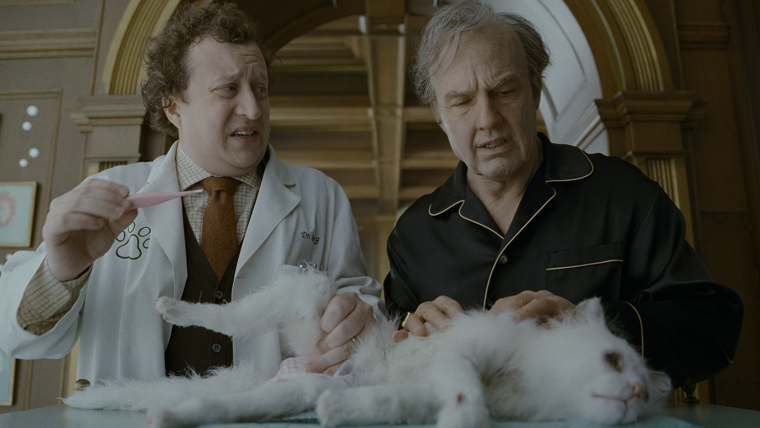
The performance itself cleaves the actor from his persona, making him pull on levers that have rusted through disuse. He’s going for it in Digger. Angry, buffoonish, vindictive, Cruise slathers on a barbecue-grilled Southern accent and grandly speechifies about how Rockwell’s fossil-fuel company – which is directly responsible for the oncoming apocalypse – has actually helped the Earth. The film is positively stuffed with monologues, a high percentage of which fall to its lead. Where dialogue is the lubricant that eases us between set pieces in Cruise’s popcorn movies, it’s the main event here.
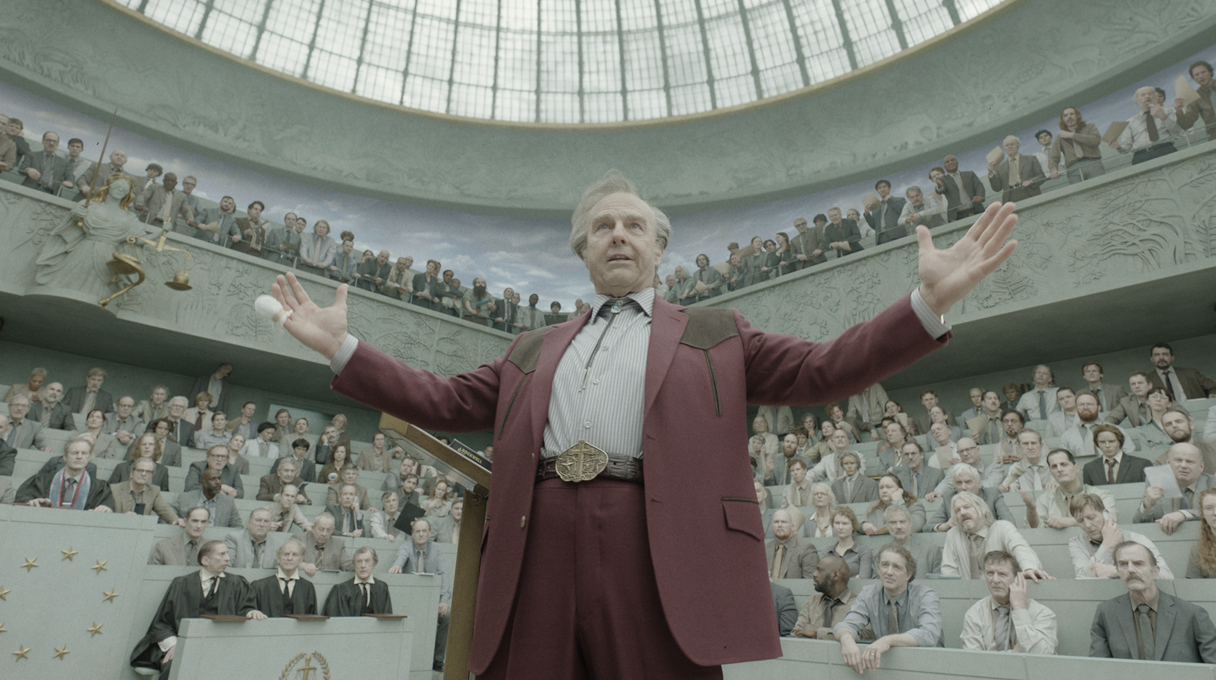
His most explosive capital-A Acting for Digger comes in a centrepiece scene when Rockwell is called upon to defend his deplorable actions before a committee of braying naysayers. Cruise does what he does best: he puts on a show. His voice, unapologetic and indignant, booms across the auditorium as he slams his fists into the lectern, then prowls around it, babbling like an ape, grabbing his crotch and wagging an accusatory finger at the booing crowd. For most actors, their face is their instrument; for Tom Cruise 2.0, it’s his body. Features obscured under inches of latex, he conveys emotion through motion as Rockwell. It’s a fresh twist on a tried-and-true formula.
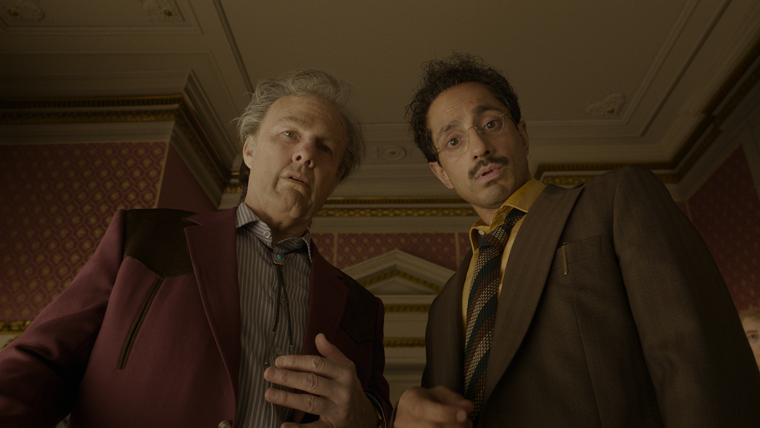
You cannot watch a Cruise film in a vacuum. Each choice, each gesture, connects what you’re seeing to his wider body of work. When Rockwell strips down to his boxers, you picture him sliding across a parquet floor in his Y-fronts in Risky Business (1983). When he swings a baseball bat, you remember him hitting pitches outside the courthouse in A Few Good Men (1992).
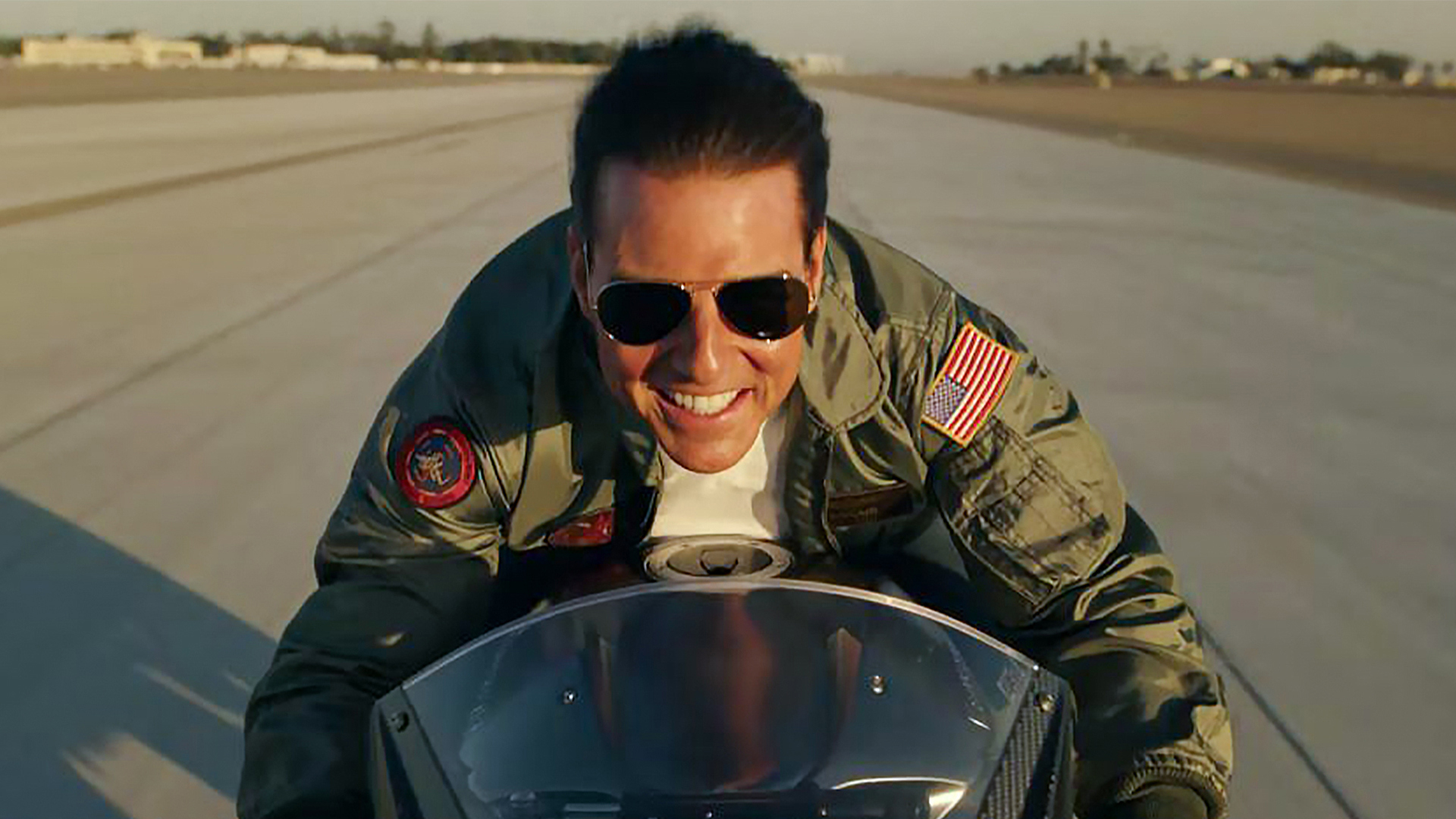
Cruise has culturally conditioned us to conceive of him as a messianic saviour, his off-camera acting so successful that it has coloured his actual acting. Digger complicates that, which – at this stage in his career – is fun and unexpected. It’s a shame that the film isn’t a U-turn, but a lay-by before he returns to sequelising Top Gun and (for some reason) Days of Thunder. I’ll be seated for both, of course. I just hope we don’t have to wait until Tom Cruise actually looks like Digger Rockwell until he dares show us his humanity again.
WATCH DIGGER IN CINEMAS
READ ON THE JOURNAL
Review
Mission: Impossible – The Final Reckoning Review: It’s Hard to Say Goodbye
Tom Cruise will break your heart in the last chapter of his celebrated espionage franchise, a self-reflexive, minor-key movie that bids farewell to Ethan Hunt and the gang. By Yasmin Omar

Review
Mission: Impossible – Dead Reckoning Review: Tom Cruise’s Epic, Heart-Stopping Thrill Ride
Just when you thought the daredevil action star couldn’t possibly reach greater heights, he exceeds expectations in this jaw-dropping, no-holds-barred sequel, writes Yasmin Omar.
Top Gun: Maverick