
Why Do Filmmakers Keep Whitewashing Gothic Literature?

As another white actor takes on the canonically brown role of Heathcliff, Nadira Begum investigates the worrying trend of directors refusing to engage with the racial politics of Gothic novels when bringing them to the big screen.
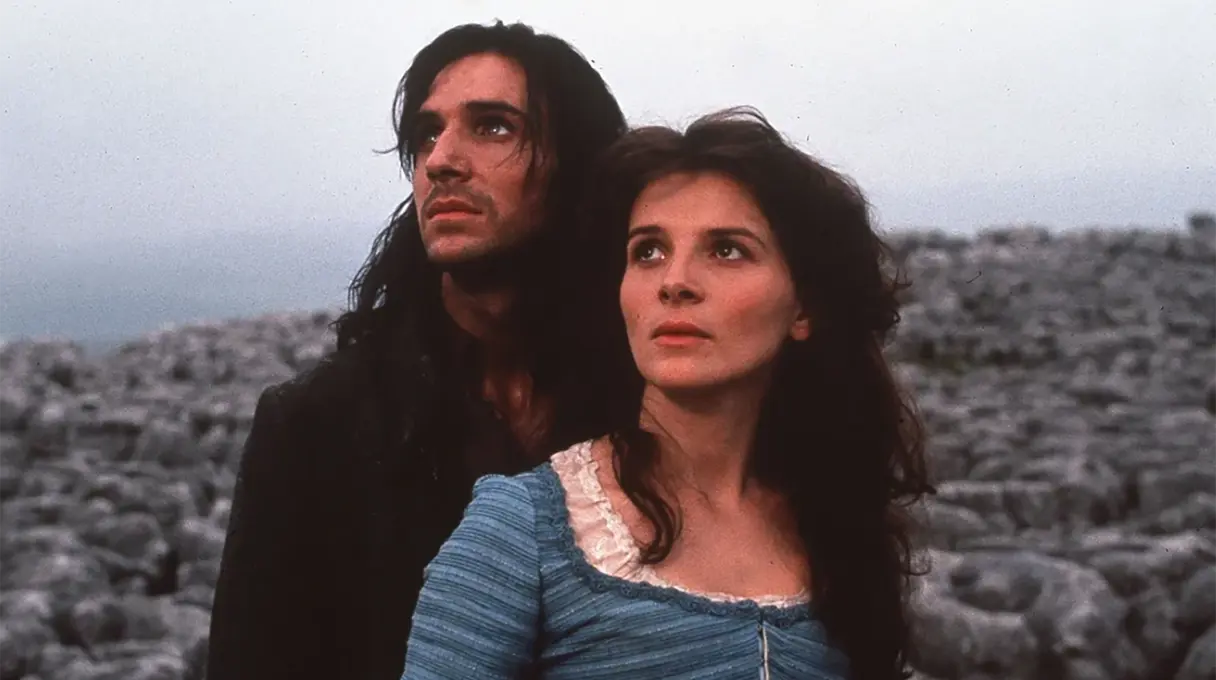
What do Laurence Olivier, Timothy Dalton and Ralph Fiennes have in common? Other than being the most brooding white actors of their generations, they’ve each played Gothic icon Heathcliff in cinematic adaptations of Emily Brontë’s 1847 novel Wuthering Heights. In fact, their performances are so renowned that the character has been completely rewritten in the public imagination as a white man, despite the novel suggesting otherwise. It’s a regrettable feat, but one that exemplifies why Gothic cinema has been plagued with accusations of whitewashing despite its literature’s storied engagement with race.
WATCH "WUTHERING HEIGHTS" IN CINEMAS
Book TicketsFrom vampire narratives warning of foreign invaders to tales of festering madness, the wily, windy moors of the Gothic have long been a space for writers to explore the social anxieties of the moment. But film adaptations of the canon have consistently struggled with the racial complexities of the genre. Though Gothic stories were initially defined by racist caricatures, by the 20th century they were preoccupied by slavery and social decay, as influenced by the rise of the civil-rights movement and expansion of America’s military arm overseas.
Writers like Octavia E Butler and Toni Morrison used Gothic romanticism as a means of examining modern America, while Thomas P Cullinan’s The Beguiled (1966) explored the psychological scars left by the Civil War. Cullinan’s story of a Union soldier whose presence wreaks havoc on an all-girls boarding school typified this era of the Southern Gothic, so when Sofia Coppola announced her intention to readapt it for the screen in 2016, it felt pertinent to the political moment. With a nation on the cusp of Trumpian turmoil, who else but the queen of Americana could provide a female perspective on this American tale?
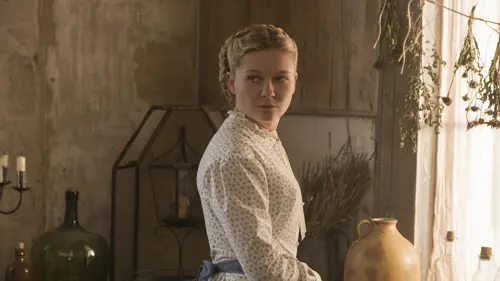
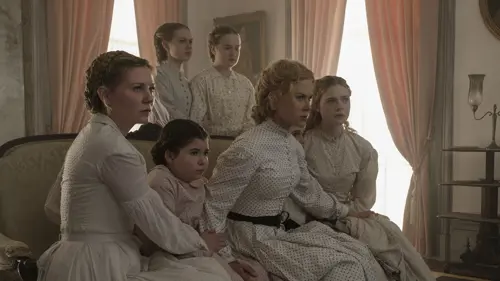
But there was one crucial flaw in Coppola’s vision of the American South: it had no Black people in it. Where Cullinan’s story included the biracial Edwina Morrow and an enslaved Black woman named Mattie, Coppola cast the white Kirsten Dunst as Edwina and erased Mattie from the story entirely. The soldier’s status as a Union fighter is essential to the plot, but beyond this, there’s no real reference to the history of slavery in the South. At the time, Coppola gave a paltry excuse – this supposedly wasn’t the depiction of African Americans she wanted to offer her young audience – but the damage was done.
Far from being a noble act of representational allyship, Coppola’s film had unintentionally presented a whitewashed perspective of the South where America’s bloody history of slavery could easily be swept under the carpet. It felt fitting for this particular director’s cinematic aesthetic. As critic Angelica Jade Bastién writes, Coppola ‘isn’t interested in historical realism, but in depicting a point in history defined completely by the perspective of the young women she turns her gaze to’. Of course there’d be no room for a Black woman’s point of view – Coppola’s gaze was fixed firmly on her white Southern belles.
The backlash to The Beguiled felt like a refreshing break from a cinematic tradition that has historically allowed for the whitewashing of Gothic literature on screen, exemplified by adaptations of Charlotte Brontë’s Jane Eyre (1847). Of the few non-white characters to make an appearance in the English Gothic canon, Bertha Mason is perhaps the best known. Colloquially referred to as ‘the madwoman in the attic’, Bertha is the violently insane first wife of Edward Rochester who is locked away on the third floor of Thornfield Hall. She is revealed to us through descriptions from Rochester and encounters with Jane: in one fit of rage, she escapes her attic prison and sets fire to Rochester’s bed; in another, she destroys Jane’s bridal veil.
So infamous is her erratic behaviour that Bertha has come to epitomise the literary tradition of the ‘racial other’ – a non-white character whose uncivilised behaviour juxtaposes the civilised white man. The half-Creole Bertha embodies the widely held Victorian belief that madness was linked to so-called ‘racial impurity’, providing the antithesis to the pure, white Jane. Where Jane is composed, Bertha is a ‘clothed hyena’ who crawls on all fours with hair ‘wild as a mane’. She’s the ‘Indian Messalina’, a deviant woman whose uncouth conduct is intrinsically linked to her outcast status as a woman of mixed heritage.
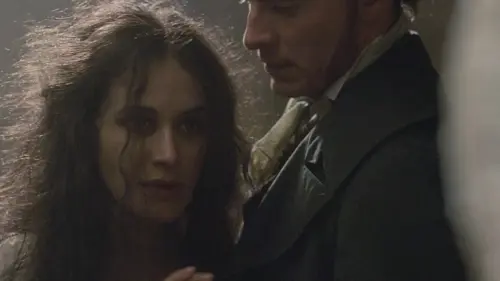
Similarly, in Emily Brontë’s Wuthering Heights, it’s the tortured Heathcliff who bears much of the novel’s violence and stands in comparison to the refined (white) Edgar Linton. Heathcliff’s racialisation is clear for those who wish to see it: he is described as a ‘dark-skinned gypsy’ and a ‘lascar’, a term used to differentiate between South Asian and white British sailors.
Not unlike her sister, Emily Brontë assigns her only non-white character all the violence of a savage native caricature. Like Bertha, Heathcliff is prone to vicious outbursts, constantly referred to as ‘it’, and likened to a demon with ‘black eyes’ and ‘an expression of mortal hate’. There’s also the significance of him being found on the streets of Liverpool, one of Britain’s largest slave-trading ports in the 18th century.
The supposed racial ambiguity of these characters becomes less ambiguous when you return to the texts, yet rarely are they ever depicted as anything other than white on screen. In numerous adaptations of Jane Eyre, Bertha is portrayed by white women, and cinematic depictions of Wuthering Heights have created such a whitewashed image of Heathcliff that it’s become a rite of passage for the most tortured white actor of each generation to embody the Byronic anti-hero. The only exception is Andrea Arnold’s Wuthering Heights (2011), where James Howson, a young Black actor, takes on the role in a performance so raw, it feels like a true understanding of the feral brutality of Brontë’s story.
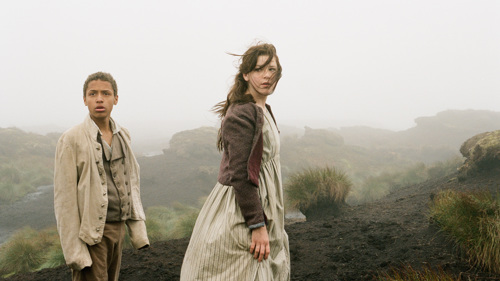
The savage, animalistic depiction of these non-white characters is inextricably linked with their racialisation – when their race is erased on screen, they are reduced to digestible facsimiles of their literary counterparts. It also erases crucial historical context; if Mattie is removed from The Beguiled, and Bertha and Heathcliff are recast as white, then audiences aren’t made to confront the history of slavery and British imperialism that underpin these stories. More than a wilful act of ignorance, it’s a practice in rewriting the canon to better suit a blinkered perspective of history. Audiences are given an out: they can avoid addressing the racism to indulge in a comfortable version of the Gothic that prioritises aesthetic over meaningful engagement with the genre’s historical context.
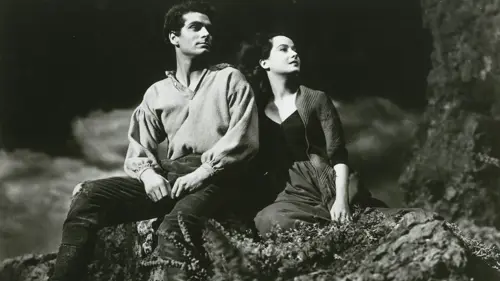
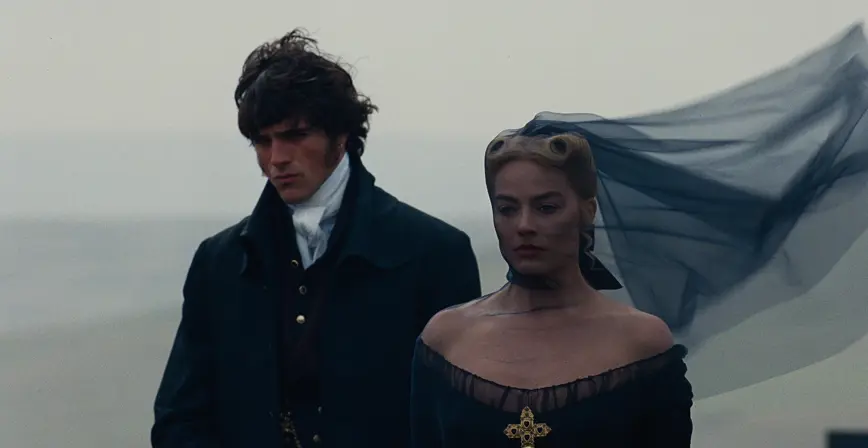
So, where does this leave Emerald Fennell’s “Wuthering Heights”? Well, Fennell has already faced criticism for her mismatched casting of Jacob Elordi as Heathcliff and Shazad Latif as Edgar Linton (swap these actors and you’d be closer to a perfect cast), but perhaps we’re being too hasty. In the few trailers released for the film, anachronistic clothing (even the costume designer admits it’ll take you out of the time period) and eye-catching prop design (can we talk about the comically large strawberries?) signal a potential twist, as is the Fennell way. Whether these bizarre glimmers of the uncanny will be enough to justify Fennell’s perceived missteps is yet to be seen, but “Wuthering Heights” could make for an excellent case study in how much progress we’ve made in adapting the Gothic – if we’ve made any progress at all.
WATCH "WUTHERING HEIGHTS" IN CINEMAS
RELATED ARTICLES

Sofia Coppola
Sofia Coppola & the Art of Loneliness
Deep Focus
Jacob Elordi’s Emotional Terrorists: On Elvis Presley & Nate Jacobs

Oscar-Nominated
13 of the Best Margot Robbie Films
From The Wolf of Wall Street to Birds of Prey and beyond, we round up the best films starring Academy Award nominee Margot Robbie.